Staatscourant van het Koninkrijk der Nederlanden
| Datum publicatie | Organisatie | Jaargang en nummer | Rubriek |
|---|---|---|---|
| Nederlandse Organisatie voor Wetenschappelijk Onderzoek | Staatscourant 2026, 39580 | overige overheidsinformatie |

U bent nu hier: Publicaties Officiële publicaties
Zoals vergunningen, bouwplannen en lokale regelgeving.
Zoals belastingen, uitkeringen en subsidies.
Officiële publicaties van de overheid.
Adressen en contactpersonen van overheidsorganisaties.

FutureFoodS Call 2026
GETS – Getting Everyone Together for Sustainable food systems: empowered consumers, innovative sustainable products and trusted value chains
Version 1, 03.11.2026
|
Call launch: 03 November 2026 |
|
Submission platform: https://futurefoods.ptj.de |
|
Webinar for pre-proposal applicants: 12 November 2026, 11:00–12:00 CET |
|
Deadline for pre-proposals: 13 January 2027, 13:00:00 CET |
|
Deadline for full-proposals: 30 June 2027, 13:00:00 CEST |
Co-funded by the European Union. Views and opinions expressed are however those of the author(s) only and do not necessarily reflect those of the European Union or European Research Executive Agency (REA). Neither the European Union nor the granting authority can be held responsible for them.
|
Associated partners |
Associated partners are self-funded partners bringing their own resources and/ or own funding; they have a clear role in the consortium and need to fill the partner profile for associated partners on the submission platform. A letter of commitment (Annex E) is mandatory for full-proposal submission. Self-funded partners will not be subject to national/regional eligibility assessments, do not count towards the minimum of 3 eligible partners from 3 different countries and cannot be coordinators. |
|
|
Associated countries |
Associated countries are non-EU countries, who are associated to Horizon Europe1, which allows entities of associated countries to participate in programme actions on equal terms with entities of EU countries. Associated countries involved in FutureFoodS and represented by a Funding Organisation within this call are: Iceland, Norway, Türkiye |
|
|
Call Board |
CB |
The CB consists of all Funding Organisations giving funding to the co-funded call. The CB will make the final decision on the selection of projects based on the ranking lists provided by the IEP and on the availability of funds. |
|
Call Office |
CO |
The CO is responsible for administrative support in relation to the co-funded call, call documents and procedures, submission platform and webinar. |
|
Code of Conduct |
A code of conduct is a set of rules outlining the norms, rules, and responsibilities or proper practices of an individual party or an organization. |
|
|
Co-funded call |
The 3rd FutureFoodS co-funded call for proposals also referred to as the “call”. |
|
|
Conflict of Interest |
CoI |
|
|
Coordinator |
The Coordinator coordinates and manages the project consortium at pre- and full-proposal stage, and over the entire lifetime of the transnational project. Details on the role, responsibilities and tasks of a Coordinator are described in section 5.6. |
|
|
Dissemination, Exploitation and Communication |
DEC |
|
|
Ethical, Regulatory and Deontology advisory Board |
ERDB |
|
|
End-term report |
ETR |
Report that all projects funded under the co-funded call need to provide after the end of the project |
|
European Commission |
EC |
|
|
Evaluation Office |
EO |
The EO is responsible for the management of the evaluation and supports the CB and the IEP. |
|
Funding Organisation |
FO |
FO is the Funding Organization listed in Table 4 which participates in the co-funded call and provides funding for the selected topic(s). |
|
Independent Observer |
IO |
An independent expert who will observe the selection procedure and its requirements (in particular, for the peer review evaluation and the ranking) and will document his/her observations in a report. |
|
International Expert Panel |
IEP |
The IEP consists of international experts in the fields covered in the topics of the co-funded call. Members of the IEP will evaluate each proposal according to the evaluation guidelines (see section 7 of this document). During the IEP meeting, the IEP will rank the proposals. |
|
Key Performance Indicators |
KPI |
|
|
Mid-term report |
MTR |
Report that all projects funded under the co-funded call need to provide at midterm of the project runtime |
|
National Contact Point/ Regional Contact Point |
NCP/ RCP |
National and Regional Contact Points of each FO. NCP/RCP will provide support in of the event that potential applicants have nationally or regionally specific questions regarding eligibility and national/regional funding procedures. |
|
Proposal |
In this call document the term “proposal” refers to pre-proposals and full-proposals. Where the text refers specifically to either the pre-proposal or the full-proposal, this will be written explicitly. |
|
|
Project partners |
Projects must consist of at least 3 partners from 3 different countries eligible and requesting funding from a FO participating in this call; self-funded partners are “associated partners” who participate with own resources (see above) |
|
|
Redress Committee |
The Redress Committee has the role to evaluate the requests for redress ensuring fair and equal treatment of applicants (see section 7.3). |
|
|
Research and Innovation |
R&D |
|
|
Sustainable Development Goals |
SDGs |
|
1 |
Preamble |
||
|
1.1 |
Background |
||
|
1.2 |
The FutureFoodS Partnership |
||
|
2 |
FutureFoodS ambition – Food Systems Approach |
||
|
3 |
Project types for achieving impact |
||
|
4 |
Call description |
||
|
4.1 |
General background and scope of the call |
||
|
4.2 |
Call topics |
||
|
4.2.1 |
Topic 1: Trusted and transparent sustainable food value chains |
||
|
4.2.2 |
Topic 2: Consumer Agency and Enabling Food Environments for Healthy, Safe and Sustainable Food Practices |
||
|
4.2.3 |
Topic 3: Innovative processing for sustainable, safe and nutritious food products |
||
|
5 |
Timeline, Call Office (CO) contacts and funding opportunities |
||
|
5.1 |
Timeline |
||
|
5.2 |
Call Office contacts |
||
|
5.3 |
Overview of participating Funding Organisations and funding opportunities |
||
|
6 |
Funding modalities |
||
|
6.1 |
Who can apply |
||
|
6.2 |
Eligibility |
||
|
6.2.1 |
General eligibility criteria |
||
|
6.2.2 |
Regional/ national eligibility criteria |
||
|
6.2.3 |
Ineligibility |
||
|
6.3 |
Ethical issues |
||
|
6.4 |
Confidentiality and Conflict of Interest |
||
|
6.5 |
General Data Protection Regulation |
||
|
6.6 |
Project Coordinator |
||
|
7 |
Call procedures |
||
|
7.1 |
Step 1: Pre-proposal phase |
||
|
7.1.1 |
Submission |
||
|
7.1.2 |
Evaluation |
||
|
7.1.3 |
Selection |
||
|
7.2 |
Step 2: Full-proposal phase |
||
|
7.2.1 |
Requests for changes in the full-proposal phase |
||
|
7.2.2 |
Widening option |
||
|
7.2.3 |
Submission |
||
|
7.2.4 |
Evaluation |
||
|
7.2.5 |
Selection |
||
|
8 |
Evaluation |
||
|
8.1 |
International Expert Panel |
||
|
8.2 |
Evaluation criteria and scoring system |
||
|
8.3 |
Selection and funding decision |
||
|
8.4 |
Redress procedure |
||
|
9 |
Obligations of funded projects |
||
|
9.1 |
Contract negotiations |
||
|
9.2 |
Contractual requirements |
||
|
9.3 |
Consortium agreement |
||
|
9.4 |
Project monitoring and reporting |
||
|
9.5 |
Dissemination requirements |
||
|
10 |
ANNEXES |
||
|
Annex A Impact Plan |
|||
|
Annex B Overview of National Contact Points / Regional Contact Points (NCP/RCP) |
|||
|
Annex C Pre-proposal template |
|||
|
Annex D Full-proposal template |
|||
|
Annex E Letter of commitment template |
|||
|
Annex F Data Management Plan |
|||
|
Annex G Dissemination, Exploitation and Communication Plan |
|||
|
Annex H List of FutureFoodS partners allowed to participate in co-funded projects |
|||
|
Annex I Regional/ national regulations |
|||
The European Commission (EC) has identified an urgent need to future-proof our food systems. This is due to challenges that our food systems are facing, such as those linked to climate change, land degradation, biodiversity loss, hunger, malnutrition, diet-related diseases, food and packaging waste, safety, scarcity of fresh water and (renewable) resources, social and economic inequalities, political tensions, and the need to safeguard our food cultural heritage.
The transformation of food systems is key to meet the UN Sustainable Development Goals (SDGs). It is a central element with respect to ending poverty and protecting the planet (Rockström et al., 20091), and is necessary to ensure that all people have access to safe and affordable diets that promote health and wellbeing (FAO and WHO, 20192). Food is an element that connects all 17 SDGs given the interplay between the economic, environmental and the social dimensions of food systems.
A sustainable food system for the EU should “...provide and promote safe, nutritious and healthy food of low environmental impact for all current and future EU citizens in a manner that itself also protects and restores the natural environment and its ecosystem services, is robust and resilient, economically dynamic, just and fair, and socially acceptable and inclusive. It does so without compromising the availability of nutritious and healthy food for people living outside the EU, nor impairing their natural environment.” (SAPEA, 20203).
The FutureFoodS Partnership is one of eight co-funded partnerships launched by the EC under Cluster 6 of Horizon Europe to drive green and digital transitions. While the partnerships AGROECOLOGY, EUPAHW, SBEP and AgData also look at various aspects of agricultural and food production, the FutureFoodS partnership has a clear focus on food post-harvest.
The vision of the FutureFoodS Partnership is to collectively achieve environmentally friendly, socially secure and fair, economically viable, healthy and safe food systems in Europe by 2050.
This is based on three identified priority needs:
1) The need for transformation of the current types of production, processing, distribution, and consumption in linear food chains towards circular food systems functioning within planetary boundaries;
2) The need for an overarching food systems approach to address several challenges in an integrative manner and empowering all relevant stakeholders, diverse voices and geographical regions;
3) The need for food that is safe, sustainable, healthy and from fair and trusted value chains for everyone.
The FutureFoodS Partnership aims to generate impact (summarized in General & Specific Objectives) through a combination of interrelated activities like case studies in living labs, agendas for research, innovation, policy-science topics and education and joint transnational calls for research and innovation (R&I) proposals across four thematic areas:
i. ‘Change the way we eat’;
ii. ‘Change the way we process and supply food’;
iii. ‘Change the way we connect with food systems’ and
iv. ‘Change the way we govern food systems.
Its potential impact is closely related to the capacity to align actors of the food system around the goals identified by the European Green Deal and the UN’s SDGs and to quantify contributions to the objectives in the Farm to Fork Strategy, the FOOD2030 agenda and the latest Food 2040 Strategic Approach as well as the Commission’s Vision for Agriculture and Food, the Strategy for European Life Sciences and the EU Bioeconomy Strategy.
The FutureFoodS beneficiaries represent 86 partners from 22 EU Member States, six associated countries and one third country – 29 countries in total.
The incorporation of research actors from social sciences and humanities, of policy makers and the involvement of external experts, practitioners and stakeholders ensures the consideration of multiple perspectives, needs and experiences in the planning and implementation of FutureFoodS activities.
This clearly reflects the partnership’s mission to mobilize R&I to accelerate the transition towards sustainable food systems with a wide range of actors, who are joining forces in this partnership.
The FutureFoodS Partnership is planning to launch up to six calls for transnational R&I projects during its ten-year lifetime. As the third call of the partnership, the current call draws the applicants’ attention to essential guiding elements that articulate the partnership’s ambition for this call, as well as for all subsequent calls.
Central to the FutureFoodS Partnership is the ambition that tackling the complex challenges making current European food systems unsustainable requires mobilizing knowledge, actors and resources through a food systems approach. An approach of this kind is important as it propounds a holistic view when addressing wicked problems, acknowledging enduring dependencies between food system actors, as well as identifying drivers and leverage points within systems.
|
Food systems approach4: “a system that embraces all elements (environment, people, inputs, processes, infrastructure, institutions, and power relations, markets and trade) and activities that relate to production, processing, distribution and marketing, preparation and consumption of food. A systems approach acknowledges the interactions between natural resources/ecosystems services, primary food production (farming, aquaculture and fishery), food processing, packaging, logistics, marketing, retail, food services, food consumption and waste management/recycling and the many feedback loops between them, which together defines the degree of complexity”. |
|
A food system approach towards Research and Innovation integrates the bio-physical focus with an actor-based approach, which enables scientists and other actors to address both the ‘what’ questions as well as the question ‘how’ changes and larger scale transformation can be realized.” |
The European food system R&I community has an important role to play in promoting the design and realisation of a food systems approach involving relevant food system actors. The proposals submitted to this call should clearly delineate and characterise the particular food system under inquiry. What are its key actors? What are the main dependencies within the system? What levers may induce enhanced sustainability of the system? How does the chosen one connect to other food systems?
What are guiding elements for FutureFoodS projects?
A. Transformative perspective
– Research should be solution- and impact-driven and leverage points towards transformation should be identified (proposals are required to set up an Impact Plan for food system transformation which follows a theory of change)5;
– Projects should investigate the context in which they operate (the Impact Plan is expected to include a problem- and context-analysis);
– The diversity of European food systems means that solutions for a more sustainable food system may vary depending on the context6, e.g. different geographical conditions, different institutional settings, different demographical or cultural settings;
– Projects are expected to drive systems innovation in various dimensions to foster real change (behaviour, culture, business models, policy, infrastructure, technology etc.).
B. Inter- and transdisciplinarity7
– Project consortia are expected to bring together scientific approaches from multiple academic disciplines or research fields (linking life sciences with social sciences and humanities);
– Consortia should work towards transdisciplinarity, involving partners beyond academic disciplines;
– Consortia should choose the level of cross-disciplinarity, appropriate for the R&I questions under inquiry, project specific aims and Impact Plan;
C. Multi-stakeholder engagement8
– Engagement of stakeholders from different sectors, governance levels and countries to foster real-life relevance and applicability of R&I actions;
– Engagement should encompass all stages of the R&I process, from design to implementation and monitoring;
– The participation of a broad range of food system actors is encouraged along the “quadruple helix” (science, policy, industry and society), e.g. citizens/ consumers, civil society organisations, food companies, research organisations, regional authorities, decision makers, municipalities and the food nutrition and health community.
D. Sustainability
– Projects should take all three dimensions of sustainability (environmental/ economic/ social incl. nutrition and health9) into account, but are not obliged to address all dimensions to the same extent;
– Projects should envisage clearly how they will contribute to the transformation towards sustainable food systems (see SAPEA definition on p. 4).
The guiding elements will be part of the proposal evaluation and should be described in corresponding sections of the proposal and especially in the Impact Plan towards Food system Transformation (Annex A).
Applicants are asked to choose among two project types:
• Exploratory Research
• Accelerating Innovation
Both project types are equally substantial to boost food system transformation. Table 4 indicates the project types that each FO is able to fund (also displayed in Annex I).
The first project type, labelled as Exploratory Research Project, shall advance the state-of-the-art of scientific knowledge in multiple academic fields related to food sustainability, ranging from ground research developing new theoretical understandings on food sustainability transitions to more applied research aimed at the acquisition of new knowledge and skills for developing new products, processes, tools or services. Such projects may range from theory development to proof of concept, essentially in an academic or laboratory setting.
The second project type, labelled as Accelerating Innovation Project, is targeting research and innovation activities related to new sustainable food practices, services, products and processes that are ready for practical application in real life settings. These projects aim at developing and up-scaling science-based solutions in industry, policy and society.). For more technically oriented innovations, besides technical feasibility other aspects such as market acceptance, regulatory compliance, market potential analysis and business models, could be considered. We encourage applications that address a wide range of types of innovations, including those that address social needs and improve societal well-being of all/specified consumer groups, those that contribute to new business practices or more efficient relationships between food system actors or those that develop new marketing strategies and business models, including changes in product design, packaging, or pricing models.
It is the applicant’s responsibility to select the project type that is best suited for the activities, results and expected impacts generated by their application, as well as the collective and individual competences of the participating team members. Applications submitted using each project type will be evaluated and ranked separately to generate a greater diversity of projects under the present call. Please note that all three call topics are open to both project types.
In summary, table 1 displays some guidance helping to decide if your application fits best within Exploratory Research Project or Accelerating Innovation Project.
|
Exploratory Research |
Accelerating Innovation |
|
|---|---|---|
|
Concept |
Basic and/ or applied research focused on knowledge co-creation, mainly researcher-led (comparable to EC-Research and Innovation Action) |
Focused on developing new practices and smart solutions in industry, public sector or society, clear stakeholder commitment and collaboration with professional practice (comparable to EC-Innovation Action) in a way that is scientifically sound. |
|
Foreseen impacts |
Develop the state of the art of scientific knowledge laying the ground for an accelerated food system transformation |
Increase and develop the adoption and uptake of new sustainable food practices, services, products and processes across Europe |
|
Concretion level |
Ideas development and implementing proof of concept |
Testing and validating prototypes or pilots that are ready for practical application in real life settings |
|
TRL1 scale (if applicable) |
3–5 |
6–8 |
|
Guiding elements for food systems approach |
Essential, see section 2 |
Essential, see section 2 |
Rationale: getting everyone on board
The overall scope of research, and innovation to be addressed by the FutureFoodS Partnership is comprehensively described in its Strategic Research and Innovation Agenda (SRIA)10.
With this third Call, and in line with the EU Vision for Agriculture and Food11, FutureFoodS aims to support the transformation of European food systems towards improved sustainability, health, safety, resilience, competitiveness, strategic autonomy, and inclusiveness, translated into the following three topics:
• Topic 1: Trusted and transparent sustainable food value chains;
• Topic 2: Consumer agency and enabling food environments for healthy, safe and sustainable food practices;
• Topic 3: Innovative processing for sustainable, safe and nutritious food products.
A central theme across the three topics is “Getting everyone on board”12, which reflects the need for coordinated collaboration among governments, civil society, private sector and academic disciplines to enable effective information exchange and collective action. This ambition has also been reflected in food policy initiatives across Europe13, for instance efforts to harmonise food and nutrition strategies at national and regional level through multi-stakeholder educational programmes or to reconnect consumers with how their food is produced. Building trust in supply chains, strengthening consumer agency and advancing processing methods each depend, in their own way, on coordination and durable collaboration among the relevant actors. This inclusive ambition carries an explicit equity dimension14, calling for particular attention to socially and economically disadvantaged groups; while also recognizing that actors in central positions within existing food systems, like large food corporations, can act as significant levers of transformation, particularly when enabled by supportive public policy, innovation frameworks and market mechanisms.
Governance is increasingly recognized as a substantial dimension to food system transformation; in this context it is therefore treated as a significant cross-cutting lens applied across the food systems domains covered by the Call. This is in line with the SRIA’s own framing of governance as the interaction among the public and private sectors, civil society, and consumers needed to identify, implement, resource, and monitor solutions for achieving healthy, sustainable, resilient, just, and equitable food systems15. A complementary assessment commissioned by the SCAR Food Systems Working Group reinforces this view, describing governance for transformation as an interdependent architecture, combining normative grounding, institutional capacity and cross-level coordination, rather than a single lever16.
Next to governance, digitalisation is recognized as another central aspect, to which special attention should be paid.
General Expected Outcomes
Projects funded under this Call are expected to contribute to the transformation of European food systems by combining research and innovation approaches with strong multi-stakeholder involvement and by demonstrating clear, credible and plausible pathways to impact at societal, industry and policy levels.
Depending on their scope and project type, projects should contribute by generating reliable knowledge, methods, metrics or tools to understand and monitor food-system transformation; identifying the socio-environmental factors that enable or hinder transformation; strengthening the capacity of relevant actors across sectors and territories to initiate, implement and sustain change.
Consistent with the Partnership’s food-systems approach17, both research-oriented and innovation-oriented projects are promoted across the call, enabling consortia to select the project type best aligned with the maturity of the challenges, proposed solutions and intended pathway to impact.
Each proposal should address one topic. For the chosen topic proposals are expected to address at least one of the related subtopics, with freedom to combine different aspects as suited to the proposed challenges and context at hand. Applicants should explain how their chosen combination relates to the scope and expected outcome of the selected topic and the Call.
Moreover, applicants are expected to avoid duplication of research conducted under previous FutureFoodS Calls18, and to clearly articulate the complementarity, added value and potential synergies of their proposed work.
Please note that primary production (on land and sea/water), such as growing food, agricultural production and other specific aspects related to it, as well as diseases related to nutrition and lifestyle are not in focus in this partnership. These aspects are covered in other Horizon Europe partnerships. However, dependencies and impacts related to these aspects may need to be reflected upon in a project to fully embrace a food systems approach.
Background
Food value chains19 are undergoing profound change, driven by a range of factors, including tightening sustainability regulations, growing demand for transparency, and the need to adapt to a changing climate. Trust is central to this transformation: consumers need confidence that food is produced in a safe, ethical and sustainable way, yet many of these attributes are not directly observable20, leaving a gap in common, understandable and trustworthy quality signals. Certification and traceability systems, together with digital tools (such as blockchain, AI-driven analytics and digital tracking tools) are increasingly relied upon to verify sustainability claims, prevent fraud and misleading labelling, and to give businesses confidence in what they are marketing and consumers’ confidence in what they are purchasing. The current landscape of sustainability standards certification schemes and labelling remain fragmented, in the absence of a harmonised, easily applied framework. Evidence shows that market pressure for competitive differentiation keeps generating new certifications and labels alongside existing standards, leaving consumers and operators struggling to judge which sustainability signs are equivalent, rigorous or trustworthy21. Sustainable procurement (including public procurement) and fairer, more cooperative relationships between suppliers, farmers/ producers, processors, public institutions, retailers and local communities are central to this transition, as is a better understanding of the regulatory, economic and informational barriers, drivers and enablers.
Expected outcome
Projects funded under topic 1 are expected to strengthen trust and transparency across sustainable food value chains through developing, testing and/or scaling of certification, traceability and labelling solutions that are credible, interoperable and usable by supply chain actors of different sizes, including SMEs and short food supply chain operators22. Proposals should demonstrate a plausible pathway towards harmonised and trustworthy sustainability claims and, where relevant, support the uptake or scaling of standard and digital tools across public, private and civil society. They should also foster strong cooperation, trust and fairer value sharing among farmers23, processors, intermediaries and communities. Across all subtopics, proposals should show how innovation and technology, business models or governance will lead to stronger alignment and harmonisation and move proposed solutions from pilot cases towards real-world adoption.
Scope
Topic 1 addresses the transformation of food value chains towards improved sustainability, trust, transparency, resilience and fairness. It is anchored in the supply chain dimension of FutureFoodS’ SRIA24, particularly the area concerning how sustainable food products are supplied, traced and certified, with trust and transparency treated as a precondition for the transformation. The topic links food value-chain innovation with consumer trust and producer-consumer reconnection, including through participatory approaches such as Living Labs25, as spaces for experimentation and co-creation, as well as food system innovations in short food supply chains.26
Subtopics
Subtopic 1a: Certification, traceability and digital transparency
• Certification, traceability and transparency: which technological and organisational innovations can improve and harmonize certification schemes across products and regions, including for climate- and biodiversity-related claims, and strengthen the transparency, traceability and trustworthiness of sustainability information along the chain? What is the extent of comparability of existing certification and labelling schemes, particularly for similar sustainability claims? What conditions enable such schemes to scale and be replicated across public, private and civil society actors?
• Food safety and supply chain monitoring: how do local food systems (e.g. Community Supported Agriculture, direct sales and short supply chains) challenge food safety control measures, and which new monitoring tools are required for them?
• Digitalisation and data: how can blockchain, AI-driven analytics and other digital tools ensure full product traceability, optimise supply chain processes, and strengthen sustainability data collection, recognising the key role of farmers27, processors, wholesalers, retailers and food service actors?
Subtopic 1b: Procurement and fair value distribution
• Sustainable procurement and value chains: how can procurement be embedded in sustainable supply chain management (e.g. via improved Life-Cycle-Assessment methods28), to deliver co-benefits for the environment, social and human health; what trade-offs exist between local/short and global sourcing models; and what barriers drivers and enablers (regulatory, economic, market, informational) can shape or accelerate this transition?
• Fairness, networks and community cooperation: how can fair and equitable cooperation between suppliers, farmers29, processors and local communities be developed, and how can such models be replicated by new partners?
Subtopic 1c: Producer-consumer reconnection30
• Short food supply chains as a potential producer-consumer reconnection tool: how can short food supply chains – coexisting with conventional chains rather than substituting them, contribute to transparency, socio-economic benefits and resilience at the local level? What local coordination arrangements – among farmers31, processors, consumers and public authorities, support their development and scaling?
Background
The concept of agency refers to the capacity of individuals to act independently and make choices that shape their lives and the social structures around them. Consumers’ agency emphasizes the idea that consumers are not merely passive recipients of societal influences or structural forces but are active participants who can exercise their will, make decisions, and initiate actions relating to their food consumption.32
Food environments, in turn, refer to the physical, economic, political and socio-cultural context in which consumers engage with the food system to acquire, prepare and consume food (HLPE, 2017). All consumers are an integral part of the food system and contribute to shape it, although their level of involvement may vary.
Providing consumers with a more comprehensive education on healthy and sustainable diets is a high priority for shifting dietary patterns and fostering lifelong habits, particularly among children and adolescents. Furthermore, there is evidence of connection between dietary choices and health outcomes. Enhancing transparency of information and access to knowledge can empower consumers to make informed choices. Particular attention should be given to socially and economically disadvantaged groups that may experience unequal access to information, economic resources and participation processes, avoiding a one-size-fits-all approach that risks leaving these groups further behind. In order to get everyone on board, there is the need to identify strategies to overcome socio-economic, cultural and institutional barriers, as well as to adopt inclusive and context-sensitive approaches that support equitable access to healthy, safe and sustainable food choices.
On the other hand, consumers’ food safety knowledge and risk perception regarding safe food handling and storage at the household level remain under-researched and the influence of diverse sources of information and communication, including social media, advertising and industry marketing, which do not always align with public health recommendations, should be given careful consideration.
Expected outcome
Projects funded under topic 2 are expected to combine consumer agency aspects with targeted interventions on the food environment. This includes encouraging and facilitating more sustainable food practices; strengthening food and nutrition literacy in specific target groups, as well as increasing food safety knowledge in domestic settings. Concrete interventions are also expected, such as for example redesigning collective catering settings or piloting more affordable healthy food options in cooperation with diverse food systems stakeholders such as retailers.
Proposals could also explore social innovation, including community-led initiatives, digital tools, social media and participatory food policies – and how this can contribute to making sustainable food choices more accessible, affordable, and socially attractive. Furthermore, proposals should foster collaboration, for example among formal education systems, public and private institutions, and civil society to build consumers’ capacity to participate meaningfully in food systems transitions, in line with the principles of food democracy.33 Across all subtopics, proposals are also strongly encouraged to demonstrate how social innovation and governance mechanisms will lead to consumer engagement, capacity, and practices from pilot cases towards real world adoption, lasting behavioural change and improved food environments.
Scope
Topic 2 addresses consumer agency34 and its interaction with food environments, linking individual and house-hold level behaviours, where systemic change ultimately materialises in daily practices35, to the systemic levers within food environments. Aspects to consider include effective collaboration strategies to shape sustainable and healthy food environments, including commercial settings; inclusivity and accessibility for disadvantaged and vulnerable groups; the pathway from awareness to knowledge and practice needed to sustain lasting behavioural change.
Mechanisms of food democracy such as Living labs36, food policy councils and third spaces (e.g. shared kitchens, community food hubs), offer promising experimental spaces: to explore and understand the diverse, relational and dynamic nature of food environments, to identify opportunities to challenge, to reimagine and transform them, and to pilot and scale socially inclusive and sustainable food practices. Consumers should be actively engaged in the cocreation and design of these experimental spaces.
Subtopics
Subtopic 2a: Effective collaboration strategies and food environments
• Food environments for sustainability and behavioural change: how can food environments be designed, through practices and policies in collective and commercial catering settings and retail environment (e.g. schools, canteens, workplaces, food outlets), to promote health at both public and personal levels, support behavioural change and shape new social norms and practices?
• Durable collaborations and codesign of food systems and environments: how can knowledge institutions, public authorities, private entities and civil society organizations establish effective and durable collaborations to co-design resilient and inclusive food systems and environments? What frameworks can support vertical and horizontal coordination across scales at EU, national, regional, urban-rural level?
• Interdisciplinary knowledge exchange and coordinated decision-making: How can mechanisms and platforms enhance interdisciplinary knowledge exchange and enable coordinated decision-making among heterogeneous stakeholders?
Subtopic 2b: Inclusivity and accessibility
• Disadvantaged groups and food environment reshape: how can disadvantaged or vulnerable groups (e.g. old population, children, people living with disabilities) be actively engaged in the sustainable food transition, overcoming socio-economic and socio-cultural barriers? What policy levers, social innovation and behavioural insights can reduce the structural inequalities and economic and institutional barriers (public and private) that shape food environments and affect access to healthy and sustainable food options?
• Diversity of social groups and tailored intervention strategies: how to acknowledge the diversity of social groups and underlying motivations to develop tailored-intervention strategies, incentives, and explore possible synergies and spill-over effects?
Subtopic 2c: From awareness to knowledge and practice
• Knowledge and practices on sustainable consumption: What is the state of knowledge and practices on sustainable and healthy consumption among European citizens and how can existing best practices on regional levels be extended and exchange fostered? Which strategies can support increased knowledge and uptake, e.g. to prevent foodborne illness?
• Education and food system literacy: how can educational initiatives in public schools and beyond stimulate healthier dietary paterns and strengthen food system literacy, safe food handling and storage practices across contexts and populations? How can digital tools (e.g. smart apps, IoT sensors) bring added value?
• Inspiration and motivation: To what extent can established alternative sustainable diets and production practices, diets and food systems, including organic food, serve as inspiration and guidance for the support and adoption of healthy and sustainable diets?
• Media and marketing influence: How are consumer perceptions of food with regard to quality, safety or healthiness influenced by (mis)information, particularly from non-expert sources such as social media and advertising? How do consumers respond to industry marketing, advertising and pricing strategies compared with public health recommendations, and how can industry communication be beter aligned with public health objectives?
Background
In line with the FAO’s concept of Food security (FAO, 2003 and 2006), food should be safe and nutritious meeting dietary needs and preferences and should be available and accessible for all. Yet planetary resources are scarce in light of a growing population and the triple burden of malnutrition (undernutrition, overweight and obesity, and micronutrient deficiencies) is present to variable degrees in all EU countries (Swinburn et al., 2019; FAO, 2021).
Ensuring everyone’s nutritional needs are met sustainably while reducing the prevalence of unhealthy diets largely depends on the foods our systems provide. Therefore, post-harvest activities should be adapted to enhance the availability, affordability, accessibility, and safety of healthy foods produced via sustainable practices. Continued research and innovation, and investment are needed to increase the diversity of our food options, ensure safety and enhance connectivity among producers, manufacturers, retailers and consumers.
In line with the EU Vision for Agriculture and Food37, this topic also recognises the need to strengthen sustainability and resilience of food processing, reducing strategic dependencies, while maintaining competitiveness, affordability and high environmental and social standards.
More specifically, this entails promoting diversified, sustainable European protein systems that substitute or complement protein sources with alternatives (e.g. from underutilized crops, algae, low-trophic aquatic species, microorganisms etc), while investing in research and innovation on microbiomes, food biotechnology, and sustainable techniques to support skills and methods. Innovation should be assessed against nutritional quality, safety, affordability, consumer acceptance and whole-system environmental performance.
Next to food innovation, digitalization and integration of AI are highlighted as important drivers to support the envisaged shift, with promising aspects covering also the interconnection of different stages and actors in food production and processing.
In light of a food systems perspective, attention should also be paid to barriers and enablers of knowledge and innovation uptake and transfer, as well as to governance measures which can act as support levers.
Expected outcome
Projects funded under topic 3 are expected to have a multi-pronged approach. Advancements in food processing should be complemented by efforts to increase food diversity, including for example through alternative protein sources, dietary reformulation, innovative food product development, optimization of food composition and the preservation of bioactivity and functionality. These innovations should not only meet fundamental taste and texture requirements but also provide health benefits and convenient consumption experiences.
The role and involvement of various actors needs to receive more attention. Proposals are expected to achieve better knowledge and understanding of synergies and trade-offs between health/nutrition qualities of foods and diets in different contexts and other sustainability objectives. Moreover, possible barriers and pathways to technology transfer and broad uptake should be analysed.
Across all subtopics, proposals should show how advanced knowledge and/or uptake of technology, business models, organisation models or governance will move innovations in food processing and design from pilot cases towards real-world adoption and changes in everyday life. Proposals should pay attention to regulatory pathways and responsible innovation measures enabling new food processing methods and healthier products, supported by regulatory “sandboxes” that provide safe testing environments, close knowledge gaps, reduce risk, accelerate regulatory feedback, and build trust to spur investment and innovation.
Scope
Topic 3 addresses the transformation of how food is processed and developed38, with the important goal to increase sustainability, health and inclusiveness39. The topic links advanced technological innovations with sustainability goals. Getting everybody on board40 requires thinking and acting jointly and should be addressed via multi-stakeholder involvement and participatory approaches creating collaborative learning environments. Living labs are a potential tool to foster the involvement of people to experiment and trust new ways of food production aiming at sustainable and healthy diets and practices.
Subtopic 3a: Innovative processing and alternative sources and ingredients
• Alternative sources and ingredients: How may alternative proteins (e.g. plant-, single-cell or algae-based) contribute to more sustainable, nutritious and resilient food systems as alternatives to conventional, mainly animal-derived foods? To what extent may alternative sources and ingredients (e.g. products derived from cellular agriculture) lead to a shift towards more sustainable foods? What are potential positive and negative effects?
• Advanced processing methods and techniques: How might advanced food technologies and processing approaches (e.g. precision fermentation, enzyme-assisted extraction or use of natural preservatives) ensure nutrient bioavailability while retaining sensory and functional properties and minimizing impacts on the environment? Which innovations are applicable to a range of product types and diets (such as keto or vegan diets)? What implications could this have for promoting healthier diets (and thus decreasing less healthy options) and supporting long-term well-being? What are the benefits and disadvantages relative to traditional methods and what is the quantitative impact on sustainability?
• Digitalisation and smart solutions: What role do AI-driven automation and robotics play in improving sustainability in food manufacturing? In what ways can personalized food processing and 3D printing enhance the functionality of food products? What impact might these technologies have on overarching sustainability goals seen on systems level?
Subtopic 3b: Ensuring nutritional values and diversity of sustainable food products and diets
• Safety: What are the potential health impacts, risks and benefits of dietary shifts towards new food sources and technologies (e.g. microbiological pathogens, intrinsic plant toxins, toxic compounds from fungi and algae, allergens, processing contaminants, heavy metals, etc.) and possible unknown reactions? What methods are needed to better characterize and manage food safety concerns associated with latest food trends and how to map long-term health effects?
• Nutritional value: How does the degree of processing and the nutrient profile of alternative ingredients impact product quality and nutritional value? What are opportunities to reduce unhealthy components, preserve food bioactivity and help address nutrient deficiencies and dietary gaps among diverse consumer groups? How to assess, evaluate and compare nutritional value?
Subtopic 3c: Scale-up and uptake of innovations for sustainable food products
• Barriers and enablers: Which are the barriers to the uptake of alternative ingredients and reformulated products from different viewpoints (producers, manufacturers, consumers etc)? How can these be addressed? What are technical, economic and institutional barriers to the re-formulation of so called “ultra-processed” food products, and can these be overcome? What are requirements in legislation so that new methods, ways of producing food and innovating new healthy foods and the resulting investments can be created in Europe (raising the “sandbox” of novel food legislation, testing combined with safety research on new methods)? How do evolving cultural norms and demographic shifts (e.g. increasing demand for halal, kosher or other specific labels) influence the acceptability of sustainable diets? What effect do social media(-influencers) have on food choices and acceptability of new ingredients and products?
• Uptake of innovations: How to foster transfer of sustainable and competitive technologies? How can governance contribute to achieving a shared vision/ strategy for the uptake? What measures are effective and which actors (public-private-civil society) can lead and guide the shift? How can the different needs of innovators, suppliers and retailers, policy makers and consumers be aligned with sustainability, nutrition and safety objectives? How could the right investments and adequate business models for producers and processors be activated? How could the right market environment for adoption of the innovation be stimulated?
• Cross-sector policy frameworks: What integrated, cross-sector policy frameworks (linked to health, agriculture, industry, environment, trade, education, etc.) are required to promote diets based on sustainable processing transitions and innovations?
|
1. STEP: PRE-PROPOSAL PHASE |
|
|
28 September 2026 |
Pre-announcement |
|
03 November 2026 |
Launch of the co-funded call (opening of the electronic submission system + the partnering tool) |
|
12 November 2026 |
Webinar for applicants |
|
13 January 2027 (13:00:00 CET) |
Deadline for pre-proposal submission |
|
Mid Jan – mid April 2027 |
1. Step eligibility check, evaluation and selection |
|
Early February 2027 |
Communication of eligibility check outcomes to project Coordinators (possibility of redress on eligibility) |
|
Mid April 2027 |
Communication of evaluation outcomes and funding decisions to project Coordinators |
|
Second half of April 2027 |
Period for pre-proposal phase redress |
|
Until end of April 2027 |
Evaluation of redress requests and communication of decisions to applicants |
|
05 May 2027 |
Start of full-proposal submission |
|
2. STEP: FULL-PROPOSAL PHASE |
|
|
tbc |
Webinar for full-proposal applicants |
|
11 June 2027 |
Deadline to inform about exceptional changes (see section 6.2.1) |
|
30 June 2027 (13:00:00 CEST) |
Deadline for full-proposal submission |
|
July – end of Sept 2027 |
2. Step eligibility check, evaluation and selection |
|
Mid July 2027 |
Communication of eligibility check outcomes to project Coordinators (possibility of redress on eligibility) |
|
End of September 2027 |
Communication of evaluation outcomes and funding decision to project Coordinators |
|
~First half of October 2027 |
Period for full-proposal stage redress |
|
~End October 2027 |
Evaluation of redress requests and communication of decisions to applicants |
|
NATIONAL/ REGIONAL CONTRACT NEGOTIATIONS |
|
|
November 2027 – March 2028 |
Nat/reg. contract negotiations and start of projects |
|
FUNDED PROJECT MONITORING AND MEETINGS (tentative timeframe) |
|
|
2nd quarter 2028 |
Kick-off meeting |
|
Project month 18 |
Mid-term report (MTR); depends on runtime (given for 36 months) |
|
By mid of 2029 |
Mid-term meeting |
|
By end of 2030 |
Final meeting |
|
Project month 36 |
End-term report (ETR); depends on runtime (given for 36 months) |
The submission of proposals will be carried out using an online submission platform, where applicants will find all the information necessary for the preparation and submission of proposals. The submission platform is available at https://futurefoods.ptj.de.
|
How to start: to prepare a proposal, the coordinator needs to register and generate the proposal first. The coordinator can then assign partners, who will receive an invitation to join and register themselves to the submission platform. More info can be found on the submission platform itself. |
|
Submission platform: https://futurefoods.ptj.de |
Partnering tool
A partnering tool is attached to the submission platform, where interested parties can submit and search partner profiles.
|
A webinar for pre-proposal applicants will be hosted on 12th of November 2026 from 11:00 am to 12:00 CET. The webinar will provide an overview of all relevant aspects considering the pre-proposal phase of the call. The webinar is open to everyone interested and no registration is required. |
|
Access information to the webinar: Join link: https://ptj-fzj.webex.com/ptj-fzj-en/j.php?MTID=mbbb124dfc2f113cce25922e78fafd53d Webinar number: 2781 072 4426 |
|
Webinar password: aJXHWj3T8C3 (25949538 when dialing from a phone or video system) |
|
Join by phone +49-619-6781-9736 Germany Toll +49-89-95467578 Germany Toll 2 |
|
Access code: 278 107 24426 |
The FO might organize national/regional webinars besides the FutureFoodS webinar. Applicants should be aware of the respective communication channels.
The CO will be operated by Project Management Juelich (Germany).
|
Name |
|
Phone |
|---|---|---|
|
CO |
ptj-futurefoods@ptj.de |
N/A |
|
Nikola Hassan |
n.hassan@ptj.de |
+49 (0) 2461 61 96787 |
|
Frank Hensgen |
f.hensgen@ptj.de |
+49 (0) 2461 61 85443 |
|
Emilie Gätje |
e.gaetje@ptj.de |
+49 (0) 2461 61 96367 |
|
Hanna Steffens |
h.steffens@ptj.de |
+49 (0) 2461 61 3253 |
All technical issues with the submission system are to be addressed to the CO.
The following table provides an overview of the countries and FO involved, as well as the financial contributions committed to the call and individual topics. For further guidance on the applicable national/regional regulations please consult your NCP/RCP (Annex B) and the information given in Annex I.
A total of approx. 39 million EUR have been provisionally allocated for this Joint Transnational Call by the participating FOs combined with the contribution from the European Union (EU).
|
Country |
FO full name |
Abbreviation |
Supported project type |
National/regional call contribution (provisional) |
Topic |
||||
|---|---|---|---|---|---|---|---|---|---|
|
Research |
Innovation |
Indicative budget in EUR (provisional) |
Maximum national/regional amount in EUR per project |
1 |
2 |
3 |
|||
|
Austria (AT) |
Österreichischer Wissenschaftsfonds |
FWF |
Yes |
No |
1.000.000 |
max. 450.000 |
x |
x |
x |
|
Belgium (BE) |
Fonds de la recherche scientifique |
F.R.S.-FNRS |
Yes |
No |
300.000 |
300.000 |
x |
x |
x |
|
Belgium (BE) |
Fonds Voor Wetenschappelijk Onderzoek-Vlaanderen |
FWO |
Yes |
No |
700.000 |
350.000 |
x |
x |
x |
|
Belgium (BE) |
Service public de Wallonie, Département de la Recherche et du développement technologique |
SPW |
Yes |
Yes |
1000000 |
1.000.000 |
x |
x |
x |
|
Belgium (BE) |
Vlaanderen Agentschap Innoveren & Ondernemen |
FIO/ VLAIO |
Yes |
Yes |
2.000.000 |
500.000/ 375.000 |
x |
– |
x |
|
Bulgaria (BG) |
Bulgarian National Science Fund |
BNSF |
Yes |
No |
900.000 |
300.000 |
x |
x |
x |
|
Denmark (DK) |
Danish AgriFish Agency |
DAFA |
Yes |
Yes |
1.500.000 |
300.000/500.000 |
x |
x |
x |
|
Estonia (EE) |
Sihtasutus Eesti Teadusagentuur |
ETAG |
Yes |
No |
300.000 |
100.000 / 300.000 |
x |
x |
x |
|
Estonia (EE) |
Regionaal- ja Põllumajandusministeerium |
REM |
Yes |
No |
100.000 |
100.000 |
x |
x |
x |
|
Finland (FI) |
Maa- ja metsätalousministeriö |
MMM |
Yes |
Yes |
500.000 |
250.000 |
x |
x |
– |
|
Finland (FI) |
Business Finland |
BFI |
Yes |
Yes |
4.000.000 |
N/A |
x |
x |
x |
|
France (FR) |
Agence nationale de la recherche |
ANR |
Yes |
No |
1.500.000 |
300.000 / 350.0001 |
x |
x |
x |
|
Ireland (IE) |
Department of Agriculture, Food and the Marine |
DAFM |
Yes |
No |
350.000 |
350.000 |
– |
– |
x |
|
Italy (IT) |
Ministero dell’Agricoltura, della Sovranita’ Alimentare e delle Foreste |
MASAF |
Yes |
Yes |
700.000 |
300.000 |
x |
x |
x |
|
Italy (IT) |
Provincia Autonoma di Bolzano/ BOZEN |
PROV.BZ/ BOZEN |
Yes |
Yes |
450.000 |
300.000 |
x |
x |
x |
|
Lithuania (LT) |
Lietuvos mokslo taryba |
LMT |
Yes |
Yes |
300.000 |
150.000–250.000 |
x |
x |
x |
|
Lithuania (LT) |
Lietuvos Respublikos Žemės Ūkio Ministerija |
ZUM |
Yes |
Yes |
120.000 |
120.000 |
x |
x |
x |
|
Norway (NO) |
Norges Forskningsrad |
RCN |
Yes |
Yes |
24 mill. NOK (EUR ~2.200.000) |
3.5 / 4.0 mill NOK |
x |
x |
x |
|
Poland (PL) |
Narodowe Centrum Badań i Rozwoju |
NCBR |
Yes |
Yes |
2.000.000 |
300.000/ 400.000 |
x |
x |
x |
|
Portugal (PT) |
Fundação para a Ciência e a Tecnologia |
FCT |
Yes |
Yes |
500.000 |
150.000/ 250.0001 |
x |
x |
x |
|
Romania (RO) |
Unitatea Executivă pentru Finanţarea Ȋnvăţământului Superior a Cercetării, Dezvoltării şi Inovării |
UEFISCDI |
Yes |
Yes |
500.000 |
200.000/250.000 |
x |
x |
x |
|
Slovakia (SK) |
Ministerstvo Podohospodarstva a Rozvoja Vidieka Slovenskej Republiky |
MARD |
Yes |
No |
110.000 |
110.000 |
x |
x |
x |
|
Slovakia (SK) |
Centrum vedecko-technických infomrácií |
CVTISR |
Yes |
Yes |
800.000 |
300.000/ 450.000 |
x |
x |
x |
|
Spain (ES) |
Agencia Estatal de Investigación |
AEI |
Yes |
Yes |
1.000.000 |
Details see Annex I |
x |
x |
x |
|
Spain (ES) |
Centro para el Desarrollo Tecnologico y la Innovacion E.P.E. |
CDTI |
Yes |
Yes |
600.000 |
n.a. |
x |
x |
x |
|
Spain (ES) |
Elika Nekazaritzako Elikagaien Segurtasunarako Euskal Fundazioa |
ELIKA |
Yes |
Yes |
100.000 |
100.000 |
x |
x |
x |
|
Spain (ES) |
Agencia de Ciencia, Competitividad Empresarial e Innovación Asturiana |
Sekuens/ FICYT |
Yes |
Yes |
150.000 |
150.000 |
x |
– |
x |
|
Sweden (SE) |
Verket for Innovationssystem |
VINNOVA |
No |
Yes |
900.000 |
250.000/ 400.000 |
x |
x |
x |
|
The Netherlands (NL) |
De Staat, Vertegenwoordigd door de Minister van Landbouw, Visserij, Voedselzekerheid en Natuur |
MIN-LVVN |
Yes |
Yes |
2.000.000 |
350.000/450.000 |
x |
x |
x |
|
The Netherlands (NL) |
Nederlandse organisatie voor wetenschappelijk onderzoek |
NWO |
Yes |
No |
2.000.000 |
400.000 |
x |
x |
x |
|
The Netherlands (NL) |
Regieorgaan SIA |
SIA |
Yes |
Yes |
900.000 |
300.000/325.000 |
x |
x |
x |
|
Türkiye (TR) |
Tarımsal Araştırmalar ve Politikalar Genel Müdürlüğü |
TAGEM |
Yes |
Yes |
200.000 |
100.000 |
x |
x |
x |
|
Türkiye (TR) |
Türkiye Bilimsel ve Teknolojik Araştırma Kurumu |
TÜBITAK |
Yes |
Yes |
500.000 |
200.000 |
x |
x |
x |
The FOs participating in the co-funded call are listed in Table 4. The funding for transnational projects will be based on a virtual common pot mechanism. This means that the partners (applicants) in the projects selected for funding will receive the grant directly from their corresponding national/regional FO41, according to their legal terms and conditions for project funding (see national/regional funding regulations, Annex I).
|
All applicants need to check terms and conditions of the respective national/ regional funding regulations (Annex I). In addition, it is strongly recommended to contact the NCP/RCPs from one’s FO (Annex B). |
In general terms, universities and universities of applied sciences, research institutes, non-profit legal entities (i.e. non governmental organisations, associations, societies, cooperatives, federations etc.), small and medium sized enterprises and large enterprises and public bodies (i.e. municipalities, regional/ national administrative bodies, authorities etc.) can apply for funding under this call, subject to the national/ regional funding regulations and eligibility criteria (see also Annex I). Each FO funds the participation of different kind of institutions, so applicants must check the national/ regional funding regulations and eligibility criteria, in order to confirm their eligibility for funding.
Please, see the Annex I for the eligibility rules of the FO to which you submit an application. If in doubt please consult your NCP/ RCP.
Conditions for the participation in the call for beneficiaries of the FutureFoodS Partnership:
Research teams from some of the organisations that are also beneficiaries of the FutureFoodS Partnership may participate in this co-funded call; the list of the beneficiaries of FutureFoodS allowed to participate in the projects’ consortia is indicated in Annex H. Firewall measures are being implemented within the partnership to prevent these beneficiaries obtaining any advance or additional insights into this call, so as to mitigate the risk of, perception of, or de facto conflict of interest (CoI) or unequal treatment of applicants, including clear segregation of duties. All other beneficiaries of the FutureFoodS Partnership not listed in Annex H may not apply for funding under the co-funded call for proposals.
Proposals must be in line with the general eligibility criteria as described below and applicants requesting funding from participating FOs within this call must comply with national/ regional criteria as established in Annex I respectively.
After the closing dates, the CO will carry out the general eligibility check of the proposals submitted with respect to the criteria cited in this section. Proposals not meeting these minimum requirements will be rejected, following consultation with the Call Board (CB). Each member of the CB will then check the proposals and applicants requesting funding against national/ regional eligibility criteria as described in the national/ regional funding regulations.
Proposals complying with both sets of criteria (general and national/regional eligibility criteria) will advance to the evaluation procedure.
After the closing date for submission, all proposals will be checked against the following mandatory general eligibility criteria:
• The minimum requirement for project consortia is to be comprised of at least three partners
○ 1) from at least three different Member States or Associated Countries participating in the call and
○ 2) eligible to request funding from the FOs participating in this call and providing funding for the selected topic and project type (Table 4).
There is no rule for setting out the maximum number of partners that may participate in a consortium. The number should be appropriate to meet the project goals and should remain manageable (recommended number of partners per project is between 4–8);
• Each consortium applying must be led by a project Coordinator, who must be from an organisation eligible and applying for funding from a FO of this call;
• In order to achieve balanced consortia and promote real collaboration, the proportion of the overall effort that is allocated to all of the partners (excluding associated partners) from a single country shall not exceed 60% of the total number of person months allocated to the project;
• An individual affiliated to several organisations cannot request funding from more than one FO in one proposal. If participating in the call as an affiliate of more than one organisation, the individual must declare which partner and thus which organisation within the consortium they represent. That person will not be considered as two different partners within the same consortium;
• The same person cannot act as Principal Investigator of a Coordinator for more than one proposal. Please additionally check the relevant nat/reg regulations (Annex I).
• The maximum project duration is 36 months (please check Annex I for specifications);
• Proposals must be written in English;
• Proposals must be complete, respect page limits and the number/type of attachments allowed, including CV templates that are in line with sound principles for project assessment according to the proposal templates (Annexes C and D) and information provided in the online submission system;
• Proposals must be submitted using the online submission system (https://www.futurefoods.ptj.de) by 13th of January 2027 (13:00:00 CET) for pre-proposals and 30th of June 2027 (13:00:00 CEST) for full-proposals;
• The prior submission of a pre-proposal is a requirement for the submission of a full-proposal. The information given in the pre-proposals is binding. No change to the objectives outlined in a proposal is allowed. A limited number of changes with respect to the administrative details/ minor revisions may be allowed upon request and approval by the CO and the FOs concerned (see section 7.2.1) or in case of force majeure;
• Applicants must complete an ethics self-assessment as part of the application;
• Self-funding/ associated partners: partners can join project consortia with their own resources and/ or can bring their own funding (e.g. in the case eligibility to receive funding is not met or due to other reasons). Self-funded partners will not be subject to national/regional eligibility assessments. They will appear within the project proposal as “associated partners” and will need to submit a “letter of commitment” (Annex E) with the full-proposal submission. In case the letter of commitment is not included at the point of full-proposal submission, the associated partner will be rejected and will not be taken into account in the evaluation. Associated partners cannot be coordinators of projects, their role should be clear and they are not counted towards the minimum number of eligible partners and countries (minimum of three funded partners from three different countries).
There is no set maximum overall project budget for the transnational project stipulated as part of the call. The costs must be appropriate to meet the project goals. Nonetheless, individual FOs may have regulations and/or restrictions concerning the budget they can award within projects that must be respected (for example, some funders may limit the maximum budget per partner in a project to a certain amount). Therefore, it is essential that each project partner carefully reads their national/regional funding regulations (see Annex I). If in doubt, applicants should consult their NCP/RCP who can inform them of the relevant regulations (see Annex B).
In addition, applicants need to respect that entities subject to EU restrictive measures42 under Article 29 of the Treaty on the European Union (TEU) and Article 215 of the Treaty on the Functioning of the EU (TFEU) as well as Article 75 TFEU are not eligible to participate in any capacity. In addition, restrictions apply to legal entities established in Russia, Belarus, or in non-government controlled territories of Ukraine43. Restrictive measures against Hungary are lifted44.
National/ regional eligibility criteria must be respected and the proposed project must be consistent with the national/ regional thematic priorities and requirements of the FO, as stated in the respective “national/regional funding regulations” (see Annex I). FOs may require additional procedures and documents according to their own national/regional or organisational regulations. Applicants should consider that certain national/regional FOs may not fund all topics/ all project types or all organisation types. Moreover, some FO do not allow the same person to participate in more than one proposal per call (see Annex I).
Applicants must carefully read the national/regional funding regulations and it is highly recommended to contact their NCP/ RCP before submitting a proposal to make sure that they respect all the national/regional eligibility criteria and rules.
After the closing date, the CO will carry out a general eligibility check of the proposals followed by the national/ regional eligibility checks performed by FOs respectively. Proposals not meeting the eligibility criteria listed in the call announcement or national/ regional funding regulations will be rejected after consultation within the CB. The CO will inform coordinators of proposals without further delay after the decision has been taken (see table 2).
The evaluation criteria of this call for proposals include the evaluation of compliance with relevant ethical requirements. Applicants should always describe any relevant ethical aspects in their project plans. Any work involving the use of animals or humans should be carried out with the appropriate authorisation, taking into account EU and national ethics requirements. In order to identify any potential ethical issues, applicants are required to complete an ethics self-assessment and provide support documentation referred to in the ethics issues checklist. Please consult the available Horizon Europe programme guidance: How to complete your ethics self-assessment. If any ethical issues are expected to arise during the proposed project, these must be addressed in the full-proposal.
The Horizon Europe guidelines address ethical issues in relation to the following: human embryos & foetuses, human beings, human cells or tissues, personal data, animals, non-EU countries, environment, health & safety, dual use and exclusive focus on civil applications. Applicants can also consult the EC’s Guidance Note – Ethics and Food-Related Research45 on core issues of ethical concern in the field of food-related research, including an appendix that addresses broader concerns in the field of food ethics.
This self-assessment, as well as any additional ethical issues that are raised by the International Expert Panel (IEP) and the Ethical, Regulatory and Deontology advisory Board (ERDB) of FutureFoodS, will be shared with national/regional funders who may stipulate specific ethics requirements, which in turn must be met by successful applicants as part of the national/ regional funding contract.
Any proposal deemed to violate fundamental ethical principles, after review by the ERDB of FutureFoodS, will not be accepted. Assessment of the significance of ethical issues will be made applying the criteria published by the EC in its guidelines for the Horizon Europe Framework Programme.
Where activities undertaken in non-EU and non-associated countries raise ethical issues, the applicants must ensure that the research conducted outside the EU is legal in at least one EU Member State or Associated Country.
The FutureFoodS Partnership is committed to avoiding any CoI and safeguarding good scientific practice. A code of Conduct related to CoI, confidentiality and non-disclosure is defined and applies to the CB, Independent Observer, Ethical, Regulatory and Deontology advisory Board and IEP. An important aspect of this code is the avoidance of any conflicts between personal interests and the interests of the applicants. The CB and related NCP/RCPs, the IO, and the IEP will perform their work impartially and take all measures to prevent any situation where the impartial and objective implementation of the work is compromised for reasons involving economic interest, political or national affinity, family or emotional ties or any other shared interest (‘conflicts of interest’).
The following situations will automatically be considered a CoI (list not exhaustive):
• Being involved in (the preparation of) any pre- and/or full-proposal;
• Having submitted a proposal as a principal investigator or a team member, under the call;
• Being director, trustee or partner or in any way involved in the management of an applicant;
• Being employed or contracted by one of the applicants;
• Having close professional proximity, e.g., being a member of the same scientific institution with a hierarchical or department relation or impending change of the IEP member to the institution of the applicant in a position with a hierarchical or department relation or vice versa;
• Having close family ties (spouse, domestic or non-domestic partner, child, sibling, parent etc.) or other close personal relationships with the applicants of the proposal;
• Having (or have had during the last five years) a close scientific collaboration with an applicant of the proposal;
• Having (or have had) a relationship of scientific rivalry or professional hostility with an applicant of the proposal;
• Having (or have had), a mentor/mentee relationship with a principal investigator of the proposal;
• Having a current or prior (past five years) activity in advisory bodies of the applicant’s institution, e.g., scientific advisory boards;
• Having direct or indirect benefit / disadvantage if any proposal submitted is accepted or rejected;
• Having personal economic interests in the funding decision. Other situations preventing the IEP members or reviewers from participating in the evaluation impartially could be considered a CoI and should be reported as such by the IEP members.
Applicants included in a proposal submitted to this call (including all the team members) can not serve as IEP members.
Those beneficiaries of FutureFoodS Partnership that might apply to the co-funded calls are completely excluded from the work of call preparation, selection and project follow-up and monitoring. All call-related information is inaccessible to these beneficiaries. In this way, the possibility for research units belonging to these organisations to participate in the FutureFoodS Partnership calls for proposals is safeguarded. To ensure complete transparency, the beneficiaries of the FutureFoodS Partnership that may apply to the co-funded calls are explicitly listed in Annex H, emphasizing their absolute exclusion from the process of preparing the calls both in terms of defining the priority areas of the call and the procedures for evaluating and selecting project proposals. Concrete measures to avoid potential CoI or unequal treatment of applicants are ensured.
All personal data provided to the FutureFoodS Partnership in the execution of the call (e.g., project applications, reviewers and expert assessments, mailing lists, tracking websites, registration for activities and events) will be collected, stored and processed in accordance with the General Data Protection Regulation (GDPR) (Regulation EU 679/2016). For more information, please consult the privacy policy on the online submission platform.
Each project consortium needs to appoint a Coordinator. The Coordinator has the following roles and responsibilities:
• Make sure that the national/ regional funding regulations and funding modalities of all partners involved are met – confirmation of compliance provided to the Coordinator by the partners themselves – to ensure the eligibility of the entire project;
• Lead the consortium throughout the application procedure and be responsible for the correct pre-proposal and full-proposal submission. The Coordinator is the one who creates an account for the proposal in the online submission platform;
• Be responsible for the overall project coordination and act as the central contact point for the consortium during the full lifespan of the research project;
• Inform the CO about any situation or event that might affect the implementation of the project;
• Ensure that all work is carried out to a high standard and meets contractually agreed deliverables and milestones presented in the proposal and approved by the FOs;
• Be responsible for sharing all information with consortium partners;
• Be responsible for monitoring data and for the punctual delivery of project reports;
• Be responsible for the set up of a consortium agreement between project partners.
The Coordinator will not be responsible for the financial management of project funding, which shall be handled directly between the consortium members and their corresponding FOs.
The co-funded call is conducted as a two-step-procedure. As a first step, a pre-proposal has to be submitted and following an invitation, a full-proposal can be submitted in a second step.
|
Deadline for pre-proposals is 13th of January 2027, 13:00:00 CET |
|
Deadline for full-proposals is 30th of June 2027, 13:00:00 CEST |
Proposals that are not submitted within the submission system on time will not be considered for evaluation and will be rejected.
Details on each step are explained in the following sections.
The objective of a pre-proposal is to present the project idea, objectives and aim and the consortium without providing much detail on the work plan. The detailed template for the pre-proposal with explanations is provided in Annex C and an example is also available within the document section of the submission platform: https://futurefoods.ptj.de.
Following the submission, pre-proposals will be checked against the general and national/regional eligibility criteria as defined in the respective funding regulations (see Annex I). Pre-proposals that do not pass the general and national/regional eligibility check will be rejected after consultation of the CB.
Only eligible pre-proposals will be evaluated.
Eligible pre-proposals will be evaluated against the two equally weighted evaluation criteria excellence and impact, as described in section 8.2. The evaluation procedure will be conducted as described in section 8.
The selection of pre-proposals will be decided by the CB based on the ranking lists and the availability of funds (see table 4 and Annex I). The Coordinators of the selected pre-proposals will be invited to submit a full-proposal. The Coordinators of pre-proposals that are not selected will also be also informed accordingly by the CO. The decision letter will include the summary evaluation report prepared in response to the pre-proposal.
The information given in the pre-proposals is binding and thus, no changes are allowed, unless in case of force majeure or explicitly requested by the IEP, a FO or the CB. However, all changes must comply with the requirements of the call and the respective FOs. The following changes between the pre- and full-proposal stage might be possible, but always require prior endorsement by the respective FOs of the proposal and the CO, as described below for each case.
Change of budget can be allowed by the relevant FO. The NCP/ RCP of a FO can decide according to its own rules whether a justification is needed. Prior to such a change, the CO must be informed. Applicants must explicitly indicate any changes made compared to the pre-proposal in the online submission platform.
Changes in the consortium composition:
• A change of project Coordinator (person and/or organisation in charge) can exceptionally be allowed in case of force majeure. In this case, a request to change the Coordinator must be submitted to the CO and to all of the FOs from whom the partners in the consortium have requested funding. The deadline for any such request is 11th of June 2027;
• Changes in the consortium composition (i.e. addition, removal and replacement of a partner) can exceptionally be allowed in case of force majeure or if explicitly requested by the CB for the particular cases of i) ineligibility of a partner (e.g. because of a legal restructuring of a partner between the pre- and full-proposal stage) and/or ii) invitation to add a partner that will request funds to an undersubscribed FO (widening option, see 7.2.2). Requests must be submitted to the CO and to all of the FOs from whom the partners in the consortium have requested funding. The deadline for any such request is 11th of June 2027. Regardless of the type of changes, the eligibility criteria, both general and national/regional criteria (section 5) must be respected;
• Changes in associated partners (i.e. addition, removal or replacement) are possible but should be communicated to the CO and clearly described in the proposal.
|
All new partners requesting funding must comply with the applicable national/ regional funding regulations. If a new partner is declared ineligible at Step 2/ full-proposal phase, the whole consortium will be declared ineligible and the proposal will not be evaluated. |
It is the responsibility of the Coordinator to ensure that a new partner is eligible to receive funding from the respective FO before submitting the full-proposal. This includes checking whether the proposal is compatible with the national/regional programme of the relevant FO and thus, whether eligibility of a new partner is verified. All changes have to be explicitly indicated in the online submission platform.
In case of undersubscription of one or more FOs, a so-called widening option will be offered to all proposals entering the full-proposal phase. FOs are considered undersubscribed if their available budget within the call is significantly higher than the requested budget by all successful applicants from the country/region in question in the pre-proposal step. This would mean a loss of R&I funding and thus, should be prevented if possible.
For full-proposal consortia, the widening option gives an additional opportunity to react on comments or recommendations given in the pre-proposal evaluation, or by FOs to refine the proposal, i.e. by adding additional expertise/ disciplines/ know-how by involving a new partner fundable by an undersubscribed FO. A list with respective FOs that are undersubscribed and have clearly expressed their willingness to apply the widening process will be provided to applicants and optionally, consortia are allowed to include one new partner fundable by the respective FOs. Widening partners can be found using the consortium partners’networks and taking advantage of the partnering toolavailable on the Call submission platform.
A change following the widening option will only be allowed under recommendation by the CB and under the following conditions:
• The Coordinator of an application considering using the widening option must inform the CO in case the consortium would like to add an eligible partner from an undersubscribed FO. Please note that only one additional partner requesting funding is allowed per proposal; Information about the additional partner must be given to the CO and respective FO by 11th of June 2027;
• The total number and composition of partners including the newly added one from undersubscribed FOs in the consortium must fulfil all eligibility criteria stated in section 5.2;
• The applicants must clearly explain the added value of this additional partner in the full-proposal;
• The eligibility for funding of the new partner must be confirmed by the national/ regional FO. Therefore, it is necessary to contact the respective national/ regional FO of the new partner prior to submission of the full-proposal, in order to comply with national/ regional requirements and receive approval.
Following the invitation to submit a full-proposal, the Coordinator can submit a full-proposal via the submission platform: https://futurefoods.ptj.de. Applicants are strongly advised to consult with their NCP/ RCP to clarify any uncertainties or doubts regarding compliance with the applicable funding regulations before submitting a proposal (see Annex B).
The detailed template for full-proposals with explanations is provided in Annex D and an example is also available in the document section of the submission platform.
Note that in the full-proposal phase all associated project partners, participating at their own expense (self-funded partners) need to submit a letter of commitment (see Annex E). The absence of this letter will result in the rejection of the associated partner who will be excluded from the proposal (see section 6.2 Eligibility).
National/ regional eligibility criteria, as defined in the respective funding regulation (see Annex I), must be respected and the proposed research project must be consistent with the national/regional thematic priorities and requirements of the FO. The FOs may require additional procedures and/or documents according to their own national/regional or organisational regulations.
|
Failure of one applicant to meet any of the eligibility criteria, including the national/regional eligibility criteria, will result in the rejection of the entire proposal. The inclusion of an associated partner participating at own expense in a full-proposal without a letter of commitment will result in the rejection of the respective partner. Rejected associated partners, their expertise and activities, will be disregarded in the full-proposal evaluation. |
After the closing date, the CO will carry out the general eligibility check of the proposals with respect to the criteria listed in section 6.2.1. Proposals not meeting the minimum requirements will be rejected by the CO, following consultation with the CB. The members of the CB will then check the proposals against national/ regional eligibility criteria as described in the funding regulations.
Full proposals complying with both sets of criteria (general call eligibility criteria and national/ regional eligibility criteria) will advance to the evaluation procedure. The CO will inform coordinators of proposals without further delay after the decision has been taken (see table 2).
A peer review evaluation will be performed for each step (pre- and full-proposal). The EO will establish an IEP. The IEP will be endorsed by the CB and has the following mandate:
• Provide a peer review of proposals, on the basis of the evaluation criteria outlined in section 8.2;
• Provide a written evaluation summary report (consolidated report of the individual evaluations) for each proposal to explain the evaluation result to the CB. The evaluation summary report will be provided to the Coordinator of each proposal by the CO;
• Provide ranking lists of proposals based on the evaluation scores. There will be two separate ranking lists for the two projects types (see section 3).
A chair and a vice-chair of the IEP will coordinate the work of the IEP with the support of the EO. The IEP members will be independent of the FOs and applicants involved in this co-funded call. The EO will ensure that no CoI exists concerning the IEP members and the proposals evaluated by them. The IEP members will be required to sign a declaration stating the lack of any CoI and a declaration of confidentiality. The online evaluation tool will include a feature that will prevent access to a proposal where a CoI is declared by an IEP member.
Throughout the entire procedure, strict confidentiality will be ensured with respect to the identities of the applicants and the contents of the proposals, unless disclosure of information is required by national law. Proposals will be accessible to the CB, the IEP members involved and the EO. The full-proposals will also be read by the FutureFoodS Ethical, Regulatory and Deontology advisory Board in order to fulfil the obligations outlined in section 6.3. All collected data will be handled in accordance with the GDPR, see also section 6.5.
Each proposal will be evaluated by a minimum of three IEP members. They will apply evaluation criteria and score the pre-proposals and full-proposals as described in 8.2, respectively. They will prepare individual written evaluation reports, in advance of the IEP meeting. Following the individual evaluation, a rapporteur (i.e. one of the three evaluators) will summarise the individual evaluation reports and write a draft summary report, which will be used to present the proposal at the IEP meeting and initiate the discussions of the IEP members. During the IEP meeting, all proposals will be introduced and evaluations presented by evaluators, with the rapporteur being the first to present the proposal. The IEP members will discuss the proposals and give feedback on the scores and reports given. The experts shall agree on scores for each of the criteria. In case of disagreements among the three evaluators assigned and high deviations in scoring, a fourth evaluator might be consulted. Based on the agreed final scores, the ranking lists of proposals will be compiled.
After the IEP meeting, the rapporteur will finalize the summary report and validate with the involved evaluators. The summary reports shall reflect the evaluation along the given criteria, the discussions by the IEP and should be in line with the score. They will be shared with the applicants.
The ranking lists and the summary evaluation reports will be shared with the CB.
An IO will oversee the entire evaluation procedure in terms of compliance with the Horizon Europe regulations for co-funded calls and will report to the FutureFoodS coordination team.
If a proposal passes the general and national/regional eligibility check, it will be evaluated following the procedure described above. A detailed description of each criterion is provided in table 5 below. Criteria/ sub-criteria written in italic are only applied in the full-proposal evaluation.
Excellence (threshold 3/5)
• Clarity and pertinence of the project’s objectives, and the extent to which the proposed work is ambitious and goes beyond the state of the art;
• Soundness of the proposed overall methodology,
○ Including the integration of the gender dimension in research and innovation content as well as open science practices
○ including the underlying concepts, models, assumptions, inter-disciplinary approaches, appropriate consideration of the gender dimension in research and innovation content, and the quality of open science practices, including sharing and management of research outputs and engagement of citizens, civil society and end-users where appropriate. (full-proposal only)
Impact (threshold 3/5)
• Credibility of the pathways to achieve the expected outcomes and impacts specified in the work programme, and the likely scale and significance of the contributions from the project.
• Suitability and quality of the measures to maximise expected outcomes and impacts, as set out in the dissemination and exploitation plan, including communication activities (full-proposal only).
Quality and efficiency of the implementation (threshold 3/5; full-proposal only)
• Quality and effectiveness of the work plan, assessment of risks, and appropriateness of the effort assigned to work packages, and the resources overall.
• Capacity and role of each participant, and the extent to which the consortium as a whole brings together the necessary expertise.
|
EXCELLENCE |
|
|
Clarity and pertinence of the project’s objectives |
– To what extent will the proposed project contribute to tackle the challenges at hand (question of relevance)? – How well does the proposed project fit to the aims of the Partnership and the scope of FutureFoodS (beyond primary production and disease related aspects)? – To what extent are the proposed objectives and research questions adequate to contribute to the thematic priorities of the call? – Is the selected project type (Exploratory Research or Accelerating Innovation; see also table 1) fitting and in line with the profile of the project? |
|
Extent to which the proposed work is ambitious and goes beyond the state of the art |
– How innovative is the proposed work? Will it lead to systemic change and transformation? – What is the degree of innovation? (i.e. is the proposed product, process or service state of the art? Is there sufficient technological maturity and risk?) – Are knowledge gaps clearly identified and described? – Is the work complementary to existing research, especially to previously funded projects of FutureFoodS – To what extent is the proposal contributing to and/or increasing the advancement of its field and across different fields (inter- and transdisciplinarity)? – Does the proposal offer a potential breakthrough or have significant leverage points been identified? |
|
Soundness of the proposed overall methodology, including the integration of the gender dimension in research and innovation content as well as open science practices/ including the underlying concepts, models, assumptions, inter-disciplinary approaches, appropriate consideration of the gender dimension in research and innovation content, and the quality of open science practices, including sharing and management of research outputs and engagement of citizens, civil society and end-users where appropriate. |
– To what extent are the methods and research design clear, feasible and suitable to answer the identified knowledge gaps and/or achieve the proposed objectives? – To what extent does the proposed activity suggest and explore creative, original concepts that support a systems approach (see section 2)? – Does the consortium show an inter- or transdisciplinarity character and involvement of a diversity of actors? – Is the involvement of social sciences and humanities convincingly integrated? – Does the proposed methodology, including the underlying concepts, models, assumptions, inter- and transdisciplinary approaches, appropriately consider ethical issues according to the EU “Do no significant harm” principle (DNSH), gender dimension in research and innovation content? – Does the proposed methodology address, when appropriate, the quality of open science practices, including sharing and management of research outputs and engagement of stakeholders and diversity of food system actors (e.g. citizens, civil society and end users)? |
|
IMPACT |
|
|
Credibility of the pathways to achieve the expected outcomes and impacts specified in the work programme, and the likely scale and significance of the contributions from the project |
– Are the pathways to impact clear, credible and suited to achieve outcomes at societal, industry and policy levels? – Is the project’s Impact Plan (including the problem analysis at pre-proposal level and the impact pathway at full-proposal level) clear and does it follow logically from the expected results of the project? – Is the Impact Plan both suitably ambitious and actionable and to what extent does it follow FutureFoodS guiding elements of a systems approach (transformative perspective, inter-and transdisciplinarity, multi-stakeholder engagement and sustainability)? – Is there a strategic impact in terms of solving sustainability-related (environmental, economic and social) food system challenges at different scales (local to global)? – Can contribution to sustainable development and Food 2040, including gender equality, be expected? – To what extent is the benefit from a transnational approach clearly argued and addressed in comparison with a regional/ national one? |
|
Suitability and quality of the measures to maximise expected outcomes and impacts, as set out in the dissemination and exploitation plan, including communication activities (full-proposal only) |
– Is there a feasible plan for the exploitation and dissemination of the project’s scientific results (including management of intellectual property rights – IPR) – Are the expected results or the knowledge acquired of importance for economic/ societal sectors and for future development? – Are the plans for strategic activities clear and appropriate, including communication, stakeholder engagement, monitoring, evaluation and learning and capacity building? – To which extent are interactions with / exchange and transfer of results within the consortium, to stakeholders, other EU initiatives or civil society clearly thought through and described? |
|
QUALITY AND EFFICIENCY OF THE IMPLEMENTATION (full-proposal only) |
|
|
Quality and effectiveness of the work plan, assessment of risks, and appropriateness of the effort assigned to work packages, and the resources overall |
– Is the proposed organisation and management of the scientific project adequate to achieve the proposed objectives? – Are the management structures and procedures, including risk and innovation management properly developed and laid out? – Is the estimated effort/ allocation of resources appropriate? – Are the resources assigned to the work packages in line with their objectives and deliverables? – Is the planned work feasible in terms of workload allocation (time/ person months)? – Is the project inherently coherent and do the individual workpackages interlink well with one other? |
|
Capacity and role of each participant, and the extent to which the consortium as a whole brings together the necessary expertise. |
– Do participants in the proposal have the required competences to carry out the tasks assigned to them (necessary expertise)? – Is their role clearly defined and do they complement each other well? – Is the scientific workload and financial burden balanced among the partners and countries (e.g. distribution of person months, equipment and facilities, involvement of young researchers to be trained)? – Is gender equality sufficiently integrated in the consortia as well as the work plan, including the distribution of power and influence? |
Individual scores will be attributed only to the three main criteria, even though the IEP members will evaluate all sub-criteria described above in the scoring system.
For both pre- and full-proposal evaluation, each criterion will be scored out of five (no half marks allowed) based on the following scoring system (Table 6). The threshold for each criterion is three out of five. The scores of the three criteria sum up to the overall score (agreed by the IEP). Any project with a lower score for one of the main criteria or an overall score lower than 10 at Step 2 (full-proposal) will not be considered for funding.
IEP members will identify strengths and weaknesses (if any) and provide context for their comments based on the application, i.e., IEP members will be asked to score proposals as they were submitted, rather than on their potential if certain changes were to be made. When an IEP member identifies substantial shortcomings, they must reflect this by awarding a lower score for the criterion concerned. There should be consistency between the numerical scores and the written comments.
The 0–5 scoring system for each criterion indicates the following assessment:
|
0 |
Failure |
The proposal fails to address the criterion or cannot be assessed due to missing or incomplete information. |
|
1 |
Poor |
The criterion is inadequately addressed, or there are serious inherent weaknesses. |
|
2 |
Fair |
The proposal broadly addresses the criterion, but there are significant weaknesses. |
|
3 |
Good |
The proposal addresses the criterion well, but a number of shortcomings are present. |
|
4 |
Very good |
The proposal addresses the criterion very well, but a small number of shortcomings are present. |
|
5 |
Excellent |
The proposal successfully addresses all relevant aspects of the criterion. Any shortcomings are minor. |
A score is agreed upon for each criterion by minimum of the three IEP members who evaluated the proposal.
For pre-proposals, and as a derogation from the Horizon Europe general annexes, a threshold of three out of five will be applied; i.e. pre-proposals with a score less than three in any of the two criteria will not be recommended for invitation to submit a full-proposal.
For full-proposals, the general annexes fully apply, i.e. full-proposals with a score less than three for any of the three criteria will not be recommended for funding. For full-proposals, a second, overall threshold of 10/15 will be applied with respect to the total score (sum of the three scores per criterion); i.e., proposals with a total score under 10 will not be selected for funding. All proposals will be ranked according to the final scores agreed during the IEP meeting. The outcome of the joint evaluation is irrevocable.
The final ranking lists will be communicated to the CB, which will meet to decide on the projects to be selected for funding.
For this decision, the CB will select projects for funding on the basis of the ranking lists built in accordance with the evaluation results, and the availability of funds.
Proposals with the same final scores will be prioritised by the CB taking into consideration the following principles (priority order as listed). The CB can decide how to use these principles providing that they are used uniformly for all proposals:
1) Promoting a balanced funding among FOs (favouring proposals which request funding from FOs that have no projects selected yet or have a low amount of funding requested); thereby also striving for geographical balance;
2) Maximizing the total number of projects funded and thus optimizing the amount of EU financial support to the FutureFoodS Partnership call;
3) Strive for balance between different topics and types of projects of the Call;
The outcome of the evaluation process and the funding decision will be communicated to the Coordinators by the CO. Evaluation summary reports will be provided to the Coordinators. The Coordinators are responsible for forwarding all of the information to the proposal partners. Following receipt of the selection letter, the Coordinator and all of the partners involved in the successful proposal will initiate all necessary steps for the project start as described in section 9.1.
The decision on the full-proposals selected for funding will be published on the FutureFoodS website, with a mention that this decision is subject to final approval by the FOs concerned. The following information will be published:
• Project title and project acronym;
• Duration of the project;
• Project summary;
• Total requested funding of the project;
• Name and contact information of the project Coordinator;
• Country, organisation and participant name of each partner.
A mechanism will be established according to Article 30 of the Regulation (EU) 2021/695 of the European Parliament and of the Council of 28 April 202146 to ensure the independent and fair treatment of complaints related to this call. An applicant may request an evaluation review if it considers that the applicable evaluation procedure has not been correctly applied to its proposal. This redress procedure only covers the procedural aspects of the evaluation and/or eligibility checks, excluding the national/regional eligibility checks. The request for redress will not call into question the scientific or technical judgement of appropriately qualified members of the IEP.
Where redress is sought, the Coordinator of the proposal shall submit their appeal to the FutureFoodS CO via email. The appeal must be submitted within no more than 14 calendar days after the date of dispatch of the eligibility or evaluation outcome by the CO at the end of relevant phase (pre-proposal or full-proposal phase; see table 3). The CO will inform Coordinators of proposals by mail of the decisions taken at the time points indicated in table 3. An appeal for redress can be send with regard to general eligibility after the decision on eligibility has been shared or with regard to the evaluation procedure after the decision on selection has been shared, respectively for each step of the call. Appeals that address national/regional eligibility decisions need to be send directly to national/regional funding bodies and will be handled according to their respective rules.
Admissibility of request for redress
For a request for redress to be admissible the following conditions must be met:
• The request for redress must be submitted by the Coordinator of the (pre- or full-) proposal to which the request for redress relates;
• Only one request for redress per (pre- or full-) proposal will be considered;
• The request for redress must be addressed to the CO;
• The request for redress must be submitted via email within the 14 calendar days deadline.
The request for redress must respect the format and contain the minimum information as follows:
• The acronym and the title of the (pre- or full-) proposal;
• A description of the alleged shortcomings of the evaluation procedure;
• Description of the redress must respect the limit of 7000 character counts (excluding spaces).
The request for redress must demonstrate a procedural irregularity, factual error or misuse of powers, or a CoI. Requests for redress that do not meet the above conditions, that do not deal with the evaluation of a specific proposal or that express mere disagreement with the result or the reasoning of the evaluation will be judged unsuitable for redress. The national/ regional eligibility decisions are excluded from the redress and potential complains need to be handled on national/regional level.
Procedure
Upon receipt of a request for redress, an acknowledgement of receipt will be sent by the CO at once and no later than within three calendar days.
All requests for redress received within the 14 calendar days deadline will be processed together and the decision will be communicated to the Coordinator of the proposal within 14 calendar days from the deadline for submitting requests for redress.
The FutureFoodS CB will establish a redress committee for each request consisting of at least two representatives of participating FOs not involved in the research proposal seeking redress. The redress committee will be observed by the nominated IO of the respective call (passive observation). The role of the redress committee is to evaluate the requests for redress according to the procedure, ensuring fair and equal treatment of applicants, with the support of the CO. The committee will provide its opinion on the implementation of the evaluation procedure, based on the available information related to the proposal and its evaluation, and will make a recommendation to the CB. The final decision on the outcome is made by the CB.
A negative outcome of a national/ regional eligibility check conducted by a FO cannot be overruled by the Redress Committee. Requests for redress concerning national/ regional eligibility decisions will be handled and assessed by the FO responsible for the national/ regional eligibility check. The redress procedure may lead to a (re-)evaluation of all or part of the proposal by independent experts not involved in the previous evaluation or to the confirmation of the initial evaluation.
A re-evaluation will only be carried out if the request for redress shows that the selection procedure was flawed in that there was a breach that affected the evaluation outcome and the final decision on whether to invite to step 2 or fund the proposal in question. This means, for example, that a problem relating to one evaluation criterion will not lead to a re-evaluation if the proposal has failed anyway on the basis of another criterion, or if by adding the maximum points for this criterion, the final score remains below the funding threshold.
The score following any re-evaluation will be deemed definitive. It may be lower than the original score. All requests for redress will be treated in confidence and will not prejudice future applications.
Once the Coordinators have been informed of the funding decision, the partners within the projects selected for funding will either be contacted by the FOs or will need to contact the FOs of their respective countries/regions themselves. This in accordance with the applicable regulations and practices, in order to start the contract negotiation process and accomplish the remaining steps until the project can start. All project partners within the funded projects shall start no later than April 2028. Please be aware that applicable European regulations on all aspects of funding must also be respected, e.g., state aid regulations.
Each FO will fund their respective applicant(s) within the project. Formal funding decisions are made by the participating FOs and funding will be provided according to applicable national/ regional funding regulations and subject to clarification of any specific ethical issues raised by the evaluators.
The start date and end date of the groups within the consortium must be aligned as much as possible.
In this call for proposals, being co-funded by the European Union, project partners are considered as third parties of FOs. All project partners commit to the following articles of the Horizon Europe Annotated Grant Agreement47 and related regulations of Annex 5:
• Conflicts of interest (Article 12)
• Confidentiality and security (Article 13)
• Ethics and values (Article 14)
• Visibility (Article 17)
• Specific rules for carrying out the action (Article 18)
• Information obligations (Article 19)
• Record-keeping (Article 20)
Moreover, the bodies mentioned in Article 25 (e.g. granting authority, the European Court of Auditors (ECA), the European Anti-Fraud Office (OLAF)) have the right to carry out checks, reviews, audits and investigations on the project partners, and in particular to audit the payments received. If access is denied by the project partners, the costs will be rejected.
For some FOs, a signed consortium agreement might be required for release of the national/regional funds. Successful consortia shall negotiate and sign a consortium agreement before commencement of the project to satisfy applicable national/regional funding regulations. The consortium agreement should address at least the following issues:
• Internal organisation and management of the consortium;
• Intellectual property arrangements;
• Settlement of internal disputes.
Support for the preparation of a consortium agreement can be found on the DESCA webpage (https://www.desca-agreement.eu/desca-model-consortium-agreement/).
In addition to the reporting required by the national/regional regulations of the relevant FOs, reporting will be required half-way through the project in the form of a mid-term report (MTR; M18 for 36-month projects) and an End-term report (ETR) at the end of each project. Reporting will consist of a project status report and an in-depth monitoring survey to measure project progress and the contribution made to the overall aims of the co-funded call and FutureFoodS’s general objectives. All project partners will have to deliver input for these reports. However, it is the responsibility of the Coordinator to submit the complete reports on time (see section 6.6). The MTR and ETR will include an update on the ethics self-assessment and documentation on how potential ethical issues are addressed. These reports will feed into the monitoring of the implementation of the FutureFoodS Partnership.
In order to enhance knowledge sharing and networking amongst the projects and the dissemination of the project results, kick-off, mid-term and final meetings will be organised by FutureFoodS. The Coordinators shall represent their projects at these meetings. Coordinators should include budget for attendance of three mandatory joint network meetings (kick-off in 2028, mid-term in 2029 and final meeting in 2030) in their finance plan during proposal submission. These meetings will take place in Europe (for budgeting purposes it is suggested to assume these meetings will take place in Brussels).
Detailed information on the reporting and monitoring procedures, as well as templates, will be provided to the Coordinators of the funded projects in due course by FutureFoodS.
A list of the funded projects will be published on the website of the FutureFoodS Partnership and all communication channels the partnership is contributing to upon completion of all contract negotiations. Applicants should be aware that certain information obtained from the proposals, as listed under section 8.3, will be published for promotion purposes.
Communication and dissemination of project-related information and results (e.g. oral/poster presentations during workshops or conferences, a webpage, scientific publications or public articles) must provide a clear reference to FutureFoodS. Respective logos will be provided on the submission platform and the FutureFoodS website.
National/ regional funders’ regulations in terms of acknowledgement of national/ regional grants must also be respected.
Applicants are strongly encouraged to make sure that any peer-reviewed journal articles they publish are openly accessible, free of charge. Open access is the practice of providing online access to scientific information that is free of charge to the user and is reusable (see Annex G). Please note that the respective FOs may also have specific requirements in terms of open access to data.
Annex A Impact Plan
Annex B Overview of National Contact Points/ Regional Contact Points (NCP/RCP)
Annex C Pre-proposal template
Annex D Full-proposal template (full-proposal only)
Annex E Letter of commitment template (full-proposal only)
Annex F Data Management Plan (full-proposal only)
Annex G Dissemination, Exploitation and Communication Plan (full-proposal only)
Annex H List of FutureFoodS partners allowed to participate in co-funded projects
Annex I National/ Regional regulations
|
The guiding elements (see Call Announcement section 2) will be part of the proposal evaluation and should be described in corresponding sections of the proposal and especially in the Impact Plan towards Food system Transformation (menu point “project description” of the proposal). |
|
The guiding elements are A. Transformative perspective B. Inter- and transdisciplinarity C. Multi-stakeholder engagement D. Sustainability |
FutureFoodS ambition is to utilize Research and Innovation (R&I) for transforming food systems to become sustainable and future-proof. To do so, knowledge, actors and resources need to be mobilized through an impact-driven Food Systems Approach. Therefore, and in line with the aim of the European Commission and Horizon Europe, projects should address societal challenges, and should have potential for societal impact. Societal impact is never solely a result of knowledge and insights from research, and moreover, it is often only realised in the years after a project has been concluded. Innovation and experimenting new solutions need scaling for larger impact. In summary, in order for impact to be made more likely, it needs to be planned. Consortia applying for this call should therefore consider how relevant stakeholders can be involved in, and / or benefit from, the design and realisation of the proposed R&I project from the very beginning.
To further enhance the potential for impact of the proposed research, the application should state how approaches for achieving impact are integrated in the project design. Further engagement of end users, such as practitioners, policymakers, and industry should be clear and integrated in the project. To this end, applicants are asked to describe their project following an Impact Plan approach, which is reflected in the proposal outline (see Annex C, D) and which will be considered in the evaluation.
The Impact Plan should build upon a Theory of Change. A Theory of Change is a process-oriented and logical framework that can be used as a tool to write a good proposal aiming at societal impact. Below you can find summarized background information. In addition, there is more information freely accessible and developed by the Dutch Research Council (NWO):
Free online workshop for applicants: https://impact.nwo.nl/en/working-with-an-impact-plan
More info: https://www.nwo.nl/en/impact-plan-approach
Requirements for applicants of FutureFoodS:
In the pre-proposal, applicants are asked to perform a problem analysis – as explained below. Based on this problem analysis, the proposal should clearly identify potential solutions and interventions. In the full proposal, applicants will need to provide a complete Impact Plan, including impact pathways, effective outreach and application-driven interactions and strategic planning of scientific and innovation activities. The budget should take into account activities necessary to complete the Impact Plan.
Funded projects are asked to follow-up on their Impact Plan throughout their runtime and especially during mid- and end-term reporting. Support measures, such as trainings and practice exchanges will be offered.
Background info about the Impact Plan approach and Theory of Change:
Theory of Change describes how the R&I process can contribute to societal/ economic/ environmental change, taking into account the context, the actors involved and describing the sequence of logically linked consequential relations (see Figure 148).
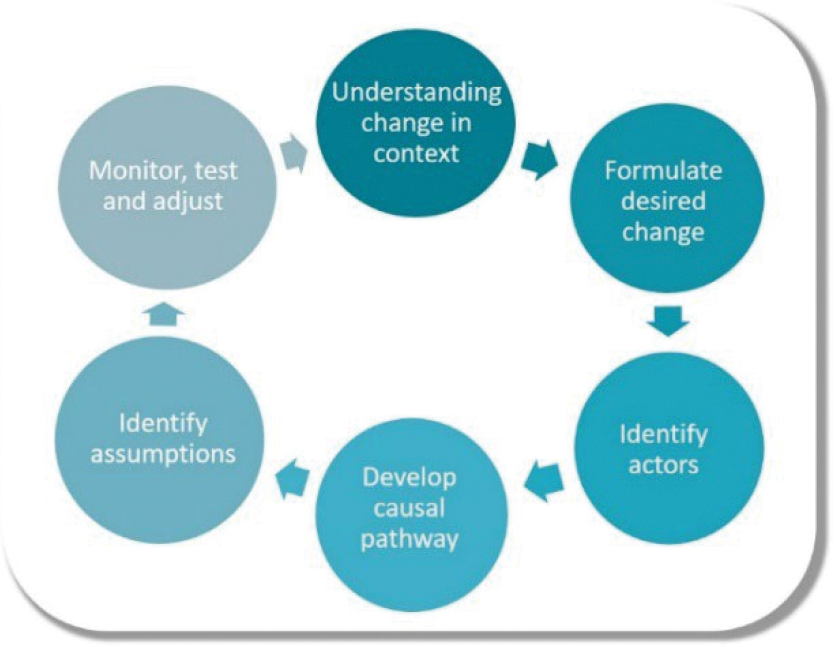
Figure 1: Cycle of reflection behind the Impact Plan Approach
There are two parts (see Figure 249):
• Within the Problem Analysis project partners as well as stakeholders are asked to jointly explore which (and whose) problem is being tackled and how the desired change is perceived to happen through R&I efforts. The Problem Analysis starts by clearly defining the societal problem and the desired impact. Next, the causes for this problem are discussed and the knowledge gaps identified. This part should form a logical chain to the project, hypotheses, methodology and work plan.
• The Impact Pathway is the visualisation of the change process as described in the Theory of Change following from project execution. It makes explicit how the R&I activities will lead to results or insights (output), and how exchange of knowledge and the uptake of research output and innovations will contribute to desired changes in behaviour, relationships, actions and activities of partners and stakeholders (outcome) that are considered essential to achieving the desired impact.
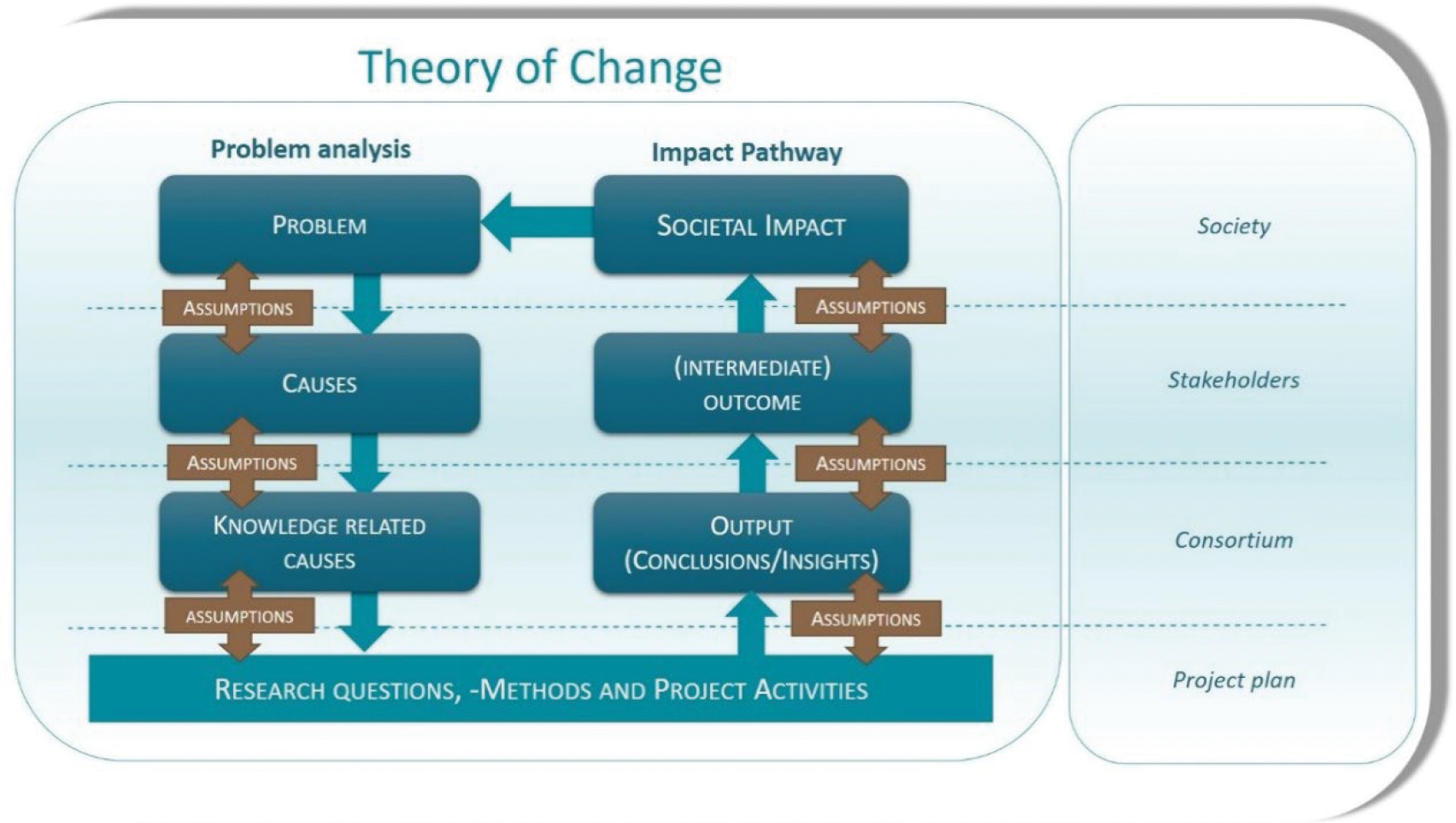
Figure 2: Schematic representation of the Theory of Change
|
R&I outputs relate to the direct and immediate insights obtained by a project or programme. |
|
R&I outcomes relate to the changes in behaviour, relationships, actions, or activities of stakeholders as a result of sharing and uptake of research and innovation. This starts during the project but continues after the end of the project. |
|
R&I impact is defined as changes in economic, environmental and social conditions that a project or programme is aiming at. The actual impact is often appearing long after the project ends. |
Any projections on expected change will be based on multiple assumptions; these assumptions will differ from project to project and between persons as well as over time. Documenting these assumptions already in the proposal helps to create shared vision and allows for reflection on whether and how expected pathways to impact remain adequate or need adjustment. This is why a Theory of Change is not fixed, but set to evolve along the project lifetime, and to be reflected upon continuously throughout the R&I process and beyond. For this reason, it is also used as part of the monitoring, evaluation and learning trajectory.
Moving from output to outcome does not happen automatically. Important points are the productive interactions: exchanges between researchers and stakeholders in which knowledge is produced and valued that is both scientifically robust and socially relevant. No change can be made without exchanging information and people acting on that information! Interactions can be direct / personal, indirect or financial. The quantity as well as quality of the productive interactions form an indicator for the potential for societal impact. Examples of productive interactions are:
• Co-design: formulation of R&I questions and approaches jointly with researchers, stakeholders and potential end-users (i.e. practitioners, policy makers, industry etc.).
• Co-creation: joint execution of R&I projects and interactive dialogue on project results.
A Strategic Activity Planning spells out how the proposed productive interactions contribute to achieving outcomes. Strategies are needed to plan and monitor how the consortium’s efforts will enhance the potential for outcomes. These activities should be given with a timeline covering the phases after the completion of the project as well, demonstrating how the project results will/can be put into practice. Qualitative and quantitative information should also be provided in order to be able to monitor these activities. This planning should include specific activities for:
• Stakeholder engagement: who are the relevant stakeholders to engage with according to context analysis, how are the productive interactions organised and when?
• Communication strategy: how are engagement dialogues organised and results exchanged and translated, and whose responsibility is it?
• Uptake and upscaling of project results: how to enable the application, uptake and potentially upscaling of project results in society and/or food sector?
• Monitoring, Evaluation and Learning: how are results of activities monitored and evaluated, such that assumptions can be tested and activities adjusted accordingly, and whose responsibility is it?
• Capacity strengthening: how are required capacities (of consortium partners and stakeholders) strengthened in order to achieve the outcomes, how is this organised and whose responsibility is it?
• Assessment of co-benefits and trade-offs:what are potential positive as well as negative consequences of the project’s activities? What are the benefits and trade-offs for project partners, stakeholders and other actors? Who might be left out? Are there unexpected effects?
|
Country |
FO |
Contact Person |
|
|---|---|---|---|
|
Austria (AT) |
FWF |
Milojka Gindl Karin Fessl |
milojka.gindl@fwf.ac.at karin.fessl@fwf.ac.at |
|
Belgium (BE) |
F.R.S.-FNRS |
Florence Quist Joël Groeneveld |
international@frs-fnrs.be |
|
Belgium (BE) |
FWO |
Toon Monbaliu Kristien Peeters |
Europe@fwo.be |
|
Belgium (BE) |
SPW |
Cédric Morana Fleur Roland |
cedric.morana@spw.wallonie.be fleur.roland@spw.wallonie.be |
|
Belgium (BE) |
FIO/ VLAIO |
Marianne Claessens Jef Willems |
Marianne.claessens@vlaio.be Jef.willems@vlaio.be |
|
Bulgaria (BG) |
BNSF |
Milena Aleksandrova Yuri Kalvachev |
aleksandrova@mon.bg kalvachev@mon.bg |
|
Denmark (DK) |
DAFA |
Bettina Heimann GUDP secretariat |
bethei@lbst.dk gudp@fvst.dk |
|
Estonia (EE) |
ETAG |
Laura Peri Margit Suuroja |
laura.peri@etag.ee margit.suuroja@etag.ee |
|
Estonia (EE) |
REM |
Maarja Malm |
Maarja.Malm@agri.ee |
|
Finland (FI) |
MMM |
Suvi Ryynänen |
suvi.ryynanen@gov.fi |
|
Finland (FI) |
BFI |
Pirjo Hakanpää Juha Heinola |
pirjo.hakanpaa@businessfinland.fi juha.heinola@businessfinland.fi |
|
France (FR) |
ANR |
Claude Yven Simon Bourdin |
claude.yven@anr.fr Simon.BOURDIN@anr.fr |
|
Ireland (IE) |
DAFM |
Manuel Lopez Vernaza |
manuel.lopezvernaza@agriculture.gov.ie |
|
Italy (IT) |
MASAF |
Serenella Puliga Giorgia Di Domenico |
s.puliga@masaf.gov.it giorgia.didomenico.ext@masaf.gov.it |
|
Italy (IT) |
PROV.BZ/BO ZEN |
Arianna Vismara |
arianna.vismara@provincia.bz.it ricerca@provincia.bz.it |
|
Lithuania (LT) |
LMT |
Asta Aleksandraviciene |
asta.aleksandraviciene@lmt.lt |
|
Lithuania (LT) |
ZUM |
Simona Bieliauskaite |
simona.bieliauskaite@zum.lt |
|
Norway (NO) |
RCN |
Maan Singh Sidhu Inger Oline Røsvik |
mss@forskningsradet.no ior@rcn.no |
|
Poland (PL) |
NCBR |
Jowita Pawlak |
Jowita.Pawlak@ncbr.gov.pl |
|
Portugal (PT) |
FCT |
Pedro Miguel Ferreira Marta Norton |
pedromiguel.ferreira@fct.pt marta.norton@fct.pt |
|
Romania (RO) |
UEFISCDI |
Adrian Asanica Luciana Bratu Andreea Popa |
adrian.asanica@uefiscdi.ro luciana.bratu@uefiscdi.ro andreea.popa@uefiscdi.ro |
|
Slovakia (SK) |
CVTI-SR |
Martina Slivková Juraj Fukatsch Erika Jankajová |
martina.slivkova@cvtisr.sk juraj.fukatsch@cvtisr.sk erika.jankajova@cvtisr.sk |
|
Slovakia (SK) |
MARD |
Jana Hreňová |
jana.hrenova@land.gov.sk |
|
Spain (ES) |
AEI/ FECYT |
Juan Climent Blasco Manuel Sanchez Blanco |
juan.climent@aei.gob.es era-agro@aei.gob.es |
|
Spain (ES) |
CDTI |
Cristina Gracia |
cristinateresa.gracia@cdti.es partenariadosHE@CDTI.ES |
|
Spain (ES) |
ELIKA |
Mónica de Prado |
mdeprado@elika.eus |
|
Spain (ES) |
Sekuens/ FICYT |
Ana Elena Fernández Floriane Nguyen |
anae@sekuens.es fnguyen@ficyt.es |
|
Sweden (SE) |
VINNOVA |
Camilla Sjörs Erika Ax |
camilla.sjors@vinnova.se erika.ax@vinnova.se |
|
The Netherlands (NL) |
MIN-LVVN |
Scheidegger Nathalie |
n.m.i.scheidegger@minlnv.nl |
|
The Netherlands (NL) |
NWO |
Matilda Nahabedian Jasper Hondelink |
futurefoods@nwo.nl |
|
The Netherlands (NL) |
SIA |
Marcus van Leeuwen Thijs Simons |
Marcus.vanleeuwen@regieorgaan-sia.nl thijs.simons@regieorgaan-sia.nl |
|
Türkiye (TR) |
TAGEM |
Ahmet Budaklıer İlkem Demirkesen Mert |
ahmet.budaklier@tarimorman.gov.tr ilkem.mert@tarimorman.gov.tr |
|
Türkiye (TR) |
TUBITAK |
Merve POLAT Çınar ADALI ÖNER Arif DUYAR |
futurefoods@tubitak.gov.tr |
(not included, available on https://futurefoods.ptj.de/call3-pp)
(not included, available on https://futurefoods.ptj.de/call3-pp)
(not included, available on https://futurefoods.ptj.de/call3-pp)
Data Management is an essential component of success for R&I projects – and Data Management Plans are indispensably linked to this.
Representatives of knowledge institutions, industry, funding agencies and scholarly publishers designed and jointly endorsed a concise and measurable set of principles referred to as “FAIR data principles”. These intend to provide a guideline for the reusability of data holdings. Four foundational principles – findability, accessibility, interoperability and reusability – are a necessity of Data Management. The EC published Guidelines on FAIR Data Management in Horizon Europe: https://horizoneuropencpportal.eu/repository/5b7fcc0e-73da-4e76-8b46-3682a36fa59b
https://horizoneuropencpportal.eu/sites/default/files/2022-09/ore-fair-data-guide.pdf (accessed 30 August 2026)
All applications under this call will have to include a Data Management Plan of max. 1 page (DIN A 4). This plan should mainly focus on how the project partners will manage the research data generated and/or collected during the project, in particular:
• What types of data will the project generate/collect?
• What standards will be used?
• How will this data be exploited and/or shared/made accessible for verification and reuse?
• If data cannot be made available, explain why.
• How will this data be curated and preserved?
• How will the costs for data curation and preservation be covered?
Data Management is an ongoing activity of improvement and adaptation and the Data Management Plan needs to reflect this: The Data Management Plan therefore will have to evolve during the project’s lifetime in order to present the status of the project’s reflections on Data Management.
The Data Management Plan needs to be submitted in the full proposal stage.
Each project should go beyond dissemination and envision how to communicate, reach out and engage relevant stakeholders outside of the project consortium (private and public actors, policy makers, civil society etc.) and the general public. Therefore, a plan for dissemination, communication and exploitation (DEC) of the project and its results has to be described at the Full-Proposal stage This will be taken into account in the evaluation with the aim to increase the quality of the implementation and to achieve greater impact (see also Annex A about the role of communication as strategic activity within the Impact Plan).
Appropriate resources should be dedicated to the dissemination, communication and exploitation activities and the involvement of stakeholders outside of the consortium. Please consult your national/ regional regulations to find out which activities can be supported.
Why is it important for a successful R&I project?
Communication in research and innovation projects refers to the strategic dissemination of project results, objectives, and activities to a wide audience, including stakeholders, policymakers, and the general public. It aims to raise awareness, enhance understanding, and promote the societal impact of the research. Effective communication ensures the project’s relevance and fosters broader engagement and support from relevant stakeholders.
Communication is in addition to ‘dissemination’, which is focused on the production of scientific papers, posters and presentations at scientific congresses, and work with specialist stakeholder groups. Please include both communication and dissemination activities for the entire project duration in your plan.
Communication activities may for example include activities such as development of a website and/or app, media communication programme, social media programme, videos, podcasts, infographics, project literature, creative artwork, exhibition stands, quizzes, games, serious gaming, science fairs, open houses intended for wider audiences, meetings of targeted stakeholders and training for the consortium on aspects of communication. Please consult the national/regional contact person of your respective funding organisation for potential limitations to funding certain communication activities.
What is a Dissemination, Exploitation and Communication (DEC) Plan?
It is a document that demonstrates that a consortium has thought through the rationale, target stakeholders, activities, timescales, budgets and measures including their key performance indicators (KPIs) and means of verification communication and (scientific) dissemination activities. It will be implemented as an integral part of its project plan.
Whilst each DEC Plan will be different, it is likely to consist of:
• a narrative (the rationale/ approach)
• a table which draws together information on priority target stakeholder groups and methods to reach them
• a timetable/GANTT chart
• a budget table with enough detail on each action/activity/product and its delivery
• a table pulling together the agreed key performance indicators or measures of success against each planned activity.
The plan should allow to answer the following questions clearly:
• Who are our priority audiences and why?
• What should the communication lead to?
• What should the priority audiences know, think about and do?
• When is the most appropriate time to engage with each audience and why?
• What should we always say and highlight when we communicate?
• Does the message differ for different target groups?
• How do the Communication and Dissemination actions create synergy with the rest of the project plan?
• How do we justify the budget allocated to each of our proposed communications actions?
• How are we splitting responsibility for the resources and actions across the consortium?
For FutureFoodS the expected requirements of the Dissemination, Exploitation and Communication (DEC) Plan are:
• A maximum two A4 page document
• A narrative on approach/rationale/contribution to the project
• A list of priority stakeholders, messages, actions & timetable
• Key Performance Indicators (KPIs) and means of verification
Please consider that all project partners must give proper reference to the FutureFoodS Partnership in any documentation published (in written, oral or electronic form). Please consult the national contact person of your respective funding agency for potential instructions on reference to funding sources.
There are possibilities to get support and advice for your DEC plan, for example:
• https://rea.ec.europa.eu/dissemination-and-exploitation_en (accessed: 30 August 2026)
• https://op.europa.eu/en/publication-detail/-/publication/3bb7278e-ebf3-11e9-9c4e-01aa75ed71a1 (accessed: 30 August 2026)
• https://webgate.ec.europa.eu/funding-tenders-opportunities/pages/viewpage.action?pageId=1867972 (accessed: 30 August 2026)
• https://ec.europa.eu/info/funding-tenders/opportunities/docs/2021-2027/horizon/guidance/programme-guide_horizon_en.pdf (accessed: 30 August 2026)
|
IMPORTANT: This FutureFoodS call is an external and open call! You can join and either apply for funding or take part as self-funded partner (associated partner). To apply for funding please check your eligibility with the involved Funding Organisations (see Annex I: National/ Regional Regulations). |
|
This Annex (Annex H) only lists those organisations which are also consortium partners within FutureFoodS and are also allowed to apply for the call. This Annex is mandatory and has relevance for Conflict of interest. |
|
Country |
Beneficiary Acronym |
Beneficiary Full Name |
|---|---|---|
|
Austria (AT) |
AGES |
Östereichische Agentur für Gesundheit und Ernährungssicherheit GMBH |
|
Belgium (BE) |
EV-ILVO |
Eigen Vermogen van het Institut voor Landbouw- en Visserijonderzoek |
|
Belgium (BE) |
FF |
Flanders’ Food |
|
Belgium |
WAG |
WAGRALIM |
|
Bulgaria (BG) |
UFT |
University of Food Technologies |
|
Bulgaria (BG) |
AUP |
Agraren Universiteit – Plovdiv |
|
Croatia (HR) |
PTFOS |
Sveuciliste Josipa Jurja Strossmeyra u Osijeku, Prehrambeno-Tehnoloski Fakultet Osijek |
|
Croatia (HR) |
FFTB |
UNIVERSITY OF ZAGREB – FACULTY OF FOOD TECHNOLOGY – UZAG PBF |
|
Denmark (DK) |
AU |
Aarhus Universitet |
|
Denmark (DK) |
RUC |
ROSKILDE UNIVERSITET |
|
Finland (FI) |
UH |
HELSINGIN YLIOPISTO |
|
Finland (FI) |
SeAMK |
Seinajoen Ammattikorkeakoulu Oy |
|
Finland (FI) |
LUKE |
Luonnonvarakeskus |
|
Finland (FI) |
FFA |
RUOKAVIRASTO |
|
France (FR) |
INRAE |
Institut National de Recherche pour l’Agriculture, l’Alimentation et l’Environnement |
|
France (FR) |
ACTIA |
Association de Coordination Technique pour l’Industrie Agroalimentaire |
|
France (FR) |
CIRAD |
Centre de Coopération Internationale en Recherche Agronomique pour le Développement |
|
Georgia (GE) |
SLA |
Lepl State Laboratory of Agriculture – SLA |
|
Germany (DE) |
FZJ |
Forschungszentrum Juelich GMBH |
|
Germany (DE) |
BfR |
Bundesinstitut für Risikobewertung |
|
Germany (DE) |
ATB |
Leibniz-Institut für Agrartechnik und Bioökonomie e.V. |
|
Germany (DE) |
MRI |
MAX RUBNER INSTITUT BUNDESFORSCHUNGSINSTITUT FUR ERNAEHRUNG UND LEBENSMITTEL |
|
Germany (DE) |
HSO |
STIFTUNG FACHHOCHSCHULE OSNABRUCK |
|
Greece (EL) |
EA |
Ellinogermaniki Agogi Scholi Panagea Savva AE |
|
Hungary (HU) |
CTRIA |
Kdriu Kozep- Dunantuli Regionalis Innovacios Ugynikseg Nonprofit KFT |
|
Hungary (HU) |
FoodHub |
Foodhub.HU Termeloi Agrar Szolgaltato Nonprofit Zarkoruen Mukodo Reszvenytarsasag |
|
Ireland (IE) |
TEAGASC |
TEAGASC – Agriculture and Food Development Authority |
|
Italy (IT) |
UNITO |
Universita degli Studi di Torino |
|
Italy (IT) |
CREA |
Consoglio per la Ricerca in Agricoltura e L’Analisi Dell’Economia Agraria |
|
Italy (IT) |
UNIFI |
Universita degli Studi di Firenze |
|
Italy (IT) |
UNIPI |
UNIVERSITA DI PISA |
|
Italy (IT) |
UNITE-BIOS |
UNIVERSITA DEGLI STUDI DI TERAMO |
|
Italy (IT) |
UniUd |
Universita degli Studi di Udine |
|
North Macedonia (MK) |
IJZRSM |
J.Z.U. Institut za Javno Zdravje Na Republika Severna Makedonija Skopje |
|
Norway (NO) |
IMR |
HAVFORSKNINGSINSTITUTTET |
|
Poland (PL) |
PAS |
Instytut Rozrodu Zwierzat i Badan Zywnosci Polskiej Akademii Nauk |
|
Poland (PL) |
IRWIR PAN |
INSTYTUT ROZWOJU WSI I ROLNICTWA POLSKIEJ AKADEMII NAUK |
|
Portugal (PT) |
CISAS |
Instituto Politecnico de Viana de Castelo |
|
Portugal (PT) |
IPC |
INSTITUTO POLITECNICO DE COIMBRA |
|
Portugal (PT) |
UTAD |
Universidade de Tras-Os-Montes e Alto Douro |
|
Portugal (PT) |
INSA |
INSTITUTO NACIONAL DE SAUDE DR. RICARDO JORGE |
|
Portugal (PT) |
INIAV |
Instituto Nacional e Investigacao Agraria e Veterinaria |
|
Romania (RO) |
IRCEM |
Asociatia Institutul Pentru Cercetare in Economie Circulara si Mediu Ernest Lupan Ircem |
|
Romania (RO) |
IBA |
Institutul National de Cercetare – Dezvoltare Pentru Bioresurse Alimentare |
|
Serbia (RS) |
CENM-IMR |
Institut za Medicinska Istra Ivanja |
|
Slovenia (SI) |
UL-BF |
Univerza v Ljubljani |
|
Slovenia (SI) |
JSI |
Institut Jozef Stefan |
|
Spain (ES) |
CSIC |
Agenca Estatal Consejo Superior de Investigaciones Cientificas |
|
The Netherlands (NL) |
WR |
Stichting Wageningen Research |
|
The Netherlands (NL) |
RIVM |
Rijksinstituut voor Volksgezondheid en Milieu |
|
Türkiye (TR) |
TAGEM |
Tarimsal Arastirmalar ve Politikalar Genel Müdürlügü |
|
Türkiye (TR) |
TÜBITAK |
Türkiye Bilimsel ve Teknolojik Arastirma Kurumu |
|
Türkiye (TR) |
IZU |
Istanbul Sabahattin Zaim Universitesi |
Please note: the attached Dutch national/regional regulations are only for NWO and Taskforce for Applied Research SIA.
For the full Annex I of the FutureFoodS call please visit: https://futurefoods.ptj.de
Nederlandse Organisatie voor Wetenschappelijk Onderzoek
Funding Program: FutureFoodS (NWO)
|
Name |
|
Phone |
|---|---|---|
|
Matilda Nahabedian |
futurefoods@nwo.nl |
+31703440786 |
|
Jasper Hondelink |
futurefoods@nwo.nl |
+31703494795 |
|
Indicative budget |
€ 2,000,000 for the full Call for proposals |
|||||||||
|
Maximum funding per project |
€ 400,000 |
|||||||||
|
Project duration |
Min. 24 months |
Max. 36 months |
||||||||
|
Project types to be funded: |
||||||||||
|
Exploratory Research |
Accelerating Innovation |
|||||||||
|
Yes |
No |
|||||||||
|
Topics to be funded: |
||||||||||
|
Topic 1 |
Topic 2 |
Topic 3 |
||||||||
|
Yes |
Yes |
Yes |
||||||||
|
Exceptions for funding of the research topics based on your national/regional priorities |
N/A |
|||||||||
|
Link to funding programme and other relevant information |
||||||||||
|
Following partners are eligible for funding: |
||||||||||
|
Universities |
Research institutes |
Non-profit organizations |
Consumer / citizens |
Civil society representatives |
Private companies |
Other |
||||
|
Yes |
Yes |
No |
No |
No |
No |
No |
||||
|
Any additional national/regional rules or documents or information: |
||||||||||
|
Please note: Researchers based in the Kingdom of the Netherlands who are interested to apply for funding in this Call for proposals, are recommended to carefully read the national annexes for the three participating Dutch funders: the Dutch Research Council (NWO), Taskforce for Applied Research SIA, and the Ministry of Agriculture, Fisheries, Food Security and Nature (LVVN). Please contact the relevant contact points in case of questions or to verify which Dutch funder one should apply to. Who may apply? An application for funding from NWO may consider the following roles: – National main applicant (mandatory): the applicant who leads the application to NWO and is the foreseen national project leader, in case a project is granted. – National co-applicant (optional): national applicants in addition to the national main applicant with an active role and responsibility in realising the project and requesting funding from NWO. A researcher may only request NWO funding for one project (part of a European consortium) in this Call for proposals, either as national main applicant or national co-applicant within an application for NWO funding. National main applicant To be eligible to submit a proposal, researchers must be employed for an indefinite period (with the associated employment contract) or have a tenure track agreement at any of the following research organisations: – universities as referred to in paragraphs a, b, h and j, of the Annex to the Higher Education and Scientific Research Act (WHW; Wet op het hoger onderwijs en wetenschappelijk onderzoek) and universities listed in the Policy Rules for Universities located in the Kingdom of the Netherlands – university medical centres as described in Article 1.13 paragraph 1 of the Higher Education and Scientific Research Act; – KNAW institutes and NWO institutes; – Netherlands Cancer Institute; – the Max Planck Institute for Psycholinguistics in Nijmegen; – Naturalis Biodiversity Center; – Advanced Research Centre for NanoLithography (ARCNL); – Princess Máxima Center. |
||||||||||
|
Individuals with a zero-hour or fixed term employment (other than a tenure track appointment) cannot submit a proposal. Applicants with a part-time appointment must ensure adequate supervision of the project and all project members for whom funding is requested. It may be that the national applicant’s tenure track employment contract ends before the intended completion date of the project for which grant funding is being requested, or that the national applicant’s tenure agreement ends before this date due to their reaching retirement age. In such cases, the proposal must include a statement from the employer. In this statement, the research organisation in question guarantees that the project and all project members for whom funding is being requested will receive adequate supervision for the full duration of the project. National co-applicants All requirements regarding the employment contract described under ‘National main applicant’, also apply to national co-applicants. National co-applicants must be affiliated with: 1) a research organisation eligible as a national main applicant (see above) or; 2) a university of applied sciences, as referred to in Article 1.8, subsection 1 of the WHW or; 3) a TO2-institute1; 4) other research organisations as described in Article 1.1, paragraph 4 of the NWO Grant Rules 2024 that comply with the following cumulative conditions. The organisation must: – be established in the Netherlands; – be a foundation, organisation or legal entity established and governed by public law (in Dutch: publiekrechtelijke rechtspersoon) (all other legal forms, including private and public limited companies, are excluded); – have as its primary goal the independent conduct of its own fundamental research, industrial research or experimental development independently or widely disseminating the results of those activities through teaching, publications or knowledge transfer; – be able to state that the organisation keeps separate accounts with regard to economic/non-economic activities and that undertakings with decisive influence on the organisation do not enjoy preferential access to the organisation’s results. Note: Prior to submission of a pre-proposal NWO will assess whether an organisation complies with Article 1.1, paragraph 4 of the NWO Grant Rules 2024 and is thus eligible to participate as national co-applicant based on the above conditions. This assessment also helps to ensure NWO’s compliance with regulations prohibiting state aid. To enable the assessment to be carried out, the intended national co-applicant’s organisation must submit the following documents by email to futurefoods@nwo.nlno later than 21 working days before the submission deadline of the pre-proposal (i.e. by 11 December 2026, 13:00:00 CET): – a recent extract from the Netherlands Chamber of Commerce; – a deed of incorporation or current articles of association; – the most recently available annual accounts accompanied by an audit statement2; – a completed Research Organisation Statement, wich is available on the funding page of this Call for proposals. These documents must be provided in English or in Dutch. Other relevant documentation may be included. NWO may request additional information if the above documents do not allow for adequate determination of the organisation’s eligibility to act as a co-applicant. If in a full proposal national co-applicants are added to the consortium who are not affiliated with any of the research organisations listed above, these new national co-applicants must be assessed based on the same conditions. Again, the intended national co-applicant’s organisation must submit at least the above-mentioned documents by email no later than 21 working days before the submission deadline of the full proposal (i.e. by 30 May 2027, 13:00:00 CEST) If the intended national co-applicant’s organisation has already been assessed and found to comply with these conditions as part of a different NWO programme, please contact NWO at the above email address well before the applicable deadline to determine whether further assessment is necessary. If the intended national co-applicant’s organisation fails to submit the documents required for assessment on time, NWO will not accept the organisation as national co-applicant. If a research organisation was already assessed and approved as a national co-applicant for this Call for proposals prior to submitting the pre-proposal, there is no need to have it assessed again for the submission of the full proposal. The available budget modules are: 1. Personnel: Salary costs can be claimed for the following positions: 1.1 Postdoc: at least 1 position, for at least 12 months, for at least 0.5 fte, according to UNL or UMCNL rates, a benchfee is available; 1.2 Non-scientific personnel (NWP): according to UNL or UMCNL rates; 1.3 Research leave: max. 10% of the grant amount, according to UNL or UMCNL rates. 1.4 For national co-applicants: personnel at universities of applied sciences, TO2 institutes and other organisations: using the Government Tariff Manual (HOT), Table 2, under 2.2 ‘average total salary cost per salary scale’, column ‘Hourly rate productive hours, excluding VAT’ 2. Materials: For project-specific material costs, up to 25% of the grant amount. Subsequently, up to 50% of the material budget can be used for work by third parties. Engagement of students may be included here according to the usual internship fee or HOT rates.3 3. Knowledge utilisation: For activities that promote the use of knowledge from the research, mandatory and at most 20% of the grant amount. 4. Project management: Up to 5% of the grant amount. It is recommended to use the NWO budget template in the pre-proposal stage to confirm eligibility of budget items. For full proposals, it is mandatory to submit the NWO budget form for the funding requested at NWO at the time of the transnational deadline. Please submit it to futurefoods@nwo.nl. Please note the following: – An application for NWO funding has one national main applicant, responsible for research and financial management. National co-applicants within an application for NWO funding are allowed. – Researchers employed at a university in the Kingdom of the Netherlands, umc or a research organisation, as referred to in Article 1.1, first paragraph, subparagraphs c to h of the NWO Grant Rules 2024 may not apply for a scientific or post-doc position for themselves. – PhD positions cannot be applied for in this call, due to the maximum project duration of 3 years. – Overhead costs are not eligible for NWO funding. A detailed “Explanation of budget modules and indexing” can be found on the NWO funding page of this Call for proposals. Do not hesitate to contact the national contact point in case of questions. |
||||||||||
|
Further information The NWO Grant Rules 2024 and the Approval of Funding for Scientific Research are applicable to all applications for NWO funding. Any arrangements made regarding the grant from NWO must comply with the NWO Grant Rules 2024 and the European legislation on state aid. Once proposals are recommended for funding on a transnational level, the consortia will be notified by the Call Office of FutureFoodS and subsequently, the national granting process will be initiated by NWO. Under the Dutch General Administrative Law Act, any interested party has the right to lodge an objection to the decision taken by NWO within six weeks of the date of the decision letter. Further information about the objections procedure can be found on the NWO website: https://www.nwo.nl/en/lodging-an-objection. NWO will, if necessary, apply a one-off indexation of personnel costs when awarding a grant. The current UNL/UMCNL/HOT rate on the national decision date applies. Please refer to the “Explanation of budget modules and indexing” on the NWO funding page, for more information on indexing. As stipulated in the NWO Grant Rules, Article 3.2, paragraph 2, the project cannot start until the conditions set out in the grant award decision regarding the start of the project are met. Please note, these conditions will include a signed Consortium agreement by all partners in the transnational project. Submission of financial and scientific reports at national level is required in accordance with the rules of NWO. Granted consortia will be informed in due time. |
||||||||||
No audit report is necessary for organisations not legally required to have their annual accounts audited. However, such organisations must be able to provide proof of exemption from this legal requirement.
All activities included in this budget module must fit the European Commission definition of ‘knowledge transfer activities’ in the State aid framework for research and development and innovation (OJ 2022, C 414).
Funding Program: www.regieorgaan-sia.nl/ffs
|
Name |
|
Phone |
|---|---|---|
|
Marcus van Leeuwen |
Marcus.vanleeuwen@regieorgaan-sia.nl |
06 – 12 25 32 27 |
|
Thijs Simons |
thijs.simons@regieorgaan-sia.nl |
06 – 83 25 91 52 |
|
Indicative budget |
€ 900.000 for the call |
||||||
|
Maximum funding per project |
€ 300.000 if Dutch university of applied sciences is co-applicant in the transnational project € 325.000 if Dutch university of applied sciences is main applicant, coordinator of the transnational project. |
||||||
|
Project duration |
Min. 18 months |
Max. 36 months |
|||||
|
Project types to be funded |
|||||||
|
Exploratory Research |
Accelerating Innovation |
||||||
|
Yes |
Yes |
||||||
|
Topics to be funded: |
|||||||
|
Topic 1 |
Topic 2 |
Topic 3 |
|||||
|
Yes |
Yes |
Yes |
|||||
|
Exceptions for funding of the research topics based on your national priorities |
No exceptions |
||||||
|
Link to funding programme and other relevant information |
|||||||
|
Following partners are eligible for funding: |
|||||||
|
Universities |
Universiti es of applied sciences |
Research institutes |
Non-profit legal entities |
SMEs |
Large enterpris es |
Public bodies |
Other |
|
Yes, as cooperation partner |
Yes, as main applicant |
Yes, as cooperation partner |
Yes, as cooperation partner |
Yes, as cooperation partner |
No |
Yes, as cooperation partner |
Yes, as cooperation partner |
|
Any additional national/regional rules or documents or information: |
|||||||
|
Eligibility of a partner as a beneficiary institution National main applicant: Only Universities of applied sciences as referred to in Article 1.8 and paragraph g, of the annex to the Dutch Higher Education and Research Act (Wet op het hoger onderwijs en wetenschappelijk onderzoek, WHW), can act as national main applicant. The national main applicant is the applicant who leads the application to SIA and is the foreseen national project leader, in case a project is granted. Consortium partner receiving funding: other partners (than UAS), like SMEs, public authorities and/or NGO’s based in The Netherlands may be funded within the project, but only as consortium partner of the Dutch University of applied sciences. Large enterprises may not receive funding as a consortium partner. For Dutch research organisations other than UAS, please refer to the annex provided by NWO or the ministry of Agriculture, Fisheries, Food Security and Nature (LVVN). Additional eligibility criteria for SIA The board of the UAS has to be informed about the submission of this proposal and needs to agree with its content. Participation of a cooperation partner based in The Netherlands in the transnational consortium is mandatory. A minimum of 10% in-kind contribution of the requested subsidy, by the UAS or its partners based in the Netherlands, is required. At the full proposal phase, it is required to attach a SIA financial details form to the application (similar to RAAK-Publiek). This form will be available via www.regieorgaan-sia.nl/ffs. As a researcher, you may only be involved as Principal Investigator (PI) for your University of Applied Sciences once in this Call for proposals. All funded consortium partners, meaning consortium partners that are to receive subsidy from SIA through the main applicant are subject to the de minimis regulation (Regulation (EU) no. 1407/2013 of the European Commission of 18 December 2013), unless they classify as a research organisation as defined in article 1.1, paragraphs 1 and 4, of the NWO Grant Rules 2024. Based on the de minimis regulation, consortium partners may receive a maximum of € 300,000 in government support over a period of three years. By completing the de minimis statement, consortium partners declare that in the event of the award of a grant by SIA, they will not exceed the de minimis threshold. If a consortium partner finds that the de minimis threshold will be exceeded with the grant from SIA (and other possible de minimis aid), this consortium partner cannot receive funding from SIA through the main applicant. The main applicant must take this into account when drawing up the application budget and must therefore check for each funded consortium partner whether the subsidy amount applied for does not exceed the de minimis threshold. The de minimis statement, completed separately by each consortium partner, forms part of the full proposal. Eligible costs Funding for Universities of Applied Sciences: no limit on number of positions. Cooperation partners like SMEs, public authorities and/or NGOs based in the Netherlands may be funded within the project. Large Enterprises cannot be funded. Personnel Funding for Universities of Applied Sciences: no limit on number of positions, rates based on the most recent version of Handleiding Overheidstarieven (HOT), Table 2 under 2.2 “Gemiddelde totale kosten per salarisschaal CAO Rijk”, column “Uurtarief productieve uren, ex btw”, costs for the participation of students and material costs. The most recent HOT tariffs must be applied for the entire duration of the project. Higher tariffs than HOT are not allowed. Other partners (than UAS), like SMEs, public authorities and/or NGO’s based in The Netherlands may be funded within the project. For other educational institutions, TO2 institutions, governments and other government-funded institutions, the same rates apply as for universities of applied sciences. For organisations that do not use a comparable collective agreement (cao), the following salary scales from HOT table 2 under 2.2, columns productive hours apply. Project assistant scale 6. Junior scale 10. Medior scale 12. Senior scale 13. Director scale 16. In total the maximum allowed funding for other consortium partners, excluding the universities of applied sciences, is 25% of the funding by SIA. Participation of students It is allowed for students, connected to the university of applied sciences, to work within the project. If the students contribute as part of their curriculum, the rate according to the usual internship fee of the college or university applies. For students employed as student assistants, the rate according to Handbook of Government Rates (HOT), Table 2 under 2.2 “Gemiddelde totale kosten per salarisschaal CAO Rijk”, column “Uurtarief productieve uren, ex btw”, scale 1, applies. Material Costs Material costs include consumables, test setups, open access publications, hiring third parties, citizen science, (inter)national travel and accommodation costs (economy class), access to major (inter)national facilities and costs for permits, software licenses, conferences, fieldwork, guest researchers and data management. Not eligible are costs that fall under organizational infrastructure and overhead, such as a fully functioning workstation, office automation, depreciation other than those mentioned above, housing, insurance, administration and provisions for archiving. Investments It is possible to claim costs for investments in equipment, infrastructure and other research resources that retain economic value or can be reused after the project has ended. Labour costs for staff who prepare the equipment, infrastructure and other research resources for use are not considered part of the investment. Only the depreciation costs of investments are eligible for funding. Depreciation rates are calculated based on the purchase price excluding financing costs, a straight-line depreciation method and an actual useful life. Depreciation costs relating to investments made abroad cannot be claimed. A maximum of 20% of the subsidy amount can be budgeted for investment costs. In-kind contribution A minimum in-kind contribution of 20% is required. The in-kind contribution may be delivered by the UAS or its Dutch partners. The in-kind contribution may exist of either personnel or material costs. Additional information The NWO Grant Rules 2.024 are applicable to the part of the project’s budget covered by Regieorgaan SIA. Under the Dutch General Administrative Law Act, any interested party has the right to lodge an objection to the decision taken by Regieorgaan SIA, within six weeks of the date of the decision letter. Further information about the objections procedure can be found on the SIA website https://regieorgaan-sia.nl/financiering/bezwaar-maken/. |
|||||||
|
Do not hesitate to contact the national contact person in case of questions. |
|||||||
|
Organisation type |
Basic research |
Applied Research |
Experimental development/ Innovation |
|---|---|---|---|
|
Large Enterprises |
N/A |
N/A |
N/A |
|
Medium Enterprises |
N/A |
100% |
100% |
|
Small Enterprises |
N/A |
100% |
100% |
|
Universities, public research organisations |
N/A |
100% |
100% |
|
Public authorities |
N/A |
100% |
100% |
|
Associations without economic activities, NGOs |
N/A |
100% |
100% |
Rockström, J., Steffen, W., Noone, K., Persson, Å., Chapin, F. S., Lambin, E. F., ... & Foley, J. A. (2009). A safe operating space for humanity. Nature, 461 (7263), 472–475
Sustainable healthy diets, Guiding principles: https://openknowledge.fao.org/handle/20.500.14283/ca6640en
European Commission: Directorate-General for Research and Innovation and Group of Chief Scientific Advisors, Towards a sustainable food system – Moving from food as a commodity to food as more of a common good – Independent expert report, Publications Office, 2020, https://data.europa.eu/doi/10.2777/282386
FutureFoodS SRIA, cited from: Halberg, N. & Westhoek, H. 2019. SCAR SWG Food systems Policy Brief: The added value of a Food Systems Approach in Research and Innovation? European Union Publication. ISBN 978-92-76-08794-6.
a theory of change is a conceptual model for planning R&I activities that makes explicit key assumptions that underpin the realisation of a long-term goal and anticipate the effects of a desired outcome/change
Determinants of food choices are context-specific (European Commission, 2022) scoping-paper_sustainable-food-consumption.pdf (europa.eu)
Further info can be found here: https://km4djournal.org/index.php/km4dj/article/view/170; https://www.nwo.nl/en/knowledge-platform-for-interdisciplinary-and-transdisciplinary-research#background-information
Please consult the eligibility guidelines of your national/ regional funding organisation to ensure what activities/ which actors can be supported
Sustainable Food Systems Partnership for People, Planet and Climate: STRATEGIC RESEARCH AND INNOVATION AGENDA: https://static1.squarespace.com/static/66bcb49cbff345337f6a3ded/t/693692db6d6d11238d1ffda7/1765184219526/DELIVERABLE+2.1+DRAFT+SRIA+1.0.pdf
SRIA mentions: Farm to Fork strategy, the Dutch Food Agenda, France’s National Strategy for Food, Nutrition and Climate (SNANC), and Scotland’s Good Food Nation policy.
SRIA section 6.3.2, Knowledge Gaps to Be Addressed – Inclusivity and Accessibility in Sustainable Food Systems; and The Influence of large food industry corporation and Market Dynamics.
SRIA section 6.4, R&I Area 4. Change the way we govern; definition follows Fanzo et al. (2021), Food Systems Countdown Initiative, as adopted in the SRIA.
Béné, C. (2026). An Assessment Framework for Food Systems Sustainable Transitions and Transformations. Independent expert report under the RefreSCAR project. Study commissioned by the SCAR Food System Working Group.
Please find more info on the FutureFoodS website: Call 1 Projects – FutureFoodS; the results of Call 2 will be released on the website by mid November 2026
Food value chains: all stages from production through processing, distribution and retail, including the management and recirculation of food, nutrients and by-products to minimize waste, retain value and enhance resource efficiency across the system
European Commission, Joint Research Centre (2024), Sustainability labelling in the EU food sector: current status and coverage of sustainability aspects: https://publications.jrc.ec.europa.eu/repository/handle/JRC134427
Living Labs are practice-driven organisations that facilitate and foster open, collaborative innovation and real-life environments or arenas where both open innovation and user innovation processes can be studied and subject to experiments and where new solutions are developed (EnoLL, 2022)
SRIA section 6.3.2, Area 3/Pillar 2 Getting everyone on board. Short food supply chains are characterised by a limited number of intermediaries between producers and consumers.
Life-Cycle-Assessment methods are used to measure and communicate the life-cycle environmental performance of products and organisations, in line with EU’s Environmental Footprint framework (European Recommendation of 16 December 2021)
SRIA section 6.3.2, Pillar 3.2. Getting everyone on board, p. 70, cross-referenced from the supply pillar’s own knowledge gaps in section 6.2.2, p. 63.
Food democracy: The need for “greater access and collective benefit from the food system” (Lang, 1999).
SRIA section 6.1.2 Area 1/ Pillar 2 Domestic food practices for enhancing sustainable and healthy diets
Living Labs are practice-driven organisations that facilitate and foster open, collaborative innovation and real-life environments or arenas where both open innovation and user innovation processes can be studied and subject to experiments and where new solutions are developed (EnoLL, 2022).
SRIA section 6.1.2 Area 1/ Pillar 2 Domestic food practices for enhancing sustainable and healthy diets
In case of countries with more than one national/regional FO, the applicants may need to select (during application phase) the one to which they are requesting funding. For this selection they will need to check concrete requirements of the respective FO in Annex I “National/Regional regulations”.
eur-lex.europa.eu/legal-content/EN/TXT/PDF/?uri=CONSIL:ST_13568_2026_COR_1&qid=1792063469801
Guidance Note – Ethics and Food-Related Research: https://ec.europa.eu/research/participants/data/ref/fp7/89847/research-food_en.pdf (accessed: 9 February 2024)
https://ec.europa.eu/info/funding-tenders/opportunities/docs/2021-2027/common/guidance/aga_en.pdf
Source of Figures: NWO website: https://impact.nwo.nl/en/working-with-an-impact-plan/theory-societal-impact-and-the-route-to-it
Source of Figures: NWO website: https://impact.nwo.nl/en/working-with-an-impact-plan/theory-societal-impact-and-the-route-to-it
Kopieer de link naar uw clipboard
https://zoek.officielebekendmakingen.nl/stcrt-2026-39580.html
De hier aangeboden pdf-bestanden van het Staatsblad, Staatscourant, Tractatenblad, provinciaal blad, gemeenteblad, waterschapsblad en blad gemeenschappelijke regeling vormen de formele bekendmakingen in de zin van de Bekendmakingswet en de Rijkswet goedkeuring en bekendmaking verdragen voor zover ze na 1 juli 2009 zijn uitgegeven. Voor pdf-publicaties van vóór deze datum geldt dat alleen de in papieren vorm uitgegeven bladen formele status hebben; de hier aangeboden elektronische versies daarvan worden bij wijze van service aangeboden.
 Authentieke versie (PDF)
 Informatie
 Printen
 Delen