Staatscourant van het Koninkrijk der Nederlanden
| Datum publicatie | Organisatie | Jaargang en nummer | Rubriek |
|---|---|---|---|
| Nederlandse Organisatie voor Wetenschappelijk Onderzoek | Staatscourant 2026, 25829 | overige overheidsinformatie |

U bent nu hier: Publicaties Officiële publicaties
Zoals vergunningen, bouwplannen en lokale regelgeving.
Zoals belastingen, uitkeringen en subsidies.
Officiële publicaties van de overheid.
Adressen en contactpersonen van overheidsorganisaties.
2026-06-04
The Clean Energy Transition Partnership is a transnational joint programming initiative to boost and accelerate the energy transition, building upon regional and national RDI funding programmes. The initiative is receiving funding from the European Union’s research and innovation programme “Horizon Europe” under grant agreement No 101069750.
|
DEFINITIONS |
|
|
1. |
OVERVIEW |
|
1.1. |
This Call document |
|
1.2. |
The Call |
|
1.3. |
Call process in brief |
|
2. |
AIM, CHALLENGES AND SCOPE OF THE CALL |
|
2.1. |
Aim and expected impacts |
|
2.1.1 |
Aim |
|
2.1.2 |
Expected impacts |
|
2.1.3 |
Approach |
|
2.2. |
Challenges |
|
2.3. |
Scope |
|
2.3.1 |
Cross-cutting dimensions |
|
2.3.2 |
Dimensions of innovation |
|
2.3.3 |
Knowledge management |
|
2.3.4 |
Impact and exploitation maximisation |
|
2.3.5 |
Communication and dissemination |
|
2.3.6 |
Open science |
|
2.3.7 |
Gender dimension |
|
2.3.8 |
Ethics |
|
2.3.9 |
Do No Significant Harm (DNSH) |
|
2.3.10 |
Use of generative artificial intelligence (AI) tools |
|
2.4. |
Expected outcomes of Projects |
|
3. |
REQUIREMENTS AND GUIDELINES |
|
3.1. |
Proposal submission |
|
3.2. |
Project Consortium Partners |
|
3.3. |
Project duration and budget |
|
3.4. |
Research, development and innovation (RDI) approaches / Technology Readiness Levels (TRLs) |
|
3.5. |
Reporting and Knowledge Community work package |
|
4. |
EVALUATION CRITERIA |
|
4.1. |
Excellence |
|
4.2. |
Impact |
|
4.3. |
Quality and efficiency of the implementation |
|
4.4. |
Scoring and thresholds |
|
5. |
CALL PROCESS |
|
5.1. |
Stage 1 (Pre-Proposal stage) |
|
5.1.1 |
Submission of Pre-Proposals |
|
5.1.2 |
Eligibility check of Pre-Proposals |
|
5.1.3 |
Evaluation of Pre-Proposals |
|
5.1.4 |
Selection of Pre-Proposals |
|
5.2. |
Stage 2 (Full Proposal stage) |
|
5.2.1 |
Submission of Full Proposal |
|
5.2.2 |
Eligibility check of Full Proposals |
|
5.2.3 |
Evaluation of Full Proposals |
|
5.2.4 |
Selection of Full Proposals |
|
5.3. |
Redress |
|
5.3.1 |
Admissibility check of requests |
|
5.3.2 |
Examination of requests |
|
6. |
PROJECT IMPLEMENTATION |
|
6.1. |
Funding arrangements and Project duration |
|
6.2. |
Consortium Agreement (CA) |
|
6.3. |
Changes during Project implementation |
|
6.4. |
Reporting and Knowledge Community participation |
|
6.5. |
Communication and dissemination |
|
6.6. |
Gender Equality Plans (GEPs) |
|
7. |
CALL MODULES |
|
CM2026-01 Integrated energy system resilience in a changing environment |
|
|
Aim and expected impacts |
|
|
Challenges |
|
|
Scope |
|
|
Expected outcomes of Projects |
|
|
CM2026-02 Energy system flexibility in a high renewable energy sources (RES) scenario: energy generation, storage and system integration |
|
|
Aim and expected impacts |
|
|
Challenges |
|
|
Scope |
|
|
Expected outcomes of Projects |
|
|
CM2026-03A/03B Advanced renewable energy (RE) technologies for power production |
|
|
Aim and expected impacts |
|
|
Challenges |
|
|
Scope |
|
|
Expected outcomes of Projects |
|
|
CM2026-04 Industrial carbon management |
|
|
Aim and expected impacts |
|
|
Challenges |
|
|
Scope |
|
|
Expected outcomes of Projects |
|
|
CM2026-05 Hydrogen and renewable fuels |
|
|
Aim and expected impacts |
|
|
Challenges |
|
|
Scope |
|
|
Expected outcomes of Projects |
|
|
CM2026-06 Stationary battery technologies and systems for climate-neutral industry and built environment |
|
|
Aim and expected impacts |
|
|
Challenges |
|
|
Scope |
|
|
Expected outcomes of Projects |
|
|
CM2026-07 Heating and cooling technologies |
|
|
Aim and expected impacts |
|
|
Challenges |
|
|
Scope |
|
|
Expected outcomes of Projects |
|
|
CM2026-08 Integrated Regional Energy Systems |
|
|
Aim and expected impacts |
|
|
Challenges |
|
|
Scope |
|
|
Expected outcomes of Projects |
|
|
CM2026-09 Integrated industrial energy systems |
|
|
Aim and expected impacts |
|
|
Challenges |
|
|
Scope |
|
|
Expected outcomes of Projects |
|
|
CM2026-10 Clean energy integration in the built environment |
|
|
Aim and expected impacts |
|
|
Challenges |
|
|
Scope |
|
|
Expected outcomes of Projects |
|
|
ANNEX A. REPORTING AND KNOWLEDGE COMMUNITY WORK PACKAGE |
|
|
Task 1. Reporting |
|
|
Task 2. Contribution to Knowledge Community co-creation activities |
|
|
ANNEX B. NATIONAL/REGIONAL REQUIREMENTS AND GUIDELINES (TBC) |
|
The following definitions apply throughout this Call and all related documents, unless otherwise explicitly stated.
Call framework
Clean Energy Transition Partnership (CETPartnership) means the partnership under which this Call is implemented.
CETPartnership Joint Call 2026 (Call) means the funding call to which this document applies.
The Call process consists of two stages:
• Stage 1: Pre-Proposal stage; and
• Stage 2: Full Proposal stage.
Eligibility checks, evaluation, and selection are conducted separately at each stage in accordance with the provisions of this Call.
Proposal and Project
Proposal means an application submitted in response to this Call, including all mandatory information and documentation required for eligibility and evaluation. A Proposal describes the planned objectives, activities, methodology, implementation, timeline, budget, and collaboration arrangements of the proposed Project.
The term Proposal covers both:
• the Pre-Proposal submitted in Stage 1; and
• the Full Proposal submitted in Stage 2.
Project means the set of activities approved for funding following the selection of a Proposal under this Call and implemented in accordance with the applicable funding decision and funding agreement(s) concluded between the Beneficiary Partners and the relevant Funding Organisations.
Project implementation means the execution of the Project in accordance with the approved Proposal and the applicable funding agreement(s), including all technical, financial, reporting and compliance obligations of the Beneficiary Partners.
Project Consortium and its members
Project Consortium means the group of legal entities submitting a Proposal under this Call.
Project Consortium Partners are the legal entities forming the Project Consortium. They:
• are assigned specific tasks in the Proposal; and
• shall conclude and sign the Consortium Agreement, if the Proposal is selected for funding.
The Project Consortium may consist of the following Project Consortium Partners:
• Coordinator means the legal entity responsible for the submission and overall coordination of the Proposal and, if selected for funding, for the overall coordination of the Project. The Coordinator shall remain the same between the deadline for submission of the Pre-Proposal in Stage 1 (Subsection 5.1.1) and the funding selection decision in Stage 2 (Subsection 5.2.4). The Coordinator shall be a Beneficiary Partner.
• Beneficiary Partner means a legal entity that applies for funding under this Call and, if selected for funding, receives funding from the relevant Funding Organisation.
Beneficiary Partners shall be legal entities and may include, inter alia:
○ secondary and higher education establishments;
○ research organisations;
○ private for-profit companies;
○ public bodies;
○ other entities, including non-profit organisations.
Eligibility is subject to the applicable national/regional requirements of the Funding Organisation(s).
• Self-financed Partner means a legal entity participating in the Project Consortium without applying for funding under this Call. Its costs are declared but not reimbursed under this Call. Each Self-financed Partner shall submit a Letter of Commitment as part of the Full Proposal in Stage 2 (Subsection 5.2.1).
Project personnel
Each Project Consortium Partner may designate the following persons:
• Principal Investigator (PI), responsible for the implementation of the Project Consortium Partner’s activities under the Project;
• Team Members, contributing to the implementation of the Project under the Project Consortium Partner’s responsibility.
Stakeholders
Stakeholder means an entity that has an interest in, or influence on, the Project. A Stakeholder may contribute to, benefit from, or influence the uptake and implementation of Project results.
Stakeholders may include entities that are Project Consortium Partners as well as entities that are not Project Consortium Partners. Stakeholders do not have formal rights or obligations under the Project unless they participate as Project Consortium Partners.
Stakeholders may include, inter alia:
• End Users, who ultimately use or consume a product or service developed within the Project;
• Need Owners, who identify a need or problem within their area of operation and stand to benefit from the solution developed in the Project;
• Industry, meaning companies, organisations, or clusters engaged in the development, production, deployment, or commercialisation of goods, services, or technological solutions.
This chapter provides an overview of this document and of the Call.
This document provides information to support potential applicants in preparing and submitting Proposals under the Call.
It sets out the framework, requirements and procedures applicable to the Call, including:
• the definitions applicable throughout the Call (Definitions);
• an overview of this document and the Call (Chapter 1);
• the general aim, expected impacts and scope of the Call (Chapter 2), as well as the criteria, requirements, and guidelines (Chapter 3 and Chapter 4) to be considered when preparing and submitting a Proposal;
• the Call process, including Proposal submission, eligibility check, evaluation and selection (Chapter 5);
• key aspects of Project implementation to be considered during Proposal preparation (Chapter 6);
• the Call Modules, including their specific aims, scope, requirements, and guidelines (Chapter 7);
• the Reporting and Knowledge Community Work Package to be included in Proposals (Annex A);
• the participating national/regional Funding Organisations and their specific requirements and guidelines (Annex B)
Further information on the Call is available on the CETPartnership’s website1, including mandatory templates and access to the relevant platforms (e.g. the Submission Platform2, Event and matchmaking platform3, Impact Network4, and Impact Library5).
The Call aims to select transnational research, development and innovation (RDI) Projects that will form part of the CETPartnership and contribute to accelerating the clean energy transition, in support of the objective of climate neutrality by 2050. The Call provides an opportunity for transnational consortia to develop and demonstrate solutions that support the implementation of clean energy technologies and systems across Europe and beyond.
The Call has a total indicative budget of over EUR 84 million, committed by around 35 national/regional Funding Organisations from around 30 countries (Table 1.1). Funding Organisations will fund eligible costs directly to Beneficiary Partners in accordance with their national/regional rules.
Table 1.1. List of participating countries/regions (EU Member States and HE Associated Countries6 in bold) (TBC)
|
Austria |
Greece |
Poland |
|
Belgium |
Hungary |
Romania |
|
Canada/Alberta |
Ireland |
Slovak Republic |
|
Czech Republic |
Israel |
Spain |
|
Denmark |
Korea (Republic of Korea) |
Sweden |
|
Estonia |
Latvia |
Tunisia |
|
Finland |
Lithuania |
Türkiye |
|
France |
Malta |
UK/Northern Ireland |
|
Germany |
Norway |
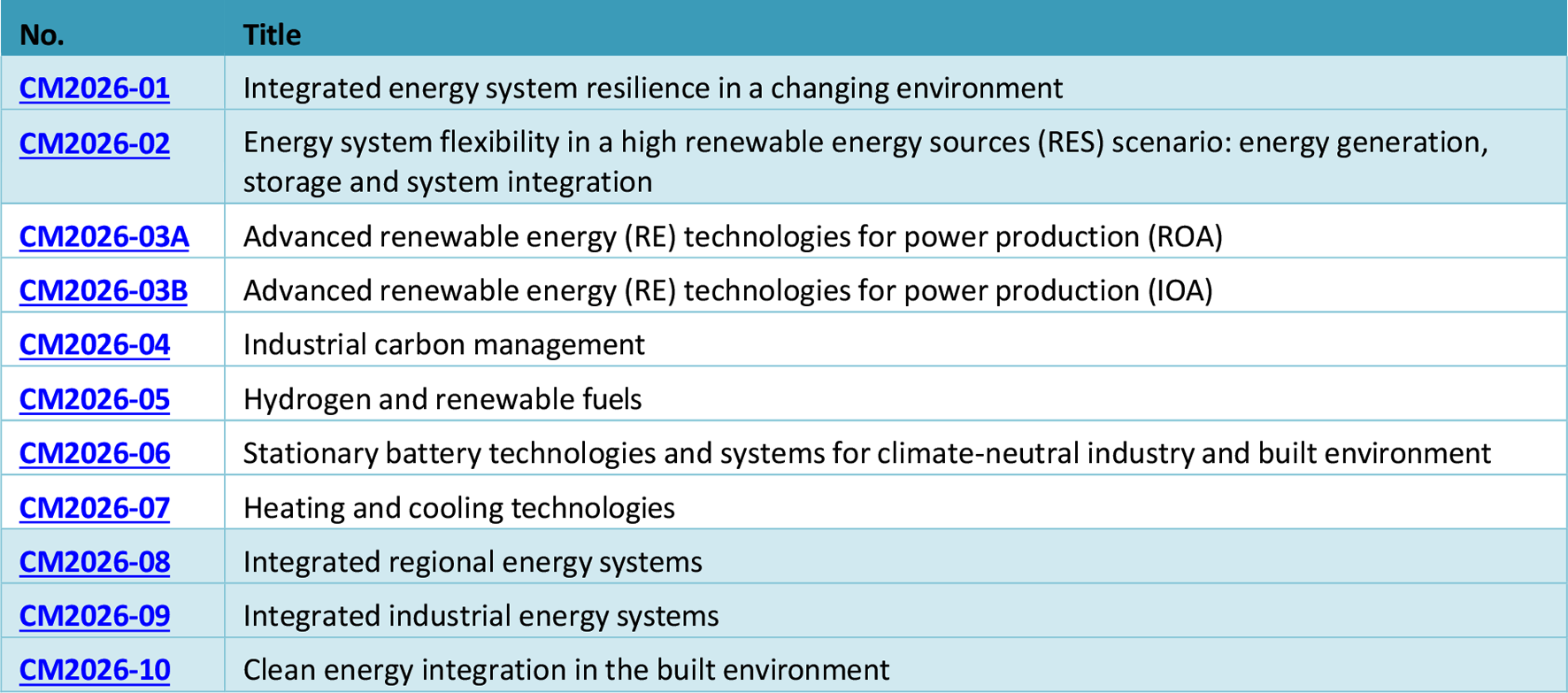
The Call consists of 11 Call Modules (Table 1.2), addressing a range of energy technology and system challenges and covering both research-oriented approaches (ROA) and innovation-oriented approaches (IOA). The Call Modules are complementary and collectively contribute to the objectives of the clean energy transition. The specific aims, challenges, scope, requirements and guidelines of the Call Modules and expected outcomes of Projects are described in Chapter 7.
Each participating national/regional Funding Organisation commits its budget to one or more Call Modules. Funding is provided at national/regional level and is subject to the eligibility rules and funding conditions of the relevant Funding Organisation. In accordance with their applicable rules and regulations, Funding Organisations will fund the eligible costs of their respective Beneficiary Partners7.
Potential applicants are therefore strongly encouraged to verify, before submitting a Proposal that the Funding Organisations from which funding will be requested support:
• the chosen Call Module and topic;
• the proposed type(s) of organisations;
• the proposed types of costs;
• the proposed RDI approach and technology readiness level (TRL).
Information on participating Funding Organisations and applicable national/regional requirements and guidelines is provided in Annex B.
Table 1.2. Overview of Call Modules under the CETPartnership Joint Call 2026, including technological (white) and systemic (blue) challenges
To be considered for funding, a Proposal shall:
• comply with all transnational requirements (Chapter 3) and applicable Call Module requirements (Chapter 7), and include Beneficiary Partners eligible for funding from the Funding Organisations participating in the chosen Call Module (Annex B), and;
• be selected for funding based on the evaluation results, ranking and available budgets in the Call.
As a transnational requirement (Chapter 3), the Project Consortium shall include at least three Beneficiary Partners applying for funding from at least three different countries participating in the chosen Call Module. At least two of these Beneficiary Partners shall be from EU Member States or Horizon Europe (HE) Associated Countries8.
The Call process (Chapter 5) is implemented in two stages:
• Stage 1: Pre-Proposal stage;
• Stage 2: Full Proposal stage.
A Project Consortium shall submit a Pre-Proposal under one Call Module (Chapter 7) in Stage 1. Proposals selected at Stage 1 will be invited to submit a Full Proposal under the same Call Module in Stage 2.
Proposals selected for funding will be funded through national/regional funding arrangements concluded directly between each Beneficiary Partner and its respective Funding Organisation (Section 6.1).
Table 1.3. Call timeline
|
Information event |
Date |
|
Call launch |
26 May 2026 |
|
Q&A |
09 September 2026 |
|
Stage 1 |
Date |
|
Opening for Pre-Proposal submission |
08 June 2026 |
|
Deadline for Pre-Proposal submission |
08 October 2026, 14:00 CEST |
|
National/regional deadline for Pre-Proposal submission |
See Annex B |
|
Selection decision communicated |
Early January |
|
Stage 2 |
Date |
|
Opening for Full Proposal submission |
08 January 2027 |
|
Deadline for Full Proposal submission |
11 March 2027, 14:00 CET |
|
National/regional deadline for Full Proposal submission |
See Annex B |
|
Selection decision communicated |
Mid-June 2027 |
In both Stage 1 and 2, Proposals are assessed for compliance with:
• the general Call requirements (Chapter 3)
• the Call Module requirements (Chapter 7); and
• the national/regional requirements of the Funding Organisations (Annex B).
Proposals that comply with the applicable eligibility conditions are evaluated against the evaluation criteria (Chapter 4), ranked per Call Module, and selected for funding subject to the available budgets.
Funding Organisations may additionally require Proposal submission through their own procedures, including deadlines, submission portals, and templates (Annex B).
Failure to comply with any applicable criterion, requirement, or guideline may lead to exclusion from the evaluation or selection process in either Stage 1 or Stage 2. Project Consortia are therefore strongly encouraged to carefully review all applicable criteria, requirements and guidelines and to contact the appropriate points of contact where necessary.
Questions concerning the Call in general should be addressed to the CETPartnership Call Management (callmanagement@cetpartnership.eu).
Questions concerning specific Call Modules should be addressed to the respective Call Module contacts (Chapter 7).
Questions concerning national/regional requirements and guidelines should be addressed to the respective Funding Organisations (Annex B).
This chapter describes the overall aim, expected impacts, challenges and scope of the Call, as well as the expected outcomes of the Projects. Further background information is available on the CETPartnership’s website9 and in its Strategic Research and Innovation Agenda (SRIA)10.
This Call aims to support high-quality transnational RDI Projects under the CETPartnership. The selected Projects shall contribute to accelerating the clean energy transition and achieving climate neutrality by 2050.
The CETPartnership is a multilateral, strategic and co-funded European Partnership under Horizon Europe (HE). It brings together national/regional Funding Organisations from more than 30 countries in Europe and beyond, as well as public and private stakeholders. Its objective is to overcome fragmentation in the clean energy research and innovation landscape and to strengthen transnational innovation ecosystems through aligned strategic priorities and coordinated Joint Calls.
Through its Joint Calls, the CETPartnership aligns national, regional and EU RDI priorities and enables transnational Projects with greater impact than individual national/regional actions. It supports the implementation of the European Strategic Energy Technology (SET) Plan11 and collaborates with Mission Innovation (MI)12.
This Call builds on the CETPartnership Joint Calls 2022–2025 and addresses current and emerging policy priorities related to clean energy technologies, energy system resilience and security of supply. It ensures continuity in scope and structure while allowing targeted adaptations to evolving societal, technological and geopolitical developments. The European Green Deal provides the overarching strategic framework. Information on Projects selected under previous Joint Calls is available on the CETPartnership’s website13.
Proposals submitted under the Joint Calls are evaluated and selected through a centralised, joint decision-making procedure. Following selection, Beneficiary Partners in the corresponding Projects conclude funding agreements with their respective Funding Organisations and receive funding in accordance with applicable national/regional rules and available budgets.
The overall expected impact of this Call is to deliver highly impactful and transformative RDI outcomes that support robust and inclusive clean energy transition pathways through transnational collaboration.
The main impacts to be generated by topics under this Call include:
• Scientific impact: strengthened knowledge generation, interdisciplinary research, and capacity building across clean energy technologies, systems and transition processes;
• Societal impact: contributions to climate neutrality, enhanced energy system resilience and security of supply, and increased stakeholder engagement, acceptance and participation in clean energy solutions;
• Economic and technological impact: accelerated development, demonstration, and deployment of clean energy technologies and solutions, supporting competitiveness, innovation capacity, and system integration across the energy value chain.
The CETPartnership applies a holistic, cross-sectoral and transformative approach to address technological and systemic challenges identified by need owners and other relevant stakeholders (Section 2.2), complemented by cross-cutting dimensions (Subsection 2.3.1). It can be structured along three dimensions of innovation: 1. Technologies & infrastructures; 2. Integration & organisation; and 3. Transformation & change (Subsection 2.3.2).
This approach is implemented together with the Projects, which are connected to each other and to relevant stakeholders within and beyond the partnership’s framework. The Projects are supported through coordinated knowledge management within the Knowledge Community (Subsection 2.3.3) and through impact and exploitation maximisation activities via the Impact Network (Subsection 2.3.4), fostering enhanced communication, collaboration, and co-creation.
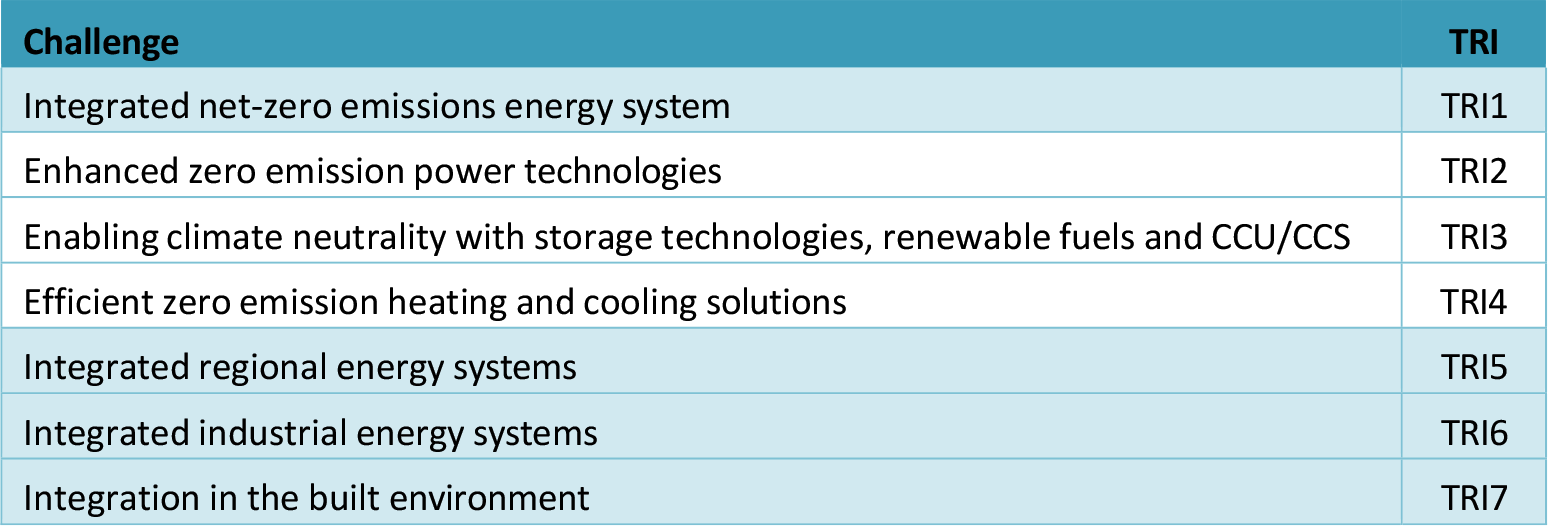
The CETPartnership Joint Calls are structured around seven thematic challenges addressing key technological and systemic aspects of the clean energy transition (Table 2.1). The challenges are identified by need owners and other relevant stakeholders and are complementary in nature.
The challenges are defined in the CETPartnership SRIA14 and are implemented through the Transition Initiatives (TRIs), which act as the operational configurations of the CETPartnership’s Funding Organisations. Together, the challenges provide a coherent framework for addressing pressing clean energy transition needs while fostering cross-sectoral and transnational collaboration.
Table 2.1. Overview of technological (white) and systemic (blue) challenges and responsible Transition Initiatives (TRIs) under the CETPartnership Joint Calls
Projects funded under the CETPartnership shall address one specific focus area, referred to as a Call Module, as defined in the Joint Calls.
This Call comprises 11 Call Modules, which together address a broad range of technological and systemic challenges and cover different RDI approaches. The Call Modules are complementary and collectively contribute to the objectives of the clean energy transition (Table 2.2).
Table 2.2. Overview of Call Modules under the CETPartnership Joint Call 2026, including technological (white) and systemic (blue) challenges and the responsible Transition Initiatives (TRIs)
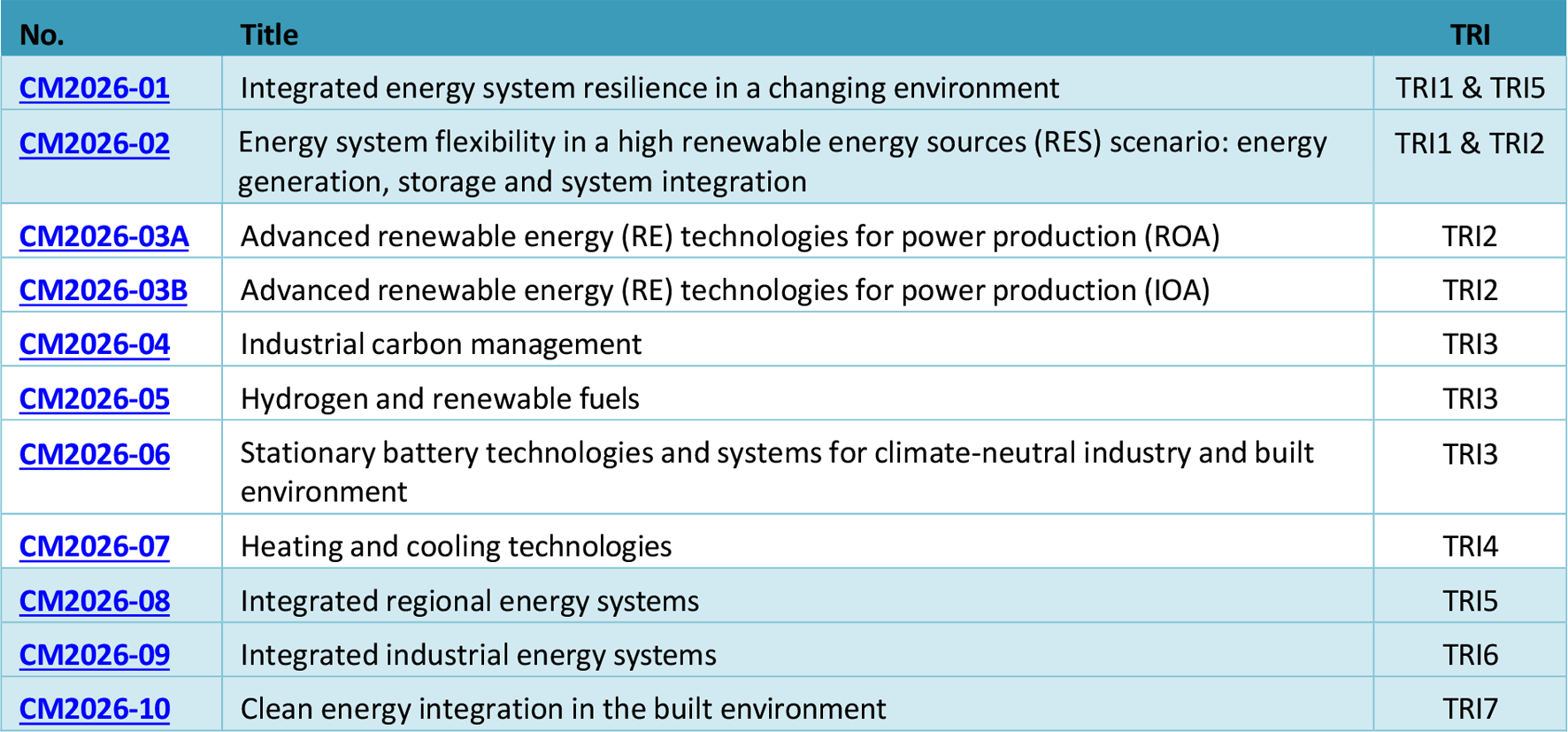
The Call Modules have been developed and will be implemented by the TRIs, which support Projects within their respective thematic areas in stakeholder engagement, communication, knowledge management, and impact and exploitation activities.
Call Modules focusing on enabling technologies (CM2026-02, CM2026-03A/03B, CM2026-04, CM2026-05, CM2026-06, and CM2026-07) typically address technology-specific approaches and may refer to Technology Readiness Levels (TRLs)15. Where relevant, a distinction is made between research-oriented approaches (ROA, CM2026-03A) and innovation-oriented approaches (IOA, CM2026-03B).
Call Modules focusing on system integration (CM2026-01, CM2026-02, CM2026-08, CM2026-09, and CM2026-10) typically address holistic, cross-sectoral and transformative approaches and are structured along three dimensions of innovation (Subsection 2.3.2).
Some Call Modules build on or contribute to other European and international initiatives, including activities under the SET Plan, such as European Research Area Networks (ERA-NETs)16 and Implementation Working Groups (IWGs)17. In addition, some Call Modules are developed in direct collaboration with MI Missions18. All Call Modules form part of the MI Call series19 and are therefore open to Proposals that directly or indirectly contribute to the objectives of MI Missions.
A Proposal shall be submitted under one chosen Call Module only. See Call Module-specific guidance on Scope under the chosen Call Module in Chapter 7.
To complement the technological and systemic challenges (Table 2.1), the CETPartnership encourages Projects to address cross-cutting dimensions that provide transdisciplinary perspectives on the clean energy transition. These dimensions are defined in detail in the CETPartnership SRIA20 and include:
• robust transition pathways;
• transition and innovation ecosystems;
• fair, just and democratic transition;
• resource efficiency and circularity;
• regulation and market design; and
• digitalisation.
Collaboration on cross-cutting dimensions takes place within the CETPartnership Knowledge Community (Subsection 2.3.3).
A Proposal shall take into account the Call Module-specific guidance on Cross-cutting dimensions under the chosen Call Module in Chapter 7.
The CETPartnership encourages Projects to extend their focus beyond individual technologies, infrastructures, and system solutions toward their integration and system transformation through a holistic, transdisciplinary, cross-sectoral and transformative approach. This approach aims to bring together diverse stakeholders, foster innovation ecosystems, and overcome fragmentation in the clean energy research and innovation landscape.
The approach can be structured along three dimensions of innovation (Figure 2.1):
1. Technologies and infrastructures: This dimension addresses the development and deployment of technologies and infrastructures for the conversion (including end use), storage and transport of clean energy and energy carriers. The guiding question is how such technologies and infrastructures can be designed, developed and implemented as effective, reliable and sustainable solutions.
2. Integration and organisation: This dimension addresses the integration and organisation of technological solutions within and across energy systems, including institutional, regulatory and market frameworks. The guiding question is how interactions and value exchanges between sectors and stakeholders can be organised to optimise system performance and resilience.
3. Transformation and change: This dimension addresses system transformation and transition processes, including their technological, societal and environmental preconditions. It covers aspects such as upscaling and replication, human-technology interfaces, user behaviour, the development and facilitation of innovation ecosystems, and the environmentally conscious design of products and services. The guiding question is how transition processes can enable the effective and seamless integration of new energy systems into the daily lives and operations of citizens, businesses, communities and infrastructure providers.
A Proposal may benefit from considering more than one dimension of innovation and establishing multidisciplinary consortia where appropriate. Collaboration with other Projects may also be beneficial to implement the holistic, cross-sectoral and transformative approach, in particular when planning activities under the Reporting and Knowledge Community Work Package (Subsection 2.3.3 and Annex A).
Call Modules focusing on system integration (CM2026-01, CM2026-02, CM2026-08, CM2026-09, and CM2026-10; Table 2.2) typically cover at least two dimensions of innovation. See Call Module-specific guidance on Dimensions of innovation under the chosen Call Module in Chapter 7.
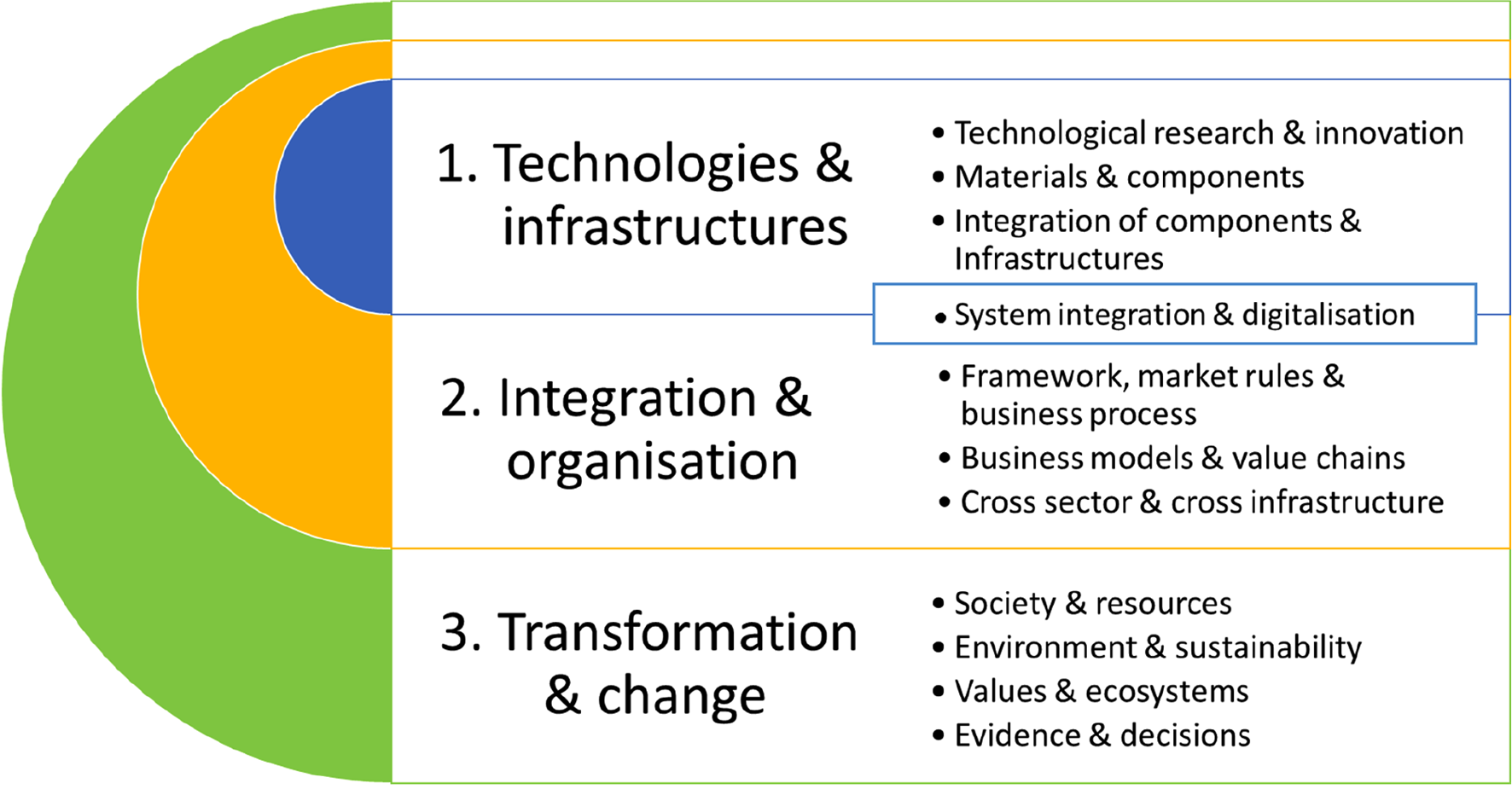
Figure 2.1. Three dimensions of innovation
Projects are expected to actively participate in the CETPartnership Knowledge Community21.
The Knowledge Community supports structured knowledge exchange and co-creation across:
• the thematic challenges (Section 2.2 and Table 2.1);
• the Call Modules (Section 2.3 and Table 2.2);
• the cross-cutting dimensions (Subsection 2.3.1); and
• the dimensions of innovation (Subsection 2.3.2).
It facilitates multilateral collaboration among research, industry, policy, and society for stakeholder engagement, communication, and dissemination through:
• exchange of Project outcomes;
• networking among Project Consortia and other RDI experts;
• co-creation of evidence-based, state-of-the-art knowledge; and
• provision of knowledge for strategic decision-making.
The Knowledge Community is supported by the CETPartnership Knowledge Community Management, in collaboration with the CETPartnership Impact Support (Subsection 2.3.4), and a Digital Information-System for Communication and Collaboration (DISCCO).
A Proposal shall include a mandatory Reporting and Knowledge Community Work Package, as defined in Annex A and required under Transnational requirement 7 (Section 3.5).
Implementation obligations regarding reporting and Knowledge Community participation are set out in Section 6.4.
Projects are expected to maximise the impact and exploitation of their outcomes and to generate added value for the clean energy transition, in accordance with the CETPartnership Exploitation Guidelines22, as referenced in the Proposal templates.
A Proposal is expected to include a structured impact and exploitation approach covering:
• identification and prioritisation of Key Exploitable Results (KERs)23;
• analysis of technological, societal and market/commercial readiness pathways (e.g. TRL, Societal Readiness Level (SRL), Market and Commercial Readiness Level (MCRL), see Section 3.4), where relevant;
• mapping of relevant Stakeholders and corresponding engagement strategies, including End Users, Need Owners, Industry, regulatory and societal actors;
• validation, demonstration, scale-up or commercialisation pathways, with identified actors responsible for market entry or operational uptake, where feasible;
• intellectual property management, protection and transfer strategy (e.g. licensing, spin-out creation, internal industrial development), where appropriate; and
• for non-commercial or openly shared results, concrete institutional uptake pathways with identified responsible actors.
Project Consortia are expected to make use of the CETPartnership Impact Support24 (see the introduction video25), including:
• the Impact Library26 (tools, methodologies, training);
• the Impact Network27 (innovation ecosystems and intermediary stakeholders).
The quality of the proposed impact and exploitation measures is assessed under the evaluation criterion Impact (Section 4.2).
Communication and dissemination are integral parts of the CETPartnership approach. A Proposal shall describe:
• communication objectives and key messages;
• target audiences;
• channels and tools;
• planned dissemination and exploitation activities;
• allocation of responsibilities and resources.
Communication activities shall:
• promote awareness of the Project and its results;
• support Stakeholder engagement and uptake;
• ensure visibility of the CETPartnership, the EU and the relevant Funding Organisations.
Communication efforts shall be proportionate to the Project size.
By submitting a Proposal, the Project Consortium agrees that, if selected for funding, basic Project information (title, acronym, abstract, Coordinator, and Project Consortium Partners including organisation name and country) may be published by the CETPartnership. Requests to limit publication shall be submitted by the Coordinator to the CETPartnership Knowledge Community Management (knowledgecommunity@cetpartnership.eu).
Implementation obligations regarding communication and dissemination are set out in Section 6.5.
The CETPartnership promotes open science in line with EU open science policy28.
A Proposal shall give due consideration to open science and to the application of the FAIR principles (Findable, Accessible, Interoperable, and Reusable).
The quality of open science practices is assessed under the evaluation criterion Excellence (Section 4.1).
The CETPartnership integrates the gender dimension into research and innovation activities and promotes gender equality throughout the Project lifecycle.
A Proposal shall address, where relevant:
• the gender dimension in research and innovation content, assessed under the evaluation criterion Excellence (Section 4.1); and
• gender balance within the Project Consortium, which may be taken into account in case of ex aequo Proposals.
Implementation obligations regarding Gender Equality Plans (GEPs) are set out in Section 6.6.
Projects shall be implemented in accordance with the highest ethical standards and applicable EU, international and national legislation.
When submitting a Proposal, Project Consortia shall carry out an ethics self-assessment via the CETPartnership Submission Platform29.
Projects shall comply with the Do No Significant Harm (DNSH) principle and shall not cause significant harm to any of the six environmental objectives defined in Article 17 of the Regulation (EU) 2020/852 (EU Taxonomy Regulation)30.
When submitting a Proposal, Project Consortia shall carry out a DNSH self-assessment via the CETPartnership Submission Platform31.
When considering the use of generative artificial intelligence (AI) tools, it is imperative to exercise caution and careful consideration. The AI-generated content should be thoroughly reviewed and validated by the Project Consortium to ensure its appropriateness and accuracy, as well as its compliance with intellectual property regulations.
When preparing a Proposal, Project Consortia are fully responsible for its content, including any parts generated with the support of AI tools and shall be transparent in disclosing which AI tools were used and how they were utilised.
Specifically, Project Consortia are required to:
• Verify the accuracy, validity, and appropriateness of the content and any citations generated by the AI tool and correct any errors or inconsistencies.
• Provide a list of sources used to generate content and citations, including those generated by the AI tool. Double-check citations to ensure they are accurate and properly referenced.
• Be conscious of the potential for plagiarism where the AI tool may have reproduced substantial text from other sources. Check the original sources to be sure you are not plagiarising someone else’s work.
• Acknowledge the limitations of the AI tool in the Proposal preparation, including the potential for bias, errors, and gaps in knowledge.
Projects are expected to contribute to the expected impacts set out under this Call (Subsection 2.1.2) and under the chosen Call Module (Aim and expected impacts under the chosen Call Module in Chapter 7).
Contributions are expected to materialise in the medium to longer term and may extend beyond the duration of the Project.
Projects shall generate added value through transnational cooperation, including joint development and sharing of knowledge, data, technologies, solutions, resources, and infrastructures, beyond what could be achieved through national/regional activities alone.
The expected outcomes of Projects may include scientific outcomes (e.g. new knowledge, methods, and evidence), technological and economic outcomes (e.g. innovation capacity, technology development, and uptake), and societal and environmental outcomes (e.g. contributions to climate neutrality, energy system resilience, and public value).
A Proposal shall clearly describe how the proposed Project is expected to contribute to the anticipated outcomes and impacts, including the scale and significance, in accordance with Call Module-specific guidance on Expected outcomes of Projects under the chosen Call Module in Chapter 7.
This chapter sets out the requirements and guidelines to be considered when preparing and submitting a Proposal under the Call. Requirements are presented in list form using •, while guidelines are provided in explanatory text.
The Call includes the following categories of requirements and guidelines:
• Transnational requirements and guidelines, applicable to all Project Consortia applying to the Call;
• Call Module requirements and guidelines, applicable to Project Consortia applying to a Call Module with specific requirements and guidelines (Chapter 7);
• National/regional requirements and guidelines, applicable to Beneficiary Partners applying for funding from the relevant Funding Organisations (Annex B).
Table 3.1. Summary of transnational requirements
|
No. |
Transnational requirement |
|---|---|
|
1 |
A Proposal shall be written in English and submitted via the CETPartnership Submission Platform before the applicable deadlines, using the mandatory Proposal templates. |
|
2 |
A Project Consortium shall consist of at least three Beneficiary Partners, including one Coordinator, from at least three different countries participating in the chosen Call Module. All Beneficiary Partners shall comply with the applicable national/regional requirements and guidelines. At least two Beneficiary Partners shall be from EU Member States or HE Associated Countries. |
|
3 |
For a Proposal, the planned effort of any single Project Consortium Partner shall not exceed 60% of the total planned Project effort. |
|
4 |
For a Proposal, the combined planned effort of all Project Consortium Partners from the same country shall not exceed 75% of the total planned Project effort. |
|
5 |
The following individuals are ineligible to participate in a Proposal: members of the CETPartnership Governing Board, members of the CETPartnership General Assembly, and researchers employed by Funding Organisations participating in the Call.1 |
|
6 |
In accordance with Horizon Europe General Annex B, specific country participation provisions apply, in particular to projects starting at TRL 4–5 and targeting TRL 6–8 (corresponding to Innovation Actions). |
|
7 |
A Proposal shall provide for a Project start date no later than 15 December 2027 and a maximum duration of 36 months. |
|
8 |
A Proposal shall include a dedicated and mandatory work package entitled “Reporting and Knowledge Community”. |
Exceptionally, legal entities may participate if they provide written proof that their organisational structure is fully independent from the relevant Funding Organisation.
To be considered for funding, a Proposal shall comply with all the transnational requirements (see this Chapter) and the applicable Call Module requirements (Chapter 7). In addition, the Project Consortium shall include Beneficiary Partners applying for funding from the Funding Organisations participating in the chosen Call Module (Annex B).
Failure to comply with any applicable requirement or guideline may lead to exclusion from the evaluation or selection process. Project Consortia are therefore encouraged to carefully review all applicable requirements and guidelines.
• Transnational requirement 1:
A Proposal shall be written in English and submitted electronically via the CETPartnership Submission Platform32 before the applicable deadlines, using the mandatory Proposal templates available on the start page of the Submission Platform.
To be considered for funding, submission of a Proposal is mandatory for all Project Consortia in Stage 1 (Pre-Proposal) and for invited Project Consortia in Stage 2 (Full Proposal).
After the submission deadline, a Proposal may not be revised or resubmitted, unless expressly requested by the Call Management.
• Funding Organisations may require additional Proposal submission in accordance with their own national/regional procedures, including deadlines, portals, and templates, see the respective national/regional requirements and guidelines in Annex B.
• Transnational requirement 2:
A Project Consortium shall consist of at least three Beneficiary Partners, including one Coordinator, from at least three different countries participating in the chosen Call Module. All Beneficiary Partners shall comply with the applicable national/regional requirements and guidelines. At least two Beneficiary Partners shall be from EU Member States or HE Associated Countries33.
• Transnational requirement 3:
For a Proposal, the planned effort of any single Project Consortium Partner shall not exceed 60% of the total planned Project effort, measured in person-months.
• Transnational requirement 4:
For a Proposal, the combined planned effort of all Project Consortium Partners from the same country shall not exceed 75% of the total planned Project effort, measured in person-months.
• Transnational requirement 5:
The following individuals are ineligible to participate in a Proposal: members of the CETPartnership Governing Board, members of the CETPartnership General Assembly, and researchers employed by Funding Organisations participating in the Call. Exceptionally, legal entities may participate if they provide written proof that their organisational structure is fully independent from the relevant Funding Organisation.
• Transnational requirement 6:
In accordance with Horizon Europe General Annex B, specific country participation provisions apply, in particular to projects starting at TRL 4–5 and targeting TRL 6–8 (corresponding to Innovation Actions).34
Funding decisions remain the responsibility of the participating national or regional Funding Organisations. Applicants shall consult the applicable national and regional requirements set out in Annex B to this Call.
• Additional Call Module requirements may apply regarding Project Consortium Partners, see Call Module requirements in the respective Call Modules in Chapter 7.
• Additional national/regional requirements and guidelines may apply regarding Project Consortium Partners, see the respective national/regional requirements and guidelines in Annex B.
Definitions related to the Project Consortium and Project Consortium Partners are provided in Definitions.
No individual involved in a Proposal may act as an evaluator in the Call.
The CETPartnership provides a matchmaking platform35 to facilitate the formation of Project Consortia.
• Transnational requirement 7:
A Proposal shall provide for a Project start date no later than 15 December 2027 and a maximum duration of 36 months.
• National/regional requirements and guidelines may apply regarding the Project duration and/or budget; see the respective national/regional requirements and guidelines in Annex B.
The Call generally aims to support Projects with a duration of 12 to 36 months and a requested total funding amount in the range of (but not limited to) EUR 0.5–5 million, in addition to any self-financing. Additional Call Module guidelines may apply regarding the Project budget; see Call Module guidelines in the respective Call Modules in Chapter 7.
• Call Module requirements may apply regarding the RDI approaches/TRLs; see Call Module requirements in respective Call Modules in Chapter 7.
• National/regional requirements and guidelines may apply regarding the RDI approaches/TRLs; see respective national/regional requirements and guidelines in Annex B.
The Call applies the definition of TRLs as set out in the HE Work Programme37.
In line with the objectives of accelerating the clean energy transition towards climate neutrality by 2050, the Call generally aims to support Projects that increase their TRL and target medium to high TRLs (4–8). Projects may combine technological and system solutions with societal, commercial, financial, environmental, regulatory, and other relevant aspects. An increase of 1–2 TRL levels is considered typical, and an increase of 3 TRL levels ambitious. An increase of 4 TRL levels is generally not considered feasible within the Project duration. Activities at lower or higher TRLs may be included where justified by Project objectives or required under national/regional rules.
In some Call Modules, additional or alternative frameworks may apply. These may include, for example:
• the Market and Commercial Readiness Level (MCRL)38, the degree to which an innovation has progressed towards market uptake and commercialisation, reflecting its maturity in validating market needs, understanding market conditions and competition, and establishing a substantiated business model and commercialisation strategy;
• the Societal Readiness Level (SRL)39, the degree to which an innovation has progressed towards societal uptake, reflecting its maturity in achieving validation, acceptance, and integration within relevant societal, institutional, and regulatory contexts.
The CETPartnership Exploitation Guidelines40 support Project Consortia in planning activities to advance along these frameworks and to maximise impact and exploitation.
• Transnational requirement 8:
A Proposal shall include a dedicated and mandatory work package entitled “Reporting and Knowledge Community”, as defined in Annex A.
This work package shall be distinct from other Project activities and shall include dedicated tasks, deliverables and allocated resources for:
• transnational reporting obligations; and
• participation in the CETPartnership Knowledge Community.
Proposals shall take into account the objectives, structure and activities of the Knowledge Community (Subsection 2.3.3).
Projects are expected to actively contribute to Knowledge Community activities in accordance with Annex A.
This chapter sets out the evaluation criteria and scoring system applicable to Proposals submitted under this Call.
In Stage 1 and Stage 2, Proposals are evaluated on the basis of the following three main criteria:
• Excellence
• Impact
• Quality and efficiency of the implementation
The sub-criteria set out below apply to all Call Modules. Sub-criteria marked with an asterisk (*) apply only in Stage 2.
The mandatory Proposal templates available on the CETPartnership Submission Platform41 indicate how Proposals should address the sub-criteria.
Under the Excellence criterion, Proposals will be assessed on the basis of:
• Clarity and pertinence of the Project’s objectives in relation to the aim of the Call (Subsection 2.1.1) and of the relevant Call Module (Aim and expected impacts under the relevant Call Module in Chapter 7);
• Extent to which the proposed work is ambitious and goes beyond the state-of-the-art in research/innovation for the clean energy transition;
• Soundness of the proposed methodology, including the underlying concepts, models, assumptions, and interdisciplinary approaches;
• *Appropriate consideration of the diversity and gender dimension in research/innovation content (Subsection 2.3.7);
• *Quality of open science practices, including sharing and management of research/innovation outputs and engagement of citizens, civil society and End Users where appropriate (Subsection 2.3.6).
Under the Impact criterion, Proposals will be assessed on the basis of:
• Credibility of the pathways to achieve the expected outcomes and impacts specified in the Call (Subsection 2.1.2 and Section 2.4) and in the relevant Call Module (Aim and expected impacts and Expected outcomes of Projects under the relevant Call Module in Chapter 7);
• Scale and significance of the Project’s potential contributions to the clean energy transition;
• The added value generated by transnational collaboration;
• Suitability and quality of the measures proposed to maximise expected outcomes and impacts, including dissemination, exploitation, and communication activities, as well as the involvement of relevant stakeholders and potential End Users to support uptake of results.
Under the Quality and efficiency of the implementation criterion, Proposals will be assessed on the basis of:
• Quality and effectiveness of the work plan.
• *Assessment of risks.
• *Appropriateness of the effort assigned to work packages and the resources overall.
• Capacity and role of each participant, and extent to which the Project Consortium as a whole brings together the necessary expertise.
Each Proposal will be scored for each of the three main evaluation criteria using integer scores from 0 to 5, as defined in Table 4.1. Scores are assigned to the main evaluation criteria, not to the individual sub-criteria.
The maximum total score is 15 points. To be considered for funding, a Proposal shall achieve:
• a minimum score of 3 for each of the three main evaluation criteria; and
• a minimum total score of 10.
Table 4.1. Interpretation of scores
|
Score |
Description |
|---|---|
|
0 |
Fail/Missing: The Proposal fails to address the criterion or cannot be assessed due to missing or incomplete information (unless the result of an ‘obvious clerical error’). |
|
1 |
Poor: The criterion is inadequately addressed or there are serious inherent weaknesses. |
|
2 |
Fair: The Proposal broadly addresses the criterion but there are significant weaknesses. |
|
3 |
Good: The Proposal addresses the criterion well but with a number of shortcomings. |
|
4 |
Very good: The Proposal addresses the criterion very well but with a small number of shortcomings. |
|
5 |
Excellent: The Proposal successfully addresses all relevant aspects of the criterion. Any shortcomings are minor. |
This chapter describes the Call process applicable to the submission, eligibility check, evaluation, and selection of Proposals in the Call.
The Call follows a two-stage procedure:
• Stage 1: Pre-Proposal stage
• Stage 2: Full Proposal stage
To be considered for funding, a Proposal shall be submitted before the applicable deadline and shall be complete and compliant with all applicable requirements. Direct submission of a Full Proposal without prior invitation to Stage 2 is not permitted.
A Pre-Proposal shall be submitted by the Coordinator, on behalf of the Project Consortium, under one chosen Call Module, via the CETPartnership Submission Platform42, no later than 8 October 2026, 14:00 CET.
The Coordinator shall submit the Pre-Proposal in collaboration with all Project Consortium Partners, including any Self-financed Partners. Through the Submission Platform, the Coordinator shall invite all Project Consortium Partners to participate. At the time of submission, all invited partners shall have accepted the invitation and completed the required administrative and budget information. Any invited entity not participating shall be removed prior to submission.
A Pre-Proposal remains in draft status until submitted. It may be revised and resubmitted multiple times before the deadline. Only the last submitted version will be taken into account. In case of technical issues with the Submission Platform, applicants shall contact IT support43 before the submission deadline.
The Pre-Proposal shall include a Project description of maximum 10 pages, using the mandatory Pre-Proposal template. Guidance on submission and content is provided in Section 3.1, Section 3.2, Section 3.3, Section 3.4 and Section 3.5. Submission of a short CV for the PI of each Project Consortium Partner is optional.
Mandatory templates, instructions, checklists, and FAQs are available on the Submission Platform and on the CETPartnership’s website44.
Funding Organisations may require additional submissions in accordance with their own procedures (e.g. national deadlines, portals, or templates). Applicants shall consult the applicable national/regional requirements in Annex B.
Each Pre-Proposal submitted under Stage 1 will be subject to eligibility checks.
Eligibility will be assessed as follows:
• Transnational requirements (Chapter 3) will be verified by the Call Management.
• Call Module requirements (Chapter 7) will be verified by the relevant TRI.
• National and regional requirements and guidelines (Annex B) will be verified by the relevant Funding Organisation(s).
Following these assessments:
• A Pre-Proposal will be classified as eligible or ineligible for submission of a Full Proposal.
• Each Beneficiary Partner included in the Pre-Proposal will be classified by the relevant Funding Organisation as:
○ eligible;
○ conditionally eligible, subject to the provision of additional information or the fulfilment of specified conditions in the Full Proposal; or
○ ineligible.
Only Pre-Proposals that comply with all transnational and applicable Call Module requirements may proceed to evaluation (Subsection 5.1.3).
Special procedure for Pre-Proposals with ineligible Beneficiary Partners
A Pre-Proposal that fails to comply with Transnational requirements 2, 3, or 4 solely due to one or more ineligible Beneficiary Partners (excluding the Coordinator) may nevertheless proceed to evaluation, provided that:
• The Pre-Proposal complies with Transnational requirements 1, 5, 6, 7, and 8 and with the applicable Call Module requirements.
• The Pre-Proposal includes at least two eligible or conditionally eligible Beneficiary Partners (including the Coordinator) from at least two different countries participating in the chosen Call Module, with at least one from an EU Member State or a HE Associated Country.
• The total planned effort of ineligible Beneficiary Partners is less than 25% of the total planned Project effort, measured in person-months.
Each eligible Pre-Proposal will be evaluated by at least three independent evaluators in accordance with the evaluation criteria set out in Chapter 4.
The evaluation panel will produce an evaluation summary report, including a score for each of the three evaluation criteria on a scale of 0–5, resulting in a total score between 0 and 15.
Based on the evaluation results, a ranking list will be established for each Call Module.
Based on the ranking lists, the Funding Organisations will agree on a list of Pre-Proposals to be invited to Stage 2. The total funding requested by the invited Pre-Proposals shall not exceed four times the available budget of each Funding Organisation.
In cases of budgetary constraints, selection decisions will be guided by the following core principles:
• maximise the EU top-up funding generated by selected Proposals;
• maximise the total number of selected Proposals;
• maximise the number of countries/regions involved in selected Proposals;
• ensure a balanced distribution of selected Proposals across the Call Modules;
• ensure similar success rates across the Call Modules.
In cases of ex aequo Proposals, gender balance among named personnel may be used as an additional consideration.
The outcome of Stage 1 will be communicated by the Call Management to each Coordinator. The notification will include the results of the eligibility checks, the evaluation summary report (where applicable), and information on redress procedure (Section 5.3).
A Full Proposal shall be submitted by the Coordinator of each invited Project Consortium under the same Call Module via the CETPartnership Submission Platform45 no later than 11 March 2027, 14:00 CET.
The submission procedure is the same as for the Pre-Proposal in Stage 1 (Subsection 5.1.1), subject to the following additional requirements:
• A Project description not exceeding 30 pages, using the mandatory Full Proposal template, replacing the 10-page Project description submitted in Stage 1.
• A short CV for the PI of each Project Consortium Partner.
• A Letter of Commitment from each Self-financed Partner, confirming its active participation and role in the Project.
Where applicable, data from the Pre-Proposal will be pre-filled or reused.
Only Proposals that fully comply with Transnational requirements 1–8 may be submitted in Stage 2.
Funding Organisations may require additional national/regional submissions. Applicants shall consult Annex B for further details.
Modifications between Stage 1 and Stage 2
The following modifications between the Pre-Proposal (Stage 1) and the Full Proposal (Stage 2) are permitted:
1. Addition of Self-financed Partner(s).
2. Replacement of Beneficiary Partner(s) classified as ineligible at Stage 1 with Self-financed Partner(s).
3. Modifications requested by a relevant Funding Organisation or by the Call Management.
4. Modifications proposed by the Project Consortium concerning Project Consortium Partners, Project duration and/or Project budget, provided that:
○ the Coordinator remains the same;
○ the modifications are duly justified; and
○ the modifications are approved by the Funding Organisation(s) concerned and by all Project Consortium Partners.
Any modification other than those referred to in points 1 and 2 shall be notified to the Call Management (callmanagement@cetpartnership.eu) before completion of the individual evaluation (Subsection 5.2.3). The notification shall include written confirmation from the Funding Organisation(s) concerned.
Where a Funding Organisation is undersubscribed at Stage 1, Project Consortia will be encouraged to include Beneficiary Partners applying for funding from that Funding Organisation.46
The addition of a Beneficiary Partner applying for funding from a Funding Organisation oversubscribed at Stage 1 may be refused.
Each Full Proposal submitted under Stage 2 will be subject to eligibility checks.
Eligibility will be assessed as follows:
• Transnational requirements (Chapter 3) will be verified by the Call Management.
• Call Module requirements (Chapter 7) will be verified by the relevant TRI.
• National and regional requirements and guidelines (Annex B) will be verified by the relevant Funding Organisation(s).
Following these assessments:
• A Full Proposal will be classified as eligible or ineligible for funding.
• Each Beneficiary Partner included in the Full Proposal will be classified by the relevant Funding Organisation as:
○ eligible; or
○ ineligible.
Only Full Proposals that comply with all transnational and applicable Call Module requirements may proceed to evaluation (Subsection 5.2.3).
A Full Proposal including ineligible Beneficiary Partners may nevertheless proceed to evaluation, provided that:
• The Full Proposal complies with Transnational requirements 1–8 and with the applicable Call Module requirements, excluding the ineligible Beneficiary Partners; and
• The total planned effort of the ineligible Beneficiary Partners is less than 25% of the total planned Project effort, measured in person-months.
Each eligible Full Proposal will be evaluated by at least three independent evaluators, in accordance with the evaluation criteria set out in Chapter 4.
An evaluation summary report will be produced, including scores for each evaluation criterion (0–5), resulting in a total score between 0 and 15. Ranking lists will be established per Call Module.
Based on the ranking lists, the available budgets, and the selection principles set out in Subsection 5.1.4, the Funding Organisations will agree on the list of Full Proposals to be funded.
The outcome of Stage 2 will be communicated by the Call Management to each Coordinator, together with the eligibility results, the evaluation summary report (where applicable), and information on redress (Section 5.3).
The Coordinator of a Project Consortium may submit a request for review if it is considered that the outcome of Stage 1 or Stage 2 was affected by a procedural error in the eligibility check, evaluation or selection procedure.
The Call Management shall verify the admissibility of the request for review.
The request for review shall:
• be submitted in writing, in English, as a single PDF to the Call Management (callmanagement@cetpartnership.eu);
• be submitted within 14 calendar days of receipt of the outcome notification;
• identify the Proposal concerned by proposal code;
• state the procedural grounds invoked and the corrective action sought.
The request shall be limited to alleged procedural irregularities, factual errors, manifest errors of assessment or misuse of powers (e.g. conflict of interest, lack of coherence between scores and comments, inadequate reasoning, or exceeding the limits of discretion).
Disagreement with the evaluation outcome or repetition of Proposal content shall not constitute valid grounds.
Only one request for review per Proposal may be submitted in Stage 1 and one in Stage 2. A request may concern only the Proposal submitted by the Project Consortium concerned.
Admissible requests shall be examined by a review committee convened by the Call Management and composed of staff not involved in the eligibility checks or evaluation of the Proposal concerned.
The review shall be limited to the procedural aspects raised in the request.
Requests shall be treated as confidential and may be shared with the relevant Funding Organisations for the purpose of examination.
This chapter sets out key obligations for Projects selected for funding under the Call. These obligations shall be taken into account when preparing a Proposal.
Funding arrangements shall be concluded directly between each Beneficiary Partner and its respective national/regional Funding Organisation, in accordance with the applicable rules and procedures.
Selected Projects are expected to start between September and December 2027. A later start date may be agreed by the relevant Funding Organisations.
Project Consortium Partners are strongly encouraged to align their Project start and end dates, even where national/regional funding periods differ.
The Project Consortium shall conclude a signed Consortium Agreement (CA) between all Project Consortium Partners. The CA shall regulate the internal organisation and management of the Project Consortium, including intellectual property rights (IPR).
The CA should be in place at Project start and shall be concluded no later than six months thereafter. The involvement of the Coordinator’s legal department is strongly recommended.
Certain Funding Organisations may require the CA before Project start or may condition payments on its conclusion. Project Consortia shall verify the applicable requirements.
Established HE CA models (e.g. DESCA, DIGITALEUROPE MCARD-HEU, EUCAR) may be used as a basis and adapted as appropriate.
Any substantial change that may affect Project implementation or the funding decision – including changes to Project duration, Project Consortium composition, or substantial changes to the work plan – shall require prior approval by the relevant Funding Organisation(s).
The Coordinator shall notify the relevant Funding Organisations via the CETPartnership Knowledge Community Management (knowledgecommunity@cetpartnership.eu). Changes shall take effect only after approval.
Minor changes – including changes to PIs, Team Members, or limited adjustments to the work plan – shall also be notified in accordance with applicable procedures.
The Coordinator shall fulfil the transnational reporting obligations defined in Annex A (Task 1), including:
• submission of a Project factsheet;
• submission of annual reports;
• submission of a final report; and
• participation in transnational surveys.
Participation in Knowledge Community activities defined in Annex A (Task 2) forms part of the obligations.
Projects shall allocate appropriate resources to the mandatory Reporting and Knowledge Community Work Package, in accordance with Annex A.
Additional national/regional reporting requirements may apply. Beneficiary Partners shall comply with the reporting obligations of their respective Funding Organisations.
In all communication and dissemination activities, the Project Consortium shall acknowledge:
• the CETPartnership;
• the EU (including reference to HE grant agreement No 101069750, where required); and
• the relevant Funding Organisations.
Projects shall comply with the CETPartnership Communication Guide, which will be provided by the CETPartnership Communication Office (communicationoffice@cetpartnership.eu) after selection for funding.
In particular, Projects shall:
• register on DISCCO;
• maintain a publicly accessible Project website or dedicated webpage presenting objectives, activities and results;
• display prominently the CETPartnership logo and the EU emblem on the homepage (visible without scrolling);
• include a link to the CETPartnership’s website (www.cetpartnership.eu);
• use the prescribed acknowledgement text in all written materials based on Project results; and
• include the logos of the relevant Funding Organisations in visual materials, where required.
Web accessibility standards (e.g. WCAG) should be respected. The use of social media channels and newsletters is recommended, where appropriate, to reach relevant target audiences.
Additional national/regional communication requirements may apply.
Beneficiary Partners shall comply with HE Guidance on Gender Equality Plans (GEPs)47.
Public bodies, and public or private higher education establishments and research organisations established in EU Member States or HE Associated Countries, shall have a GEP in place at the time of signature of the national/regional funding agreement.
This chapter sets out the Call Modules under this Call and specifies their respective scope, objectives, requirements, and guidance.
The Call consists of 11 Call Modules. Each Call Module addresses specific energy technology and/or energy system challenges and may target different research, development, and innovation (RDI) approaches. The Call Modules are complementary in scope and collectively contribute to the aim of the Call.
In addition to the transnational requirements and guidelines set out in Chapter 3 and the applicable national/regional requirements described in Annex B, specific requirements and guidelines may apply at Call Module level. These are indicated under each Call Module heading and, where relevant, further detailed in the corresponding Call Module text.
|
Call Module requirements |
|
|
For Proposals targeting a higher TRL and/or including demonstration activities: The participation of at least one Need Owner as a Project Consortium Partner is mandatory. |
|
|
Guidelines |
|
|
Project Consortium Partners |
• Secondary and higher education establishments; • Research organisations; • Private for-profit companies; • Public bodies; • Other entities (e.g. non-profit organisations). The involvement of Need Owners depends on the ambition level and type of activities proposed. For Proposals targeting a lower final TRL, or Proposals primarily focused on modelling, planning tools, or analytical methods: the participation of Need Owners (e.g. system operators, national or local regulators) in an advisory capacity (e.g. Advisory Board or Steering Board) is recommended. For Proposals targeting a higher TRL and/or including demonstration activities: see Call Module requirements above. |
|
Project budget |
In the range of EUR 2–5 million, including any self-financing. |
|
Target RDI approaches/TRLs |
For Proposals primarily focused primarily on modelling, planning and analytical methods, the formal definition of TRL may not be fully applicable. In such cases, the expected KERs shall consist of tools, such as models, software, APIs, or comparable solutions. These tools shall: • Be developed on open access platforms; • Follow recognised quality standards; • Ensure traceability of results; and • Ensure system maintainability. For Proposals including demonstration activities (e.g. validation and application in relevant environments, advanced laboratory activities): • Project start: TRL 3 or higher. • Project end: Increase of at least one TRL level from Project start. |
|
Contact |
|
|
TRI1 |
|
This Call Module aims to strengthen the resilience of power systems and integrated energy systems under changing environmental, technological and security conditions. It supports Projects addressing realistic, non-standard operating conditions representative of systems with high shares of renewable energy sources (RES) and increasing electrified demand.
An integrated energy system is understood as a coordinated multi-carrier infrastructure (electricity, gas, heating/cooling) combining diverse energy resources and enabling physical and digital interconnection of generation, storage and demand to optimise performance, sustainability and resilience.
System resilience refers to the ability of a system to limit the extent, severity and duration of performance degradation following a threat that (largely) exceeds its design ratings.
The overall expected impact of this Call Module is to provide new approaches, methods and instruments that enhance energy system resilience under emerging threats and evolving operating conditions, covering technological gaps across the full system resilience cycle:
• Anticipation – forecasting and monitoring extreme events;
• Preparation – planning of measures to prevent events or to be ready for them;
• Absorption – decreasing energy system vulnerabilities;
• Critical operation – management of the system even with limited operational performances;
• Recovery – limiting the consequences of disruptive events;
• Adaptation – measures to adapt the energy system to the threats (increase system adequacy).
The main impacts to be generated by topics under this Call Module are:
• Availability of scalable and replicable tools and solutions applicable across the full system resilience cycle;
• Improved capability of energy systems to withstand, manage and recover from severe disturbances;
• Strengthened continuity and quality of energy supply under stressed or degraded conditions;
• Enhanced preparedness of system operators, infrastructure providers, end users and other stakeholders.
The Call Module is open to Proposals addressing power systems as well as integrated energy systems.
The European integrated energy system is highly interconnected, market-driven and increasingly based on variable renewables. While this transformation improves sustainability, it also introduces new vulnerabilities.
Key challenges include:
• Intrinsic vulnerability: Structural weaknesses in generation, transmission and distribution networks when operating beyond design limits. These are often linked to high RES penetration, increased variability, reduced inertia, limited voltage control and flexibility shortages.
• External threats:
○ Natural events (e.g. extreme weather such as storms, floods, snow and heatwaves);
○ Human-related events (e.g. cyberattacks, sabotage);
○ System complexity and cascading effects: Interdependencies between energy vectors and infrastructures may amplify disturbances.
Ensuring adequate quality and security of supply under such vulnerabilities and threats requires innovation across the entire system resilience cycle (anticipation, preparation, absorption, critical operation, recovery, adaptation).
These challenges define the problem space. The Scope below defines the activities and solutions eligible for support.
This Call Module supports Projects addressing resilience in power systems and integrated energy systems. Proposals shall focus on situations that may jeopardise reliability and quality of supply if not adequately managed. The emphasis is on stressed, degraded or emergency operating conditions, rather than normal system operation.
Proposals shall address at least one type of resilience challenge (intrinsic vulnerability and/or external threats) and one or more steps of the system resilience cycle.
Target topics
Projects may elaborate methods and tools or demonstrate new measures to increase resilience.
Methods and tools
Projects may develop:
• Probabilistic assessment and forecasting methods to estimate the probability, severity and return periods of threats exceeding design ratings, including:
○ Intrinsic vulnerabilities (e.g. RES hosting capacity exceedance under steady-state, dynamic and emergency conditions);
○ Natural events – weather events and their direct consequences and effects. In this respect, Proposals shall consider not only the forecasting of extreme meteorological conditions but also climate models targeting medium and long-time perspectives (2050–2070 and beyond) taking into consideration different emissions scenarios as defined by the International Panel on Climate Change (IPCC) with its different Representative Concentration Pathways (RCPs)48;
○ Human-related threats (e.g. cyberattacks, sabotage).
• Planning and operational tools enabling rapid recovery and restoration of system performance following disruptions.
• Integrated assessment approaches to evaluate and enhance resilience levels of specific energy systems across all stages of the resilience cycle.
Demonstration of resilience measures
Projects may demonstrate and validate actionable solutions, such as:
• Adoption of innovative technologies enhancing resilience at any step of the resilience cycle, including AI-based system integration, distributed resources, advanced protection systems and cybersecurity solutions;
• Resilient congestion management, including operational approaches to anticipate and mitigate congestion under stressed and uncertain conditions, using flexibility, demand response, sector coupling and prioritisation of critical loads;
• Mission-critical energy services, ensuring continuity of essential services during degraded operation or prolonged disturbances;
• Rapid recovery and adaptive reconfiguration, demonstrating measurable improvements in recovery time and service restoration;
• Multi-vector operation, preventing cascading effects through coordinated management of energy carriers and system supporting services (e.g. communication).
Exploitation strategy
Proposals shall include a clear, credible and TRL-appropriate exploitation strategy.
The exploitation strategy shall:
• Define the Project’s KERs;
• Identify intended Need Owners, like End Users, infrastructure operators, technology providers and other Stakeholders;
• Proposals shall identify the organisation(s) responsible for advancing the KERs beyond the Project and describe the pathway through which the results could be taken up (e.g. commercial transfer, open-access use, or policy/institutional integration);
• The intensity and format of engagement shall be appropriate to the TRL, from early validation to advanced adoption and business model considerations.
Cross-cutting dimensions
Proposals should, where relevant:
• Integrate digitalisation and AI-based solutions;
• Address cybersecurity and data protection;
• Consider climate change adaptation;
• Promote scalability and replication across European contexts.
Dimensions of innovation
In line with Dimensions of innovation, Proposals are encouraged to adopt a holistic approach:
1. Technologies and infrastructures: Development and validation of technological and infrastructural solutions improving resilience (e.g. monitoring systems, protection schemes, storage integration).
2. Integration and organisation: Integration of technological solutions across energy carriers and institutional frameworks, including regulatory and market arrangements enhancing resilience.
3. Transformation and change: System-level adaptation processes, including upscaling, replication, innovation ecosystems, user interaction and environmentally conscious design.
Complementarity with other Call Modules
Other Call Modules address energy systems under normal operating conditions or focus on specific technology development. This Call Module concentrates on resilience under stressed and emergency conditions.
Proposals shall clearly demonstrate complementarity and avoid overlap with activities addressing standard system optimisation or purely technology-focused development without a resilience dimension.
Projects are expected to deliver results contributing to one or more of the following outcomes:
• Validated methods and tools for assessing and forecasting intrinsic and external threats;
• Demonstrated technologies and operational solutions improving system robustness, absorption capacity and recovery performance;
• Reduced recovery times and improved continuity of mission-critical energy services;
• Enhanced multi-vector coordination and prevention of cascading failures;
• Scalable and replicable resilience solutions applicable across European energy systems;
• Strengthened evidence base for resilience-oriented planning, operation and adaptation;
• Projects shall demonstrate measurable improvements in system resilience and contribute to ensuring reliable, secure and sustainable energy supply under evolving environmental and security conditions.
|
Call Module requirements |
|
|
None. |
|
|
Guidelines |
|
|
Project Consortium Partners |
• Secondary and higher education establishments; • Research organisations; • Private for-profit companies (including system operators, SMEs and spin-off companies who contribute technical expertise, operational knowledge and innovation capacity, in particular for the implementation of innovative solutions and the development of breakthrough technologies). The participation of SMEs and spin-off companies is recommended. The participation of Project Consortium Partners from countries involved in the Green Powered Future Mission (including countries not participating in the CETPartnership) is not mandatory. However, it will be considered a preferential attribute in the evaluation of the Proposal, where relevant. |
|
Project budget |
In the range of EUR 1–2 million, including any self-financing. |
|
Target RDI approaches/TRLs |
Project start: TRL 3 or higher. Project end: Increase of 1–2 TRL levels from Project start. |
|
Contact |
|
|
TRI1 and TRI2 who have jointly developed the Call Module. |
|
This Call Module aims to contribute to the implementation of the Green Powered Future Mission (GPFM)49 Flagship Project 2 (FP2) “Multilateral Research Programme” by supporting research and innovation for power system decarbonisation and transformation, while strengthening international cooperation.
The Call Module is developed in collaboration between Mission Innovation (MI) GPFM and the CETPartnership TRI 1 and TRI 2.
The overall expected impact of this Call Module is the availability of key innovative technologies and systems needed to enable the integration of up to 100% variable renewable energy (VRE), based on solutions with high scalability and replicability potential.
In line with the objectives of MI GPFM50 and the CETPartnership SRIA51, this Call Module supports the transition towards highly renewable-based, cost-efficient, secure and resilient energy systems with a high level of quality of supply.
The main impacts to be generated by topics under this Call Module are:
• Increased renewable electricity generation while preserving system stability and reliability;
• Accelerated deployment and effective integration of energy storage technologies and systems;
• Strengthened flexibility, quality of supply and operational efficiency;
• Effective flexibility markets enabling innovative flexibility sources and demand-side participation;
• Enhanced digitalisation of energy systems, including cybersecurity, artificial intelligence (AI) and digital twins.
Achieving very high shares of VRE requires structural transformation of power systems. Variability, decentralisation and electrification increase the need for flexibility across technologies, infrastructures, markets and users.
This Call Module addresses five core R&I challenges:
1. Increase renewable generation while preserving system stability and reliability;
2. Foster the adoption of energy storage technologies and systems;
3. Strengthen quality of supply and flexible operations;
4. Enable flexibility markets adopting innovative flexibility sources and demand side applications;
5. Leverage system digitalisation, including cybersecurity aspects, AI and digital twins.
These challenges define the transformation objectives. The Scope below defines the Innovation Priorities and research topics eligible for funding.
This Call Module supports research and innovation projects addressing large-scale integration of renewable energy sources into the power grids, storage solutions, application of digital technologies, data platforms and AI for optimised operation of the energy system, integration of equipment based on power electronics and smart management of energy demand.
Proposals shall clearly explain:
• The technological and systemic advancement beyond the state of the art;
• The contribution to one or more of the identified five R&I challenges (see above);
• The scalability and replicability of the proposed solutions.
Proposals are expected to build, where appropriate, on existing initiatives or infrastructures and to foster collaboration between research organisations, industry and other Stakeholders as defined under Definitions.
Projects are expected to share knowledge and results with the GPFM and through the GPFM knowledge sharing platform52, as well as with CETPartnership Knowledge Community.
Target topics
Among the 77 Innovation Priorities considered in the GPFM Action Plan 2025–2027, 12 of them, well aligned with the CETPartnership SRIA53, have been selected for the present Call Module.
Proposals shall address one or more of the following GPFM Innovation Priorities54:
1. Large-scale renewable energy generation for improving system reliability & stability (GPFM IP 1.3.2).
2. Innovative solutions in energy storage technologies (GPFM IP 1.5.3).
3. Distributed Integrated Renewable Energy generation at grid edge (GPFM IP 1.3.3).
4. Energy storage technologies applications and economic analysis (GPFM IP 1.5.8).
5. Flexibility markets for innovative ancillary services by VRE and storage (GPFM IP 2.7.1).
6. Unlocking commercial and residential buildings flexibility potential (GPFM IP 2.5.2).
7. Connected data platforms for enhanced forecasting and flexible operation (GPFM IP 3.3.2).
8. Innovative AI-based technologies and tools for power systems (GPFM IP 3.2.7).
9. Digital twins for assets maintenance and dynamic grid monitoring (GPFM IP 3.2.8).
10. Power electronics devices for grid flexibility (GPFM IP 2.2.3).
11. Tools and solution for Distribution System Operator (DSO) flexibility management (GPFM IP 2.3.4).
12. Demand response, electric vehicle (EV) services and grid impact assessment (GPFM IP 2.5.4).
The 12 Innovation Priorities are clustered under the five R&I challenges described above.
The Call Module mainly focuses on research activities. Participation of industry as Beneficiary Partners is encouraged to ensure technological relevance and market orientation.
Exploitation strategy
Proposals shall include a clear, credible and TRL-appropriate exploitation strategy.
The exploitation strategy shall:
• Define the Project’s KERs;
• Design a pathway to enhance scientific impact.
Proposals shall explain how Stakeholders will be involved to validate relevance, usability and pilot applications of the KERs, as appropriate for the relevant TRL.
Cross-cutting dimensions
Where relevant, Proposals should:
• Integrate cybersecurity considerations in digital solutions;
• Ensure interoperability with existing infrastructures and standards;
• Consider regulatory and market frameworks enabling flexibility;
• Promote international cooperation, including collaboration with partners outside Europe.
Dimensions of innovation
In line with Dimensions of innovation, Proposals are encouraged to adopt a holistic approach:
1. Technologies and infrastructures: Development and deployment of renewable generation, storage, power electronics and digital tools enabling flexible and reliable operation.
2. Integration and organisation: Integration of technological solutions across energy carriers and infrastructures, including market design and regulatory frameworks.
3. Transformation and change: System transformation processes, including upscaling, replication, innovation ecosystems, user behaviour, human-technology interfaces and sustainable system design.
Proposals covering more than one dimension of innovation and establishing multidisciplinary Project Consortia are encouraged.
Complementarity with other Call Modules
To ensure coherence across the Call:
• Proposals addressing the development of renewable energy components or systems are addressed under CM2026-03A/03B;
• Proposals addressing medium- to long-term stationary storage technologies for power system applications are addressed under CM2026-03A/03B;
• Proposals addressing battery technologies for behind-the-metre applications are addressed under CM2026-06.
Proposals shall clearly demonstrate complementarity and avoid overlap with other Call Modules.
Projects are expected to contribute to one or more of the following outcomes:
• Preservation of power system stability and reliability under high shares of renewable generation;
• Provision of flexibility services through energy storage technologies and systems;
• Enhanced system stability, efficiency and optimisation through digitalisation and AI applications;
• Operative flexibility markets based on demand-side participation and innovative flexibility sources;
• Increased scalability and replicability of renewable solutions;
• Strengthened global dissemination of results, particularly through collaboration with partners outside Europe.
Projects shall demonstrate measurable progress towards flexible, highly renewable and system-integrated energy systems that maintain high standards of security and quality of supply.
|
Call Module requirements |
|
|
CM2026-03B (IOA): Proposals shall include an industrial (private for-profit company) in the Project Consortium. |
|
|
Guidelines |
|
|
Project Consortium Partners |
• Secondary and higher education establishments; • Research organisations; • Private for-profit companies; • Public bodies and other entities (e.g. non-profit organisations) might be included, where relevant. |
|
Project budget |
CM2026-03A (ROA): in the range of (but not limited to) EUR 1–2.5 million, including any self-financing. CM2026-03B (IOA): in the range of (but not limited to) EUR 2.5–5 million, including any self-financing. |
|
Target RDI approaches/TRLs |
CM2026-03A (ROA): TRL 3–5 (Project start: TRL 3 or higher; Project end: TRL 4 or higher). CM2026-03B (IOA): TRL 5–7 (Project start: TRL 5 or higher, Project end: TRL 6 or higher). |
|
Contact |
|
|
TRI2 |
|
This Call Module aims to accelerate the development, demonstration and system integration of next-generation renewable energy (RE) technologies for power production. It supports the achievement of the EU’s climate neutrality objectives and energy security goals.
The Call Module contributes directly to the SET Plan Actions on Global Leadership in Renewables, in particular through the implementation of relevant SET Plan Implementation Plans for wind, solar (photovoltaics (PV) and concentrated solar power (CSP)/solar thermal electricity (STE)), geothermal, ocean energy and other offshore renewables.
Building on the CETPartnership SRIA55, this Call Module supports collaborative research and innovation projects that strengthen Europe’s technological leadership, industrial competitiveness and the resilience of renewable-based power systems. It promotes a sustainable, circular and cost-effective transition to a net-zero electricity system.
The overall expected impact of this Call Module is to deliver high-performance, sustainable and digitally enabled renewable energy technologies that are competitive, resilient and ready for large-scale deployment.
The main impacts to be generated by topics under this Call Module are:
• Improved efficiency, reliability and lifetime of renewable power technologies;
• Reduced investment costs and levelised cost of energy (LCOE);
• Enhanced sustainability, circularity and resource efficiency;
• Improved system flexibility and dispatchability through hybrid and storage-enabled solutions;
• Strengthened European industrial leadership and market readiness.
The large-scale deployment of renewable power generation requires continuous technological progress and system adaptation. Renewable technologies must become more efficient, durable and cost-competitive while reducing environmental impacts and resource use.
This Call Module addresses the following challenges:
• Performance and cost competitiveness: Improve efficiency, reliability, lifetime and cost-effectiveness of renewable technologies and components.
• Next-generation renewable technologies: Advance innovative concepts with improved sustainability, reduced environmental footprint and enhanced circularity.
• Operational excellence and resilience: Increase availability and robustness of renewable assets through advanced monitoring, predictive maintenance and digital solutions.
• System integration and flexibility: Enable effective integration of renewable generation with storage, grids and other energy carriers to enhance flexibility and dispatchability.
• Digital transformation: Deploy digital twins, advanced data analytics and AI-based tools to optimise design, operation and maintenance.
• Sustainability and resource efficiency: Reduce dependency on critical raw materials, improve recyclability and support life-cycle sustainability.
These challenges define the objectives of the Call Module. The Scope below specifies the technology areas and activities eligible for support.
This Call Module targets renewable energy technologies for power generation at utility scale and for distributed generation, in both onshore and offshore environments.
Proposals may address development, validation and demonstration activities at component, subsystem and system level, as appropriate to the technology maturity level. Proposals shall clearly explain the advancement beyond the state of the art, the pathway to deployment and the contribution to European industrial competitiveness.
Bioenergy for power generation is excluded.
Applicants are advised to verify the eligibility of specific technology areas with their relevant national or regional Funding Organisations.
Target topics
Proposals may address one or more of the following technology areas.
The list below indicates the thematic focus of the Call Module. Proposals shall demonstrate clear technological innovation and relevance to renewable power production.
Solar Energy (PV and CSP/STE)
• High-efficiency, low-impact PV technologies, including tandem and thin-film solutions;
• Sustainable and circular PV materials and components;
• Advanced CSP components, materials and thermal energy storage systems;
• Digitalisation of concentrated solar thermal (CST) plants for a more efficient monitoring, operation, and maintenance;
• Innovative applications such as agrivoltaics and floating PV.
Wind Energy (Onshore and Offshore)
• Next-generation turbines with reduced material use and environmental footprint;
• Advanced control systems, digital twins and AI-based optimisation tools;
• Innovative operation and maintenance solutions, including robotics and automation, ensuring high cybersecurity standards and enabling lifetime extension;
• Sustainable and nature-inclusive wind farm design;
• Advanced wind resource assessment and forecasting.
Ocean and other offshore Energy
• Cross-cutting offshore technologies (moorings, cabling, foundations, advanced materials);
• Cost-effective operation and maintenance solutions and autonomous inspection systems;
• Advanced marine and meteorological modelling;
• Modelling of components, devices, arrays and systems impact of ocean energy;
• Ocean energy device subsystems, power take-off systems and dry-testing solutions;
• Standardisation, modularity and scalability of ocean energy technologies.
Geothermal Energy for Power Generation (excluding drilling)
• Advanced resource assessment and modelling tools;
• Innovative and sustainable power plant components and processes;
• Standardisation and decision-support tools for geothermal project development.
Hybridisation, Integration and Storage
• Co-located and hybrid renewable energy systems (onshore and offshore);
• Integration of renewable power with storage and other energy carriers (e.g. hydrogen);
• Development of medium- and long-term/long-duration storage technologies for front-of-the-metre applications.
Exploitation strategy
Proposals shall include a clear, credible and TRL-appropriate exploitation strategy.
The exploitation strategy shall:
• Where relevant, identify intended End Users, technology providers and other relevant Stakeholders;
• Define the Project’s KERs;
• Describe pathways to exploitation of the results;
• Where relevant, outline actions to increase market, societal and commercial readiness.
Cross-cutting dimensions
Where relevant, Proposals should:
• Integrate digitalisation and AI-based solutions;
• Ensure life-cycle sustainability and circular design;
• Reduce environmental and biodiversity impacts;
• Improve resource efficiency and reduce reliance on critical raw materials;
• Promote interoperability and compatibility with grid and system requirements.
Complementarity with other Call Modules
To ensure coherence across the Call:
• Thermal energy applications for heating, cooling or industrial processes are addressed under CM2026-07;
• Batteries for stationary behind-the-metre applications are addressed under CM2026-06;
• System integration of storage in the energy system is addressed under CM2026-02.
Proposals shall avoid overlap with other Call Modules and focus on key technology areas outlined in the Scope.
Projects are expected to deliver results contributing to one or more of the following outcomes:
• Increased efficiency, reliability and lifetime of renewable power technologies;
• Reduced investment costs and LCOE;
• Enhanced system flexibility through hybrid, integrated and storage-enabled solutions;
• Improved resilience and operability under variable and extreme conditions;
• Reduced dependency on critical raw materials and improved circularity;
• Lower environmental and biodiversity impacts of renewable installations;
• Digital tools and methodologies supporting optimisation across the full life cycle;
• Strengthened European industrial competitiveness and increased market readiness of advanced renewable technologies.
Projects shall demonstrate measurable progress towards competitive, sustainable and system-ready renewable power technologies supporting Europe’s climate neutrality and energy security objectives.
|
Call Module requirements |
|
|
• Scope: Proposals shall fall within the thematic scope and definitions of this Call Module. Proposals that do not comply are ineligible. • Project Consortium Partners: The Project Consortium shall include at least one industrial partner (e.g. a private for-profit entity engaged in development, production, deployment or commercialisation activities). The role, responsibilities and budget of the industrial partner(s) shall be clearly described in the Proposal. Proposals without at least one industrial partner are ineligible. • Target TRLs: Proposals shall demonstrate a TRL increase and achieve at least TRL 5 by Project end. Proposals targeting a TRL below 5 are ineligible. Stricter eligibility requirements may apply at national or regional level, in accordance with the rules of the relevant Funding Organisations (Annex B). |
|
|
Guidelines |
|
|
Project Consortium Partners |
• Higher education establishments; • Research organisations; • Private for-profit companies; • Public bodies; • Other entities (e.g. non-profit organisations). See also Call Module requirements above regarding industrial partners. |
|
Project budget |
In the range of (but not limited to) EUR 1–3 million, including any self-financing. |
|
Target RDI approaches/TRLs |
See Call Module requirements above. |
|
Contact |
|
|
TRI3 |
|
This Call Module aims to support global decarbonisation through research and innovation in industrial carbon management technologies and value chains56.
Industrial carbon management covers three technological pathways:
• Capture of CO2 for storage (CCS): Capture of CO2 emissions of fossil, biogenic or atmospheric origin for permanent and safe geological storage;
• Capture of CO2 for utilisation (CCU): Use of captured CO2 to substitute fossil-based carbon in construction products, chemicals or fuels;
• Removal of CO2 from the atmosphere, also referred to as Carbon Dioxide Removal (CDR): biogenic or atmospheric CO2 is captured by technological means and stored permanently.
The overall expected impact of this Call Module is to enable the large-scale deployment of cost-effective, safe and sustainable industrial carbon management solutions that contribute to climate neutrality.
In the shorter term, the aim is to significantly reduce CO2 emissions during the 2030s through accelerated deployment of CCS, CCU and CDR technologies.
The main impacts to be generated by topics under this Call Module are:
• Acceleration of industrial-scale CO2 capture, transport, storage and utilisation;
• Cost reduction and technology maturation across full value chains;
• Development of sustainable and circular carbon management strategies;
• Strengthened European industrial leadership and global cooperation in carbon management.
Industrial carbon management is essential for decarbonising energy-intensive industries. However, several barriers remain.
The primary challenges are:
• Cost reduction and technology maturation: Lowering capital and operational costs while increasing performance and reliability;
• Scale-up: Bridging the gap between pilot scale and industrial or early-commercial deployment;
• Infrastructure development: Establishing transport and storage networks, including cross-border solutions;
• Life-cycle sustainability: Reducing the overall CO2 footprint of CCS, CCU and CDR technologies and ensuring environmental integrity;
• Market and regulatory readiness: Creating enabling conditions for investment and deployment;
• Implement industrial carbon management at industrial scale.
A secondary challenge is to develop circular economy strategies that reduce CO2 emissions across the full life cycle of industrial carbon management technologies.
These challenges define the ambition of the Call Module. The Scope below defines the eligible technological pathways and activities.
This Call Module supports research and innovation projects addressing one or more of the three industrial carbon management pathways (CCS, CCU, CDR). Proposals shall demonstrate clear potential for scaling up to industrial size, either at demonstration level or in early-commercial phases.
Proposals shall contribute to the ambitions of the EU industrial carbon management strategy57 and align, where relevant, with:
• The roadmap of the SET Plan Implementing Working Group on CCS and CCU58;
• Mission Innovation Priority Research Directions59.
Proposals shall clearly describe the advancement beyond the state of the art and explain how duplication of previous or ongoing research is avoided.
Access to top-class research infrastructures is encouraged. Where relevant, synergies with infrastructures such as ECCSEL60 or similar facilities should be maximised.
Target topics
Proposals shall address at least one of the following technological topics within CCS, CCU or CDR pathways:
CO2 Capture and Utilisation
• CO2 capture from the energy sector and energy-intensive industries (e.g. cement, iron and steel, aluminium, other metals, waste-to-energy, petrochemicals);
• CO2 capture technologies for reducing carbon intensity of mobile sources (e.g. marine transport, rail, heavy-duty trucking);
• Monitoring and management technologies for emissions from CO2 capture systems;
• Advanced capture technologies achieving 95–100% CO2 removal from dilute flue gases;
• Low-cost CO2 capture for hydrogen produced from natural gas;
• Full value-chain CCU technologies, including capture, conversion and utilisation;
• Materials and manufacturing innovations that reduce cost and increasing performance of CCU and CCS systems.
CO2 Transport and Storage
• Infrastructure for CO2 transport and storage (pipelines, ships, intermodal solutions, temporary storage, monitoring and metering in CO2 networks, well integrity and well technologies);
• Development of commercial CO2 storage sites, including screening, characterisation, safe management and cost-effective monitoring;
• Monitoring and management of basin-wide effects from multiple storage sites.
CO2 Removal (CDR)
• Technologies advancing direct air capture (DAC), enhanced mineralisation and biomass with carbon removal and storage (BiCRS). These technologies are similar to those addressed by the Mission Innovation Carbon Dioxide Removal (CDR) Mission61;
• Approaches bringing CDR technologies closer to market readiness.
System-level Improvements
• Improving cost-efficiency and energy-efficiency of industrial carbon management value chains, including scale-up, basin-scale storage, hubs, digital tools, and efficient Stakeholder collaboration.
Proposals shall show the potential for scaling up to industrial size, either in a demonstration phase or an early-commercial phase. Proposals that focus on developing new pilots and demonstration facilities are of special interest.
Proposals shall also document what makes the Project unique. Projects that duplicate earlier or ongoing research and innovation projects will not be funded.
Exploitation strategy
Proposals shall include a clear and TRL-appropriate exploitation strategy. The exploitation strategy shall:
• Identify intended End Users, technology providers and other Stakeholders;
• Define the Project’s KERs;
• Describe pathways to industrial uptake and commercial deployment;
• Demonstrate cost-sharing or industrial engagement, particularly with energy-intensive industries and technology suppliers;
• Outline measures to accelerate market introduction of affordable, environmentally sustainable solutions.
Proposals should address intellectual property (IP) and exploitation rights and arrangements within the Project Consortium, to ensure that Project results can effectively support industrial competitiveness and market deployment
Proposals should describe how Stakeholders and affected communities will be engaged to promote social acceptance and mutual benefits.
Cross-cutting dimensions
In addition to technological innovation, Proposals should address relevant cross-cutting topics that affect industrial deployment, such as:
• Development of market and business cases;
• Faster scale-up at lower risk (design optimisation, demonstration, legal frameworks, knowledge sharing, system integration);
• Environmental and human health risk assessment across life cycles and mitigation strategies;
• Circular economy strategies;
• Public engagement and education;
• Stakeholder and community engagement;
• Life-cycle assessment (LCA) and techno-economic analysis (TEA);
• Integrated sustainability assessment incorporating social sciences and humanities (SSH).
Proposals focusing solely on cross-cutting topics without a technological component are outside the scope.
Complementarity with other Call Modules
This Call Module complements CM2026-09, which focuses on integrated industrial-scale energy systems for carbon-neutral production. Applications targeting CCU integrated in industrial-scale systems should be addressed under CM2026-09. Applications developing CCU technology, without industrial integration integrated in the scope, should be addressed to this Call Module.
Projects shall advance the state of the art in CCS, CCU or CO2 removal technologies and bridge the gap between technology development and industrial implementation.
Projects are expected to achieve at least one of the following outcomes:
• Industrial-scale CO2 capture by the mid-2030s;
• CO2 storage at megaton scale by the mid-2030s and gigaton scale by 2050;
• Deployment of large-scale CO2 transport and storage infrastructure enabling tens of millions of tonnes per year by the mid-2030s;
• Industrial-scale CO2 utilisation by the early 2030s with a measurable and sustainable reduction in CO2 emissions;
• CDR industrial-scale deployment by the mid-2030s.
Projects shall demonstrate measurable progress towards affordable, safe, environmentally sound and resource-efficient industrial carbon management solutions supporting climate neutrality.
|
Call Module requirements |
|
|
• Scope: Proposals shall fall within the thematic scope and definitions of this Call Module. The Call Module covers the entire value chain for hydrogen and renewable fuels. Proposals focusing on blue hydrogen are ineligible. • Project Consortium Partners: The Project Consortium shall include at least one industrial partner. The role, responsibilities, and budget of the industrial partner(s) shall be clearly described in the Proposal. Proposals without at least one industrial partner are ineligible. • Target TRLs: Proposals shall demonstrate a TRL increase and achieve at least TRL 5 by Project end. Proposals targeting a TRL below 5 are ineligible. Stricter eligibility requirements may apply at national or regional level, in accordance with the rules of the relevant Funding Organisations, see Annex B. |
|
|
Guidelines |
|
|
Project Consortium Partners |
• Higher education establishments; • Research organisations; • Private for-profit companies; • Public bodies; • Other entities (e.g. non-profit organisations). See also Call Module requirements above. |
|
Project budget |
In the range of (but not limited to) EUR 1–3 million, including any self-financing. |
|
Target RDI approaches/TRLs |
See Call Module requirements above. |
|
Contact |
|
|
TRI3 |
|
This Call Module aims to accelerate the substitution of fossil fuels by supporting research and innovation in hydrogen, renewable fuels and advanced biofuels. It contributes to achieving the EU target of at least 45% renewable energy in the energy mix by 203062 and supports the “EU Fit for 5563” policy package.
The Call Module facilitates the development and implementation of technologies for the clean, safe and efficient production, distribution, storage and end use of:
• Renewable and advanced biofuels64;
• Renewable hydrogen and other zero-carbon hydrogen production pathways;
• Synthetic renewable fuels65 of non-biological origin66, including electrofuels (e-fuels)67.
The overall expected impact of this Call Module is to accelerate the transition towards a decarbonised economy by enabling fossil fuel substitution at scale and contributing to climate neutrality by 2050.
The main impacts to be generated by topics under this Call Module are:
• Accelerated market uptake of hydrogen and renewable fuel technologies;
• Significant CO2 emissions reductions by 2030 and beyond;
• Cost-effective, safe and scalable value chains for hydrogen and renewable fuels;
• Strengthened European industrial leadership and cross-sector integration.
Industrial involvement in research and innovation activities is strongly encouraged to accelerate time to market and enhance scalability and replicability.
Hydrogen and renewable fuels are essential for decarbonising sectors that are difficult to electrify, including heavy industry, aviation, shipping and heavy-duty transport. However, several challenges remain.
Key challenges include:
• Sustainable and competitive production: Scaling up production from diverse feedstocks and renewable electricity at costs competitive with fossil alternatives;
• Value chain development: Integrating production, storage, transport and end use across sectors;
• Infrastructure readiness: Adapting and developing infrastructure, including pipelines, storage systems and distribution networks;
• Safety and reliability: Ensuring safe handling, storage and transport of hydrogen and renewable fuels;
• System integration: Managing intermittency and ensuring interoperability with energy systems;
• Market, regulatory and societal aspects: Addressing certification, regulation, business models and social acceptance.
Transformative changes across the full value chain are required to ensure safe, sustainable and cost-effective deployment.
These challenges define the ambition of the Call Module. The Scope below specifies the eligible technological areas and activities.
This Call Module supports research and innovation projects on hydrogen and renewable fuels, including fuels of non-biological origin. Proposals addressing hydrogen production pathways shall clearly demonstrate their contribution to decarbonisation and climate neutrality objectives. Projects shall contribute to decarbonisation goals and align, where relevant, with SET Plan priorities68 and Mission Innovation research directions69.
Where renewable hydrogen is addressed, it shall be understood in accordance with applicable EU definitions.
Proposals shall clearly describe:
• The technological advancement beyond the state of the art;
• The disruptive or innovative character of the concept;
• The contribution to fossil fuel substitution and CO2 reduction;
• The scalability and industrial relevance of the proposed solution.
Proposals shall primarily focus on technological development while also addressing relevant cross-cutting dimensions to enable sustainable deployment.
Target topics
Proposals shall address at least one of the following technological topics:
Production Technologies
• New and improved processes for hydrogen and renewable fuel production;
• Reliable and low-cost production technologies for advanced fuels;
• Novel electrolysis concepts (e.g. non-pure water electrolysers), solar-driven fuels (e.g. thermochemical, photochemical, artificial photosynthesis);
• Hydrogen production from biomass, waste feedstocks, methane or low-carbon power, including integration with carbon capture;
• Renewable ammonia production and integration into fuel value chains.
Storage and Transport
• Secure and safe hydrogen storage, including solid and liquid carriers;
• New or adapted infrastructure for hydrogen and renewable fuel distribution, including pipeline reuse and cost-competitive materials;
• Safe, environmentally and economically feasible storage and transport solutions.
End-Use Technologies
• New or adapted end-use technologies for industry and mobility sectors, including heavy-duty transport, non-road mobile machinery, shipping and aviation;
• Technologies enabling the use of 100% renewable and advanced fuels in hard-to-decarbonise sectors;
• Integration of hydrogen and renewable fuels in residential and service sectors where relevant.
Value Chain Demonstration
• Pilot installations demonstrating innovative concepts along the full hydrogen and renewable fuel value chain;
• Integration of power-to-X solutions and coupling with carbon capture, utilisation and storage (CCUS).
Proposals shall demonstrate potential for significant CO2 reduction by 2030 and beyond.
Exploitation strategy
Proposals shall include a clear and TRL-appropriate exploitation strategy.
The exploitation strategy shall:
• Identify intended End Users, technology providers and other Stakeholders;
• Define the Project’s KERs;
• Describe pathways to industrial deployment and market introduction;
• Address cost-competitiveness and scalability;
• Consider SRL aspects and Stakeholder engagement.
Industrial participation is encouraged to enhance market relevance and accelerate commercialisation. Proposals should clearly define intellectual property and exploitation arrangements within the Project Consortium to ensure effective market deployment and support industrial competitiveness.
Cross-cutting dimensions
Proposals shall address one or more cross-cutting dimensions relevant to deployment, such as:
• Consumer attitudes, risk perception and behavioural aspects;
• Life-cycle assessment (LCA), techno-economic analysis (TEA) and environmental impact assessment (including raw materials, water, land use, circularity and energy consumption);
• Barriers and solutions for scale-up;
• System analysis and integration into the energy system;
• Infrastructure and distribution challenges;
• Cross-sector collaboration and innovation ecosystems;
• Digitalisation and data-driven optimisation.
Proposals focusing exclusively on non-technological aspects are outside the scope.
Complementarity with other Call Modules
This Call Module complements CM2026-09, which focuses on industrial energy system integration. Proposals addressing end-use technologies with a focus on their integration in industrial processes are recommended to apply under CM2026-09, while this Call Module targets R&I on the hydrogen and renewable fuels value chain (production, distribution, storage and cross-sectoral end use), not site-specific industrial integration.
Projects are expected to contribute to one or more of the following outcomes:
• New cost-effective solutions for hydrogen production and advanced electrolysers with higher efficiency and reduced costs;
• Competitive renewable fuel concepts and value chains compared to fossil-derived alternatives;
• Pilot installations demonstrating technological feasibility and building confidence for deployment;
• Safe and economically viable storage and transport solutions;
• Advanced end-use technologies enabling substitution of fossil fuels namely in industry and transport;
• Accelerated time to market for affordable, resource-efficient and low environmental impact hydrogen and renewable fuel technologies.
Projects shall generate new knowledge and competences that significantly contribute to fossil fuel substitution, greenhouse gas reduction and the achievement of climate neutrality objectives.
|
Call Module requirements |
|
|
• Scope: Proposals shall fall within the thematic scope and definitions of this Call Module. Proposals that do not comply are ineligible. • Project Consortium Partners: The Project Consortium shall include at least one Project Consortium Partner representing Stakeholders beyond the research community. This Project Consortium Partner shall represent one or more of the following sectors: industry, commercial buildings, residential properties, home batteries, AI data centres, or energy communities. Proposals that do not comply are ineligible. • Target TRLs: Projects start at TRL 2 or higher, depending on the specific activities, and target TRL 8 or lower. Project targeting TRL 9 is ineligible. Stricter eligibility requirements may apply at national or regional level, in accordance with the rules of the relevant Funding Organisations, see Annex B. |
|
|
Guidelines |
|
|
Project Consortium Partners |
• Higher education establishments; • Research organisations; • Private for-profit companies; • Public bodies; • Other entities (e.g. non-profit organisations). See also Call Module requirements above. |
|
Project budget |
Funding requested from the Call in the range of (but not limited to) EUR 0.6–3 million, in addition to any self-financing. |
|
Target RDI approaches/TRLs |
See Call Module requirements above. |
|
Contact |
|
|
TRI3 |
|
This Call Module aims to advance stationary battery technologies tailored for behind-the-metre and microgrid applications across industry, commercial buildings, residential areas, AI data centres and energy communities.
The Call Module is battery chemistry-agnostic. It supports research and development that strengthens performance, safety, sustainability and cost efficiency, while accelerating progress towards scalable and bankable stationary battery solutions. By integrating customer needs, manufacturability and business readiness considerations at an early stage, the Call Module seeks to shorten innovation cycles and accelerate industrialisation.
The Call Module aligns with the Battery Booster Strategy and complements EU initiatives supporting battery innovation across applications70.
The overall expected impact of this Call Module is the development and industrialisation of stationary battery solutions that enhance Europe’s competitiveness; while encouraging international collaboration with partners whose expertise can accelerate innovation and benefit global markets.
The main impacts to be generated by topics under this Call Module are:
• Improved performance, safety, lifetime and reliability of stationary battery systems;
• Reduced total cost per delivered kilowatt-hour(kWh);
• Validated modelling tools and simulations approaches reducing reliance on extensive physical testing;
• Strengthened industrial and research capabilities across the battery value chain;
• Better alignment of battery designs with sector-specific operational needs;
• Clearer pathways towards scale-up, industrial readiness and bankability.
The stationary battery market is expanding rapidly. However, many current solutions were originally developed for mobility applications and are not optimised for stationary use.
Key challenges include:
• Application-specific optimisation: Designing batteries for long lifetime under continuous cycling, high safety standards and integration into microgrids and building systems;
• High reliability requirements: Meeting the stringent performance and resilience demands of industry and AI data centres;
• Cost competitiveness: Reducing total cost per delivered kWh while maintaining safety and durability;
• Sustainability across the value chain: Improving material efficiency, circularity and environmental performance;
• Industrial scale-up: Embedding manufacturability, supply chain robustness and business readiness from early R&D stages;
• System interoperability: Ensuring seamless integration with local energy systems, distributed energy resources and sector-specific constraints.
Current technologies often reflect compromises rather than optimised solutions for these specific use cases. The challenge is to develop purpose-designed stationary battery technologies that address the needs of defined end users.
These challenges define the objectives of the Call Module. The Scope below specifies the eligible R&D activities and application domains.
This Call Module supports early-stage battery-specific research and development for behind-the-metre and microgrid applications. It focuses on modelling, performance optimisation, design methodologies, sustainability analysis and scale-up considerations of batteries at component, pack and system level.
The Call Module does not include:
• Utility-scale or grid-level storage applications;
• Whole-system integration tasks beyond behind-the-metre scope;
• Projects primarily focused on end user demonstration.
Proposals shall demonstrate how proposed activities generate verifiable knowledge, validated tools or improved processes enabling future industrialisation.
Target topics
Proposals shall focus on methods, tools and development activities relevant to stationary battery technologies. The choice of activities, focusing on a chemistry-neutral approach that seeks to deliver Projects which combine data-centric and business-centric battery design paradigms, is informed by the long-term direction for forward looking battery research identified in the most recent Battery 2030+ R&I roadmap.71
Eligible activities include, but are not limited to:
Modelling, Simulation and Digital Tools
• Development or refinement of models, sub-models and digital twins;
• Application-specific performance assessment and behaviour prediction;
• Scenario analysis supporting design optimisation and system integration.
Process and Technology Development
• Cell, module, pack and system design optimisation;
• Material and energy requirement analysis;
• Manufacturability and production method research;
• Preparation for later-stage scale-up and integration into larger systems.
Sustainability and Value Chain Methods
• Analytical frameworks addressing material efficiency, circularity and durability;
• Environmental performance assessment and resource flow analysis across the value chain.
Customer- and End User-Informed Development
• Structured methodologies for capturing operational requirements;
• Translation of End User and Need Owner requirements into design and engineering decisions;
• Validation of use-case assumptions and operational profiles.
Application-oriented focus
Proposals shall address one or more of the following application domains:
• Industrial stationary battery systems: Solutions for continuous cycling, harsh environments and high reliability production settings;
• Commercial buildings and facilities: Systems enabling flexibility services, peak shaving, resilience and interaction with HVAC and building energy management systems;
• AI and high-load data centres: Solutions supporting power quality stabilisation, uninterruptible supply and resilience to grid disturbances;
• Residential batteries and microgrids: Safe, cost-sensitive and easy-to-install solutions integrated with rooftop photovoltaics (PV);
• Energy communities and shared ownership models: Technologies supporting community-scale microgrids and coordination with distributed energy resources;
• Sector-specific operational optimisation: Use-case-dependent duty cycles, safety constraints and control strategies requiring tailored battery design.
Exploitation strategy
Proposals shall include a clear and TRL-appropriate exploitation strategy.
The exploitation strategy shall:
• Identify intended End Users, Need Owners and technology providers;
• Define KERs;
• Address pathways to industrialisation and commercialisation;
• Consider early Business Readiness Level (BRL)72 aspects and bankability;
• Demonstrate engagement with relevant Stakeholders.
Proposals shall show credible routes towards higher TRLs and BRLs.
Cross-cutting dimensions
Proposals shall include at least two of the following dimensions:
• Value chain resilience and industrial readiness;
• Business readiness and market validation;
• System integration needs within buildings, industry or microgrids.
Proposals may address additional cross-cutting dimensions such as:
• Techno-economic analysis (capital expenditures (CAPEX), operational expenditures (OPEX), cost per delivered kWh);
• Environmental sustainability and circularity;
• Sociopolitical and regulatory conditions affecting deployment;
• Digitalisation and data-driven optimisation;
• Sustainability of large-scale deployment (material availability, recycling potential).
Proposals should combine technical progress with Stakeholder engagement and market validation to strengthen long-term bankability.
Dimensions of innovation
In line with the CETPartnership Dimensions of innovation, Proposals are encouraged to adopt a holistic approach:
1. Technologies and infrastructures: Development of advanced battery materials, components, modelling tools and system architectures for stationary applications.
2. Integration and organisation: Integration into industrial processes, building systems and microgrids, including interoperability, safety standards and value chain coordination.
3. Transformation and change: Upscaling, replication, innovation ecosystems, user acceptance and environmentally conscious design across the battery lifecycle.
Multidisciplinary Project Consortia combining technical, economic and system-level expertise are encouraged.
Proposals should address intellectual property (IP) and exploitation rights and arrangements within the Project Consortium, to ensure that Project results can effectively support industrial competitiveness and market deployment.
Complementarity with other Call Modules
This Call Module is limited to battery-specific early-stage R&D, including modelling, performance optimisation, design methodologies, sustainability analysis, and scaleup considerations at the component, pack, or behind-the-metre system level.
Utility-scale storage, grid-level integration and broader system integration challenges are addressed in other CETPartnership Call Modules. It also does not include Proposals that primarily focus on end user demonstration activities or broader system integration challenges, as these fall under other CETPartnership Call Modules.
Projects are expected to contribute to one or more of the following outcomes:
• Improved performance, safety and reliability of stationary battery technologies in sector-specific applications;
• Reduced total cost per delivered kWh through advances in materials, modelling and process optimisation;
• Validated digital tools and application-specific battery models enabling improved design decisions;
• Actionable knowledge supporting scale-up, manufacturability and value chain sustainability;
• Enhanced techno-economic and environmental understanding supporting bankability and investment decisions;
• Documented End User benefits demonstrating operational value;
• Strengthened collaboration between developers, manufacturers, system integrators and End Users;
• Clear and credible pathways towards higher TRLs and BRLs and future market uptake.
|
Call Module requirements |
|
|
The Project Consortium shall include at least one company as a Project Consortium Partner. Proposals shall demonstrate that a valid proof of concept has been achieved prior to submission. |
|
|
Guidelines |
|
|
Project Consortium Partners |
• Companies (including small, medium-sized and large enterprises); • Research organisations; • Secondary and higher education establishments; • Non-profit organisations. |
|
Project budget |
Funding requested from the Call in the range of (but not limited to) EUR 1–4 million, in addition to any self-financing. |
|
Target RDI approaches/TRLs |
Project start: TRL 3 or higher. Project end: TRL 4 or higher. |
|
Contact |
|
|
TRI4 |
|
This Call Module aims to accelerate the development and deployment of robust, affordable and climate-neutral heating and cooling technologies and systems across Europe’s diverse climate zones.
The overarching objective is to enable 100% climate-neutral heating and cooling by 2050, in line with the CETPartnership TRI4 challenge73 and relevant EU policy frameworks, including RED III, REPowerEU and the Net-Zero Industry Act.
The overall expected impact of this Call Module is to accelerate the clean energy transition in heating and cooling, a sector that currently lags behind electricity in renewable market penetration.
The main impacts to be generated by topics under this Call Module are:
• Improved performance, efficiency and affordability of heating and cooling technologies and systems;
• Increased renewable energy share in heating and cooling across various end-use sectors: built environment, industry and agriculture;
• Strengthened European competitiveness and resilience, including reduced dependence on imported fuels, equipment and critical raw materials;
• Technologies and systems to manage seasonal peaks in winter heating and summer cooling demand.
Projects should demonstrate a credible pathway to market with a time-to-market below 10 years.
Heating and cooling represent the largest share of final energy use in Europe, yet the transition to renewable sources in this sector is too slow. Only one-quarter of heating and cooling currently comes from renewables, compared to nearly half of electricity. This creates a major gap in meeting EU climate targets and energy security goals.
Europe also wants to become more resilient and less dependent on other regions of the world. Less dependent for fuels, for equipment manufacturing and for critical raw materials. Seasonal demand variation is a concern. Winter heating peaks and summer cooling peaks must be managed with flexible, integrated solutions, including thermal storage.
The challenge is to accelerate the development and deployment of affordable, robust, climate-neutral heating and cooling technologies for all sectors. The challenge is to also contribute to European resilience. The Call Module addresses these pressing challenges, in line with EU policy frameworks such as RED III, REPowerEU, and the Net-Zero Industry Act, by fostering innovation and scaling up sustainable heating and cooling technologies across Europe.
These challenges define the ambition of the Call Module. The Scope below specifies eligible technologies and activities.
This Call Module supports research and innovation activities across the heating and cooling value chain, from component development to system-level concepts, contributing to the transition towards climate-neutral heating and cooling systems.
The scope covers renewable heat and cold sources as well as thermal energy storage, conversion technologies (including heat pumps) and the distribution of thermal energy.
Proposals may address:
• Single technologies or components;
• Integrated solutions across the value chain;
• Early-stage applied R&D;
• Pilot and demonstration activities showing market readiness and scalability.
Proposals shall clearly demonstrate technological advancement beyond the state of the art, a clear pathway to market, and contribution to European resilience.
Target topics
Proposals shall address one or more of the following technology areas. The topics align with the SET Plan and relevant Implementation Working Groups74. The technology areas are in bold. The bulleted lists are examples of target topics.
Sub-surface Climate-Neutral Heat and Cold Sources
• Innovative geothermal heating and cooling from shallow and deep subsurface sources;
• Exploration methods, resource characterisation and operational techniques.
Above-Ground Heat and Cold Sources
• Solar thermal technologies;
• Renewable cooling technologies;
• Concentrated solar thermal for heating and cooling applications;
• Utilisation of ambient heat and cold (air, surface water, sewage systems);
• Biomass and organic waste for heating and cooling purposes.
Thermal Storage
• Seasonal underground storage;
• Short-term storage for industry and buildings;
• Power-to-heat technologies;
• Smart storage systems balancing supply and demand;
• Residential and industrial thermal storage solutions.
Heating and Cooling Networks and Conversion
• Conversion technologies, including heat pumps for built environment and industry;
• High-temperature heat pumps for industrial processes;
• Cost-efficient heating and cooling networks;
• Next-generation district heating and cooling systems;
• Retrofit of existing networks.
End-Use Systems
• Innovative distribution systems within buildings, homes and industrial complexes.
Proposals focusing exclusively on non-technological cross-cutting research are ineligible.
Exploitation strategy
Proposals shall include a clear and credible exploitation strategy. The exploitation strategy shall:
• Identify relevant End Users, Need Owners and technology providers;
• Define KERs;
• Present a clear pathway to validation, scale-up and commercialisation within 10 years;
• Quantify expected market potential and environmental benefits;
• Demonstrate strong involvement of companies and, where appropriate, End Users.
Projects that lack a market-driven approach or credible uptake strategy will not be funded.
Cross-cutting dimensions
Proposals are encouraged to address relevant cross-cutting dimensions as outlined in Subsection 2.3.1.
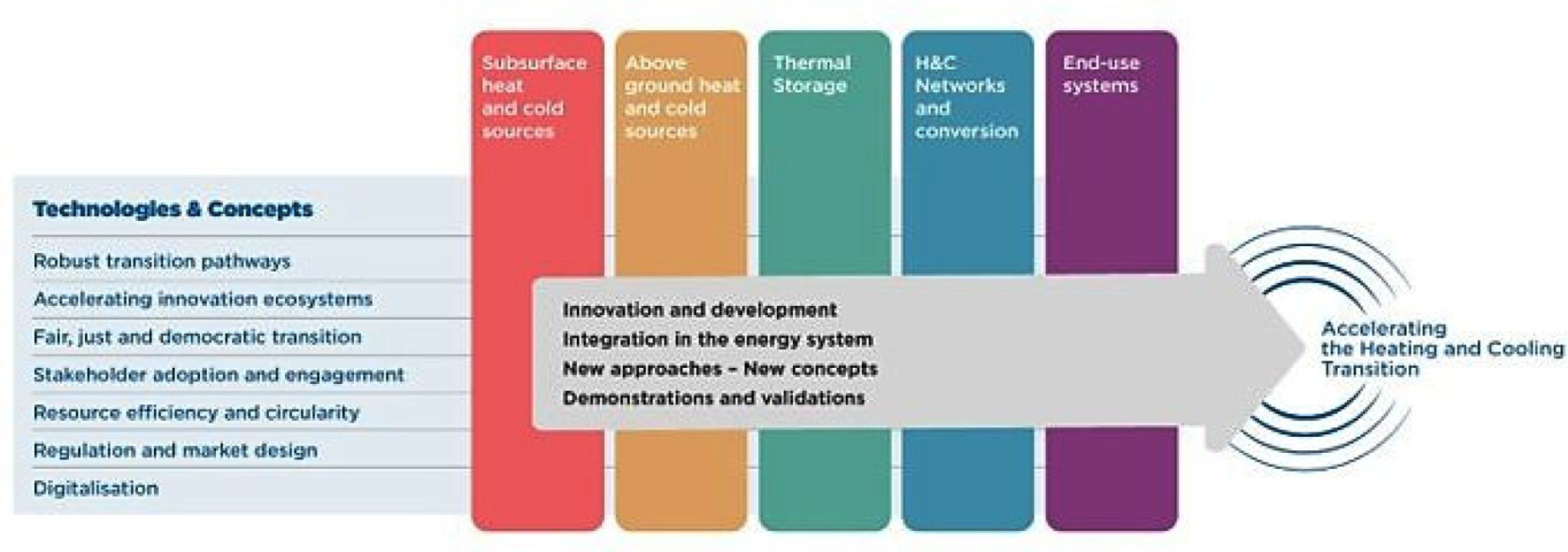
Figure 7.1 Heating and cooling technologies and concepts
Figure 7.1 illustrates the technological scope (vertical bars) and the cross-cutting dimensions (horizontal bars) relevant to this Call Module. The forward-facing arrow symbolises the future-oriented and systemic innovation approach supported by the Call Module.
Complementarity with other Call Modules
This Call Module complements other CETPartnership Call Modules:
Concentrated solar and geothermal energy for power production are addressed in CM2026-03A/03B;
System integration of heating and cooling in regional energy systems, industrial processes and systems and the built environment is addressed in CM2026-08, CM2026-09 and CM2026-10.
Applicants should consult relevant Funding Organisations to ensure alignment and avoid overlap.
Projects are expected to:
• Deliver measurable improvements in technological performance, environmental and climate benefits and cost-effectiveness;
• Deliver solutions that accelerate market deployment of climate-neutral heating and cooling;
• Demonstrate strengthened European manufacturing capacity and resilience;
• Provide clear validation and scaling pathways with strong market uptake potential.
Projects shall demonstrate how their solutions are scalable, impactful and contribute to a climate-neutral and resilient Europe.
|
Call Module requirements |
|
|
Proposals shall take an integrated approach. • Address a specific regional energy-transition challenge with a targeted, impactful solution. • The participation of at least one Need Owner as a Project Consortium Partner is mandatory. • Demonstrate in at least one region and show potential for replication in at least one other region to amplify impact, or identify possible framework-condition gaps. • Project Consortia are encouraged to include partners from under-represented countries or regions in EU clean-energy R&I. • Digital platforms or digital twins may act as enablers but their development is not a core focus of the Call Module. Proposals limited to the development of a single technological component, without integration into a broader system or application context, are ineligible. |
|
|
Guidelines |
|
|
Project Consortium Partners |
• Private and public institutions and companies; • Local and regional authorities (public bodies, municipalities, local and regional governments); • Regional innovation clusters, Stakeholder groups or networks; • Regional infrastructure providers and distribution system operators; • Citizen and industrial energy communities; • Interregional and transnational innovation ecosystems such as Cluster networks or Start-ups networks; • Solution providers: technology product and system developers, service providers, etc.; • Higher or secondary education establishments; • Research organisations. Participation of public and private organisations, networks and clusters, or existing initiatives is encouraged. |
|
Project budget |
Funding requested from the Call in the range of (but not limited to) EUR 1.5–5 million, in addition to any self-financing. |
|
Target RDI approaches/TRLs |
Target RDI approaches: Applied research and system integration combined with real-world demonstration in a relevant distribution grid environment. |
|
Target TRLs: Technological components should advance to TRL 6. For non-technological aspects, SRL and/or MCRL (Section 3.4) should be applied. |
|
|
Contact |
|
|
TRI5 |
|
This Call Module aims to accelerate Europe’s energy transition by promoting integrated, innovative and regionally embedded energy system solutions. It focuses on enhancing the functionality of regional energy systems by improving interactions between system components, regional energy exchanges and diverse actors.
The Call Module encourages Proposals that build on previous work, projects or proofs of concept, with the aim of further developing, demonstrating and validating these results in a regional context.
The overall expected impact of this Call Module is strengthened regional capacity to coordinate a decentralised, efficient and digitalised energy system, including increased stakeholder engagement and societal acceptance.
The main impacts to be generated by topics under this Call Module are:
• Validated, scalable system solutions for integrated regional energy systems;
• Improved cross-sector integration of electricity, heating/cooling, mobility and industry at regional level;
• Transition towards more digitalised, decentralised and flexible system operation;
• Demonstrated transferability and replication potential across diverse European regions.
The energy transition is associated with both technical and complex societal challenges.
Technical challenges
• Integrate heterogeneous local assets (e.g. photovoltaics (PV, solar electricity generation), heat pumps, storage, electric vehicles (EVs));
• Adapt distribution networks to harmonisation of higher shares of renewables and flexible demand;
• Manage congestion and connection-capacity constraints;
• Enable cross-sector integration across electricity, heating/cooling and mobility.
Socio-organisational challenges
• Ensure stakeholder acceptance and active involvement;
• Improve interactions of diverse actors, including residents, the public sector, businesses and infrastructure operators;
• Align innovation with local energy and climate plans;
• Develop governance, market and regulatory frameworks that enable participation and non-discriminatory access.
System transformation requires technological as well as organisational, institutional and social innovation, shifting the focus from isolated technologies to integrated, validated system solutions embedded in regional transition processes.
This Call Module supports multidisciplinary Projects that develop, demonstrate and validate integrated regional energy system solutions. Development of technological components without system integration is ineligible.
Demonstration activities of technological components shall advance to TRL 6 by Project end. For non-technological aspects, proposals should define measurable validation criteria (e.g. contractual uptake, Stakeholder commitment, revenue testing, replication planning) and apply SRL and/or MCRL (Section 3.4).
Definition and role of a “Region”
For this Call Module, a region is a functionally coherent local energy system comprising municipalities, energy communities, industry and grid operators. Boundaries are defined by physical infrastructure, market mechanisms, local generation/consumption patterns and flexibility potential rather than administrative borders.
This reflects current European developments: Distribution grids must expand and adapt to integrate decentralised renewable generation and new flexible demand such as heat pumps and electric vehicle (EV) charging (EC Action Plan for Grids75) and non-discriminatory market access must be ensured Internal Electricity Market Directive and Regulation (IEMD and IEMR).
Regional focus and Stakeholders
Proposals shall address the needs and transition opportunities of at least one clearly defined region among the participating countries. Proposals should:
• Define the region and justify its boundaries (e.g. infrastructure, market mechanisms, local generation/consumption and flexibility profiles);
• Reference existing regional strategies (e.g. climate, energy or implementation plans) and explain precisely how the Project contributes to these plans;
• Validate solutions in real regional environments (pilot, living lab or demonstrator). For each validation activity specify: location, pilot host, key performance indicators, baseline and expected improvement.
Proposals shall clearly define the composition of the Project Consortium and the role of Need Owners. Proposals shall:
• List regional target groups involved (e.g. Distribution System Operators (DSOs), municipal/regional authorities, energy communities, industry, citizen groups);
• Specify which Stakeholders are the Need Owners of the proposed solution and therefore will be the potential implementers;
• Include at least one Need Owner as Project Consortium Partner and provide a concrete engagement plan (timeline, formal agreements or commitments, responsibilities, and mitigation of participation risk).
Applicants are encouraged to use B2Match76 and the Impact Network77 to identify potential matchmaking and validation partners for the Project Consortium. It is also recommended that applicants carefully check the national eligibility requirements for potential Project Consortium Partners of the respective funding organisations. These requirements can be decisive for the composition of Project Consortia.
Target topics
Proposals addressing regional energy transition challenges should include one or more of the following key areas and are encouraged to address at least one of the indicative research questions listed below.
1. Multi-vector integration of regional infrastructures
Integrated system solutions combining electricity, heating/cooling and mobility (including vehicle-to-grid technologies), with the objective of optimising infrastructure use and minimising grid reinforcement.
Indicative questions:
• Which combinations of local assets and control strategies are able to minimise the need for distribution grid reinforcement?
• What data, interoperability standards and control architectures are required to enable fast, reliable multi-vector coordination across heating, electricity and transport sectors?
2. Higher shares of renewables and regional value creation
Approaches that enable higher shares of renewable energy and increase local value creation by strengthening the roles of municipalities, local communities, industries, DSOs and other Stakeholders in shaping local energy exchanges and consumer dynamics.
Indicative questions:
• How can local generation, storage and demand be optimised to increase the share of renewable energy in the regional context?
• How can aggregated local flexibility be demonstrated as dispatchable, verifiable and bankable to support suppliers, grid operators and grid customers in strengthening regional value creation?
3. Regional flexibility and congestion management
Validation of approaches that can be quickly implemented in practice to solve challenges that already exist today. Design coordination and market approaches to identify, aggregate and reliably deploy local flexibility (e.g. battery systems, V2G, demand response, industrial flexibility) to relieve distribution level congestion and provide system services.
Indicative questions:
• How can grid connection and congestion problems be alleviated in the near future through existing regional solutions?
• How can existing assets and solutions be rapidly bundled into regional demonstrations?
4. Regional innovation ecosystems and Need Owner integration
Develop transferable governance, business and participation models that embed technologies, including social/economic research and innovation management approaches to steer, evaluate and scale transitions.
Indicative questions:
• Which governance and business models enable fair, participatory and financially viable regional transitions?
• Which innovation management practices (e.g., living labs, staged scaling, Stakeholder roadmaps) most effectively accelerate adoption and institutionalisation?
Exploitation strategy
Proposals shall include a clear and TRL-appropriate exploitation strategy:
• Description of pathways to uptake (e.g. implementation plans, policy recommendations, IP ownership);
• Definition of target users and Need Owners of proposed solutions;
• Steps to increase societal, market and commercial readiness;
• Consideration of regulatory and institutional frameworks;
• Credible replication and scaling strategies beyond the demonstration region (e.g. methodological transferability, modular system design, governance blueprints);
• Identification of KERs (e.g. software, data sets, algorithms).
Cross-cutting dimensions
Relevant cross-cutting dimensions may include:
• transition and innovation ecosystems
• Social acceptance and behavioural aspects;
• Regulation and market design;
• Fair, just and democratic transition processes.
Dimensions of innovation
In line with the CETPartnership framework Dimensions of innovation, this Call Module typically covers more than one dimension of innovation:
1. Technologies and infrastructures – focus on solutions that go beyond purely technological innovation, using technology primarily as an enabler to support scalable, context-specific system solutions.
2. Integration and organisation – address organisational and institutional aspects, connecting with local and regional energy plans, policies, and roadmaps, and involve regional Stakeholders in co-design, planning, and implementation.
3. Transformation and change – consider systemic transformation, strengthening regions as active players in the energy system, supporting energy transition processes, and ensuring solutions that are scalable and transferable solutions across Europe.
Multi-disciplinary collaboration, including social and economic sciences, is encouraged to maximise societal impact, foster innovation management.
Complementarity with other Call Modules
This Call Module complements other CETPartnership Call Modules:
• Proposals focusing on regional energy system resilience, particularly with regard to reliability, security, and operation under extreme conditions, should consider CM2026-01.
• Proposals focusing on integrated industrial energy systems at the level of a single industrial site should apply to CM2026-09.
• Proposals focusing primarily on system integration in the built environment or specific sectors should consult CM2026-10 or other relevant modules.
In case of uncertainty about where to best propose your Proposal, consult with relevant Funding Organisations or TRIs.
Projects are expected to support the implementation of European energy objectives in line with the Energy Efficiency Directive (EED), the Renewable Energy Directive (RED III).
Expected outcomes of Projects include one or more of the following:
• Regional system solutions validated in relevant environments;
• Increased participation of regional Stakeholders like private and public companies, municipalities, institutions, citizen and industry energy communities and prosumers and citizens in supplying energy, providing flexibility and taking an active role in regional energy systems;
• Transformation of regional energy systems towards more digitalised, decentralised, integrated, adaptive, flexible and resilient configurations;
• Documented evidence of replication potential indicating that the proposed solutions can be transferred and adapted to similar regions across several European countries;
• Mobilisation and inclusion of underrepresented countries and regions, supported by transnational matchmaking and partnering to enhance replication potential.
|
Call Module requirements |
|
|
• Scope: Proposals are in scope where technologies are integrated into industrial processes, industrial symbiosis, and/or energy system coupling. Proposals shall address at least two pathways across defined focus areas with measurable outcomes. • Expected outcomes of Projects: Projects shall contribute to at least three of the outcomes specified in the Call Module. • Project Consortium Partners: The Project consortium shall be a transnational collaboration and shall include at least one industrial Project Consortium Partner (private for-profit company). Industrial involvement is mandatory. Participation of an End User is encouraged. • Target TRLs: TRL at Project end shall be 5 or higher. The Proposal shall include a clear plan to increase TRL during the Project. Additional national/regional requirements and guidelines may apply, see Annex B. |
|
|
Guidelines |
|
|
Project Consortium Partners |
• Secondary and higher education establishments, including disciplines such as social science, humanities, technology, economic and natural science; • Research organisations; • Private for-profit companies, including industrial companies, and providers of technology and services; • Public bodies, including municipal companies; • Other entities (e.g. non-profit organisations). See also Call Module requirements above. |
|
Project budget |
Funding requested from the Call in the range of (but not limited to) EUR 1.5–5 million, in addition to any self-financing. |
|
Target RDI approaches/TRLs |
Projects shall be planned to demonstrate a clear increase in TRL during implementation, moving the proposed solution progressively closer to commercial readiness. |
|
Contact |
|
|
TRI6 |
|
This Call Module aims to accelerate the transition to climate-neutral and resource-efficient industrial energy systems by supporting integrated solutions at industrial site level. These solutions shall reduce direct process emissions, increase electrification, enable the use of renewable energy and green hydrogen, and strengthen the role of industry as an active, flexible and secure component of a renewable-based energy system.
The Call Module is implemented jointly with the Net Zero Industries Mission78 and CETPartnership TRI6 Integrated Industrial Energy Systems (integrated meaning integration of industry energy demand and production to the local and wider energy system and electricity markets, including energy sector integration of heat and electricity also electricity and gas). It targets cost-competitive solutions for the efficient decarbonisation of hard-to-abate, energy-intensive industries by 2030.
It supports the objectives of the Clean Industrial Deal79 by turning decarbonisation into a driver of competitiveness and growth.
The overall expected impact of this Call Module is to increase energy efficiency, reduce total energy consumption, replace fossil fuels, and accelerate the transition towards net-zero emissions in European industry, while strengthening energy independence and system resilience.
The main impacts to be generated by topics under this Call Module are:
• Acceleration of technological breakthroughs and increased industry ambition to support transition to sustainable, climate-neutral industrial production;
• Significant reduction of direct industrial process-related emissions, including emissions across entire value chains;
• Increased resource, carbon and energy efficiency, including circularity and industrial symbiosis;
• Enhanced electrification, renewable energy integration in industry including the direct use of renewable heat;
• Strengthened flexibility, resilience, robustness and security of industrial energy systems;
• Pre-commercialisation of disruptive solutions such as hydrogen integration, renewable e-fuels, carbon capture and utilisation (CCU) and reuse of industrial excess heat.
Achieving climate-neutral industry requires a profound transformation of industrial processes and the integrated energy infrastructure that enable them.
Key challenges include:
• Deep decarbonisation of industrial processes: Reducing direct process-related greenhouse gas emissions through electrification, renewable energy integration and carbon management solutions;
• Integration of new energy carriers: Deployment of green hydrogen and renewable e-fuels as feedstocks and energy carriers;
• Energy & resource efficiency and circularity: Improving material efficiency, sector coupling between industrial energy systems and the wider energy system enabling industrial symbiosis while reducing environmental impacts;
• System flexibility and integration: Positioning industry as an active and flexible participant in renewable-based energy systems;
• Competitiveness and scalability: Developing cost-competitive, replicable solutions ready for market uptake.
This Call Module supports research, development and innovation projects that develop and demonstrate integrated technical solutions for carbon-neutral industrial production at single industrial site level, or a hub of industries while considering interaction with the local and European wide energy system.
Solutions shall go beyond incremental improvements. Stand-alone technical developments without integration into an industrial energy system context are out of scope.
To support effective deployment, Proposals are expected to outline the intermediate steps required to progress from TRL 5 validation toward largescale demonstration, including elements of investment readiness. Proposals should also identify relevant market, regulatory and demand side barriers, and briefly clarify exploitation roles and IP management arrangements supporting future industrial uptake. Insights from these aspects will help enable viable pathways toward largescale and replicable implementation.
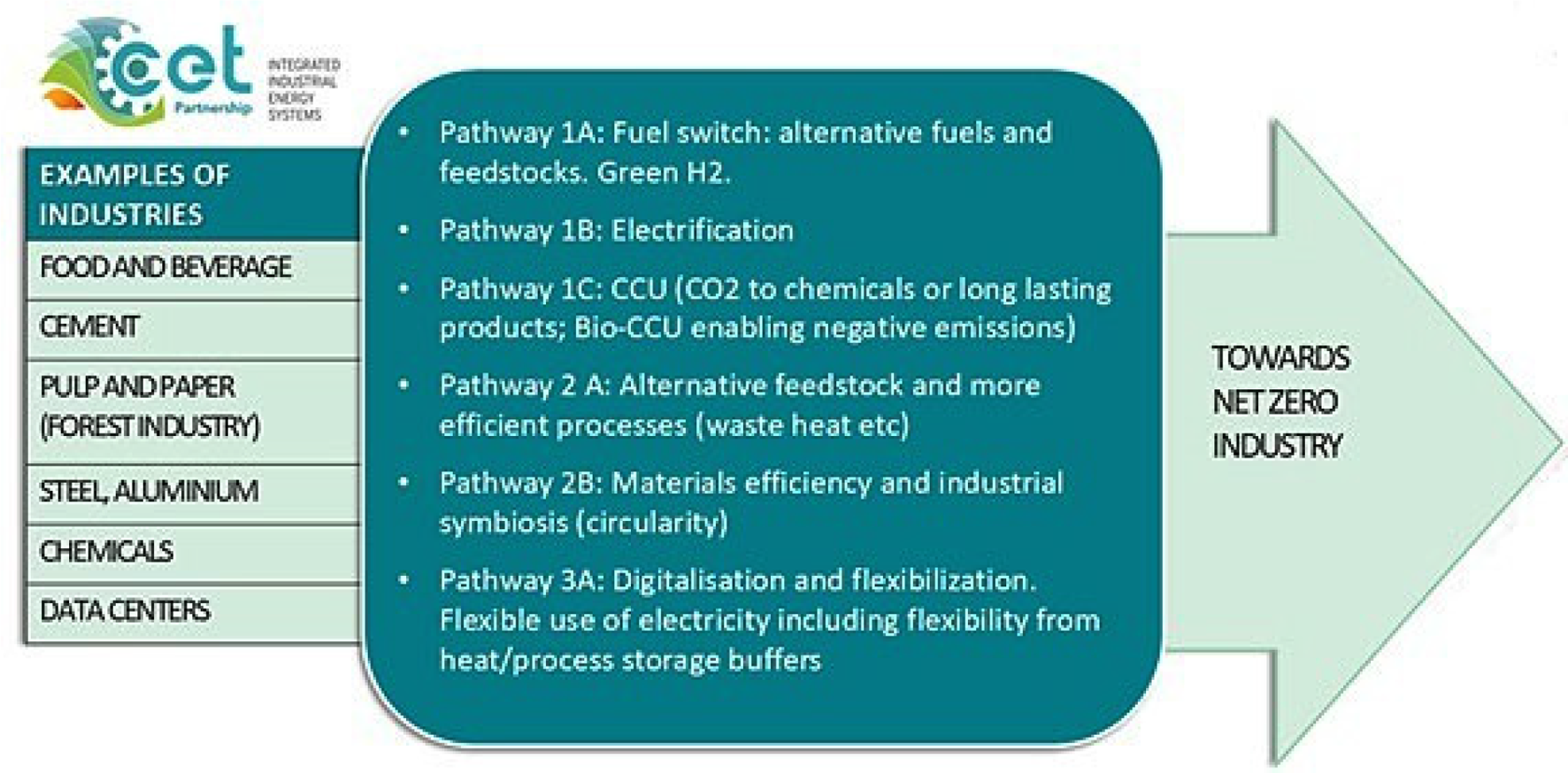
Figure 7.2 Scope of CM2026-09 Integrated industrial energy systems
Target topics
Projects shall address at least two pathways. These may be selected within a single focus area or across multiple focus areas. The focus areas and their corresponding pathways are outlined below.
Focus area1: Climate-neutral industry
Projects shall accelerate the reduction of direct process-related emissions through transformative technological solutions.
Process-related emissions include emissions originating directly from industrial processes and emissions from combustion of fossil-derived residual streams (e.g. flaring of process gases). The primary focus is on greenhouse gas emissions to air, while other pollutants (e.g. SOx, NOx) may be included as additional work. Proposals focusing solely on indirect emissions reductions or conventional fuel switching are ineligible unless they deliver substantial reductions in direct process emissions.
Pathway 1A: Fuel switch – alternative fuels and feedstocks
• Replacement of fossil fuels and feedstocks with renewable or low-carbon alternatives, especially green hydrogen;
• Integration of hydrogen and e-fuels into core industrial processes;
• Development of new process routes enabled by sustainable feedstocks;
• This pathway requires fundamental process transformation rather than incremental substitution.
Pathway 1B: Electrification
• Electrification of high-temperature and energy-intensive industrial processes;
• Deployment of advanced electrified equipment and electric-thermal coupling;
• Integration of renewable electricity to achieve significant, measurable reductions in direct emissions and enable more efficient, sustainable industrial energy systems.
Pathway 1C: Carbon Capture and Utilisation (CCU)
• Capture of fossil and biogenic CO2 from industrial processes;
• Conversion into long-lasting products or valuable feedstocks;
• Integration of CCU with green hydrogen pathways;
• CCU solutions shall enable long-term carbon retention or substitution of more carbon-intensive products.
Examples of relevant topics
• Industrial electrification of core processes or heat demand;
• Reduction of carbon and additional pollutants (SOx, NOx);
• Renewable hydrogen or e-fuel based fuel switching;
• CCU pathways for durable products and materials;
• Integrated gas systems that enable deeper reductions in direct process emissions.
Focus area 2: Enabling energy and resource-efficient industrial energy systems
Projects shall strengthen energy and resource efficiency, improve processes, and enable integration with industrial sites, across industries, and with local or regional energy systems. Solutions should foster industrial and cross-sectoral symbiosis through the exchange of energy, materials, residual streams, waste heat, cooling, byproducts and other resources, supporting circular outcomes that benefit industry and communities.
Pathway 2A: Alternative feedstock and efficient processes
• Use of alternative, low-impact feedstocks and innovative materials;
• Redesign of production processes to reduce energy and material consumption;
• Creation of new production routes improving resource utilisation and lowering environmental impacts.
Pathway 2B: Materials efficiency and industrial symbiosis
• Recovery and upgrading of excess heat (e.g. via heat pumps) for internal and external use;
• Exchange of energy, materials and residual streams across industrial processes;
• Integration of industrial processes with local or regional energy systems to enable circular, resilient industrial ecosystems.
Examples of relevant topics
• Solutions for advanced energy sector coupling in industries for instance power to heat;
• Energy and resource-efficient process technologies;
• Circular and resource-efficient material flows across industries;
• Industrial symbiosis involving exchange of materials, energy, or residual streams;
• Innovations in process chemistry.
Focus area 3: Enhancing system integration and flexibility for renewable integration
Projects shall improve the interaction between industrial energy systems and renewable-based electricity and heat systems through digitalisation, operational flexibility and intelligent control.
Solutions should enable dynamic process adaptation, optimised energy use, and stable, efficient industrial production. Proposals may include sector coupling that links heat and power, hybrid systems, and integration of industrial waste heat into district heating. The aim is to position industry as an active balancing resource.
Pathway 3A: Digitalisation and flexibilisation
• Advanced digital energy management systems and real-time optimisation of energy and material flows;
• Demand-side flexibility and hybrid energy systems combining electricity, heat and storage;
• Digital twins, predictive analytics, forecasting and automated control systems;
• Integration of industrial flexibility into smart grids or local energy communities.
Examples of relevant topics
• Advanced digital solutions for industrial energy management;
• Realtime optimisation of industrial demand and production;
• Flexible loads, heat and / or power storage systems;
• Smart balancing using industrial storage for flexible demand;
• Integration of industrial flexibility into district heating or local energy communities.
Exploitation strategy
Proposals shall include a clear and TRL-appropriate exploitation strategy.
This shall:
• Identify End Users, Need Owners and technology providers;
• Define KERs;
• Present pathways to scale-up and pre-commercialisation;
• Demonstrate credible routes to follow-up funding (e.g. Innovation Fund80 or flagship projects);
• Address international collaboration and long-term partnerships.
Cross-cutting dimensions
Proposals may address relevant cross-cutting aspects, including:
• Policy, regulatory and market frameworks enabling industrial decarbonisation;
• Social acceptance, workforce skills and just transition;
• Sustainability assessments (environmental, economic and social), including life-cycle and circularity analysis.
Proposals focusing exclusively on cross-cutting aspects without integrated technological innovation are ineligible.
Dimensions of innovation
In line with the CETPartnership framework Dimensions of innovation, Proposals under this Call Module should consider the following dimensions of innovation:
1. Technologies and infrastructures – development and demonstration of integrated industrial energy technologies.
2. Integration and organisation – integration of industrial systems with energy markets and networks.
3. Transformation and change – upscaling, replication, innovation ecosystems and transition pathways.
Given its system integration focus, this Call Module could address multiple dimensions simultaneously.
Complementarity with other Call Modules
This Call Module focuses on integrated industrial energy systems for carbon-neutral production. Applications targeting CCU integrated in industrial systems should be addressed under this Call Module. Applications developing CCU technology, without industrial integration integrated in the scope, should be addressed to CM2026-04.
This Call Module complements CM2026-05, which targets R&I on the hydrogen and renewable fuels value chain (production, distribution, storage and cross-sectoral end use), not site-specific industrial integration. In contrast, this Call Module focuses on industrial energy system integration and Proposals addressing end-use technologies with a focus on their integration in industrial processes are recommended to apply under this Call Module.
CM2026-07 focuses on developing heating and cooling technologies. System integration of heating and cooling in regional energy systems, industrial processes and systems and the built environment is addressed in CM2026-08, this Call Module and CM2026-10, respectively.
This Call Module focuses on a single industrial site and its internal energy system, or a hub of industries including its interaction with the wider energy system whereas CM2026-08 focuses on energy exchange and coordination between multiple actors within a regional system.
Applicants are advised to consult relevant Funding Organisations in case of uncertainty.
Projects are expected to deliver integrated technical solutions contributing to climate-neutral industrial production and enhanced system flexibility.
Projects shall contribute to at least three of the following outcomes:
• Development and demonstration of integrated industrial energy system solutions;
• Advancement towards commercial readiness and active exploitation of results;
• Increased industrial efficiency and flexibility supporting renewable-based energy systems;
• Preparation for follow-up demonstration or flagship funding projects both from private sources and other funding programmes like EU’s Innovation Fund81. Establishment of long-term international collaboration among industrial and research partners.
Projects shall generate new knowledge, skills and technologies that support a competitive, climate-neutral and resilient European industrial base.
|
Call Module requirements |
|
|
Single-technology developments are ineligible. |
|
|
Guidelines |
|
|
Project Consortium Partners |
• Private for-profit companies (including small, medium-sized and large enterprises); • Public bodies (including municipalities and local or regional authorities); • Infrastructure providers and operators; • Secondary and higher education establishments; • Research organisations. |
|
Project budget |
Funding requested from the Call in the range of (but not limited to) EUR 1–5 million, in addition to any self-financing. |
|
Target RDI approaches/TRLs |
Project start: TRL 3 or higher. Project end: TRL 5 or higher. |
|
Contact |
|
|
TRI7 |
|
This Call Module aims to transform the built environment from a passive energy consumer into an active, flexible and integrated component of the energy system.
Therefore, the Call Module has 3 complementary goals:
• The integration of existing energy production, conversion, storage and energy management technologies into new and existing buildings;
• Foster digitalisation across the entire building life cycle, from planning and construction to operation, decommissioning and disposal;
• Accelerate the renovation and refurbishment of the existing building stock through innovative concepts and technologies.
The overall expected impact of this Call Module is to contribute to a climate neutral building stock/built environment.
The main outcomes to be generated by topics under this Call Module are:
• Development and validation of building integrated energy solutions;
• Increased building-level flexibility and contribution to overall energy system stability;
• Improved digital tools and processes across the building life cycle;
• Acceleration of renovation rates through scalable, cost-effective solutions;
• Strengthened European competitiveness and innovation capacity in the built environment sector.
This Call Module complements initiatives such as B4PP, DUTP-PED, NEB, and other Call Modules under this Call.
The built environment is central to achieving climate neutrality. However, buildings remain largely passive elements within the energy system. Renovation rates are low, and digital integration across the life cycle is fragmented. The sector must address technical, organisational and societal barriers to accelerate transformation.
This Call Module address the following challenges:
1. Transform buildings into active elements of the energy system
Integrate on-site renewable generation, energy storage and advanced energy management systems to enable buildings to produce, store, manage and exchange energy.
2. Digitalisation of the full building life cycle
Enable digital processes from planning and construction to commissioning, operation, renovation, decommissioning and circular disposal.
3. Accelerating renovation of the existing built environment
Develop innovative, scalable and economically viable concepts and technologies to increase renovation rates and reduce life-cycle emissions, including embodied (“grey”) energy.
The Challenges define the transformation objectives. The Scope below specifies the eligible technological and system activities.
This Call Module supports research, development and innovation actions that integrate technologies and system solutions in real building contexts. Proposals shall go beyond stand-alone component development and demonstrate integration in the built environment.
Proposals should identify the intended building contexts and application areas, such as:
• Existing and new buildings;
• Residential (urban, rural, isolated) and non-residential buildings (public buildings, commercial centres, service and mobility infrastructures, logistics hubs);
• Historical and heritage buildings;
• Different climate and geographical conditions.
Activities may range from applied research to pilot and demonstration activities, provided there is a clear pathway towards market uptake.
Target topics
Proposals are expected to address one or more of the following thematic areas, aligned with at least one of the three Challenges mentioned above.
Under Challenge 1:
• Renewable energy production integrated in buildings;
• Seamless architectural and urban integration of energy technologies;
• Integration of electrical and thermal storage;
• Integration of e-mobility concepts and vehicle-to-building solutions;
• Building-to-building energy exchange and active building concepts;
• Innovative ventilation and air-conditioning systems;
• Active building elements (e.g. façades, windows, switchable insulation) and their system integration;
• Other solutions that enhance renewable integration and building-level flexibility.
Under Challenge 2:
• Digital in-building energy management systems;
• Solutions increasing self-consumption and operational efficiency;
• Digital management of local heating and cooling networks;
• Building Information Modelling (BIM) across the full life cycle, including life-cycle assessment (LCA);
• Circular-oriented digital services within the construction and demolition value chain;
• Other digital innovations supporting planning, operation and end-of-life processes.
Under Challenge 3:
• Prefabricated elements to accelerate renovation;
• Tools for efficient and scalable renovation pathways;
• Holistic and economically viable renovation concepts, including demonstration and LCA;
• Serial renovation approaches;
• Solutions for heritage buildings;
• Life-cycle assessment including embodied energy;
• User acceptance and economic viability studies;
• Other innovations contributing to increased renovation rates.
Exploitation strategy
Proposals shall include a clear and TRL-appropriate exploitation strategy. This shall:
• Identify the intended users and Need Owners (e.g. building owners, municipalities, developers, facility managers);
• Define KERs;
• Describe pathways to market uptake, replication and scaling;
• Outline steps to increase technological readiness, business readiness and societal acceptance.
Proposals should demonstrate strong market uptake potential and include relevant industry partners. Purely research-oriented projects without a credible pathway to deployment will not be funded.
Cross-cutting dimensions
In addition to technological integration, Proposals are encouraged to address cross-cutting aspects that influence deployment, including:
• Market and business model development;
• Regulatory and policy alignment;
• Circular economy strategies over the building life cycle including the efficient use of resources;
• Public engagement and social acceptance;
• LCA and techno-economic analysis (TEA).
However, proposals focusing exclusively on cross-cutting topics are ineligible.
Dimensions of innovation
In line with the CETPartnership framework Dimensions of innovation, Proposals shall explicitly address:
1. Technologies and infrastructures – development and integration of building-level renewable, storage and digital solutions;
And are encouraged, where relevant, to address:
2. Integration and organisation – integration within energy systems, regulatory and market frameworks.
3. Transformation and change – user behaviour, innovation ecosystems, replication, circularity and environmental sustainability.
Projects should describe how they contribute to at least one Challenge through technological innovation, and how additional dimensions strengthen system integration and transformation.
Complementarity with other Call Modules
This Call Module bridges the gap between:
• Single-technology development (e.g. CM2026-03A/03B, CM2026-07);
• Large-scale system integration (e.g. CM2026-08).
Basic battery research is addressed under CM2026-06.
Applicants uncertain about the most appropriate Call Module should consult the relevant Funding Organisations.
Projects are expected to deliver measurable and validated results contributing to one or more of the following outcomes:
• Development and demonstration of integrated building energy systems;
• Increased building-level flexibility and improved interaction with integrated energy systems;
• Wider use of renewable energy and advanced energy management tools;
• Improved digital tools supporting planning, operation, renovation and end-of-life processes;
• Accelerated progress towards commercial readiness and scalable market uptake;
• Enhanced readiness of Project Consortium partners to pursue follow-up demonstration or flagship funding;
• Quantified environmental and climate benefits, including reduced life-cycle emissions and increased resilience.
|
Transnational requirement 8 |
|
A Proposal shall include a dedicated and mandatory work package entitled “Reporting and Knowledge Community”. |
|
Contact |
|
Knowledge Community Management |
This annex describes the mandatory Reporting and Knowledge Community, which shall be included in every Proposal in accordance with Transnational requirement 8 (Section 3.5).
The Work Package shall be allocated appropriate resources, expressed in person-days (PDs) and corresponding budget.
The required level of resources depends on the Project Consortium composition, scope, and duration of the Project. As a minimum:
• Projects shall allocate at least 15 PD per year;
• Projects with a total budget exceeding EUR 2 million shall allocate at least 20 PDs per year.
The maximum expected allocation for this Work Package is 3% of the total Project effort.
For conversion purposes, an average of 18–20 PDs corresponds to one person-month (PM).
This Work Package applies at the transnational level of the CETPartnership. Additional national/regional requirements regarding reporting, communication, or dissemination may apply (Annex B).
The Work Package includes both mandatory and optional activities. At least one Project Consortium Partner shall participate in the mandatory activities. For optional activities, the Project Consortium is advised to select activities based on relevance, objectives, and available capacity.
Unless otherwise specified, the following applies:
• Activities are primarily organised virtually, with support from the CETPartnership Knowledge Community Management and the Digital Information-System for Communication and Collaboration (DISCCO)82.
• Multiple Project Consortium Partners may participate in the same activity.
• Certain activities may be more relevant to specific types of Project Consortium Partners.
• Active participation in at least one Working Group or related activity is encouraged.
• Regular participation in virtual meetings and workshops is encouraged.
• Participation in at least one physical meeting per year is recommended, where feasible, with low-emission travel options such as rail transport.
• Some Funding Organisations may restrict funding for dissemination activities to specific types of organisations (e.g. public entities). Project Consortia shall consult the relevant Funding Organisations where necessary.
The work package consists of the following two tasks:
The Coordinator is responsible for transnational reporting obligations under this Task.
Reporting activities include submission of a factsheet, annual reports, a final report, and participation in transnational surveys, as specified in Table A.1. The collected information will be used for monitoring and assessment purposes at partnership level.
Table A.1. Reporting (Task 1). Mandatory activities and indicative annual time commitment per Project per year
|
Activity |
Format |
Frequency |
Estimated time (PD) |
|---|---|---|---|
|
Publishable factsheet |
Report |
1 (Project start) |
0.5 |
|
Annual report |
Report |
1 |
≈3–5 |
|
Participation in transnational surveys |
varies |
varies |
0.5 |
|
Final report for the entire Project duration |
Report |
1 (Project end) |
≈5–7 |
Under this Task, Projects are expected to contribute to activities within the CETPartnership Knowledge Community (Subsection 2.3.3).
The Knowledge Community provides a range of collaboration and co-creation activities. Participation shall be aligned with the objectives, thematic focus, and RDI approach of the Project and the expertise of the Project Consortium Partners.
Details of the available activities are set out in Table A.2.
Table A.2. Contribution to Knowledge Community co-creation activities (Task 2). Mandatory (blue) and optional (white) activities and indicative annual time commitment per Project per year
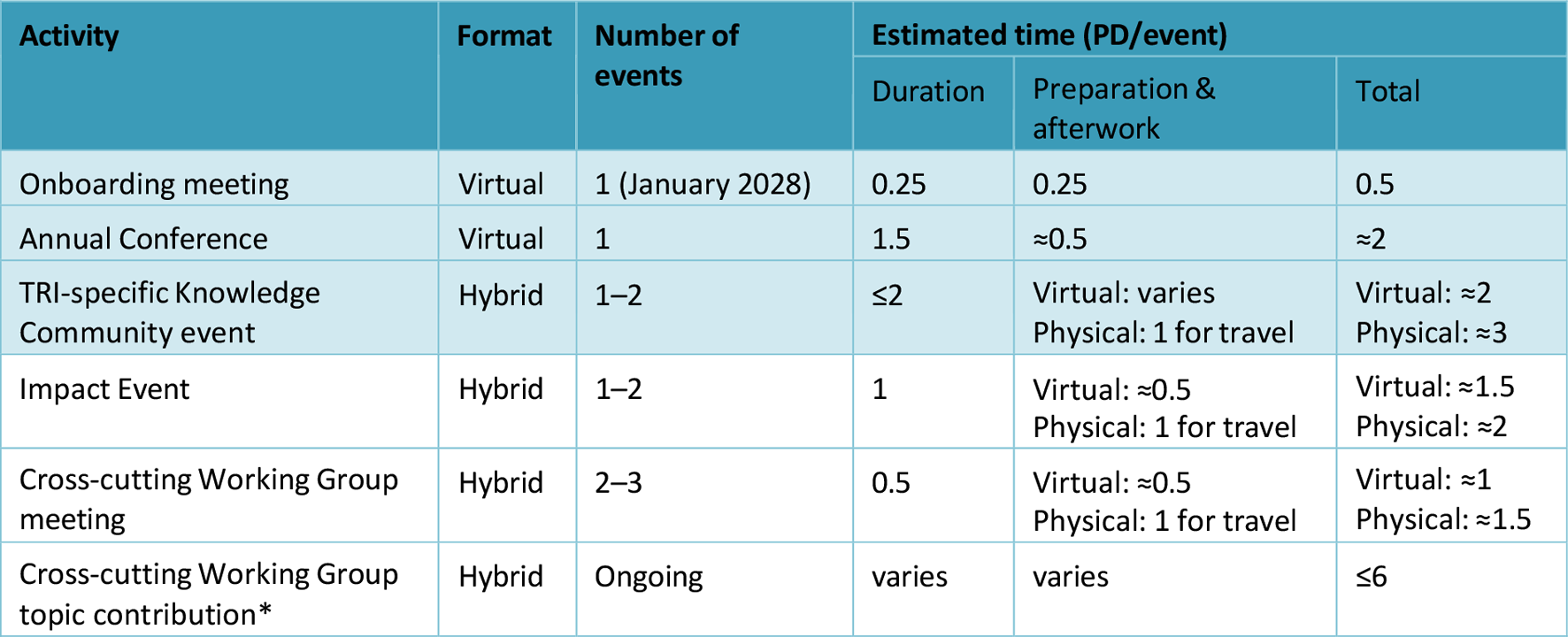
*Cross-cutting Working Group topic contribution can be towards a knowledge brief, joint article, etc.
Table B.1. Participating Funding Organisations
|
Country |
Region |
Organisation name |
Acronym |
|---|---|---|---|
|
Austria |
Austrian Research Promotion Agency |
FFG |
|
|
Belgium |
Flanders |
Fonds Innoveren en Ondernemen |
FIO/VLAIO |
|
Belgium |
Wallonia |
Service public de Wallonie |
SPW |
|
Canada |
Alberta |
Emissions Reduction Alberta |
ERA |
|
Czech Republic |
Technology Agency of the Czech Republic |
TA CR |
|
|
Denmark |
Energy Technology Development and Demonstration Programme |
EUDP |
|
|
Estonia |
Estonian Research Council |
ETAG |
|
|
Finland |
Business Finland |
BF |
|
|
France |
(Federal) |
Agence Nationale de la Recherche |
ANR |
|
Pays de la Loire |
Pays de la Loire Region Council |
RPL |
|
|
Germany |
(Federal) |
Projektträger Jülich/Forschungszentrum Jülich GmbH (BMWE) |
PtJ (BMWE) |
|
Saxony |
Saxon State Ministry for Science, Culture and Tourism |
SMWK |
|
|
Greece |
General Secretariat for Research and Innovation |
GSRI |
|
|
Hungary |
National Research, Development and Innovation Office |
NKFIH |
|
|
Ireland |
Taighde Éireann – Research Ireland (formerly Science Foundation Ireland) |
TÉ-RI (SFI) |
|
|
Sustainable Energy Authority of Ireland |
SEAI |
||
|
Israel |
|||
|
Korea (Republic of Korea) |
Korea Agency for Infrastructure Technology Advancement |
KAIA |
|
|
Latvia |
Latvian Council of Science |
LZP |
|
|
Lithuania |
Research Council of Lithuania |
LMT |
|
|
Malta |
Xjenza Malta (formerly Malta Council for Science and Technology/Science Malta) |
XM (MCST) |
|
|
The Netherlands |
Dutch Research Council |
NWO |
|
|
Netherlands Enterprise Agency |
RVO |
||
|
Norway |
The Research Council of Norway |
RCN |
|
|
Poland |
National Centre for Research and Development |
NCBR |
|
|
Romania |
Executive Agency for Higher Education, Research, Development and Innovation Funding |
UEFISCDI |
|
|
Slovak Republic |
Slovak Centre of Scientific and Technical Information |
CVTI SR |
|
|
Spain |
(State) |
Agencia Estatal de Investigación |
AEI |
|
Centre for the Development of Technology and Innovation |
CDTI |
||
|
Asturias |
Fundación para el Fomento en Asturias de la Investigación Científica Aplicada y la Tecnología – Agencia de Ciencia, Competitividad Empresarial e Innovación Asturiana |
FICYT-SEKUENS |
|
|
Basque Country |
Departmento de Desarrollo Económico, Sostenibilidad y Medio Ambiente. Eusko Jaurlaritza-Gobierno Vasco |
EUSKADI |
|
|
Sweden |
Swedish Energy Agency |
SWEA |
|
|
Tunisia |
Ministry of Higher Education and Scientific Research |
MHESR |
|
|
Turkey |
The Scientific and Technological Research Council of Türkiye |
TUBITAK |
|
|
The United Kingdom |
Northern Ireland |
Invest Northern Ireland |
Invest NI-UK |
Link to more information about the national/regional requirements and guidelines can be found on the CETPartnership’s webpage83.
Last updated 02.06.2026
Information on the Funding Organisation in the Call
|
Budget |
€ 2,000,000 |
|
Anticipated number of projects to fund |
5 |
|
Website |
|
|
Contact |
Tom van Rens, Policy Officer, +31 6 2307 6121 Steven Beijer, Policy Officer, +31 6 8345 9733 cetpartnership@nwo.nl |
National/regional requirements and guidelines on proposals
|
Call Modules and topics |
CM2026-01 “Integrated energy system resilience in a changing environment” CM2026-07 “Heating and cooling technologies” CM2026-08 “Integrated Regional Energy Systems” |
||
|
Proposal submission |
It is recommended to use the NWO budget template in the pre-proposal stage to confirm eligibility of budget items and correct use of tariffs. For full proposals, it is mandatory to submit the NWO budget form for the funding requested at NWO at the time of the transnational deadline. |
||
|
Project Consortium Partners |
An application for funding from NWO may consider the following roles: – National main applicant (mandatory): the national applicant who leads the application to NWO and is the foreseen national project leader, in case a project is granted. – National co-applicant (optional): national applicants in addition to the national main applicant with an active role and responsibility in realising the project and requesting funding from NWO. A researcher may only request NWO funding for one project (part of a European consortium) in this Call for proposals, either as national main applicant or national co-applicant within an application for NWO funding. National main applicant To be eligible to submit a proposal, researchers must be employed for an indefinite period (with the associated employment contract) or have a tenure track agreement at any of the following research organisations: – universities and universities of applied sciences, as described in Section 1.8, subsection 1 of the Dutch Higher Education and Research Act, or universities referred to in the Policy Rules for Universities in the Kingdom of the Netherlands; – university medical centres, as described in Article 1.13, paragraph 1 of the Higher Education and Scientific Research Act; – KNAW institutes and NWO institutes; – TO2 institutions1; – Netherlands Cancer Institute; – Max Planck Institute for Psycholinguistics in Nijmegen; – Naturalis Biodiversity Center; – Advanced Research Centre for NanoLithography (ARCNL); – Princess Máxima Center. Researchers employed at a university of applied sciences and researchers employed at a TO2 institute may also submit as a national main applicant if they have at least a salaried position for a limited period of time. Individuals with a zero-hour or fixed-term employment contract (other than a tenure track appointment) cannot submit a proposal. Applicants with a part-time appointment must ensure adequate supervision of the project and all project members for whom funding is requested. It may be that the national applicant’s tenure track employment contract ends before the intended completion date of the project for which grant funding is being requested, or that the national applicant’s tenure agreement ends before this date due to their reaching retirement age. In such cases, the proposal must include a statement from the employer. In this statement, the research organisation in question guarantees that the project and all project members for whom funding is being requested will receive adequate supervision for the full duration of the project. This applies to a national main applicant as well as national co-applicant (see below). National co-applicant National co-applicants must be affiliated with a research organisation either 1) eligible as a national main applicant (see above), or 2) with other research organisations as described in Article 1.1, paragraph 4 of the NWO Grant Rules 2024 that comply with the following cumulative conditions. The organisation must: – be established in the Netherlands; – be a foundation, organisation or legal entity established and governed by public law (in Dutch: publiekrechtelijke rechtspersoon) (all other legal forms, including private and public limited companies, are excluded); – have as its primary goal the independent conduct of its own fundamental research, industrial research or experimental development or with widely disseminating the results of those activities through teaching, publications or knowledge transfer; – be able to state that the organisation keeps separate accounts regarding economic/non-economic activities and that undertakings with decisive influence on the organisation do not enjoy preferential access to the organisation’s results. Note: Prior to submission of a pre-proposal, NWO will assess whether an organisation complies with Article 1.1, paragraph 4 of the NWO Grant Rules 2024 and is thus eligible to participate as national co-applicant based on the above conditions. This assessment also helps to ensure NWO’s compliance with regulations prohibiting state aid. To enable the assessment to be carried out, the intended national co-applicant’s organisation must submit the following documents by email tocetpartnership@nwo.nlno later than 10 working days before the submission deadline (i.e. by 24 September 2026, 14:00:00 CEST): – a recent extract from the Chamber of Commerce; – a deed of establishment and/or current articles of association; – the most recently available annual accounts, including an audit report2; – a completed Research Organisation Statement, which is available on the funding page of this Call for proposals. Other relevant documents may also be included. NWO may also request additional information if the above documents do not allow for adequate determination of the organisation’s eligibility to act as national co-applicant. If in a full proposal national co-applicants are added to the consortium who are not affiliated with any of the research organisations listed above, these new national co-applicants must be assessed based on the same conditions. Again, the intended national co-applicant’s organisation must submit at least the above-mentioned documents by email to cetpartnership@nwo.nl no later than 10 working days before the submission deadline (i.e. by 25 February 2027 14:00:00 CET). If the intended national co-applicant’s organisation has already been assessed and found to comply with these conditions as part of a different NWO programme, please contact NWO at the above email address well before the applicable deadline to determine whether further assessment is necessary. If the intended national co-applicant’s organisation fails to submit the documents required for assessment on time, NWO will not accept the organisation as national co-applicant. If a research organisation was already assessed and approved as a national co-applicant before submitting the pre-proposal, there is no need to have it assessed again for the submission of the full proposal. |
||
|
Project duration |
Maximum of 36 months |
||
|
Project budget |
– € 400,000 in case of one national main applicant; – € 600,000 in case of a national main applicant and at least one national co-applicant, both applying for research personnel costs. |
||
|
Funding request |
|||
|
Funding rates (%) |
|||
|
Basic research |
Industrial/ applied research |
Experimental development/innovation |
|
|
Large enterprises |
– |
– |
– |
|
Medium enterprises |
– |
– |
– |
|
Small enterprises |
– |
– |
– |
|
Universities, public research organisations |
100 |
100 |
100 |
|
Public authorities |
– |
– |
– |
|
Associations without economic activities, NGOs |
– |
– |
– |
|
Notes |
|||
|
Types of cost to be funded |
The available budget modules are: 1. Personnel: Salary costs can be claimed for the following positions: 1.1 Postdoc: at least 1 position, for at least 12 months, for at least 0.5 fte, according to UNL or UMCNL rates, a benchfee is available; 1.2 Non-scientific personnel (NWP): according to UNL or UMCNL rates; 1.3 Research leave: max. 10% of the grant amount, according to UNL or UMCNL rates. 1.4 Personnel at universities of applied sciences, TO2 institutes and other (research) organisations: using the Government Tariff Manual (HOT), Table 2, under 2.2 ‘average total salary cost per salary scale’, column ‘Hourly rate productive hours, excluding VAT’. 2. Material: For project-specific material costs, up to 25% of the grant amount. Subsequently, up to 50% of the material budget can be used for work by third parties. Engagement of students may be included here according to the usual internship fee or HOT rates. 3. Knowledge utilisation: For activities that promote the use of knowledge from the research, mandatory and at most 20% of the grant amount. 4. Project management:: Up to 5% of the grant amount. It is recommended to use the NWO budget template in the pre-proposal stage to confirm eligibility of budget items and correct use of tariffs. For full proposals, it is mandatory to submit the NWO budget form for the funding requested at NWO at the time of the transnational deadline. Please note the following: – An application for NWO funding has one national main applicant, responsible for scientific and financial management. National co-applicants within an application for NWO funding are allowed. – Researchers employed at a university in the Kingdom of the Netherlands, UMC or a research organisation, as referred to in Article 1.1, first paragraph, subparagraphs c to h of the NWO Grant Rules 2024 may not apply for a scientific or post-doc position for themselves. – PhD positions cannot be applied for in this call, due to the maximum project duration of 3 years. – Overhead costs are not eligible for NWO funding. A detailed “Explanation of budget modules and indexing” can be found on www.nwo.nl/cetp. Do not hesitate to contact the national contact points in case of questions. |
||
|
RDI approaches and TRLs |
TRL level as specified per eligible Call Module (see module description in call for proposals). |
||
|
Other requirements/guidelines |
The NWO Grant Rules 2024 and the Approval of Funding for Scientific Research are applicable to all applications for NWO funding. Any arrangements made regarding the grant from NWO, for instance in a Consortium Agreement, must comply with the NWO Grant Rules 2024 and the European legislation on state aid. Once proposals are recommended for funding on a transnational level, the consortia will be notified by the CETP Call Management and subsequently, the national granting process will be initiated by NWO. Under the Dutch General Administrative Law Act, any interested party has the right to lodge an objection to the decision taken by NWO within six weeks of the date of the decision letter. Further information about the objection’s procedure can be found on the NWO website: https://www.nwo.nl/en/lodging-an-objection. NWO will, if necessary, apply a one-off indexation of personnel costs when awarding a grant. The current UNL/UMCNL/HOT rate on the national decision date applies. Please refer to the “Explanation of budget modules and indexing” on the NWO funding page, for more information on indexing. As stipulated in the NWO Grant Rules, Article 3.2, paragraph 2, the project cannot start until the conditions set out in the grant award decision regarding the start of the project are met. Please note, these conditions will include a signed Consortium agreement by all partners in the transnational project. Submission of financial and scientific reports at national level is required in accordance with the rules of NWO. Granted consortia will be informed. |
||
https://energy.ec.europa.eu/topics/research-and-technology/strategic-energy-technology-plan_en
Definition in Horizon Europe Work Programme 2025, 14. General Annexes, https://ec.europa.eu/info/funding-tenders/opportunities/docs/2021-2027/horizon/wp-call/2025/wp-14-general-annexes_horizon-2025_en.pdf
https://cetpartnership.eu/sites/default/files/documentation/CETP_exploitation_guidelines_2024.pdf
Horizon Europe Work Programme 2025, 14. General Annexes, https://ec.europa.eu/info/funding-tenders/opportunities/docs/2021-2027/horizon/wp-call/2025/wp-14-general-annexes_horizon-2025_en.pdf
Innovation actions (IA) – Activities that aim directly to produce plans and arrangements or designs for new, altered or improved products, processes or services. These activities may include prototyping, testing, demonstrating, piloting, large-scale product validation and market replication.
https://innovationsfonden.dk/sites/default/files/2019-03/societal_readiness_levels_-_srl.pdf
https://cetpartnership.eu/sites/default/files/documentation/CETP_exploitation_guidelines_2024.pdf
https://mur.support.cineca.it/support.php?service=mur-internazionali.bandi.cineca.it&cmp=65330
Representative Concentration Pathways (RCPs) are greenhouse gas concentration trajectories defined by the Intergovernmental Panel on Climate Change (IPCC). They describe different climate futures based on projected emission levels. For example, RCP4.5 represents an intermediate stabilisation scenario in which radiative forcing stabilises at 4.5 W/m2 (approximately 650 ppm CO2 equivalent) by 2100. In this pathway, global emissions peak around 2040 and then decline due to mitigation measures, without exceeding the target forcing level.
EU’s industrial carbon management strategy, https://energy.ec.europa.eu/topics/carbon-management-and-fossil-fuels/industrial-carbon-management_en
EU’s industrial carbon management strategy, https://energy.ec.europa.eu/topics/carbon-management-and-fossil-fuels/industrial-carbon-management_en
Mission Innovation report, https://www.energy.gov/hgeo/articles/accelerating-breakthrough-innovation-carbon-capture-utilization-and-storage
“Advanced biofuels” means biofuels produced from the feedstock listed in Part A of Annex IX to Directive (EU) 2018/2001(Renewable Energy Directive).
“Synthetic renewable fuels” means fuels derived from renewable hydrogen produced using renewable energy (e.g. electricity,
heat or sunlight) and combined with CO2 or N2, preferably captured from air or from biogenic effluent gases.
“Electro-fuels” or “e-fuels” means a category of synthetic, drop-in replacement fuels produced by storing renewable electricity in the chemical bonds of liquid or gaseous fuels. They are intended to be carbon-neutral. Typical products include butanol, biodiesel and hydrogen, as well as other alcohols and carbon-containing gases such as methane and butane.
COM/2023/634 final; https://eur-lex.europa.eu/legal-content/EN/TXT/?uri=CELEX:52023DC0634; https://setis.ec.europa.eu/working-groups/renewable-fuels-and-bioenergy_en; https://setis.ec.europa.eu/working-groups/hydrogen_en
See Battery 2030+ R&I Roadmap, https://battery2030.eu/wp-content/uploads/2025/11/Deliverable-2.2_Roadmap_4th-edition_final_-2025.10.31.pdf
See Energy and resource efficiency in buildings: IWG5_IP_Update_Final_20250728.pdf; Concentrated solar thermal technologies: Initiative for Global Leadership in Concentrated Solar Thermal Technologies; Geothermal energy: d2a943_9d8dc3dfe4774e38891675e551aff18c.pdf; and Sustainable and Efficient Energy Use in Industry: 6ddf1194-1407-44ad-986d-ab3ec112e5d2_en
Kopieer de link naar uw clipboard
https://zoek.officielebekendmakingen.nl/stcrt-2026-25829.html
De hier aangeboden pdf-bestanden van het Staatsblad, Staatscourant, Tractatenblad, provinciaal blad, gemeenteblad, waterschapsblad en blad gemeenschappelijke regeling vormen de formele bekendmakingen in de zin van de Bekendmakingswet en de Rijkswet goedkeuring en bekendmaking verdragen voor zover ze na 1 juli 2009 zijn uitgegeven. Voor pdf-publicaties van vóór deze datum geldt dat alleen de in papieren vorm uitgegeven bladen formele status hebben; de hier aangeboden elektronische versies daarvan worden bij wijze van service aangeboden.
 Authentieke versie (PDF)
 Informatie
 Printen
 Delen