Staatscourant van het Koninkrijk der Nederlanden
| Datum publicatie | Organisatie | Jaargang en nummer | Rubriek |
|---|---|---|---|
| Nederlandse Organisatie voor Wetenschappelijk Onderzoek | Staatscourant 2022, 28931 | overige overheidsinformatie |

U bent nu hier: Publicaties Officiële publicaties
Zoals vergunningen, bouwplannen en lokale regelgeving.
Adressen en contactpersonen van overheidsorganisaties.

EUROPEAN PARTNERSHIP
DRIVING URBAN TRANSITIONS
DUT Call 2022
Co-funded by the European Commission (Grant N° 101069506)
CALL TEXT
|
IMPORTANT DEADLINES |
|
Submission deadline pre-proposals: 21 November 2022 at 13:00 (CET) |
|
Submission deadline full-proposals: 3 May 2023 at 13:00 (CEST) |
Revisions of the call text
If the call text has been updated, the changes are tracked in the table below.
|
Date Update in call text |
|---|
The Driving Urban Transitions (DUT) Partnership builds upon the achievements of the Joint Programming Initiative (JPI) Urban Europe created in 2010 to address the global urban challenges with the ambition to develop a European research and innovation (R&I) hub on urban matters and create European solutions by means of coordinated research. JPI Urban Europeso far has implemented fifteen transnational Joint Calls (out of which five were in cooperation with the European Commission (EC), three in international cooperation).
With 111 funded projects bringing together 765 beneficiaries from 35 countries throughout Europe and the world it has contracted EUR 116.8 million.
It has published strategic research and innovation agendas (SRIA), in co-creation with urban stakeholders and R&I actors. In addition, active AGORA community and city network groups have been created.
While the DUT Partnership will build upon all these achievements, it will at the same time allow to enhance the ambition, strongly increase the portfolio of projects, set up new measures towards capacity building, urban policy support, demonstration and mainstreaming of results.
The DUT Partnership is supported by the EC and funded under the Horizon Europe co-funded Partnership scheme (Topic HORIZON-CL5-2021-D2-01-16) under grant agreement N° 101069506.
|
1 |
Introduction |
2 |
||
|
1.1 |
Structure of the call tekst |
2 |
||
|
1.2 |
Background to urban challenges addressed through the DUT Partnership |
3 |
||
|
1.3 |
Available budget and funding scheme |
4 |
||
|
2 |
Scope and topics of the Call for proposals |
4 |
||
|
2.1 |
Aims, approaches and recommendations for the proposals |
4 |
||
|
2.2 |
Types of research and innovation (R&I) activities to be supported |
5 |
||
|
2.3 |
Call topics |
7 |
||
|
2.3.1 |
Positive Energy Districts Transition Pathway (PED) |
8 |
||
|
2.3.2 |
15-minutes City Transition Pathway (15mC) |
11 |
||
|
2.3.3 |
Circular Urban Economies Transition Pathway (CUE) |
13 |
||
|
3 |
Eligibility criteria and guidelines for applicants |
15 |
||
|
3.1 |
Consortium: who can participate and apply |
16 |
||
|
3.2 |
What can be applied for |
17 |
||
|
3.3 |
Preparing and submitting an application |
17 |
||
|
3.4 |
Summary of the transnational eligibility criteria |
18 |
||
|
3.5 |
National/regional specific eligibility rules |
19 |
||
|
3.6 |
Eligibility check |
19 |
||
|
4 |
Assessment and selection procedure |
19 |
||
|
4.1 |
Pre-proposal stage (stage 1) |
19 |
||
|
4.2 |
Full-proposal stage (stage 2) |
20 |
||
|
4.3 |
Right to object a decision, redress procedure |
21 |
||
|
4.4 |
Time schedule |
21 |
||
|
4.5 |
Evaluation criteria |
21 |
||
|
4.6 |
Conflicts of interest (Expert Panel) |
22 |
||
|
5 |
Project implementation |
22 |
||
|
5.1 |
Consortium Agreement |
22 |
||
|
5.2 |
Project monitoring and reporting |
23 |
||
|
5.3 |
Programme activities |
23 |
||
|
5.3.1 |
Mandatory project events |
23 |
||
|
5.3.2 |
Reports and summaries for the general public |
23 |
||
|
5.4 |
Publications and dissemination |
24 |
||
|
5.4.1 |
Acknowledgements |
24 |
||
|
5.4.2 |
Open science practices, data management and data sharing |
24 |
||
|
5.5 |
Personal data protection |
24 |
||
|
5.6 |
“Do No Significant Harm” (DNSH) principle |
25 |
||
|
6 |
Contact details and other information6 |
25 |
||
|
Annex A: Specific Funding Agencies’ Budgets and Rules of Eligibility37 |
26 |
|||
|
Annex B: Data Management |
80 |
|||
|
Annex C: Definitions of strategic and applied research, and innovation |
81 |
|||
|
Annex D: Urban Living Labs |
82 |
|||
|
Annex E: Glossary |
84 |
|||
The purpose of this Call for proposals is to support transnational research and/or innovation projects addressing urban challenges to help cities in their transition towards a more sustainable economy and functioning. The challenges are grouped into three themes called ‘Transition Pathways’: Positive Energy Districts, the 15-minute City and Circular Urban Economies.
It is the first Call of the Partnership Driving Urban Transitions (DUT) funded by the European Commission under the Horizon Europe Partnership scheme.
The projects selected within this Call will be funded directly by national/regional Funding Agencies from the following countries: Austria, Belgium, Bulgaria, Cyprus, Czech Republic, Denmark, Estonia, Finland, France, Germany, Greece, Hungary, Iceland, Italy, Latvia, Lithuania, The Netherlands, Norway, Poland, Portugal, Romania, Slovenia, Spain, Sweden, Switzerland, Türkiye and the United Kingdom.
Each proposal must involve, at least, three partners from three countries on this list and that are eligible for funding by their respective national/regional Funding Agency. The added value of transnational collaboration should be clearly stated.
The Call is opened to a wide range of scientific disciplines and welcomes interdisciplinary approaches. It intends to support a large range of activities, from research to innovation and implementation.
It also asks applicants to engage explicitly with stakeholders (companies, public authorities, NGOs...) in the projects and to consider users’ needs in the identification of the project goals. Projects are expected to take a transdisciplinary and preferably co-creative approach from the early project formulation stages.
This document describes the objectives, scope, and topics of the Call, rules for participation and procedures for proposal development and project implementation.
Further information on this Call (mandatory templates to use for applying, link to the submission platform, etc.) can be found on the DUT Website.
This call text is structured as follows:
• The aims and topics of the Call are described in chapter 2.
• Chapter 3 presents the eligibility criteria for an application as well as the instructions for submission.
• Chapter 4 covers the assessment and selection procedure and presents the evaluation criteria.
• Finally, in chapter 5, the implementation of the project with regards to the consortium agreement, project monitoring and programme activities is described.
Our future relies on tackling complex grand challenges now, many of which must be addressed within cities and by urban communities. Cities and urban areas are the nexus for the transformations required if the European Union (EU) is to achieve the targets of the European Green Deal (EGD) and to fulfil commitments related to the United Nations (UN)’ Agenda 2030 Sustainable Development Goals (SDGs), UN-Habitat’s New Urban Agenda, the Urban Agenda for the European Union, the Paris Agreement and to support the New European Bauhaus (NEB) movement.
The Driving Urban Transitions (DUT) Partnership aims to address these challenges with an integrated approach to offer decision makers in municipalities, companies and, more generally, society the means to enact and enable the necessary urban transformations. Furthermore, the DUT Partnership aims to develop, through research and innovation (R&I) projects, skills and tools (including technology) to make urban change happen and boost the urgently needed urban transformations, and to bring existing and new knowledge and evidence into action.
The DUT Partnership focuses on three critical urban sectors (and their interrelationships) which are laid out in its roadmap1 as Transition Pathways (TP):
• The Positive Energy Districts (PED) Transition Pathway aims at supporting urban energy transitions through innovative solutions for the planning, large-scale implementation and replication of PEDs with the mission to have at least 100 PED by 2025. Furthermore, it will contribute to the Mission on Climate Neutral and Smart Cities2 by building a portfolio of PED-related solutions towards climate-neutrality. PEDs build on the optimisation of energy efficiency, (local) energy generation from renewables and energy flexibility and will be synergistically connected to the energy system in Europe. By applying an integrative approach including technology, spatial, regulatory, legal, financial, environmental, social and economic perspectives, PEDs raise the quality of life in cities, contribute to achieving the COP21 targets and the EGD objectives and enhance European capacities and knowledge to become a global role model.
• The 15-minute City (15minC) Transition Pathway fosters sustainable urban mobility transitions by improving accessibility and connectivity, starting from the neighbourhood level. The concept of the 15minC is based on the idea that city dwellers should be able to cover the vast majority of their daily needs within a 15-minute radius, by walking and cycling, while connecting to further districts and travelling larger distances by other forms of sustainable transport. The 15minC seeks to establish integrated and mixed-used neighbourhoods at large, which are key to reduce greenhouse gases (GHG) emissions in the transport and logistic sector and adapt urban environments to the challenges of climate change. Thus, the 15minC wants to account for the diversity of contemporary lifestyles and boost climate-neutral, liveable and inclusive cities. The 15minC objective is to facilitate analysis, elaboration, experimenting and testing of innovations for 15-minute cities in co-creative settings, bringing these together in a 15minC innovation portfolio of 50+ experiences and practices, recognising different urban contexts and focusing on transferability.
• The Circular Urban Economies (CUE) Transition Pathway aims to support the planning and design of inclusive urban spaces sustained by circular resource flows. The CUE TP operates from the assumption that such spaces can only emerge if transformative interventions understand and address urban areas as simultaneously characterised by their resource use and socio-economic aspects. Thus, it encourages a multitude of tools and approaches that combine efforts towards increased urban resource efficiency and liveability. By collecting examples and grouping them according to topic and context, the CUE TP will provide a portfolio of 50+ solutions that can contribute to the circular transformation of urban areas until the end of the DUT Partnership.
For the DUT Partnership to maximise impact for European and global policies, these three Transition Pathways (TP) are to be considered in an integrated manner and with a firm commitment to urban, regional and city authority capacity building in terms of ambitious policy-making and implementation. Evidence will be created with and for city administrations, municipalities, business and society, aiming at all kinds of innovation and capacity building needed to transform our neighbourhoods and urban areas. The DUT Partnership will offer a framework for innovation, demonstration and preparation of larger-scale translation of solutions and approaches into local urban settings.
This first Call aims to create or reinforce a portfolio of R&I projects that address issues and challenges identified in one of the three TPs. Proposals addressing subjects from across different TPs can be submitted and are welcome, though it is not mandatory3. All projects are asked to choose a main TP and may indicate which other TP(s) are involved, if any.
The total available budget for this Call is approximately EUR 90 M, including support from the European Commission (EC) through Horizon Europe (co-funded action DUT – Grant Agreement number 101069506).
The national/regional Funding Agencies (the list is given in Annex A), which are the partners of the EC grant under the DUT Partnership project, are not eligible for funding under this co-funded call.
Each national/regional Funding Agency will provide funds directly to their eligible beneficiaries in accordance with the agencies’ rules and regulations.
Tables 1 and 2, provided in Annex A, give an overview of the national and regional budgets dedicated to this call by each Funding Agency and of its positioning on which topics and who can be funded.
Table 3, provided in Annex A, presents the funding rules and guidelines for each national/regional Funding Agency.
Focus on urban areas, in the context of achieving climate-neutral and sustainable cities
Projects are expected to be focussed on urban area (including peri-urban area) issues and challenges. Where appropriate, they may also consider the effects and impact on other territories like rural areas or take into account the urban-rural relationships.
Transdisciplinarity, involvement of “stakeholders”, practitioners, citizens, community groups, NGOs
The complex societal challenges addressed in the DUT Partnership also ask for knowledge on and insight in transition, innovation and implementation processes, acceptance of new systems and services and insight in mid- and long-term behaviour of stakeholders.
Therefore, collaboration and co-production of knowledge with research users and, in particular, professionals in companies and governments, citizen groups or NGOs (grouped under the generic name of “stakeholders” below), is highly relevant.
All projects must clearly engage stakeholders and demonstrate user needs relevant to the project goals (see the evaluation criteria in Chapter 4.2).
Stakeholders might, for example, be involved in the choice of the topic of the proposal, in the design and advising on the project and/or in carrying out parts of the work programme. Therefore, consortia submitting proposals to this Call are asked to describe how stakeholders are involved in the project (such as throughout the various stages of project design, implementation, analysis and dissemination). The extent of involvement may vary according to the context of the project proposed and national/regional regulations of participating funding organisations.
Stakeholders may be associated to the project as full partners (particularly for R&I proposals, see below the definitions), or as associated co-operation partners that do not directly receive funding but can contribute to the project through various forms (steering committee, advisor, provider of data...). See Annex A for individual funder rules.
Projects are expected to take a transdisciplinary and preferably co-creative approach from the early project formulation stages.
Scientific disciplines and interdisciplinary approaches
This Call is open to a very wide range of scientific disciplines, in social sciences and humanities and arts, in environmental sciences, in natural and technical sciences and application fields such as architecture, spatial planning and policy development.
Moreover, the complexity of urban sustainability usually requires interdisciplinary approaches to analyse the challenges and find solutions. Projects should mobilise the necessary disciplines required to address all aspects of the issues they wish to tackle.
Inclusion of diversity (including gender dimension) or specific population considerations
Applicants are highly encouraged to integrate diversity considerations in submitted proposals, as well as to consider underrepresented populations in the planned research.
This includes not only the diversity distribution and gender balance in the consortium composition, but also the inclusion of diversity perspectives and analysis in the R&I activities if it is relevant4.
Transnational benefit
Projects should support collaboration that goes beyond individual national efforts and demonstrates sharing, operationalising and transferring existing knowledge, resources, and research facilities to mutual, transnational benefit. Clear added value of the transnational consortium should be demonstrated and, if relevant, the added value for national investments.
Connection to earlier European, national, regional research and innovation actions
The projects resulting from this Call are expected to build on existing knowledge and experiences as achieved in earlier relevant European, national and regional R&I programmes, pilots and test implementations and field labs5. In the proposal, it is necessary to indicate how projects are positioned with respect to the state-of-the art.
In particular, the projects are expected to clearly explain how they complement and go beyond earlier or on-going European, national and regional R&I projects (and, of course, beyond the state-of-the-art) in the domain or on the subject they would like to explore.
Outputs and outcomes of the projects, broader impacts of the proposed activity
Establishment of potential long-term partnerships, leveraging of existing knowledge networks and project co-design between researchers and stakeholders should be essential components of the proposed projects.
Outputs should be targeted towards decision-making (including public and private spheres as well as communities) and innovations (technological, organisational and institutional as well as social).
The proposals are expected to clearly present:
• how stakeholders will be engaged and contribute to the project and will be involved in the dissemination and use of the results;
• their plan for broadly communicating and disseminating their outputs and outcomes, to enhance scientific and technological understanding and transfer their results to end users; and describe their strategy for longer-term utilisation of project outcomes;
The projects are also asked to contribute to, and through their results, feed into the dissemination and valorisation activities of the DUT Partnership (see section 5.3 Programme activities).
This Call is open for proposals referring to a broad range of research types: strategic urban research, applied urban research, urban innovation and implementation (see definitions in the table below).
Different Funding Agencies have the possibility to fund different parts of the R&I landscape. Table 1 in Annex A indicates the research types that will be funded by each Funding Agency.
The combination of different research types within one project (with potential differentiation at work package level) is possible as long as involved Funding Agencies’ eligibility rules are fulfilled.
However, it is clear that the purpose, expected impact at the end of the project, level of involvement and role of stakeholders (companies, local authorities, end users’ representatives…) in a project depends on the positioning with respect to R&I activities.
The assessment procedure of the proposals is built to take into account these differences in characteristics, goals and expectations. In particular, some sub-criteria differ if the project is more focussed on research or if it is more focussed on innovation (see section 4.5) and the relative weighting in assessment between academic expertise and more practical expertise will also be adjusted.
The topics presented below for each TP are open to this broad range of R&I activities. None of the topics favour one research type over the other: research as well as innovation approaches can be suggested for all call topics. However, it is likely that specific subjects or issues tackled at the level of a project are more suited to one or other of these approaches.
Research and innovation should not be seen as conflicting and instead as a continuum and most projects will probably be a mix of both. However, to help ensure a balanced portfolio of funded projects covering the R&I landscape, applicants are asked to identify and indicate which of the following approaches is the best fit for their project, depending on the main purpose of their proposal:
> a more “research-oriented approach” (ROA) to support projects aiming at producing knowledge, analysing data, better understanding and modelling phenomena and developing expertise and tools that will be useful to stakeholders, practitioners and policy-makers. This R&I orientation (called ROA moving forwards) welcomes proposals mainly focused on strategic and/or applied research;
> a more “innovation-oriented approach” (IOA) to support projects aiming at developing or improving practical, operational solutions – technological and organisational – for companies, local communities and authorities in charge of urban transport and urban planning, as well as management and testing of such solutions. This R&I orientation (called IOA moving forwards) welcomes proposals mainly focused on applied research and innovation6;
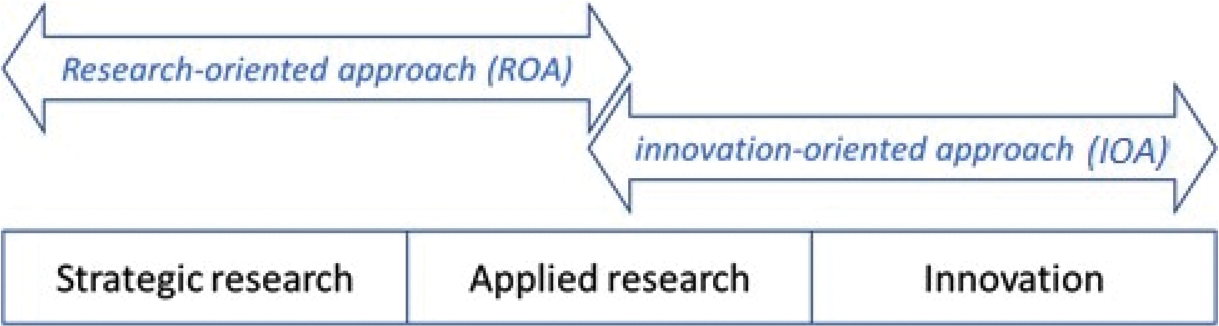
Figure 1: positioning of the ROA and IOA with respect to research and innovation
Both approaches are equal in relevance for this call.
For proposals combining both research and innovation aspects, the project coordinator has to choose the R&I approach that is the most relevant considering the main objective and major novelty brought about by their project.
|
Definitions of strategic research, applied research and innovation (research types) |
|
The key characteristics of the three stages of R&I activities are defined as follows: |
|
• “strategic urban research” is defined as research activities driven by the desire to know, understand, and explain how cities function and interact across domains and sectors. Strategic urban research by this definition encompasses qualitative as well as quantitative approaches, and examples can be found in any academic discipline. The subject of this type of research can be a specific aspect of a city or a city in its entirety, or even a network of related cities. Strategic urban research can be theoretical, comparative or case-specific. For this research approach, the prime goal is to expand on the common knowledge about how cities function. In line with this, it places a high value on traditional scientific method and publication in peer reviewed journals. In many cases, this type of research would still have value to end users so they should be engaged where appropriate. |
|
• Understanding of how cities function (including urban mobility and connectivity) is essential to be able to achieve effective (policy) intervention. Achieving this through knowledge creation is often referred to as “applied urban research”. Applied urban research in this context is about how city officials, citizens, practitioners, and others can influence and interact with a city, with a purpose of improving it or adapting it in some respect. In applied urban research, there is good opportunity to involve citizens, and representatives from non-academic institutions (NGO’s, citizen organisations, companies, public authorities…) in the projects, to bring the practitioners’ perspective in order to co-produce knowledge relevant for user stakeholders. Applied urban research is designed to be tangible and applicable to such a degree that the results are likely to have an impact on actual decisions and policy. Apart from publication in peer-reviewed journals, knowledge exchange activities such as policy briefings, policy seminars and other events targeted at stakeholders are important, as well as dissemination in popular media. |
|
• While strategic and applied urban research are both focused on producing knowledge, “urban innovation and implementation” takes things one step further, and promotes the actual creation or advancement towards new policies, practices, services, products or processes – such as integrated systems, tools, services and data – in such a manner that the first impact already takes place during the project phase. Initiatives should therefore have a focus on experimentation, testing, implementation, evaluating and disseminating results, and are always carried out in close collaboration with stakeholders. Policies, practices, processes, services or products being developed could be of commercial value, but equally welcome is innovation directed at public governance, management, and operation. Urban innovation should be carried out in close collaboration with stakeholders. |
The following table provides some key characteristics of the two R&I approaches.
|
Characteristics |
Research-oriented approach (ROA) |
Innovation-oriented approach (IOA) |
|---|---|---|
|
Desired impact |
Advance towards answering the questions: – “How do cities really function?” in a way that can be generalised and add to the universal body of knowledge about cities, and serve as a foundation for future research. – “What works, when attempting to improve cities?” in a way that can be generalised enough to serve as useful knowledge for decision-makers and practitioners. |
Advance towards the development, implementation, demonstration, testing, evaluation, and uptake of approaches for new products, services, policies, practices, and processes, with potential for improving economic, social, or environmental sustainability in cities. |
|
Importance of generating results fit for publication in reputable academic journals |
Very important |
Encouraged |
|
Methodological approach |
Rigorous scientific method including methodological advancement |
Systematic, proven approach |
|
Foundation of work on evaluation and analysis of empirical observations |
Encouraged |
Required |
|
Involvement of stakeholders |
Involved at least as advisors |
Directly involved into the workload |
|
Role for applying Urban Living Labs |
Welcome |
Encouraged |
|
Role for policy research |
Fits well |
May fit |
|
Valorisation of project results |
Provision of insights to an important societal issue, production of useful knowledge for stakeholders/decision makers/practitioners |
Market potential of the project or capacity to respond to a demand or need (including societal needs) |
|
Interdisciplinary approach |
Encouraged |
Encouraged |
|
Academic disciplines expected in project |
All welcome (especially from social sciences, arts and humanities) |
|
|
Preference for qualitative or quantitative methods |
Both welcome |
Both welcome |
|
Background of evaluators for project assessment |
Knowledgeable researchers from universities and Research and Technology Organisations (RTOs) with topic-relevant disciplinary background and expertise, researchers with strong experience on utilization of research results, representatives of companies, cities and other relevant stakeholders. |
|
The basis of the call topics description is the three TPs: Positive Energy Districts, 15-minute City, and Circular Urban Economies.
For each TP, several topics are defined. The context, issues and opportunities that define each topic are presented first, in terms that aim to inspire research and innovation ideas, along with examples of expected results and outcomes that may be addressed either through the research-oriented approach or through the innovation-oriented approach.
Furthermore, since urban transition issues are intrinsically interconnected, it is possible to address several topics, either from the same or different TPs, within the same proposal.
All projects should choose as their main TP, the TP that is the closest to the subject they would like to address and may indicate another TP involved if needed. Though the proposal will be evaluated within its principal main TP, crosscutting characteristics will also be taken into account in the assessment.
The PED Programme7 has developed a framework definition for PEDs that builds on the technological optimisation of the three energy functions of PEDs, while equally considering the context of the societal, economic and environmental challenges and with the goal of advancing urban energy transitions towards climate neutrality:
“PEDs are energy-efficient and energy-flexible urban areas or groups of connected buildings which produce net-zero greenhouse gas (GHG) emissions and actively manage an annual local or regional surplus production of renewable energy. They require integration of different systems and infrastructures and interaction between buildings, the users and the regional energy, mobility and ICT systems, while securing the energy supply and a good life for all in line with social, economic and environmental sustainability.”8
Proposals are asked to refer to this framework definition and provide details as to how it applies to the local context of the project.
PED topic 1: Energy communities – energy transition driven by civil society
The transformation of the energy system towards net-zero greenhouse gas (GHG) emissions and climate neutrality also aims to empower individuals and shift the citizens’ role from their traditional position as customers towards a more active role. As organised local initiatives addressing the energy transition, energy communities play an important part in facilitating citizens’ participation and decision making in the energy system. Energy communities organise collective and citizen-driven energy actions that will help pave the way for a clean energy transition, whilst moving citizens to the fore. They contribute to increasing both public acceptance of renewable energy projects and scale of uptake and make it easier to attract private investments in the clean energy transition. By supporting citizen participation, energy communities can moreover help in providing flexibility and resilience to the electricity system through demand-response and storage.
Energy communities will strengthen the PED concept with its neighbourhood-oriented focus and contribute to a better organisational grounding of PEDs within local communities. How can we mainstream the concept of energy communities in different contexts? How can energy communities be involved already in early planning phases or urban planning processes in general? Proposals are encouraged to design PED implementation processes largely based on bottom-up initiatives like energy communities, show challenges, barriers and benefits of these approaches and provide technologies/products/services (e.g., in the context of digitalisation) that can support these communities.
Regulatory framework for energy communities
Through the Clean Energy for All Europeans Package9, the EU has introduced the concept of energy communities in its legislation, notably as citizen energy communities and renewable energy communities, including new rules that enable active consumer participation. National legislation is increasingly adapted according to the EU directives. Proposals are asked to identify barriers and opportunities of the legislative framework in a given national context and make use of the transnational setting of projects by comparing and identifying fruitful frameworks and best practice examples. Based on this, proposals should explore multiple governance models for energy communities, their place in current regulatory system, questions of ownership (e.g., physical elements) and their connection to existing governing bodies. Furthermore, proposals are asked to design strategies for better involving energy communities in the process for PED implementation according to this framework.
Process design for incentivizing/mobilizing energy communities
Proposals are asked to design and demonstrate strategies for mobilising active citizen participation in the energy market in a given local context through awareness- and capacity-building, linking with existing local initiatives, etc. Proposals should explore initiation and onboarding processes for individuals and entities to an energy community. This should make sure that these are not gated communities, and people with different economic backgrounds are able to participate on multiple levels.
Business models and public-private partnerships
An increasingly decentralised energy market asks for new business models and new forms of public-private partnership. In order to enable residents to form energy communities, they need to be provided with models that involve all relevant stakeholder groups in the process: energy suppliers, grid operators, operators of the energy community, participants/users and public authorities. Proposals are asked to design business model development in a given local context and design a process for technical implementation, planning and design of the energy-relevant assets in an energy community.
Furthermore, proposals are asked to design processes to handle and track assets and their value exchange. Due to the multi-owned nature of resources in such communities, a trustworthy way to exchange goods is necessary.
PED topic 2: Energy flexibility strategies – technological, legal, societal challenges
For a climate-neutral future energy system based on renewables, energy flexibility is a core challenge. Energy flexibility actively contributes to the resilience and balancing of the regional energy system with the optimal benefit for the regional energy system in mind. The main roles and functions of PEDs regarding energy flexibility are:
• to actively contribute to the resilience and balancing of the regional energy system with the optimal benefit for the regional energy system in mind. With urban districts/neighbourhoods being among the main consumers of energy in the energy system, demand side management, sector coupling and storage are among the main instruments to achieve this goal;
• to ensure energy security and prevent energy poverty, as well as to create and ensure resilience to external cost increases without excluding anyone;
• to manage any interactions between the urban district/neighbourhood and the regional energy system such as to enable carbon neutrality and 100% renewable energy in local consumption and an additional surplus of renewable energy over the year.
With PEDs being an essential part of the regional energy system, PEDs themselves become balancing factors in the regional energy system, based on the reduction of energy demand, and with instruments for balancing seasonal and regional fluctuations of energy use and energy generation.
Technological solutions
Proposals are asked to design innovative technological solutions for energy flexibility strategies in PEDs and to show innovative bridging of existing technological solutions, and demonstrate them in a specific urban context, e.g. by means of Living Labs. Solutions shall refer to demand side management, sector coupling, active management for balancing and optimisation, peak shaving, load shifting and storage and consider strategies for implementation considering the societal, cultural, economic, legal and spatial context. Technological solutions must contribute to the net-zero emission goal and embed circularity and nature-based solutions. Proposals should also focus on exploring tools and approaches to calculate and optimise technical solutions on multiple levels (building, neighbourhood, district, city).
Legal framework and challenges
The EU promotes active consumer participation in all energy markets through Clean Energy for All Europeans Package10. National legal frameworks are often seen as a major barrier for energy flexibility measures (e.g., sharing and trading of energy, etc.). Proposals are asked to identify these barriers and provide proposals for overcoming them, as well as identify gaps in the regulatory framework.
Role of PEDs in the regional/national energy system
PEDs require active interaction with the regional energy system, according to the potential of renewables – only a few PEDs will be able to manage an exclusively locally generated energy surplus. Regarding energy flexibility, PEDs may play an important balancing role in the regional context. In the transformation phase of the energy system11, for actual climate-neutrality of a PED, energy sources from outside the PED need to be fossil-free. Proposals are asked to design strategies for interaction between PEDs and the regional/national energy system, considering smart grids, share of energy between national, regional and local levels, storing for balancing seasonal fluctuations, etc. Proposals should collect different kind of viable incentives, and create a framework and process that allows for a selection of optimal incentive packages in different contexts.
Societal impact
As with all technological solutions, energy flexibility strategies need to strongly consider both societal conditions and societal impact. Proposals are asked to design and demonstrate strategies for public participation and stakeholder involvement regarding energy flexibility solutions and to raise awareness and capacity. Project proposals must consider behavioural aspects, governance structures, the legal framework and the social capital of the local population. They also need to demonstrate the impact of proposed solutions on energy security and the prevention of energy poverty, including the identification and addressing of systemic inequalities regarding energy supply. Overall, proposals need to show the positive societal impact of their proposals, connecting technological solutions with improving the quality of life in a given urban context, mobilising inhabitants and stakeholders and incentivising community-building.
PED topic 3: Energy efficiency in existing urban structures
For a successful journey towards climate-neutral cities and the energy transition, we need innovative strategies for (local) generation of renewable energy, for energy flexibility and for energy efficiency. The aim of energy efficiency strategies is an optimal reduction of energy consumption within PEDs, balancing out the needs of the different sectors, building infrastructure, the use of energy, settlement typology, as well as transport and mobility. This topic focuses on energy efficiency strategies in existing urban neighbourhoods, starting with strategies for the reduction of energy demand and for significantly improving efficiency of use of the remaining energy demand, including all different layers of energy: power/heating & cooling, mobility, embodied energy. Embodied energy needs to be considered via a life cycle approach and by assessing the energetic and ecological footprint of goods and services.
Even without a PED ambition, coordinated comprehensive urban retrofitting processes are complex, time-consuming and require intense cooperation between public authorities, the building sector, owners and tenants, investors etc. Driving the energy transition via PEDs in existing urban neighbourhoods face specific challenges regarding:
• applying technological solutions in an existing, potentially historic setting with a grown building structure and infrastructure;
• behavioural aspects when it comes to energy-efficient use in households, mobility, etc;
• process design, which aims at participation and co-creation with local residents and different stakeholders’ groups, considering the social and economic capital of people living and working in a given neighbourhood and the complex ownership structures.
Strategies for tackling the transformation of existing urban neighbourhoods towards PEDs are strongly connected with the ambitions of the European Renovation Wave and the New European Bauhaus (NEB), respectively. Proposals are encouraged to align with these initiatives. The European Renovation Wave12 has identified three focus areas:
• Tackling energy poverty and worst-performing buildings
• Public buildings and social infrastructure
• Decarbonising heating and cooling
To boost energy performance of buildings, the EU has established a legislative framework that includes the Energy Performance of Buildings Directive 2010/31/EU and the Energy Efficiency Directive 2012/27/EU13.
The NEB has identified “three inseparable values”: sustainability, aesthetics and inclusion.14 This implies a comprehensively transdisciplinary approach, including technologists, architects and designers, social sciences, etc.
Technological solutions for neighbourhood-oriented strategies for retrofitting/refurbishment of buildings
Proposals are asked to provide innovative retrofitting and refurbishment strategies in an existing urban neighbourhood and to demonstrate the ability to replicate these strategies, disseminate them and foster replication. This specifically includes insulation of buildings (public/private) and building services and the need to connect with local energy generation through renewables (photovoltaic, heat-pumps, etc.) and energy flexibility strategies. Functional mix and building density are aspects that need to be considered properly, proposals are encouraged to make suggestions for improving the local mix of uses or densification/de-densification, respectively, and show the impact on energy efficiency.
Proposals need to consider aspects of design, cityscape and preservation of historical buildings and show the economic feasibility and inclusion aspects of proposed solutions. Regarding processes, proposals are asked to design and demonstrate cooperation modes between public authorities, the building sector and utilities, as well as strategies for involving residents, civic society, building owners and other stakeholders into planning and implementation processes. Since indicators are often misinterpreted and not properly acted on, proposals should be encouraged to explore and create decision support processes and tools for multiple stakeholders based on different goals. Proposals should also emphasize the exploration of synergies between existing and refurbished buildings, how these mixed developments should be handled, and how energy communities can be also extended to newly built buildings.
Energy efficiency in local mobility and transport, public services and public infrastructure
Proposals are encouraged to provide strategies and solutions for increased energy efficiency and climate-neutrality in the local/regional mobility and transport system as elements of a PED and to explore synergies between mobility, transport systems and decentralised energy generation and storage. This includes strategies for public and private mobility and the design of public spaces regarding promotion of walking, cycling and other “green” modes of mobility. Furthermore, proposals should provide innovative solutions for increasing energy efficiency in other public services and public infrastructures, e.g. public lighting, waste management, public buildings, digital infrastructure, etc. and to design strategies for the transformation process. Proposed strategies may take into consideration the wider urban context and show pathways for promoting a mixed-use functional structure of a given urban neighbourhood as a way of reducing mobility and transport needs -referring to the concept of the 15-minutes city or similar concepts.
Societal aspects
Proposals are asked to connect technological solutions with aspects of quality of life and inclusion and to link technological solutions with greening strategies and the improvement of the quality of public spaces. Proposed strategies and solutions need to not only support the goal of climate-neutrality, but also climate change mitigation. Refurbishment processes usually come with a burden for local residents, processes need to be designed sympathetically to residents. Strategies need to consider inclusiveness, meaning both affordability (effect on rents, etc.) and safety of refurbishment processes and involvement of the public in the process. They also need to address energy poverty issues, specifically by considering the socio-economic and demographic structure of existing neighbourhoods.
15mC topic 1: Strengthen the mix of urban functions and services
At the core of the 15mC stands the idea that daily necessities of diverse urban societies are within reach of comfortable walking or biking distance. A key prerequisite that makes such short distances to services and opportunities possible – to enable needs around living, working, supplying, caring, learning and enjoying – is the spatial quality and capacity of accommodating services for the local population as well as having a mix of functions in a neighbourhood. However, the recent decline of urban retail, and continuous suburbanisation, undermine this idea. Additionally, cities have had to intensify efforts to reverse and adapt car-centric and modernist developments in Europe’s post-war era that focused on separating functions in different parts of town, thus disentangling grown structures and formerly existing connections.
This topic encourages proposals that rethink the role and integration of services and institutions into the urban fabric, to the end of strengthening neighbourhood functions that provide for climate-neutral urban mobility. We encourage projects that explore current trends and diverse social needs, projects that challenge legal frameworks as well as the regulatory environment and reimagine governance, alliances of stakeholders and business models in order to enhance and implement the mix of urban functions and services – focused on mobility needs, but also on other services and amenities used daily in a neighbourhood – within the built environment. Considering the multidisciplinary nature of this theme, projects are required to consider, take up and link different groups of (urban) society, city administrations, businesses and citizens in co-creative methods.
Where (spaces for) key functions are lacking in neighbourhoods, this topic welcomes experimenting and testing innovative approaches that incentivise closely-knit networks of diverse opportunities for inhabitants, while preserving existing green spaces. Proposals are invited to reflect on experiences with such measures and procedures that build on synergies and avoid conflicts with other needs, especially with housing. More generally, ways of preserving existing and incentivising the creation of new spaces for social infrastructure, services and places of work are of interest, especially in widely mono-functional neighbourhoods. The starting point of these investigations is set on the neighbourhood level, but can also reach a system perspective on city- or metropolitan level. Here, we furthermore call for approaches and procedures to reactivate underutilised and vacant spaces for production, retail and services as well as testing concepts to make use of services using active travel for low-density and suburban areas.
Proposals are invited to build on previous projects and initiatives investigate and synthesise learnings and experience of international good practice in this field.
15mC topic 2: Foster sustainable options for personal mobility and logistics in urban outskirts15 (and beyond)
Today, the 15mC seems within reach in most lively city centres, often characterised by spatial constellations and favouring preconditions that developed over long periods of time. On the other end, many questions are left unanswered on how the principles of proximity and the city of short distances can be transferred to low- and mid-density neighbourhoods. Such areas – ranging from the urban outskirts to suburban areas and the metropolitan region – pose a considerable challenge for climate-neutral mobility, especially to active and shared forms of transport. Often established forms of public transport are unable to provide high service standards at reasonable cost. The accessibility of many destinations (workplace, schools), functions and opportunities (shopping and healthcare) is low, resulting in a high dependence on the private car and longer travel distances for individuals as well as for deliveries of products. This has been compounded by car-focused city planning, leading to persistent preferences and habits that have been shaped, anchored and are hard to be reconsidered individually.
To a high degree existing infrastructure and the local built environment are constants that cannot be rebuilt to reach targets on climate change. Therefore, the emphasis should be on reusing, repurposing and reimagining them. In order to test and deliver approaches for low- and mid-density areas more quickly, this topic focuses on sustainable mobility and logistic options as well as measures to reduce the need for frequent or long trips in these contexts. Thus, this topic highlights the importance of learning from concepts that rethink mobility in the urban outskirts, reflecting the regulatory framework and infrastructure requirements for different transport modes and investigating combinations, hubs, intermodal junctions and platforms to deliver comfortable and attractive offers for shared and active mobility, e.g. with regard to commuter traffic. Proposals are furthermore invited to cover opportunities and new business models (including public good oriented business models) for public (micro) transport, as well as broader shared mobility (bike-, scooter-, car- and ride sharing) and delivery traffic. Submitted proposals are welcome to investigate potentials for and specific approaches to delivering sustainable mobility both between city centre(s) and suburbs as well as between suburban areas.
We encourage projects that start from issues for walk- and bikeability, their potential for urban outskirts as well as the need for appropriate infrastructure and possible ways and procedures to quickly answer these (e.g. by temporary and tactical measures). The social dimension of mobility is considered central to forthcoming projects, such as in strengthening existing sustainable mobility behaviour, as well as raising awareness and creating incentives to change negative habits. This should add to existing efforts to shift away from car dependency in low- to mid-density neighbourhoods. Possible answers should start from the established local context and account for the desire of many people to live in suburban settings, while optionally including the needs of socio-economic and different age groups.
15mC topic 3: (Re)imagine urban public spaces and streets for vibrant, sustainable neighbourhoods
Public space is a scarce and critical resource in cities. Today’s streets and squares are (still) widely dominated by cars, representing a spatially inefficient form of urban mobility, both when moving and standing still. While the uneven distribution of urban street space between different transport modes is long-known, the COVID-19 pandemic highlighted the importance of high-quality public space on a neighbourhood level – and the apparent widespread lack of it. In this context, urban societies are to answer the questions of which uses they want to prioritise in public space, and how (local) streets and vibrant urban neighbourhoods will (have to) look like in climate-neutral cities.
To this end, this topic focuses on strategies, procedures, tactics and narratives that reimagine streets, where central qualities are lacking. Such qualities in public space encompass safety of stay and movement – with an emphasis on active mobility, openness to a multitude of uses, promotion of human contact and social activity and much more. We look for true alternatives to the current status quo and concepts that make use of the vast amount of space available, once street space is distribute more fairly among transport and social functions. Proposals are invited to critically reflect and conceptualise (planning) approaches, including participatory and co-creative methods, built around the involvement of the needs and expertise of the local population and businesses and that account for diversity of needs and lifestyles. We welcome projects to experiment with innovative and bold propositions, methods of place-making, and community design to tackle this challenging task as well as to develop guiding narratives for transformation, especially promoting active mobility and fostering consciousness for climate-neutral urban lifestyles in public spaces.
Another important challenge is opening public spaces and public infrastructure for multi-functional use that also considers aspects of time and day-night cycles. Here, projects can elaborate and scrutinise concepts and approaches that explore the nature of street space, and extend the scope to the ground floor zone in buildings, existing potentials of public infrastructures (such as schools and courtyards of public buildings) and to opening semi-public spaces (e.g. new walking routes through housing blocks). From such a perspective, projects are invited to investigate the rising demand of public space for deliveries due to online shopping and propose ways, designs and procedures to cover it efficiently, while addressing possible conflicts and harnessing synergies of uses in public space.
In sum, projects are encouraged to develop, contextualise and test tools and methods for (re)distributing street space in favour of sustainable mobility options and the social dimension of streets and squares.
They can build on existing experience locally and promising results from other contexts. Projects can, but are not limited to, synthesise learnings from international experience in redistributing and reassigning public space to different temporal or permanent uses, with the aim of transferring knowledge to other streets, squares, districts and cities. Within this topic, we are looking for tangible solutions, rather than theoretical concepts. These can build on urban living lab methodologies, testing contextualised or new approaches and experimentation clauses, where possible and helpful. Active involvement of city administrations will be central for such endeavours.
CUE topic 1: Urban resource sharing and circularity
The way cities and urban areas are organised have far-reaching impact on the consumption of natural resources. Given the linear ways in which most urban economies use these resources, cities and urban areas are also the main drivers of waste creation. And where solutions to increase circularity and resource efficiency exist, these tend to be loosely connected to efforts to strengthen social sustainability in the urban setting. Moreover, there are numerous hindrances – legal, physical, cultural, practical etc. – in the way to implement more circular and less resource-intensive economic models. At the core of this topic is the need for innovative ways to overcome such obstacles and to create new urban resource sharing infrastructures and circular solutions that can provide socio-economic benefits in urban communities while also fostering equal access to resources.
Proposals are asked to investigate how the combined efforts of sharing and circular economy principles, respectively, can be used to reduce, re-use, and recycle resources in ways that prolong and close material loops so that the overall volume of materials used and consumed in urban areas is decreased. The sharing economy refers to the sharing of goods or other resources by multiple people. Different solutions for sharing things between citizens and consumers are included, such as borrowing, renting, and pooling resources. Circularity refers to making efficient use of resources in circular material loops by using, re-using, and recycling resources in the urban economy, in a way that reduces the input needs of new raw materials. Circularity should not be perceived as a goal in itself, but rather that the circular urban economy is a tool to reach the goal of sustainable urban transitions.
All kinds of products, services and product-service-systems that transform waste into resources in the urban context are included. Strategies to improve the lifespan, re-use, and recycling of urban building and infrastructure materials are encouraged, as well as innovations addressing increased sharing of household appliances or furniture in buildings and neighbourhoods. Also encouraged is critical scrutiny of how planning and urban design processes could promote sharing and circularity in urban contexts and improve social sustainability.
The topic asks projects to address issues that hinder the transition to urban circular economies, such as matters of scale (how can resource sharing and circularity be facilitated both at the level of the local neighbourhood and at a larger, city-wide, scale), space and place (where can materials be circulated), responsibility (which actors share and circulate resources, and how is this responsibility regulated), social inclusion (how to ensure inclusion of all inhabitants in resource sharing and circularity schemes), and consumer behaviours and attitudes (how are perceptions and attitudes toward waste and new consumption practices shaped, and how do these hinder or facilitate adoption of sharing and other circular practices).
Projects submitted to this call topic are encouraged to address one or more of the following challenges:
• How can digital tools, and the application of digital tools, facilitate urban resource sharing and circularity without excluding marginalised or vulnerable groups in society, including those lacking digital access and capabilities?
• What incentives and disincentives are needed to increase urban resource sharing and circularity, and to reduce resource use and consumption, and how could such incentives be designed and implemented in inclusive way?
• How can urban resource sharing and circularity measures be designed and implemented so that the benefits of such measures strengthen social sustainability and justice?
CUE topic 2: Nature-based solutions (NBS)
In the coming decades, European cities and urban areas will become increasingly affected by climate change-related weather-events, such as heat waves, droughts, heavy rains, flooding and sea level rise. To proactively address these challenges, cities can make use of multifunctional greening approaches to implement nature-based solutions (NBS) that combine climate change adaptation and mitigation strategies with efforts to protect, manage, and restore urban ecosystems. Such solutions can generate green public spaces and neighbourhoods that are regenerative, attractive, and that increase the quality of life in urban communities.
In this topic, NBS are understood as an umbrella term for a great variety of actions that are inspired by the processes and the functioning of nature. Moreover, NBS can be implemented into the urban realm to help decrease the environmental impact of the urban area and promote the restoration and regeneration of urban ecosystems. To be able to do so, NBS must have political, financial, and public support from different levels of society, and be implemented in ways that consider and address urban mechanisms of exclusion. Inclusive public spaces within this topic are understood in intersectional terms, i.e., they acknowledge diversity and inclusion in terms of ethnicity, age, gender, ability, etc, and how these intersect.
Proposals are invited that address how to integrate multifunctional greening approaches in and around urban communities of varying size, density and location. Proposals can, but are not limited to, address how NBS can mitigate climate-change related urban threats and challenges by means of adaptation, while simultaneously providing additional ecosystem services. Spaces that could be explored in this topic are those that rely on a combination of social and blue-green urban qualities, such as squares, parks, private and public gardens, commons, streets, playgrounds, plant nurseries and allotment areas, and various urban and peri-urban nature areas such as wetlands, woodlands, creeks, ponds and surface water reservoirs.
The topic also includes and highlights cities’ capacities to create green public, semi-public, and private spaces that serve to strengthen both the social and ecological resilience of urban areas. It welcomes proposals that address how multifunctional greening approaches and blue-green infrastructure planning are crucial to climate adaptation and mitigation. Projects submitted to this call topic are encouraged to address one or more of the following challenges:
• How can urban planning and design proactively consider and safeguard the use and reuse of blue-green resources, for climate adaptation and ecosystem services that benefit all citizens?
• How can co-design be used to identify and mitigate urban inequalities in processes for integrating nature-based solutions into local policies and plans?
• How can planning and urban design address multifunctional greening approaches in ways that cut across and integrate spatial and governance scales, from neighbourhoods to urban districts to peri-urban areas, and that contribute multiple benefits?
CUE topic 3: Urban food systems
The ecological footprints of cities and urban areas are intimately connected to the resources needed to provide food for their inhabitants. At the same time, urban populations often lack a connection to agricultural production, and urban food cultures often favour fast and processed foods. Increased self-sufficiency measures, for example in the form of urban agriculture and food system innovations, are key to increase urban resilience. For such measures to also contribute to the social cohesion and sustainability of urban areas, it is important that urban food systems are grounded in locally rooted bottom-up practices that are socially inclusive. Urban food systems are also a key component of a circular urban economy and can play an important role in reconnecting the urban population with agricultural production and providing access to healthier foods. As a key building block of the urban circular economy, a sustainable urban food system needs to provide effective ways to minimise organic waste, recycle nutrients and make efficient use of raw materials, by-products and residual-products.
Individual patterns of food consumption are intertwined with cultural norms, commercial pressures and complex supply chains. To achieve change at scale, new regulations, policies and financial incentives need to address these mechanisms and how they affect individuals’ behaviours and choices.
This topic encourages proposals that address all aspects of the food supply chain in an urban context – from production, refining, packaging, distribution, retail and consumption to organic waste and the circularisation of such waste, and also the overall size and complexity of the supply chains. The topic welcomes proposals that address the transition towards low-impact and regenerative urban food systems that provide healthy and sustainable food to all inhabitants, including reliable accessibility to food for low-income people, while meeting cultural needs.
The topic stresses that the development of long-term sustainable urban food systems is dependent on the interconnection of urban, peri-urban, and rural areas, and therefore relies on healthy ecosystems in surrounding regions. A change in urban diets (reducing the intake of processed foods and increasing the share of local and sustainably produced, fresh products) can strengthen such interconnections and create opportunities and incentives for local and regional farmers and food producers to engage in the sustainability transition, thus improving the social and ecological resilience of urban areas and the regions they are situated in.
Projects submitted to this call topic are encouraged to address one or more of the following challenges:
• What does a sustainable urban food system and supply chain look like, and how does it function and deliver both ecological and social sustainability benefits to local communities as well as to the entire region in which the urban area is situated?
• How can urban food systems be integrated with other urban resource systems, so as to increase circularity and decrease resource use and consumption, and how can the benefits of such systems be equally distributed?
• How can urban planning and design contribute to the realisation of urban food systems that provide sustainable and healthy food to all inhabitants, including low-income people and in ways that meet cultural diversity, and what barriers (legal, economic, social, etc.) need to be overcome for this to happen?
This Call includes both a set of transnational requirements common for all Applicants (i.e. transnational eligibility criteria) as well as national/regional requirements for Applicants participating in a consortium (namely specific Funding Agency rules which apply to Applicants that claim funds from a specific Funding Agency, see Annex A for guidance and agency web links with further information).
All funded partners in this Call will be funded by their national/regional Funding Agencies in accordance with their respective national/regional eligibility criteria. Please note that a specific national/regional agency may not be able to fund all types of organisations. Applicants have to pay careful attention to the relevant national/regional funding rules indicated in Annex A and contact the relevant national/regional contact person with any queries to avoid any issues related to national/regional eligibility.
The term “proposal” is used both for the pre-proposal (first stage of the selection procedure) and the full-proposal (second stage of the selection procedure).
Definitions: applicants, main applicant, co-applicant, principal investigator
• Applicants are defined as organisations/institutions/companies (i.e. legal entities) that apply for funding. Applicants can be:
○ research organisations (universities, university colleges, research institutes or other entities with research undertakings),
○ companies and commercial organisations,
○ urban government authorities (such as regional and local government institutions, municipalities and municipal organisations, city authorities, urban public administrations, and infrastructure and service providers),
○ consumers and civil society representatives (e.g. local and community organisations, non-governmental organisations, not-for-profit organisations, citizens’ representatives, etc.).
• The Main Applicant is the body responsible for coordinating and managing the project (i.e. project coordinator). It will be the contact point with the DUT Call Secretariat on behalf of the whole consortium and is responsible for the administrative management of the complete project. The Main Applicant is responsible for overseeing the project activities and ensuring that the work programme is on track.
• Co-applicants are Applicants other than the Main Applicant, eligible for funding from a Funding Agency. There may be more than one Co-applicant from any participating country. If there is more than one Co-applicant from a country, one of them needs to be identified as the National Contact Point.
• Co-operation Partners are partners that are not eligible for funding from Funding Agencies (e.g. partners from countries not participating in this Call or not eligible for funding by any of the Funding Agencies), but may be included in a project as Co-operation Partners if (a) they finance their activity from other sources and (b) the consortium in general fulfils the requirements on the number of eligible applicants from participating countries. A clear description/indication of the role and form of engagement of these Cooperation Partners should be included in the proposal. A written commitment (Letter of Intent) from Cooperation Partners, participating with their own funding or with an in-kind contribution should be submitted with the full-proposal. It should be noted that Co-operation Partners do not count toward the minimum of three eligible applicants from at least three participating countries outlined in the transnational eligibility rule 1 below.
• Partners generically covers Applicants and Co-operation Partners.
• The Principal Investigator (PI) is defined as the person who is the lead investigator for an Applicant.
Eligibility rules for the consortia and Applicants
• Transnational eligibility rule 1: Each proposal must be submitted by a consortium consisting of at least three eligible Applicants from at least three different participating countries (see Annex A). Only Applicants eligible for the funding of the participating Funding Agencies16 from the following countries are eligible to apply as Main Applicant or Co-applicant: Austria, Belgium, Bulgaria, Cyprus, Czech Republic, Denmark, Estonia, Finland, France, Germany, Greece, Hungary, Iceland, Italy, Latvia, Lithuania, The Netherlands, Norway, Poland, Portugal, Romania, Slovenia, Spain, Sweden, Switzerland, Türkiye and the United-Kingdom. In addition, at least two of the eligible Applicants must be from different EU Member States or Associated Countries eligible for ECco-funding in this Call: Austria, Belgium, Bulgaria, Cyprus, Czech Republic, Denmark, Estonia, France, Germany, Greece, Hungary, Iceland, Italy, Latvia, Lithuania, The Netherlands, Norway, Poland, Portugal, Romania, Slovenia, Spain, Sweden and Türkiye.
All legal entities must be independent from each other to be considered as different applicants17. Please pay careful attention to the specific Funding Agencies’ rules regarding eligibility of applicants in Annex A since not all Funding Agencies can support all types of Applicants.
Non-eligible Applicants (e.g. from other countries or non-eligible to receive funding from a participating Funding Agency) may participate as a Co-operation Partner.
• Transnational eligibility rule 2: The Main Applicant (project coordinator) must be eligible to be funded and request funding by its national/regional participating Funding Agency.
• Transnational eligibility rule 3: A Principal Investigator (PI) must only participate in a maximum of two proposals18, and only once as the PI of a Main Applicant. If the Call Secretariat, in charge of checking transnational eligibility, identifies the same person as PI in more than two pre-proposals, or as PI of the Main Applicant of more than one pre-proposal, all pre-proposals/full-proposals in which they are a PI will be declared ineligible.
• Transnational eligibility rule 4: Consortia must include at least one urban government authority (city, municipality or entity providing key urban services19) either as a Main Applicant, Co-applicant, or Co-operation Partner depending on the national/regional eligibility criteria.
Recommendations for the consortia composition
Consortia may include partners active across several positions within the research and development system (i.e., innovation, applied research, fundamental research) and across disciplines (natural sciences, social sciences, arts and humanities, engineering, etc.). Moreover, consortia should include preferably at least one representative from companies and commercial organisations, consumers or civil society, either as a Main Applicant, Co-applicant, or Cooperation Partner, depending on the national/regional eligibility criteria.
Typically, small to medium-sized consortia (involving funding requests to 3–5 Funding Agencies on average per proposal) are expected. However, there is no upper limit and consortia may involve as many partners as necessary for a convincing proposal, ensuring that all participants have a justified role. Each partner within the consortium should clearly add value to the objectives of the proposed project.
Depending on the nature of the project, each partner in the consortium must demonstrate how they will exploit the expected results.
Consortia are expected to be balanced between countries both in terms of number of partners and distribution of budget and no individual Applicant or Cooperation Partner may represent more than 50% of the workload calculated in terms of person-months.
It is also recommended to consider the gender balance and the inclusion of “widening” countries (namely Bulgaria, Cyprus, Czech Republic, Estonia, Greece, Hungary, Latvia, Lithuania, Poland, Portugal, Romania, Slovenia, Türkiye)20.
This section presents the eligibility rule and the recommendations concerning the duration and funding request of a project.
• Transnational eligibility rule 5: Project duration: Projects may be funded for a maximum of 36 months.
Funding recommendations
There are no fixed minimum or maximum limits for a project size. Medium-sized projects with a total budget request from all involved Funding Agencies in the range of EUR 1–2 M are typically expected, though total project costs can be lower or higher.
However, funding limits exist for many Funding Agencies. Annex A indicates the budget available from each Funding Agency and corresponding funding rules and limitations (namely maximum amount per project or per Applicant, or a range of funding demands expected from one proposal).
In the proposal, a justification of the requested budget is required. The estimated budget must be given in euros only and be tabulated according to the proposal template provided. All costs must be eligible according to the Funding Agencies’ rules (see Annex A). In case of doubt, Applicants should consult their respective Funding Agencies.
This section presents the eligibility rules and the recommendations for preparing and submitting a pre-proposal/full-proposal. It also presents what is not allowed and what may be exceptionally allowed in terms of modifications between the pre-proposal and the full-proposal.
• Transnational eligibility rule 6: Language and mandatory forms.
Pre-proposals/full-proposals must be prepared in English using the designated mandatory proposal form. Proposals written in other languages will be ineligible.
The proposal form should be completely filled in.
Pre-proposals and full-proposals must respect the total number of pages using a standard font size and normal page margins as indicated on the proposal form.
• Transnational eligibility rule 7: Submission.
Pre-proposals and full-proposals must be submitted on the UEFISCDI electronic submission system, UDiManager21 (www.uefiscdi-direct.ro), before each associated deadline:
> the Call for pre-proposals is open until 21 November 2022, 13:00 (CET).
> In March 2023, applicants will be invited to enter the second stage of the procedure: the Call for full-proposals will close on 3 May 2023, 13:00 (CEST).
An online help document with guidelines for submission will be provided, detailing the procedures and duties of the Main Applicant and of other consortium partners.
It is not possible to resubmit or revise the pre-proposal/full-proposal after the submission deadline, unless it pertains to corrections to technical-administrative details and is requested by the Call Secretariat.
• Transnational eligibility rule 8: Only pre-proposals invited to submit a full-proposal will be eligible in the second stage of the selection procedure. If a Main Applicant decides to submit a full-proposal of a pre-proposal rejected at the end of the first stage, this full-proposal will be declared ineligible.
• Transnational eligibility rule 9: No fundamental changes initiated by the applicants alone between the pre-proposal and the full-proposal will be accepted. Namely:
○ the project objectives stated in the pre-proposal cannot be changed,
○ the Main Applicant (and its PI) must stay the same, except in case of force majeure,
○ the consortium (co-applicants) should stay the same (with the exception of the widening possibilities allowed explicitly by the Call Secretariat, see below in section 4.1),
○ only minor changes on the funding demand per Funding Agency can be allowed (except in the case adding widening partners).
The Call Secretariat may allow such modifications in exceptional cases, if duly justified.
Modifications requested by a Funding Agency do not count as changes between the pre-proposal and the full-proposal stages.
By submitting a pre-proposal/full-proposal, applicants agree that it will be forwarded to all Funding Agencies which are receiving a request to provide funding for that proposal.
Some Funding Agencies require submission of information on a national/regional level as well (see Annex A).
1. Only transnational projects will be funded; consortia must include at least three independent legal entities applying for funding from three different countries that have Funding Agencies participating in the call. In addition, at least two eligible Applicants within a consortia must be from different EU Member States or Associated Countries eligible for EC co-funding in this Call.
2. The project coordinator (Main Applicant) must be eligible to be funded by its national/regional participating Funding Agency and request funding.
3. One person must only participate in a maximum of two proposals as a PI, and only once as the PI of a Main Applicant22.
4. Each consortium must include at least one urban government authority partner, either as a Main Applicant, Co-applicant or Cooperation Partner, depending on the national/regional eligibility criteria.
5. The duration of a project must not exceed 36 months.
6. Pre-proposals/full-proposals must be written in English and respect the template form (in terms of overall size, limit of pages and characters). The template form must be completely filled in.
7. Pre-proposals/full-proposals have to be submitted on the UEFISCDI electronic submission system before the corresponding deadlines indicated in this document.
8. Only pre-proposals invited to submit a full-proposal are eligible in the second stage.
9. No fundamental changes between the pre-proposal and the full-proposal, initiated by the applicants alone, will be accepted.
In addition to the transnational rules and procedures laid out in the previous section, there may be specific Funding Agencies’ rules (e.g. Funding Agencies’ eligibility criteria for certain organisations, co-funding requirements, national/regional evaluation rules, submission of additional documents or information on a national/regional platform, etc.). Please note that there are also limitations regarding the types of research or innovation activities that different Funding Agencies are able to support.
It is strongly recommended to check these national/regional rules with the contact person at the respective Funding Agency (see Annex A) before submitting a proposal.
The DUT Call Secretariat will verify the eligibility of the pre-proposals/full-proposals according to the transnational eligibility criteria described in the previous section.
The participating Funding Agencies will perform a check for compliance according to their funding rules.
Both transnational and Funding Agencies’ eligibility criteria must be met in order for a proposal to be declared eligible at either stage.
In the case a Co-applicant(s) is (are) not eligible, the proposal may still be eligible if and when the eligibility criteria are met by the proposal without this (these) partner(s).
If a proposal is “eligible”, this does not mean that it will be awarded funding, only that the proposal will be admitted to the evaluation procedure.
For this Call for proposals, a two-stages procedure will be adopted.
In the first stage, consortia are invited to submit pre-proposals.
A pre-proposal includes a description of the partners, concise project description of no more than 12 pages, and budget indications with limited details fulfilling national/regional requirements.
Transnational evaluation
The pre-proposals declared to be eligible according to the transnational and national/regional criteria will be assessed by an Expert Panel. The Panel will consist of recognised international experts in relevant fields, academics as well as practitioners and innovators, who can assess the scientific as well as the innovative and practical value of the pre-proposals. The Panel will be appointed by the Funding Agencies. No external referees or reviewers will be part of the assessment at this stage.
The Expert Panel will assess the pre-proposals using the evaluation criteria described in section 4.5. Each pre-proposal will be assessed by at least three Expert Panel members. The Expert Panel will meet to discuss all pre-proposals, to produce an assessment report for each pre-proposal and ranking lists to advise the Funding Agencies responsible for the selection of pre-proposals.
The outcome of the Expert Panel’s work will consist of six ranking lists, each corresponding to one secific TP and one specific R&I approach (ROA or IOA):
|
TP |
Research-oriented approach (ROA) |
Innovation-oriented approach (IOA) |
|---|---|---|
|
PED TP |
Ranking list PED + ROA |
Ranking list PED + IOA |
|
15minC TP |
Ranking list 15mC + ROA |
Ranking list 15mC + IOA |
|
CUE TP |
Ranking list CUE + ROA |
Ranking list CUE + IOA |
Selection of the pre-proposals invited to the second stage
The decision for the invitation to submit a full-proposal in the second stage will be conjointly taken by the participating Funding Agencies (acting as a Call Steering Committee) and will be based on these six ranking lists and the following other criteria that will be used to arbitrate between the ranking lists.
These criteria will aim to ensure that:
• the invited pre-proposals represent national/regional funding requests that do not exceed three times (two times for Finland, Switzerland and the United Kingdom) the available national/regional budget of each Funding Agency;
• a maximum of countries participating in the Call are represented in the proposals accepted in the second stage;
• a good representation (in terms of the number of proposals) of the three TPs and of both types of R&I approaches will be included at the second stage.
Invited consortia will then have the opportunity to elaborate their ideas to full-proposals (second stage).
It is possible that invited consortia will be allowed explicitly by the DUT Call Secretariat to integrate, in their full-proposal, additional partners from specific countries, if these countries are under-represented in the proposals invited to the second stage. However, this possibility does not invalidate the consistency requirements between pre-proposal and proposal indicated at the end of section 3.3.
All consortia will be provided with an overall assessment of the quality of their pre-proposals.
Transnational evaluation
Full-proposals deemed eligible (as described in sections 3.4, 3.5 and 3.6) according to the transnational and national/regional criteria will be assessed by an international Expert Panel, as in the first stage.
Each full-proposal will be evaluated by at least four independent experts.
The Expert Panel will meet to discuss all proposals, to produce an assessment report for each full-proposal and ranking lists of full-proposals recommended to be considered for funding to the Funding Agencies.
The outcome of the Expert Panel will be six ranking lists, as in stage 1, each ranking list corresponding to a specific Transition Pathway and a specific R&I approach (ROA or IOA).
Decision for funding
Based on the ranking lists made by the Expert Panel, the Funding Agencies meeting in a Call Steering Committee (CSC) will jointly decide which projects will be recommended for funding. The final formal funding decision will be taken by each Funding Agency afterward, following its national/regional procedure.
Taking into account the available budgets of the Funding Agencies, this CSC recommendation will be based on the identification of the optimal choice of projects to be funded, arbitrating between projects from different ranking lists, and also between any projects equally ranked within the same ranking list23, according to the following objectives:
• optimising both the total number of projects funded and the total number of participating countries/regions involved in these projects;
• ensuring both a good representation (in terms of the number of projects) and not too dissimilar success rates between the three TPs and between the two R&I approaches;
• ensuring that the EC co-funding will be used as efficiently as possible but also distributed as fairly as possible among the participating countries eligible for EC co-funding.
A written statement on the evaluation of each full-proposal will be sent by the Call Secretariat to the Main Applicants. The Call Secretariat will inform the Main Applicants of projects that have been recommended for funding on the subsequent contracting procedure.
Applicants will have no possibility to rebut and appeal against, at a transnational level, the Expert Panel’s evaluation or the decision taken by the Call Steering Committee.
However, the Call does not preclude rules and legal frameworks that prevail at national/regional level. Therefore, even though the objection on a transnational level is not possible, it may be possible on a national level, depending on the national/regional legal framework.
If the decision were to be challenged by a specific pa, it will be dealt by the concerned Funding Agency at the national/regional level according to its applicable domestic law on the matter.
The result of the redress procedure is not call-wide.
|
Date |
Description |
|---|---|
|
21 November 2022 |
Deadline Submission of pre-proposals |
|
December 2022 |
Eligibility check |
|
February 2023 |
Meeting of Expert Panel to assess pre-proposals |
|
March 2023 |
Invite applicants to submit full-proposals |
|
3 May 2023 |
Deadline Submission of full-proposals |
|
May 2023 |
Eligibility check |
|
June 2023 |
Meeting of Expert Panel to assess full-proposals |
|
July 2023 |
Funding recommendation by the Call Steering Committee |
|
July 2023 |
National funding decisions and announcement of results to Main Applicants |
|
September 2023 – January 2024 |
Start of the projects |
|
2024 |
Kick-off meeting |
Pre-proposals and full-proposals will be assessed according to specific evaluation criteria by using a common evaluation form. Some sub-criteria are specific to the R&I approach (ROA or IOA). Each consortium is responsible for choosing the approach that best fits the objectives and positioning of their proposal.
The criteria will be used for both evaluating the pre-proposals and the full-proposals. Criteria with asterisk * are used only for the evaluation of full-proposals.
|
Excellence – Intellectual Merit |
5 points |
|
|
• Clarity and pertinence of the objectives • Credibility of the proposed approach and soundness of the concept • Added value of transnational co-operation • Clarity and feasibility of the project design and of the proposed methodology* • Identification of risks and mitigation plan* |
||
|
Sub-criteria adapted to ROA: • Originality, contribution to new strategic knowledge, progress beyond the state-of-the-art |
Sub-criteria adapted to IOA: • Innovativeness of the approach compared to existing solutions |
|
|
Impact and User Engagement (societal and broader impacts of project results) |
5 points |
|
|
• Relevance to the call topics • Integration of diversity and gender perspectives in the project plan and goals when applicable • Engagement of stakeholders (e.g. communities, cities, policy makers, regulators, NGOs, or industry) • Effectiveness of the proposed measures for the dissemination and/or exploitation of project results (*) |
||
|
Sub-criteria adapted to ROA: • Potential of the project to provide insights to an important societal issue and produce useful knowledge for stakeholders* |
Sub-criteria adapted to IOA: • Market potential of the project and/or capacity to respond to a demand or a need* |
|
|
Quality and Efficiency of project implementation |
5 points |
|
|
• Composition, quality, and suitability of experience and expertise of the consortium to address the project goals (including interdisciplinarity, cross-sectorial collaboration, and co-creation aspects where relevant) • Complementarity and balance of substantial contributions of partners of the consortium • Feasibility and appropriateness of timescale • Global value for money (costs are realistic and reasonable with respect to the ambition of the project and the expected results and impact) • Appropriateness of costs allocation and justification of requested resources (staff, equipment, etc.)* • Appropriateness of the allocation of tasks and workloads, ensuring that all participants have a valid role and adequate resources in the project to fulfil that role * • Appropriateness of the management structures and procedures, including risk, quality, and innovation management* • Consideration of regulatory and ethics issues, when necessary* |
||
Evaluation scores will be awarded for each of the three main criteria and not for the individual sub-criteria. Sub-criteria are aspects that the experts will consider in the assessment of that criterion.
A scoring system from 0 to 5 will be used to evaluate each proposal with respect to each evaluation criterion, using the following definitions for the scores:
|
Points |
Explanation |
|---|---|
|
5 |
Excellent. The proposal successfully addresses all aspects of the criterion. |
|
4 |
Very good. The proposal addresses the criterion very well, but small improvements are possible. |
|
3 |
Good. The proposal addresses the criterion in question well, but certain improvements are necessary. |
|
2 |
Fair. The proposal generally addresses the criterion, but there are significant weaknesses that need corrections. |
|
1 |
Poor. The proposal shows serious weaknesses in relation to the criterion. |
|
0 |
Failure. The proposal fails to address the criterion in question, or cannot be assessed because of missing or incomplete information. |
The Expert Panel will have the ability to use half marks in their evaluation.
The thresholds for a project to be considered for funding will be 3 for individual criteria and 10 for the overall score.
All necessary measures will be taken by the Call Secretariat to ensure the absence of conflict of interests (CoIs) of Expert Panel members with respect to the proposals they will have to assess.
The Expert Panel members (reviewers) will be asked to formally declare that no CoIs exist at any time of their evaluation duty and will sign a non-disclosure agreement concerning all documents and the entire process. In case of breaching the rule of no CoI, the member will be discharged from participation in the Expert Panel.
The Call Secretariat will perform a first check of potential CoIs before sending the proposals to the reviewers. Reviewers are bound to indicate after receiving the proposals whether there is a CoI with any of the consortium partners of the proposals they have been asked to assess. Reviewers will sign a formal declaration that they do not participate in the Call nor have any conflicting interests regarding the consortium partners of the projects that they reviewed.
This Call is part of the DUT Partnership that includes various joint programme activities (e.g. knowledge sharing, networking) described in this section.
Projects funded via this Call will become part of the DUT Partnership R&I portfolio. Participants of projects funded via this Call are expected to actively participate in the programme activities and to consider this in the planning of their project proposal by including budget to participate in the programme activities.
Each funded project is required to have a signed consortium agreement (CA) between all partners within six months following the start of the project.
For projects involving enterprises, the signature of the CA is needed prior to the start of the project: see Article 27 of the EC Framework for State aid for research and development and innovation.
The CA must address, as a minimum, the following topics:
• Internal organisation and management of the consortium
• Sharing of risks and results
• Dissemination and exploitation of results
• Intellectual Property arrangements
• Settlement of internal disputes
Additional national/regional Funding Agencies regulations concerning the requirement for a CA, including the date of the signature, may also apply.
The DESCA model may be a helpful starting point in designing the CA. Please note that the DESCA model CA was written for Horizon Europe projects with the EC acting as the sole Funding Agency. Thus, several of the paragraphs need to be adapted as DUT Joint Call projects have different Funding Agencies for the respective project parts carried out in the different countries.
Project monitoring and reporting will be in accordance with the respective Funding Agency’s rules.
In addition to the Funding Agency’s requirements, the consortia are expected to deliver progress reports to the Call Secretariat, in English, on an annual basis, including a description of their transnational cooperation and a publishable summary of the project status. A reporting template will be provided on the programme website.
A detailed survey must be completed by the Main Applicant together with the annual joint reports. This survey includes key performance indicators for project progress and their contribution to the overall aim of the Call.
The Call Secretariat will publish detailed guidelines to assist projects with their transnational reporting duties.
To foster exchange between the projects, dissemination and communication to stakeholders, decision makers and the general public, and to refine and identify challenges and objectives for future calls, the DUT Partnership has established a multi-layered scheme of mandatory activities, opportunities and support for projects.
Time and budget (including travel expenses) of a maximum of EUR 30,000 should be reserved by the consortium as a whole for these programme activities.
Three project events are foreseen to foster exchange between all projects of this call. A project kick-off will be organised in 2024, a mid-term event in 2025 and a final event in 2027. Active participation of the funded projects is mandatory, e.g. by preparing short project presentations and/or posters.
In addition, funded projects should plan to contribute to at least one DUT event per year. Examples of such events includes: cross-project meetings to deepen reflections on project results; participation in stakeholder dialogues; workshops to reflect research results; conference sessions to promote and discuss science-policy issues regarding sustainable urbanisation.
All consortia of funded projects are expected to prepare regular popular science summaries of the project contents and updates for programme activities and publications by the EC and the DUT Partnership (e.g. for brochures, (digital) newsletters, websites).
At the end of each project, projects are expected to submit an additional publishable report, meant for the general public. A template for this report will be provided by the Call Secretariat.
Information on the projects and its partners, including summaries, abstracts, contact information, publishable reports and general information on the project may be published by the DUT Partnership, its partners, the EC or any entity contracted by them. All partners of a consortium grant rights of use to the aforementioned entities.
The Call Secretariat will publish detailed guidelines and templates to assist projects with these duties.
Projects must ensure that all outcomes (e.g. publications) of transnational projects include a proper acknowledgement of DUT Partnership, the EC, and the respective Funding Agencies.
The Call Secretariat will publish detailed guidelines and templates to assist projects with these duties.
The DUT Partnership strongly promotes open science and communicating the open science principles to the research community as well as to other stakeholder communities.
DUT encourages funded projects to openly share research data and digital outputs to stimulate new approaches to the collection, reuse, analysis, validation and management of data and information, thus, increasing the transparency of the research and innovation process and robustness of the results.
However, the DUT Partnership also recognises that not all data can be shared openly, and that there will be legitimate reasons to constrain access. For detailed information on the requirements regarding data management within this Call, please see Annex B.
Wherever possible funded projects are expected and obliged to provide open access to research outputs (e.g., publications, data, software, models, algorithms, and workflows) through deposition in trusted repositories.
Project are expected and obliged to share either a link to a trusted repository or the files themselves of their research outputs with the Call Secretariat.
Costs of open access publications are eligible costs for many Funding Agencies involved in this Call and therefore sufficient budget should be reserved for open access publications where eligible.
The provisions of the General Data Protection Regulation (GDPR) shall be complied with by the Call Secretariat and the Funding Agencies participating in the organisation of this Call with respect to the processing of personal data. Depending on the country and the participating Funding Agency, different national laws might apply, and different electronic systems will be used regarding the processing of personal data.
By submitting an application, the Applicants consent to the use, processing and retention of their personal data24, in accordance with article 6.1 (e) and (c) of the General Data Protection Regulation (GDPR) (2016/679) and for the purposes of:
• processing and evaluating the application where processing shall be lawful only if and to the extent that processing is necessary for the performance of a task carried out in the public interest or in the exercise of official authority vested in the controller;
• administering any subsequent funding award;
• managing the relationship between the Applicants and the Funding Agencies;
• analysing and evaluating the Call;
• providing aggregate data to national and European surveys and analyses on the funded projects;
• and complying with audits that may be initiated by the Funding Agencies and the EC (or its agencies).
In addition, by submitting an application, the Applicants agree to share their personal data with funders based outside the European Economic Area and with Reviewers (some of which may be based outside the European Economic Area) in relation to the above activities.
Funders and Reviewers may link the data that Applicants provide in the application with national, bibliographic or external research funding data which is available through public subscription-based databases (e.g. Scopus, Web of Science, etc.) or other national / open datasets.
The research and innovation activities and projects funded within the DUT Partnership are obliged not to support or carry out activities that make a significant harm to any of the six environmental objectives as defined in Article 17 on the establishment of a framework to facilitate sustainable investment (EU Taxonomy Regulation).
General information on the Call
Updated information on this Call and all relevant documents/templates are published on the DUTPartnership Website.
If you have questions on the general call process and proposal submission, please contact the Call Secretariat.
DUT Call Secretariat
Elena Simion (UEFISCDI – Executive Agency for Higher Education, Research, Development and Innovation Funding), Nicolas Paulien and Pascal Bain (ANR – Agence Nationale de la Recherche), Maria Rachele Nocera (MUR – Ministero dell'Università e della Ricerca)
Email address of the Call Secretariat: call2022@dutpartnership.eu
Contact points of participating Funding Agencies
For questions regarding specific Funding Agencies’ rules and additional forms please check “Annex A: Specific Funding Agencies’ Budgets and Rules of Eligibility” first. Additional information can be obtained by contacting the indicated national contact persons at the participating Funding Agencies.
The following tables are presented to give some guidance to the applicants when considering the consortium building process and to make it easier to read the specific Funding Agencies’ rules.
Please consult Table 3 for the detailed eligibility criteria for each Funding Agency.
|
Country / Region |
Funding agency |
total budget [M EUR] |
15 minC |
CUE |
PED |
Types of RDI activities eligible for funding |
Maximum funding per project/project applicant/main applicant [K EUR] |
Indicative mean or range of funding demand per project expected [K EUR] |
Anticipated number of projects |
Universities and research organisations |
Municipalities |
Business organisations and companies |
NGOs and similar |
|---|---|---|---|---|---|---|---|---|---|---|---|---|---|
|
Austria |
FFG |
5.20 |
3.00 |
– |
2.20 |
– Strategic research – Applied research – Innovation |
200 300 |
N/A N/A |
18 – 25 |
yes yes |
yes no |
yes no |
yes no |
|
Belgium / Wallonia-Brussels |
F.R.S.-FNRS |
0.30 |
– Strategic research |
300 |
N/A |
1 |
yes |
no |
no |
no |
|||
|
Belgium / Flanders |
VLAIO |
0.80 |
– Applied research – Innovation |
500 |
N/A |
no |
no |
yes |
yes |
||||
|
Belgium / Flanders |
FWO |
0.70 |
– Strategic research – Applied research |
350 |
250 |
2 – 3 |
yes |
no |
no |
no |
|||
|
Belgium / Brussels Capital Region |
Innoviris |
1.00 |
– Applied research – Innovation |
N/A |
300 |
3 – 4 |
yes |
yes |
yes |
yes |
|||
|
Bulgaria |
BNSF |
0.38 |
– Strategic research |
128 |
N/A |
3 |
yes |
no |
no |
no |
|||
|
Cyprus |
RIF |
2.00 |
– Strategic research – Applied research – Innovation |
250 |
N/A |
8 |
yes |
yes |
yes |
yes |
|||
|
Czech Republic |
TACR |
1.60 |
0.80 |
0.80 |
– Applied research – Innovation |
250 |
200 – 350 |
4 – 8 |
yes |
yes |
yes |
yes |
|
|
Denmark |
IFD |
1.00 |
– Applied research – Innovation |
500 |
300 – 500 |
3 – 5 |
yes |
yes |
yes |
yes |
|||
|
Estonia |
ETAg |
0.15 |
– Strategic research – Applied research |
150 |
N/A |
1 |
yes |
yes |
yes |
yes |
|||
|
Estonia |
MKM |
0.15 |
– Applied research – Innovation |
150 |
N/A |
1 |
yes |
yes |
yes |
yes |
|||
|
Finland |
BF (AP) |
3.00 |
– Applied research – Innovation |
N/A |
200 – 500 |
4 – 6 |
yes |
no |
yes |
no |
|||
|
France |
ADEME |
1.50 |
– Applied research – Innovation |
300 |
250 |
5 – 7 |
yes |
yes |
yes |
yes |
|||
|
France |
ANR |
3.00 |
– Strategic research – Applied research |
500 |
200 – 350 |
8 – 10 |
yes |
yes |
yes |
yes |
|||
|
Germany |
DLR |
1.50 |
1.50 |
– |
– |
– Strategic research – Applied research – Innovation |
500/350/400 |
100 – 500 |
4 – 5 |
yes |
yes |
yes |
yes |
|
Germany |
FZJ-PtJ |
1.00 |
– |
– |
1.00 |
– Applied research – Innovation |
400/300/300 |
100 – 350 |
3 – 5 |
yes |
yes |
yes |
yes |
|
Greece |
GSRI |
0.50 |
– Applied research – Innovation |
200 (and up to 250 for project with Main applicant |
100 – 250 |
2 – 3 |
yes |
yes |
yes |
yes |
|||
|
Hungary |
NKFIH |
1.00 |
– Strategic research – Applied research – Innovation |
150 |
70 – 150 |
6 – 7 |
yes |
tbc |
yes |
yes |
|||
|
Iceland |
Rannis |
0.90 |
– Strategic research – Applied research |
300 |
200 – 300 |
2 – 3 |
yes |
yes |
yes |
yes |
|||
|
Italy |
MiSE |
16.00 |
5.00 |
5.00 |
6.00 |
– Innovation |
800 |
N/A |
20 |
yes under conditi ons |
no |
yes |
no |
|
Italy |
MUR |
2.00 |
– Strategic research – Applied research |
300 |
N/A |
yes |
yes |
yes |
yes |
||||
|
Latvia |
LCS |
0.40 |
– Strategic research – Applied research – Innovation |
300 |
200 – 300 |
2 |
yes |
no |
yes, but very strict limitation s |
no |
|||
|
Lithuania |
LMT |
0.20 |
– Strategic research – Applied research |
150 |
100 – 150 |
1 – 2 |
yes |
yes, as partners of main applicant |
yes, as partners of main applicant |
yes, as partners of main applicant |
|||
|
The Netherlands |
MINBZK |
1.50 |
1.50 |
– Strategic research – Applied research – Innovation |
N/A |
N/A |
2 – 4 |
yes |
no |
yes |
yes |
||
|
The Netherlands |
NWO |
1.80 |
0.60 |
0.60 |
0.60 |
– Strategic research |
300 |
200 – 300 |
6 |
yes |
no |
no |
no |
|
The Netherlands |
Taskforce for Applied Research - SIA |
0.75 |
0.25 |
0.25 |
0.25 |
– Applied research |
250 / 250 |
150 – 250 |
3 – 6 |
UAS only |
yes, as partners of main applicant |
yes, as partners of main applicant |
yes, as partners of main applicant |
|
Norway |
RCN |
1.70 |
max 0.5 |
– Strategic research – Applied research – Innovation |
400/400/400 |
N/A |
4 – 5 |
yes |
yes |
yes |
yes |
||
|
Poland |
NCBR |
1.425 |
0.475 |
0.475 |
0.47 5 |
– Strategic research (the eligible costs of fundamental research may comprise a maximum of 10% of total eligible costs of the project) – Applied research – Innovation |
475 |
N/A |
3 or more |
yes |
yes (for details see the national annex) |
yes |
yes (for details see the national annex) |
|
Portugal / Centro Region of Portugal |
CCDR-C |
0.50 |
– Strategic research – Applied research – Innovation |
250/125/250 |
125 – 250 |
3 – 4 |
yes |
yes |
yes |
yes |
|||
|
Portugal |
FCT – to be confirmed (tbc) |
tbc |
– tbc |
tbc |
tbc |
||||||||
|
Romania1 |
UEFISCDI |
1.00 |
0.33 |
0.33 |
0.33 |
– Strategic research – Applied research – Innovation |
200 per RO partner(s) in a project | 250 per RO partner(s) if coordinator in a project |
200 – 250 |
4 – 5 |
yes |
yes (under cond.) |
yes |
yes |
|
Slovenia |
ARRS |
0.30 |
– Strategic research |
300 |
100 – 300 |
1 – 3 |
yes |
no |
no |
no |
|||
|
Spain |
AEI |
1.00 |
0.25 |
0.35 |
0.40 |
– Strategic research – Applied research – Innovation |
250 to 350/200/300 |
N/A |
6 – 7 |
yes |
no (exceptio ns: see national annex) |
no |
no (exceptio ns: see national annex) |
|
Spain |
CDTI |
1.20 |
– Applied research – Innovation |
N/A |
250 |
3 – 6 |
no |
no |
yes |
no |
|||
|
Sweden |
Formas |
1.50 |
– |
1.50 |
– |
– Strategic research – Applied research – Innovation |
300 per project (500 if the main applicant is Swedish) |
300 – 500 |
3 – 5 |
yes |
yes |
yes |
yes |
|
Sweden |
SWEA |
1.50 |
1.50 |
– Applied research – Innovation |
N/A |
N/A |
5 – 8 |
yes |
yes |
yes |
yes |
||
|
Sweden |
Vinnova |
1.20 |
1.20 |
– Applied research – Innovation |
N/A |
200–400 |
3 – 6 |
yes |
yes |
yes |
yes |
||
|
Switzerland |
DETEC (AP) |
4.00 |
2.00 |
2.00 |
– Innovation |
N/A |
500 – 1000 |
4 – 6 |
yes |
yes |
yes |
yes |
|
|
Switzerland |
Innosuisse (AP) |
2.50 |
0.83 |
0.83 |
0.83 |
– Innovation |
N/A |
400 – 600 |
6 – 10 |
yes |
yes |
yes |
yes |
|
Switzerland |
SNSF (AP) |
0.60 |
– Strategic research – Applied research |
N/A |
N/A |
1 – 2 |
yes |
no |
no |
no |
|||
|
Türkiye |
TUBITAK |
1.00 |
– Strategic research – Applied research – Innovation |
Max funding per project 3,000,000 TRY / Per partner and Per main applicant; for "Higher education institutions, training and research hospitals and public institutions and organisations (including city, metropolitan and district municipalities)": 1,250,000 TRY (excluding Project Incentive Payment and Overhead costs) for "Private entities": 3,000,000 TRY |
3.000.000 TRY |
4 – 5 |
yes |
yes |
yes |
no |
|||
|
United-Kingdom |
UKRI (AP) |
3.50 |
3.50 |
– Strategic research – Applied research – Innovation |
500 |
200 – 400 |
7 – 10 |
yes |
not as leads |
yes |
not as leads |
|
Country / Region |
Funding Agency |
15minC TP |
CUE TP |
PED TP |
||||||
|---|---|---|---|---|---|---|---|---|---|---|
|
Topic 1 |
Topic 2 |
Topic 3 |
Topic 1 |
Topic 2 |
Topic 3 |
Topic 1 |
Topic 2 |
Topic 3 |
||
|
Austria |
FFG |
x |
x |
x |
x |
x |
x |
|||
|
Belgium / Wallonia-Brussels |
F.R.S.-FNRS |
x |
x |
x |
x |
x |
x |
|||
|
Belgium / Flanders |
VLAIO |
x |
x |
x |
x |
x |
x |
x |
x |
x |
|
Belgium / Flanders |
FWO |
x |
x |
x |
x |
x |
x |
x |
x |
x |
|
Belgium / Brussels Capital Region |
Innoviris |
x |
x |
x |
x |
x |
x |
x |
x |
x |
|
Bulgaria |
BNSF |
x |
x |
x |
x |
x |
x |
x |
x |
x |
|
Cyprus |
RIF |
x |
x |
x |
x |
x |
x |
x |
x |
x |
|
Czech Republic |
TACR |
x |
x |
x |
x |
|||||
|
Denmark |
IFD |
x |
x |
x |
x |
x |
x |
x |
x |
x |
|
Estonia |
ETAg |
x |
x |
x |
x |
x |
x |
x |
x |
x |
|
Estonia |
MKM |
x |
x |
x |
x |
x |
x |
x |
x |
x |
|
Finland |
BF (AP) |
x |
x |
x |
x |
x |
x |
x |
x |
x |
|
France |
ADEME |
x |
x |
x |
x |
x |
x |
|||
|
France |
ANR |
x |
x |
x |
x |
x |
x |
x |
x |
x |
|
Germany |
DLR |
x |
x |
|||||||
|
Germany |
FZJ-PtJ |
x |
x |
|||||||
|
Greece |
GSRI |
x |
x |
x |
x |
x |
x |
x |
x |
x |
|
Hungary |
NKFIH |
x |
x |
x |
x |
x |
x |
x |
x |
x |
|
Iceland |
Rannis |
x |
x |
x |
x |
x |
x |
x |
x |
x |
|
Italy |
MiSE |
x |
x |
x |
x |
x |
x |
x |
x |
x |
|
Italy |
MUR |
x |
x |
x |
x |
x |
x |
x |
x |
x |
|
Latvia |
LCS |
x |
x |
x |
x |
x |
x |
x |
x |
|
|
Lithuania |
LMT |
x |
x |
x |
x |
x |
x |
x |
x |
x |
|
The Netherlands |
MINBZK |
x |
x |
x |
||||||
|
The Netherlands |
NWO |
x |
x |
x |
x |
x |
x |
x |
x |
x |
|
The Netherlands |
Taskforce for Applied Research-SIA |
x |
x |
x |
x |
x |
x |
x |
x |
x |
|
Norway |
RCN |
x |
x |
x |
x |
x |
x |
x |
x |
x |
|
Poland |
NCBR |
x |
x |
x |
x |
x |
x |
x |
x |
x |
|
Portugal / Centro Region of Portugal |
CCDR-C |
x |
x |
x |
x |
x |
x |
x |
x |
x |
|
Portugal |
FCT |
tbc |
||||||||
|
Romania |
UEFISCDI |
x |
x |
x |
x |
x |
x |
x |
x |
x |
|
Slovenia |
ARRS |
x |
x |
x |
x |
x |
x |
x |
x |
x |
|
Spain |
AEI |
x |
x |
x |
x |
x |
x |
x |
x |
x |
|
Spain |
CDTI |
x |
x |
x |
x |
x |
x |
x |
x |
x |
|
Sweden |
Formas |
x |
x |
x |
||||||
|
Sweden |
SWEA |
x |
x |
x |
||||||
|
Sweden |
Vinnova |
x |
x |
x |
||||||
|
Switzerland |
DETEC (AP) |
x |
x |
x |
x |
x |
x |
|||
|
Switzerland |
Innosuisse (AP) |
x |
x |
x |
x |
x |
x |
x |
x |
x |
|
Switzerland |
SNSF (AP) |
x |
x |
x |
x |
x |
x |
x |
x |
x |
|
Türkiye |
TUBITAK |
x |
x |
x |
x |
x |
x |
x |
x |
x |
|
United-Kingdom |
UKRI (AP) |
x |
x |
x |
||||||
List of Funding Agencies for DUT Call 2022
|
Country |
Funding Agency |
|---|---|
|
Austria |
Austrian Research Promotion Agency (FFG) |
|
Belgium/Wallonia-Brussels Federation |
F.R.S.-FNRS |
|
Belgium/Flanders |
The Research Foundation – Flanders (FWO) |
|
Belgium/Brussels Capital Region |
Innoviris |
|
Belgium/Flanders Region |
VLAIO |
|
Bulgaria |
Bulgarian National Science Fund (BNSF) |
|
Cyprus |
Research and Innovation Foundation |
|
Czech Republic |
Technology Agency of the Czech Republic (TA CR) |
|
Denmark |
Innovation Fund of Denmark (IFD) |
|
Estonia |
Estonian Research Council (ETAg) |
|
Estonia |
Ministry of Economic Affairs and Communications (MKM) |
|
Finland |
Business Finland |
|
France |
ADEME |
|
France |
Agence Nationale de la Recherche (ANR) |
|
Germany |
DLR |
|
Germany |
Forschungszentrum Jülich GmbH |
|
Greece |
General Secretariat for Research and Innovation (GRSI) |
|
Hungary |
National Research, Development and Innovation Office (NKFIH) |
|
Iceland |
Rannis-Icelandic Centre for Research |
|
Italy |
Ministero sviluppo economico (MISE) |
|
Italy |
Ministero Dell’Universita’ e Della Ricerca (MUR) |
|
Latvia |
Latvijas Zinātnes padome (LCS) |
|
Lithuania |
Research Council of Lithuania (LMT) |
|
Netherlands |
Ministry of the Interior and Kingdom Relations (MINBZK) |
|
Netherlands |
Dutch Research Council (NWO) |
|
Norway |
Research Council of Norway (RCN) |
|
Poland |
The National Centre for Research and Development (Narodowe Centrum Badań i Rozwoju) |
|
Portugal |
Centro region – CCDRC |
|
Portugal (to be confirmed) |
Fundação para a Ciência e a Tecnologia (FCT) |
|
Romania |
Executive Agency for Higher Education, Research, Development and Innovation Funding (UEFISCDI) |
|
Slovenia |
Slovenian Research Agency (ARRS) |
|
Spain |
Agencia Estatal de Investigación (AEI) |
|
Spain |
Centro para el Desarrollo Tecnológico Industrial (CDTI) |
|
Sweden |
The Swedish Research Council for Environment, Agricultural Sciences and Spatial Planning (FORMAS) |
|
Sweden |
Swedish Energy Agency – Energimyndigheten (SWEA) |
|
Sweden |
Vinnova |
|
Switzerland |
DETEC (SFOE) |
|
Switzerland |
InnoSuisse |
|
Switzerland |
SNSF (Swiss National Science Foundation) |
|
Türkiye |
The Scientific and Technological Research Council of Türkiye (TÜBİTAK) |
|
United Kingdom |
United Kingdom Research and Innovation (UKRI) |
Austria – Austrian Research Promotion Agency (FFG)
(a) National/Regional information and eligibility criteria:
|
Contact Point |
Paul Kuttner (PED, general enquiries) E–mail: paul.kuttner@ffg.at Tel: +43 (0)5 7755-5069 Johannes Bockstefl (PED, general enquiries) E–mail: johannes.bockstefl@ffg.at Tel: +43 (0)5 7755-5042 Petra Gruber (15minC) E–mail: petra.gruber@ffg.at Tel: +43 (0)5 7755-5037 Dietrich Leihs (15minC) E–mail: dietrich.leihs@ffg.at Tel: +43 (0)5 7755-5034 |
|
Funding commitment |
EUR 5,200,000 (EUR 3,000,000 for the 15minC Transition Pathway, EUR 2,200,000 for the PED Transition Pathway) |
|
Anticipated number of projects to be funded by the funding partner |
18–25 |
|
Maximum funding per awarded project |
• Strategic research (Projekt der orientierten Grundlagenforschung): maximum EUR 200,000, minimum EUR 60,000 per project • Applied research (Kooperatives F&E-Projekt der Industriellen Forschung): maximum EUR 300,000, minimum EUR 100,000 per project • Innovation / Implementation (Kooperatives F&E-Projekt der Experimentellen Entwicklung): maximum EUR 300,000, minimum EUR 100,000 per project |
|
Eligibility of a partner as a beneficiary institution |
In general, universities, research institutes, SME’s and large companies, cities, municipalities and NGOs (legal entities) are eligible for funding. The complete eligibility criteria and definitions may be found in the national guidelines. |
|
Eligible topics |
• 15minC Transition Pathway: all topics (1–3) • PED Transition Pathway: all topics (1–3) |
|
Eligible type of research and TRL |
Strategic research (Projekt der orientierten Grundlagenforschung; over 50% of eligible costs must be TRL 1), applied research (Kooperatives F&E-Projekt der Industriellen Forschung; TRL 2–4), innovation / implementation (Kooperatives F&E-Projekt der Experimentellen Entwicklung; TRL 5–8) |
|
Submission of the (pre)proposal at the national level |
National application via eCallis mandatory: • Submission deadline pre-proposals: November 23rd, 2022 at 12.00 (CET) • Submission deadline full proposals: May 5th, 2023 at 12.00 (CEST) |
|
Additional eligibility criteria for the funding agency |
All Austrian partners in one project must select the same research type. Only research organisations (universities and research institutes) are eligible within the research type “Strategic research”. For the research types “Applied research” and “Innovation/Implementation” at least one enterprise that receives funding is mandatory as a partner in any transnational consortium involving Austrian partners. It is not mandatory for this enterprise to be located in Austria. |
|
Eligible costs |
• Personnel costs • Overhead costs (25% as surcharge on all cost categories besides third party costs) • Use of R&D infrastructure • Costs of materials • Third-party costs • Travel costs For detailed information see the “Kostenleitfaden” |
|
Website with additional information |
|
|
Additional information |
Close cooperation and communication with (future) Austrian pioneer cities1 is highly recommended. Further details may be found in the national call text. For projects awarded funding scientific and financial reporting via eCall on an annual basis is mandatory. We highly recommend to contact us during the preparation of the proposal. |
(b) Funding rates:
|
Organisation type |
Basic research |
Industrial / Applied Research |
Experimental development / Innovation |
|---|---|---|---|
|
Large Enterprises |
N/A |
55% |
35% |
|
Medium Enterprises |
N/A |
70% |
50% |
|
Small Enterprises |
N/A |
80% |
60% |
|
Universities, public research organisations |
100% |
85% |
60% |
|
Public authorities |
N/A |
80% |
60% |
|
Associations without economic activities, NGOs |
N/A |
80% |
60% |
Belgium/Wallonia-Brussels Federation – F.R.S.-FNRS
(a) National/Regional information and eligibility criteria:
|
Contact Point |
Florence Quist E–mail: florence.quist@frs-fnrs.be Tel: +32 2 504 9351 |
|
Funding commitment |
EUR 300,000 |
|
Anticipated number of projects to be funded by the funding partner |
1 |
|
Maximum funding per awarded project / per partner |
EUR 300,000 per project |
|
Eligibility of a partner as a beneficiary institution |
All eligibility rules and criteria can be found in the PINT-MULTI regulations. |
|
Eligible topics |
• 15mC topics 1, 2 and 3 • CUE topics 1, 2 and 3 |
|
Eligible type of research and TRL |
Basic research TRL: 1–3 |
|
Submission of the (pre)proposal at the national level |
Applicants to F.R.S.-FNRS funding must provide basic administrative data by submitting an administrative application on e-space within 5 working days after thegeneral deadline of call to be eligible. Please select the “PINT-MULTI” funding instrument when creating the administrative application. Proposals invited to the second stage will be able to complete the pre-proposal form and provide information for the full proposal upon validation by the F.R.S.-FNRS. |
|
Additional eligibility criteria |
N/A |
|
Eligible costs |
All eligibility rules and criteria can be found in the PINT-MULTI regulations. Please note that personnel costs (Article III.6) have an annual average cap of EUR 80,000 for this call. “Overhead” is not an eligible cost. If the project is selected for funding, these costs will be subject to a separate agreement between the institution of the beneficiary and the F.R.S.-FNRS. |
|
Website with additional information |
|
|
Additional information |
(b) Funding rates:
|
Organisation type |
Basic research |
Industrial / Applied Research |
Experimental development / Innovation |
|---|---|---|---|
|
Large Enterprises |
N/A |
N/A |
N/A |
|
Medium Enterprises |
N/A |
N/A |
N/A |
|
Small Enterprises |
N/A |
N/A |
N/A |
|
Universities, public research organisations |
100% |
N/A |
N/A |
|
Public authorities |
N/A |
N/A |
N/A |
|
Associations without economic activities, NGOs |
N/A |
N/A |
N/A |
Belgium/Flanders – The Research Foundation – Flanders (FWO)
(a) National/Regional information and eligibility criteria:
|
Contact Point |
Toon Monbaliu (FO) Tel: +32 (0)2 550 15 70 Kristien Peeters (SBO) Tel: +32 (0)2 550 15 95 E-mail: Europe@fwo.be |
|
Funding commitment |
EUR 700,000 |
|
Anticipated number of projects to be funded by the funding partner |
2–3 |
|
Maximum funding per awarded project / per partner |
Maximum EUR 350,000 per project/consortium (incl. overhead). |
|
Eligibility of a partner as a beneficiary institution |
The FWO integrates two of its ‘national’ funding channels within this multilateral framework. The choice of funding channel depends on the type of project the researchers from Flanders wish to undertake. The scope and the eligibility of institutions and its researchers can be verified in the relevant and respective chosen funding channels regulations, which can be consulted on the FWO website: • FWO Research Projects (FO) |
|
Eligible topics |
All topics are eligible, if the type of research fits the appropriate FWO funding channels scope. |
|
Eligible type of research and TRL |
Strategic (basic) research; Applied research (need for additional basic research on the topic of interest to come to the intended application; see SBO manuals on ‘economic’ and ‘societal’ finalities). TRL range: from 1 to 5 (end TRL) |
|
Submission of the (pre)proposal at the national level |
When the FWO SBO project channel is chosen, the researchers are asked to provide proactively, and before the pre-proposal submission deadline (preferably 1 week in advance), a concise – but to the point – valorisation plan to the FWO (no fixed format, max. 2 A4-pages), which: • clarifies the valorisation context within Flanders (and also internationally preferably); • mentions the involved – and specific – actors from Flanders. This document can be sent towards the Europe@fwo.beemail address. Failureto comply with this requirement can lead to ineligibility. There are no additional requirements at national level, when it comes to pre-submission. |
|
Participation in this call does not interfere with the ‘regular’ project submission framework, and is consequently not taken into account for calculating the max. available number of new applications and running projects combined. However, researchers can only participate within two different international consortia in this call. Projects aiming at the development of a spin-off company are not eligible in this context. The project duration is limited to 36 months, which implies the funding has to be budgeted and spent accordingly. An automatic prolongation and using positive (financial) balances after the end date is not applicable in this framework. As such article 28 of the FWO Research Projects and article 14 of the Strategic Basic Research (SBO) regulations do not apply in this context. The PI, for each of the participating institutions applying for FWO funds, must hold an appointment that fully covers the duration of the research project. Linked to the above, when it comes to the FWO research project regulations (FO): article 10, §7 is not applicable in this call. I.e. supervisors (-spokespersons), or coordinators/consortium partners in this context, who are granted emeritus status during the calendar year of submission of the project application or during the duration of the project, are not eligible. |
|
|
Eligible costs |
The respective funding channel regulations apply (i.e. ‘ FO ’ and ‘ SBO ’), and both are capped at max. EUR 350.000 per project/consortium (incl. overhead), for which the overhead rate diverges per funding channel. For the overhead calculation, the fundamental (FO) and strategic research projects (SBO) entail the same approach: A structural overhead rate should be applied on the project costs, with an overhead rate of 6% for ‘FO’ projects, and a 17% overhead rate for ‘SBO’projects. Some practical examples: • FO: the sum of all costs (personnel, consumables, travel, subcontracting, etc.) amounts to EUR 200,000, then the overhead will amount to EUR 12,000 (6% of EUR 200,000) and the total requested cost is EUR 212,000. This total requested cost may never exceed the max. available amount of EUR 350,000. • SBO: the sum of all costs (personnel, consumables, travel, subcontracting, etc.) amounts to EUR 20,000, then the overhead will amount to EUR 34,000 (17% of EUR 200,000) and the total requested cost is EUR 234,000. This total requested cost may never exceed the max. available amount of EUR 350,000. |
|
Website with additional information |
|
|
Additional information |
It is strongly advised to contact the FWO contact points mentioned above, in order not to jeopardize any research projects/consortia. |
(b) Funding rates:
|
Organisation type |
Basic research |
Industrial / Applied Research |
Experimental development / Innovation |
|---|---|---|---|
|
Large Enterprises |
N/A |
N/A |
N/A |
|
Medium Enterprises |
N/A |
N/A |
N/A |
|
Small Enterprises |
N/A |
N/A |
N/A |
|
Universities, public research organisations |
100% |
100% (see ‘Eligible type of research’) |
N/A |
|
Public authorities |
N/A |
N/A |
N/A |
|
Associations without economic activities, NGOs |
N/A |
N/A |
N/A |
Belgium/Brussels Capital Region – Innoviris
(a) National/Regional information and eligibility criteria:
|
Contact Point |
Kourosch ABBASPOUR TEHRANI E–mail: katehrani@innoviris.brussels Tel: +32 2 600 50 30 |
|
Funding commitment |
EUR 1,000,000 |
|
Anticipated number of projects to be funded by the funding partner |
3–4 |
|
Maximum funding per awarded project / per partner |
N/A |
|
Eligibility of a partner as a beneficiary institution |
Innoviris can fund private and public enterprises, regional administrations, municipalities, associations, and research organisations. Specifications: 1) Brussels projects needs to fulfil specific regional eligibility and funding criteria • Regional beneficiary develops entirely or partially its activities in Brussels Capital Region • Regional beneficiary will perform a research or innovation activity in the project • The project will be innovative and will present the positive impact on regional economy and employment by valorisation of results in the region • Regional Beneficiary has not received public funding for the same activities • Regional Beneficiary has fulfilled the obligations in the context of previous grants allocated by the Region • All applicants should demonstrate their viability and financial soundness regarding their own contribution to the project and the implementation of the results. 2) A public actor from the Brussels Region can be involved in the project (urban administration, municipality, etc.) |
|
Eligible topics |
All |
|
Eligible type of research and TRL |
• Applied research • Experimental development |
|
Submission of the (pre)proposal at the national level |
For our information the pre-proposal needs to be submitted to Innoviris by 21 November 2022. A regional application form also needs to be submitted by each individual partner to Innoviris by 3 May 2023. The templates and instructions can be found at INNOVIRIS website |
|
Additional eligibility criteria for the funding agency |
Eligibility of associations and administrations will be analysed by Innoviris. Therefore, every interested association must submit at Innoviris an official document called “declaration of activities». This document will be analysed and will allow to fix the funding level. |
|
Eligible costs |
Please check detailed eligible costs categories at INNOVIRIS webpage General |
|
Website with additional information |
|
|
Additional information |
We strongly recommend contacting the NCP during the preparation of the project. |
(b) Funding rates:
|
Organisation type |
Basic research |
Industrial / Applied Research |
Experimental development / Innovation |
|---|---|---|---|
|
Large Enterprises |
N/A |
65% |
40% |
|
Medium Enterprises |
N/A |
75% |
50% |
|
Small Enterprises |
N/A |
80% |
60% |
|
Universities, public research organisations |
N/A |
100% |
100% |
|
Public authorities |
N/A |
100% |
100% |
|
Associations without economic activities, NGOs |
N/A |
100% |
100% |
Belgium/Flanders Region – VLAIO
(a) National/Regional information and eligibility criteria:
|
Contact Point |
Veerle Desmet veerle.desmet@vlaio.be +32 2 432 43 02 |
|
Funding commitment |
EUR 800,000 |
|
Anticipated number of projects to be funded by the funding partner |
N/A |
|
Maximum funding per awarded project / per partner |
EUR 500,000 |
|
Eligibility of a partner as a beneficiary institution |
Eligible partners are Flemish enterprises and non-profit organisations (with legal entity, economic activities and valorisation in Flanders). Scientific partners and cities can be involved as subcontractors in the project. Applicants should demonstrate their viability and financial soundness regarding their own contribution to the project. |
|
Eligible topics |
All |
|
Eligible type of research and TRL |
applied research, experimental development TRL: 3–7 |
|
Submission of the (pre)proposal at the national level |
Additional templates to be completed can be found on the VLAIO website. These templates are mandatory to check the eligibility and must be sent to VLAIO on the date of deadline. We kindly ask the applicants to apply for a meeting with VLAIO as soon as possible and ultimately 2 weeks before the deadline to check the eligibility aspects. |
|
Additional eligibility criteria for the funding agency |
Please note that VLAIO does not allow multiple funding; the principal investigator should clearly state how the proposed project differs from other granted projects. We highly recommend applicants to apply for a meeting with VLAIO as soon as possible during the preparation of the project. |
|
Eligible costs |
• Personnel costs • Operational costs • Investment costs • Indirect costs (max. EUR 25,000 per FTE) • Subcontracting |
|
Additional information |
(b) Funding rates:
|
Organisation type |
Basic research |
Industrial / Applied Research |
Experimental development / Innovation |
|---|---|---|---|
|
Large Enterprises |
N/A |
60% |
35% |
|
Medium Enterprises |
N/A |
70% |
45% |
|
Small Enterprises |
N/A |
70% |
55% |
|
Universities, public research organisations |
N/A |
Only as subcontractor with an enterprise |
Only as subcontractor with an enterprise |
|
Public authorities |
N/A |
Only as subcontractor with an enterprise |
Only as subcontractor with an enterprise |
|
Associations without economic activities, NGOs |
N/A |
Only as subcontractor with an enterprise |
Only as subcontractor with an enterprise |
Bulgaria – Bulgarian National Science Fund (BNSF)
(a) National/Regional information and eligibility criteria:
|
Contact Point |
Milena Aleksandrova E–mail: aleksandrova@mon.bg Tel: +359 884 171 363 |
|
Funding commitment |
EUR 383,469 |
|
Anticipated number of projects to be funded by the funding partner |
up to 3 |
|
Maximum funding per awarded project / per partner |
EUR 127,823 |
|
Eligibility of a partner as a beneficiary institution |
Accredited universities as defined in Art.85 para.1, para 7 of the Higher Education Act; Research organizations as defined in Art. 47, para 1 of the Higher Education Act. |
|
Eligible topics |
3 |
|
Eligible type of research and TRL |
Only proposals involving basic research may be submitted in response to the call for proposals. TRL: 1–4 |
|
Submission of the (pre)proposal at the national level |
Applicants have to submit an application form for national eligibility when submitting the proposals. The form, entitled „Administrative description of the project“ should be filled in both Bulgarian and in English and signed. Application forms can be obtained at FNI website They have to be sent it back by post or in person to BNSF Registry Office before the deadline of the first stage proposal submission. |
|
Additional eligibility criteria for the funding agency |
Applicants under this procedure shall be directly responsible for the implementation of the activities under the project proposal and shall not act as intermediaries, but they shall carry out activities under the project proposal on their behalf and at their expense. • Applicants to this procedure must be entities: • Carrying out fundamental research studies; and • Whose activities are entirely of a non-profit nature; or • Whose activities are of both for-profit and not-for-profit nature, but these activities are clearly distinguished and their organization allows tracking of revenue and expenditures connected with their implementation, including by keeping analytical accounting. In the event that an applicant is involved in both for-profit and not-for-profit activities, the funding, expenditures and revenues shall be taken into account separately for each type of activity and on the basis of consistently applied principles of accounting of expenditures being justifiable. |
|
Eligible costs |
Eligible costs are specified in ”National requirements and eligibility conditions”of Bulgarian National Science Fund. |
|
Website with additional information |
N/A |
|
Additional information |
N/A |
(b) Funding rates:
|
Organisation type |
Basic research |
Industrial / Applied Research |
Experimental development / Innovation |
|---|---|---|---|
|
Large Enterprises |
N/A |
N/A |
N/A |
|
Medium Enterprises |
N/A |
N/A |
N/A |
|
Small Enterprises |
N/A |
N/A |
N/A |
|
Universities, public research organisations |
100% |
N/A |
N/A |
|
Public authorities |
N/A |
N/A |
N/A |
|
Associations without economic activities, NGOs |
N/A |
N/A |
N/A |
Cyprus – Research and Innovation Foundation
(a) National/Regional information and eligibility criteria:
|
Contact Point |
Anna Maria Christoforou E–mail: amchristoforou@research.org.cy Tel: +35722205043 |
|
Funding commitment |
EUR 2,000,000 |
|
Anticipated number of projects to be funded by the funding partner |
8 |
|
Maximum funding per awarded project |
EUR 250,000 |
|
Eligibility of a partner as a beneficiary institution |
• Legal entities established and based in the areas, which are under the effective control of the Republic of Cyprus. • Research Organisations, Enterprises (small, medium, large), Other Private Sector Organisations, Other Public and Broader Public Sector Organisations |
|
Eligible topics |
All |
|
Eligible type of research and TRL |
Basic research, applied research, experimental development TRL: 1–7 |
|
Submission of the (pre)proposal at the national level |
Mandatory |
|
Additional eligibility criteria for the funding agency |
Please check National Regulations at: • RIF website: New calls for proposals |
|
Eligible costs |
Research & Development Cost Categories: • Personnel Cost • Costs for Instruments and Equipment • Costs for External Services • Consumables • Other Specific Costs • Overheads |
|
Website with additional information |
(b) Funding rates:
|
Organisation type |
Basic research |
Industrial / Applied Research |
Experimental development / Innovation |
|---|---|---|---|
|
Large Enterprises |
100% |
65% |
40% |
|
Medium Enterprises |
100% |
75% |
50% |
|
Small Enterprises |
100% |
80% |
60% |
|
Universities, public research organisations |
100% |
100% |
100% |
|
Public authorities |
100% |
100% |
100% |
|
Associations without economic activities, NGOs |
100% |
80% |
60% |
Czech Republic – Technology Agency of the Czech Republic (TA CR)
(a) National/Regional information and eligibility criteria:
|
Contact Point |
Kateřina Volfová E–mail: katerina.volfova@tacr.cz Tel: +420 778 463 138 |
|
Funding commitment |
EUR 1,600,000 (PED: EUR 800,000, 15minC: EUR 800,000, financial allocation can be transferred from one transition pathway to another if available and needed). |
|
Anticipated number of projects to be funded by the funding partner |
4–8 |
|
Maximum funding per awarded project / per partner |
EUR 250,000 per project |
|
Eligibility of a partner as a beneficiary institution |
• Universities • Research institutes • SME’s and large companies • NGOs • Municipalities TA CR excludes the disbursement of individual aid to an enterprise: • against which a recovery order has been issued which is unpaid • meeting the definition of an “undertaking in difficulty” • which has not met the obligation to publish the financial statements for the years 2018, 2019, 2020 in the respective register – the so-called "Veřejný rejstřík” • which has not disclose its ownership structure in the so-called “Evidence skutečných majitelů” |
|
Eligible topics |
• PED topics 1-2-3 • 15minC topic 2 |
|
Eligible type of research and TRL |
Applied research (industrial research and experimental development) TRL: 3–9 |
|
Submission of the (pre)proposal at the national level |
Mandatory forms to be submitted The Czech applicants are requested to submit: • A Sworn statement of the applicant • Completed “TACR Application Form” Excel file (submitted by the main Czech applicant only)1 • if the applicant plans to achieve the “NmetS” type of result, the "Confirmation of the Certification authority for NmetS results" needs to be attached1 • if the applicant plans to achieve the “Patent” type of result, patent search must be substantiated1 • Sworn statement of the composition of the consortium (submitted by the main Czech applicant only if there is Czech enterprise in the project consortium) • “Do no significant harm” declaration (submitted by the main Czech applicant only) All mandatory documents to be found on TA CR website. Deadline for submitting all documents is the same as the deadline for submitting pre-proposals. All documents proving the eligibility of the Czech partner stated above shall be submitted via the TACR data box (TACR data box ID: afth9xp). Project start and end Please note that following national legislation, Czech applicants shall start within 120 days from the funding decision being communicated by the Call Management (60-day period to enter into a contract + 60-day period to start the project). |
|
Czech applicants can only be funded until June 2026 (further involvement in the project is possible without funding). Czech partners must contribute to the final project report (even if they finish their project activities earlier than other project partners). |
|
|
Additional eligibility criteria for the funding agency |
Eligible projects for TA CR • the project meets the definition of applied research • the research results correspond to the national rules and are applicable / exploitable. (The project proposal has to include a clear description of the exploitation plan and results.) • the aim of the project has to be relevant to the overall aim of the funding programme EPSILON • the declared share of industrial research and experimental development corresponds to the activities of the Czech partner described in the project proposal • the requested funding meets the national regulations for aid intensity Czech applicants in this Call will be funded from the EU Recovery and Resilience Facility – Czech National Recovery Plan (Národní plán obnovy) their projects must therefore: • adhere to the “Do no significant harm” principle • meet at least one of the objectives of digitalisation • indicate CZ NACE area (via TACR Application Form) • follow publicity rules of NPO • avoid conflict of Interest – "By submitting a project proposal, the applicant declares that neither the submission nor the subsequent implementation of the project will create a conflict of interest for the applicant within the meaning of Article 61 of Regulation (EU) 2018/1046 of the European Parliament and of the Council of 18 July 2018." • not include VAT as an eligible cost Supported results Projects that achieve at least one of the following types of results can be supported in this Call. The type of the result has to be clearly described in the project proposal: • P – patent • G – technically realized results – prototype, functional sample • Z – pilot plant, proven technology • R – software • F – results with legal protection – utility model, industrial design • N – Certified methodologies and practices, treatment, conservation methods, procedures and specialized maps with professional expert content • O – Miscellaneous Results supported only in combination with at least one other result listed above: • H – results reflected in non-legislative directives and regulations binding within the competence of the respective provider and results reflected in the approved strategic and conceptual documents of the state or public administration Intellectual Property Rights The applicants are required to enter into a contract with their foreign partners (sign the so-called Consortium Agreement) which will define the conditions of cooperation on the project where, among other things, they specify the method of allocating rights to the research results, as well as adjustment and management of the rights imported or created during the project's implementation, which are necessary to address the project. Submission of financial and scientific reports at the national/regional level Czech beneficiaries must follow the rules of TA CR for reporting on the project (i.e. submission of interim- and final reports and reports on the implementation of the results). Publicity obligations While promoting the project and its results Czech beneficiaries must follow the publicity rules of TA CR. In addition, Czech beneficiaries in this Call must also follow the publicity rules of Národní plán obnovy (described in Metodický pokyn pro publicitu a komunikaci pro Národní plán obnovy na období 2021–2016). |
|
Eligible costs |
Eligible costs are: • personnel costs (including scholarships) • subcontracting costs (max. 20% of total eligible costs throughout the whole project period) • other direct costs (write-offs, protection of intellectual property, operating expenses, travel costs, consumables) • indirect costs (overheads) – full cost/flat rate 25% (indirect costs in the respective year are calculated as 25% of the sum of the personnel costs and other direct costs in the same year) VAT is not an eligible cost. Specific categories of eligible costs are defined under Article 18 of the GeneralTerms & Conditions. |
|
Website with additional information |
ERA-NET Cofund Scheme on TA CR website (in Czech) ERA-NET Cofund Scheme on TA CR website (in English) National research programme EPSILON (in Czech) National research programme EPSILON (in English) |
|
Additional information |
“Guide for Czech applicants” and all mandatory forms will be available on TA CR website (in Czech). |
Applicants who will not submit this mandatory form (if relevant) via databox before the deadline will be considered as not eligible for TA CR funding.
(b) Funding rates:
|
Organisation type |
Basic research |
Industrial / Applied Research |
Experimental development / Innovation |
|---|---|---|---|
|
Large Enterprises |
N/A |
50–65% |
25–40% |
|
Medium Enterprises |
N/A |
60–75% |
35–50% |
|
Small Enterprises |
N/A |
70–80% |
45–60% |
|
Universities, public research organisations |
N/A |
up to 100% |
up to 100% |
|
Public authorities |
N/A |
same as enterprises |
same as enterprises |
|
Associations without economic activities, NGOs |
N/A |
50–80% |
25–60% |
Denmark – Innovation Fund of Denmark (IFD)
(a) National/Regional information and eligibility criteria:
|
Contact Point |
Paola Andrea Barrientos Quiroga E-mail: paola.barrientos.quiroga@innofond.dk Tel: +45 6190 5086 Jens Peter Vittrup E-mail: jens.peter.vittrup@innofond.dk Tel: +45 6190 5023 |
|
Funding commitment |
EUR 1,000,000 |
|
Anticipated number of projects to be funded by the funding partner |
3–5 |
|
Maximum funding per awarded project / per partner |
Maximum funding budget per Danish partner EUR 300,000. If two or more Danish partners participate in a project the maximum funding budget is EUR 500,000. |
|
Eligibility of a partner as a beneficiary institution |
IFD can fund Universities, RTS’s (GTS institutes), Hospitals, Public and private organizations and Industry if relevant for the project. |
|
Eligible topics |
All topics are eligible. |
|
Eligible type of research and TRL |
Primarily applied research and innovation TRL: 3–9 |
|
Submission of the (pre)proposal at the national level |
Danish applicants must upload a pdf version of the international application including annexes etc. on our national e-grant system. The Danish applicants will be informed via e-grant, when their e-grant fil has opened. This usually happens 1–2 weeks after the application deadline. |
|
Additional eligibility criteria for the funding agency |
For further information on the national call criteria please consult our national call homepage |
|
Eligible costs |
• Personnel costs • Operational costs • Investment costs • Indirect costs • Subcontracting |
|
Website with additional information |
For further information on the national call criteria please consult our national call homepage. |
|
Additional information |
IFD strongly encourage Danish applicants to include academic partners as well as relevant public authorities, utility providers or private enterprises in the project. IFD stresses the importance of high impact and diversity among the Danish partners. |
(b) Funding rates:
|
Organisation type |
Basic research |
Industrial/Applied Research |
Experimental development/innovation |
|---|---|---|---|
|
Large Enterprises |
N/A |
65% no overhead |
40% no overhead |
|
Medium Enterprises |
N/A |
75% no overhead |
50% no overhead |
|
Small Enterprises |
N/A |
75% no overhead |
50% no overhead |
|
Universities, university colleges and sector research institutes |
N/A |
90% of costs 44% in overhead |
90% of costs 44% in overhead |
|
All Public research organisations |
N/A |
90% of costs |
90% of costs |
|
Danish public hospitals |
N/A |
90% of costs 3.1% in overhead |
90% of costs 3.1% in overhead |
|
All other public research organisations |
N/A |
90% of costs |
90% of costs |
|
The Danish National Cluster Organisations if less than 250 FTEs and a turnover of less than EUR 50 M |
N/A |
75% of costs 20% in overhead |
50% of costs 20% in overhead |
|
Danish GTS Institutes, non-economic activities |
N/A |
60% of GTS rate |
60% of GTS rate |
|
Danish GTS institutes, economic activities |
N/A |
As entreprises |
As entreprises |
|
Non-public institutions which carry out non- economic activities in the project and fulfil the |
N/A |
Non-economic activities: as public research institutes. |
Non-economic activities: as public research institutes. |
|
requirements as a research- and knowledge dissemination institutions |
Economic activities: as enterprises |
Economic activities: as enterprises |
|
|
Associations without economic activities, NGOs |
N/A |
De minimis recommended. 60% of costs including a flat rate of EUR 100 per hour on salary. |
De minimis recommended 35% of costs including a flat rate of EUR 100 per hour on salary. |
Estonia – Estonian Research Council (ETAg)
(a) National information and eligibility criteria
|
Contact Point |
Priit Kilgas E-mail: Priit.Kilgas@etag.ee Tel.: +372 7300 322 |
|
Funding commitment |
EUR 150,000 |
|
Anticipated number of projects to be funded by the funding partner |
1 |
|
Maximum funding per awarded project / per partner |
EUR 150,000 |
|
Eligibility of a partner as a beneficiary institution |
1. Project Participants 1.1. The Host Institution could be any legal entity that is registered and located in Estonia. The Host Institution (the final recipient) is the applicant to which the grant will be allocated. The Host Institution must confirm to Estonian Research Council (with a confirmation letter after the submission deadline) that the project can be carried out on their premises and that they will employ the Principal Investigator during the proposed project, should the project receive funding. If the Host Institution is an undertaking, then State aid and de minimis aid must be taken into account. If the support is State aid or de minimis aid, then support will not be granted to a Host Institution who is subject to a support withdrawal decision pursuant to a previous European Commission decision deeming the aid illegal and incompatible with the common market, if that decision has not been complied with. 1.2 The Principal Investigator is a researcher who acts as the Estonian team leader in the project proposal. The Principal Investigator will be responsible for how the grant is used and how Estonia’s part in the project is executed. The Principal Investigator: 1.2.1 must have an updated public profile in the Estonian Research Information System (ETIS) by the submission deadline; 1.2.2 must hold a doctoral degree or an equivalent qualification. The degree must be awarded at the latest by the submission deadline of the grant application; 1.2.3 must have published at least three articles that comply with the requirements of Clause 1.1 of the ETIS classification of publications, or at least five articles that comply with the requirements of Clauses 1.1, 1.2, 2.1 or 3.1, within the last five calendar years prior to the proposal submission deadline. International patents are equalled with publications specified under Clause 1.1. A monograph (ETIS Clause 2.1) is equalled with three publications specified in Clause 1.1 if the number of authors is three or fewer. If the applicant has been on pregnancy and maternity or parental leave or performed compulsory service in the Defence Forces, or has another good reason, they can request the publication period requirement to be extended by the relevant period of time. |
|
Eligible topics |
All topics |
|
Eligible type of research and TRL |
• Strategic (basic) research • Applied research TRL: 1 to 6 |
|
Submission of the (pre)proposal at the national level |
No |
|
Additional eligibility criteria for the funding agency |
|
|
Eligible costs |
2. Budget 2.1 Research expenses consist of direct costs, indirect costs and subcontracting costs. The research expenses must be used to carry out the project and be separately identifiable. 2.2 Direct costs 2.2.1 Personnel costs are monthly salaries with social security charges and all the other statutory costs of the project participants, calculated according to their commitment and in proportion to their total workload at their Host Institution. 2.2.2 Travel costs may cover expenses for transport, accommodation, daily allowances and travel insurance. 2.2.3 Other direct costs are: – consumables and minor equipment related to the project; – publication and dissemination of project results; – organising meetings, seminars or conferences (room rent, catering); – fees for participating in scientific forums, conferences and other events related to the project; – patent costs; – all other costs that are identifiable as clearly required for carrying out the project (e.g. translation, copy editing, webpage hosting, etc.) and comply with the eligible costs. 2.2.4 Subcontracting costs should cover only the additional or complementary research related tasks (e.g. analyses, conducting surveys, building a prototype, etc.) performed by third parties. Subcontracting costs should not be included in the overhead calculation. The activities and budget should be described in the proposal. Core project tasks should not be subcontracted. Subcontracting costs may not exceed 15% of the total costs. 2.4 Indirect costs are overhead from the personnel costs only, which may not exceed 15% and should cover the general expenses of the Host Institution. Costs for equipment and services intended for public use (a copy machine or a printer that is publicly used, phone bills, copy service, etc.) should be covered from the overhead. 2.5 Double funding of activities is not acceptable. |
|
Website with additional information |
ETAG webpage: Partnerluste ja ERA-NET ühiskonkurssidega seotud toetused |
|
Additional information |
3. State Aid EU Regulations on State aid and de minimis aid must be taken into account when requesting funding from the Estonian Research Council (ETAg). Support is not considered to be State aid for research and development, if the project has ties to the non-economic activities of the Research (or Host) Institution, as long as the research and development activities and the related costs, funding and revenue can be clearly separated, thus avoiding the cross subsidisation of economic activity. The criteria defined in Clauses 17-22 of Communication from the European Commission – Framework for State aid for research and development and innovation (2014/C 198/01) forms the basis for determining whether the activities carried out are economic activities and whether the Host Institution is an undertaking who is considered to be a State aid recipient when it receives support. When an entity applies for State aid or de minimis aid, it has to fill in the State aid form. No tax arrears are allowed on the proposal submission date. If State aid and de minimis aid are given, the documents related to giving the support must be kept for 10 years as of the date when the agreement was entered into. State aid pursuant to the Block Exemption Regulation If the support is considered to be State aid, then support is given on the basis of Article 25, 25a or 25c of Commission Regulation (EU) No 651/2014 declaring certain categories of aid compatible with the internal market in application of Articles 107 and 108 of the Treaty (OJ L 187, 26.6.2014, p. 1–78) (hereinafter the Block Exemption Regulation), and the provisions of the Commission Regulation and Section 34² of the Estonian Competition Act apply. State aid is not given in cases specified under Articles 1(2) to (5) of the Block Exemption Regulation. If State aid is given on the basis of Article 25, the eligible costs of the project activities must comply with the requirements specified under Article 25(3) of the Block Exemption Regulation (except clause (c)), and the maximum aid intensity must comply with Articles 25(5) and (6). For State aid given on the basis of Articles 25a or 25c, see rules laid down in mentioned Articles accordingly. If the support applied for can be considered to be State aid, the application must include the information specified in Article 6(2) of the Block Exemption Regulation, and the application has to be submitted before the start of the activities. If State aid is given, then the costs of the activities carried out before application submission will not be eligible for aid. De minimis aid If support is considered de minimis aid, then giving support is subject to Commission Regulation (EU) No 1407/2013 on the application of Articles 107 and 108 of the Treaty on the Functioning of the European Union to de minimis aid (OJ L 352, 24.12.2013, p. 1–8) (hereinafter the De Minimis Aid Regulation), and the provisions of the Regulation and Section 33 of the Estonian Competition Act apply. De minimis aid is not given in cases specified under Article 1(1) of the De Minimis Aid Regulation. In case of de minimis aid, the maximum aid intensity must comply with Article 3 of the De Minimis Aid Regulation. De minimis aid given to the Host Institution together with de minimis aid applied for as support cannot exceed 200,000 euros during the current financial year and the two previous financial years. Article 5 of the De Minimis Aid Regulation applies to cumulating de minimis aid. A single undertaking is an undertaking specified in Article 2(1) of the De Minimis Aid Regulation. 4. Grant Agreement If a positive funding decision is made, the Estonian Research Council enters into a grant agreement with the Host Institution. Information on the transnational project must be entered into ETIS once the agreement has been signed. The Consortium Agreement should be signed at the latest six months after the grant agreement has been signed. If one year has elapsed and the CA has not been signed, the next instalment of funding will not be paid out. 5. Research Involving Human Subjects or Animal Testing If human research or animal testing are intended in the project, a positive resolution by the Human Research Ethics Committee or the Authorisation Committee for Animal Experiments must be submitted to the Estonian Research Council by the start of the relevant activities. 6. Nagoya Protocol By applying for funding by the Estonian Research Council, the applicants agree to consider the relevance of the Nagoya protocol for their research, and to submit the Due Diligence Declaration, if applicable. |
(b) Funding rates:
|
Organisation type |
Basic research |
Industrial / Applied Research |
Experimental development / Innovation |
|---|---|---|---|
|
Large Enterprises1 |
100% |
100% |
N/A |
|
Medium Enterprises1 |
100% |
100% |
N/A |
|
Small Enterprises1 |
100% |
100% |
N/A |
|
Universities, public research organisations |
100% |
100% |
N/A |
|
Public authorities |
100% |
100% |
N/A |
|
Associations without economic activities, NGOs1 |
100% |
100% |
N/A |
Estonia – Ministry of Economic Affairs and Communications (MKM)
(a) National information and eligibility criteria
|
Contact Point |
Siret Talve E-mail: siret.talve@mkm.ee Tel.: +372 639 7660 |
|
Funding commitment |
EUR 150,000 |
|
Anticipated number of projects to be funded by the funding partner |
1 |
|
Maximum funding per awarded project / per partner |
EUR 150,000 |
|
Eligibility of a partner as a beneficiary institution |
1. Project Participants 1.1 The Host Institution could be any legal entity that is registered and located in Estonia. The Host Institution (the final recipient) is the applicant to which the grant will be allocated. The Host Institution must confirm to MKM (with a confirmation letter after the application submission deadline) that the project can be carried out on their premises and that they will employ the Principal Investigator during the proposed project, should the project receive funding. If the Host Institution is an undertaking, then State aid and de minimis aid must be taken into account. If the support is State aid or de minimis aid, then support will not be granted to a Host Institution who is subject to a support withdrawal decision pursuant to a previous European Commission decision deeming the aid illegal and incompatible with the common market, if that decision has not been complied with. 1.2 The Principal Investigator is a researcher who acts as the Estonian team leader in the project proposal. The Principal Investigator will be responsible for how the grant is used and how Estonia’s part in the project is executed. The Principal Investigator: 1.2.1. must have an updated public profile in the Estonian Research Information System (ETIS) by the submission deadline; 1.2.2. must hold a doctoral degree or an equivalent qualification. The degree must be awarded at the latest by the submission deadline of the grant application; 1.2.3. must have published at least three articles that comply with the requirements of Clause 1.1 of the ETIS classification of publications, or at least five articles that comply with the requirements of Clauses 1.1, 1.2, 2.1 or 3.1, within the last five calendar years prior to the proposal submission deadline in case the applicant is an university or research organisation. International patents are equalled with publications specified under Clause 1.1. A monograph (ETIS Clause 2.1) is equalled with three publications specified in Clause 1.1 if the number of authors is three or fewer. If the applicant has been on pregnancy and maternity or parental leave or performed compulsory service in the Defence Forces, or has another good reason, they can request the publication period requirement to be extended by the relevant period of time. |
|
Eligible topics |
All topics |
|
Eligible type of research and TRL |
• Applied research • Innovation TRL: 3–7 |
|
Submission of the (pre)proposal at the national level |
No |
|
Additional eligibility criteria for the funding agency |
Private enterprises should submit the state aid information. |
|
Eligible costs |
2. Budget 2.1 Research expenses consist of direct costs (personnel costs, travel costs and other direct costs) and subcontracting costs. The research expenses must be used to carry out the project and be separately identifiable in the bookkeeping system. 2.2 Direct Costs 2.2.1 Personnel costs are monthly salaries with social security charges and all the other statutory costs of the project participants, calculated according to their commitment and in proportion to their total workload at their Host Institution. 2.2.2 Travel costs may cover expenses for transport, accommodation, daily allowances and travel insurance. 2.2.3 Other direct costs are: – costs of consumables and minor equipment related to the project; – costs of publication and dissemination of project results; – cost of organising meetings, seminars or conferences (room rent, catering); – fees for participating in scientific forums, conferences and other events related to the project; – patent costs; – all other costs that are identifiable as clearly required for carrying out the project (e.g. translation, copy editing, webpage hosting, etc.) and comply with the eligible costs. 2.3 Subcontracting costs should cover only the additional or complementary research related tasks (e.g. analyses, conducting surveys, building a prototype, etc.) performed by third parties. Subcontracting costs should not be included in the overhead calculation. The activities and budget should be described in the proposal. Core project tasks should not be subcontracted. Subcontracting costs may not exceed 15% of the total costs. 2.4 Indirect costs are overhead from the personnel costs only, which may not exceed 15% and should cover the general expenses of the Host Institution. Costs for equipment and services intended for public use (a copy machine or a printer that is publicly used, phone bills, copy service, etc.) should be covered from the overhead. 2.5 Double funding of activities is not acceptable. |
|
Website with additional information |
|
|
Additional information |
3. State Aid EU Regulations on State aid and de minimis aid must be taken into account when requesting funding from the ministry. Support is not considered to be State aid for research and development, if the project has ties to the non-economic activities of the Research (or Host) Institution, as long as the research and development activities and the related costs, funding and revenue can be clearly separated, thus avoiding the cross subsidisation of economic activity. The criteria defined in Clauses 17–22 of Communication from the European Commission – Framework for State aid for research and development and innovation (2014/C 198/01) forms the basis for determining whether the activities carried out are economic activities and whether the Host Institution is an undertaking who is considered to be a State aid recipient when it receives support. When an entity applies for State aid or de minimis aid, it has to fill in the State aid form. No tax arrears are allowed on the proposal submission date. If State aid and de minimis aid are given, the documents related to giving the support must be kept for 10 years as of the date when the agreement was entered into. State aid pursuant to the Block Exemption Regulation If the support is considered to be State aid, then support is given on the basis of Article 25, 25a or 25c of Commission Regulation (EU) No 651/2014 declaring certain categories of aid compatible with the internal market in application of Articles 107 and 108 of the Treaty (OJ L 187, 26.6.2014, p. 1–78) (hereinafter the Block Exemption Regulation), and the provisions of the Commission Regulation and Section 34² of the Estonian Competition Act apply. State aid is not given in cases specified under Articles 1(2) to (5) of the Block Exemption Regulation. If State aid is given on the basis of Article 25, the eligible costs of the project activities must comply with the requirements specified under Article 25(3) of the Block Exemption Regulation (except clause (c)), and the maximum aid intensity must comply with Articles 25(5) and (6). For State aid given on the basis of Articles 25a or 25c, see rules laid down in mentioned Articles accordingly. If the support applied for can be considered to be State aid, the application must include the information specified in Article 6(2) of the Block Exemption Regulation, and the application has to be submitted before the start of the activities. If State aid is given, then the costs of the activities carried out before application submission will not be eligible for aid. De minimis aid If support is considered de minimis aid, then giving support is subject to Commission Regulation (EU) No 1407/2013 on the application of Articles 107 and 108 of the Treaty on the Functioning of the European Union to de minimis aid (OJ L 352, 24.12.2013, p. 1–8) (hereinafter the De Minimis Aid Regulation), and the provisions of the Regulation and Section 33 of the Estonian Competition Act apply. De minimis aid is not given in cases specified under Article 1(1) of the De Minimis Aid Regulation. In case of de minimis aid, the maximum aid intensity must comply with Article 3 of the De Minimis Aid Regulation. De minimis aid given to the Host Institution together with de minimis aid applied for as support cannot exceed 200,000 euros during the current financial year and the two previous financial years. Article 5 of the De Minimis Aid Regulation applies to cumulating de minimis aid. A single undertaking is an undertaking specified in Article 2(1) of the De Minimis Aid Regulation. 4. Grant Agreement If a positive funding decision is made, the ministry enters into a grant agreement with the Host Institution. Information on the transnational project must be entered into ETIS by the Host once the agreement has been signed. The Consortium Agreement (CA) should be signed at the latest six months after the grant agreement has been signed. If one year has elapsed and the CA has not been signed, the next instalment of funding will not be paid out. |
(b) Funding rates:
|
Organisation type |
Basic research |
Industrial / Applied Research |
Experimental development / Innovation |
|---|---|---|---|
|
Large Enterprises1 |
N/A |
up to 100%1 |
up to 100%1 |
|
Medium Enterprises1* |
N/A |
up to 100%1 |
up to 100%1 |
|
Small Enterprises1 |
N/A |
up to 100%1 |
up to 100%1 |
|
Universities, public research organisations |
N/A |
100% |
100% |
|
Public authorities |
N/A |
100% |
100% |
|
Associations without economic activities, NGOs1 |
N/A |
100% |
100% |
Finland – Business Finland
(a) National/Regional information and eligibility criteria:
|
Contact Point |
Ilmari Absetz/ Sini Uuttu/ Karin Wikman E–mail: firstname.familyname@businessfinland.fi Tel: Sini +358 50 5577934, Ilmari +358 50 5577837, Karin +358 50 5577723 |
|
Funding commitment |
EUR 3,000,000 |
|
Anticipated number of projects to be funded by the funding partner |
4–6 |
|
Maximum funding per awarded project / per partner |
No maximum amount |
|
Eligibility of a partner as a beneficiary institution |
• SMEs & Large companies: YES (Companies BFs main target group) • Public authorities, NGOs: NO • Universities and research institutes: YES but company participation is required (Minimum 3 companies, of which 2 from Finland who participate in the project. Own funding application not always required) |
|
Eligible topics |
All |
|
Eligible type of research and TRL |
Applied research, experimental development, research together with companies TRL: 3–8 |
|
Submission of the (pre)proposal at the national level |
Only full proposal required to be submitted in BFs application portal |
|
Additional eligibility criteria for the funding agency |
For companies additional eligibility rules apply. |
|
Eligible costs |
Salaries, Indirect personnel costs, overheads, travel expenses, material and supplies, purchased services. Further details may be found here . |
|
Website with additional information |
|
|
Additional information |
(b) Funding rates:
|
Organisation type |
Basic research |
Industrial/Applied Research |
Experimental development/Innovation |
|---|---|---|---|
|
Large Enterprises |
N/A |
40% |
50% loan |
|
Medium Enterprises |
N/A |
50% |
50% loan |
|
Small Enterprises |
N/A |
50% |
50% loan |
|
Universities, public research organisations |
N/A |
70% |
N/A |
|
Public authorities |
N/A |
N/A |
N/A |
|
Associations without economic activities, NGOs |
N/A |
N/A |
N/A |
France – ADEME
(a) National/Regional information and eligibility criteria:
|
Contact Point |
Anne Grenier E–mail: anne.grenier@ademe.fr Tel: +33493957943 |
|
Funding commitment |
EUR 1,500,000 |
|
Anticipated number of projects to be funded by the funding partner |
5–7 |
|
Maximum funding per awarded project / per partner |
EUR 300,000 |
|
Eligibility of a partner as a beneficiary institution |
Universities, research institutes, SME’s and large companies, public authorities, NGOs |
|
Eligible topics |
• 15minC: Topic 1, Topic 2 • CUE: Topic 2 • PED: Topic 1 to Topic 3 |
|
Eligible type of research and TRL |
Applied research, experimental development |
|
Submission of the (pre)proposal at the national level |
No |
|
Additional eligibility criteria for the funding agency |
ADEME website: Financer |
|
Eligible costs |
• Personnel costs • Operational costs • Investment costs • Indirect costs (10% of personnel +operational costs) • Subcontracting |
|
Website with additional information |
ADEME website: Accompagner la recherche |
|
Additional information |
(b) Funding rates:
|
Organisation type |
Basic research |
Industrial/Applied Research |
Experimental development/Innovation |
|---|---|---|---|
|
Large Enterprises |
50% |
50% |
25% |
|
Medium Enterprises |
60% |
60% |
35% |
|
Small Enterprises |
70% |
70% |
45% |
|
Universities, public research organisations |
100% |
50% |
50% |
|
Public authorities |
100% |
50% |
50% |
|
Associations without economic activities, NGOs |
100% |
50% |
50% |
France – Agence Nationale de la Recherche (ANR)
(a) National/Regional information and eligibility criteria:
|
Contact Point |
Pascal Bain Email: pascal.bain@agencrecherche.fr |
|
Funding commitment |
EUR 3,000,000 |
|
Anticipated number of projects to be funded by the funding partner |
8 to 10 |
|
Maximum funding per awarded project / per partner |
ANR expects that most of typical range of funding demands per project between EUR 200,000 and EUR 350,000, depending on the number of French partners involved and if the Main Applicant of the project is French. EUR 500,000 is a maximum allowed for a project, in an exceptional and highly justified case. |
|
Eligibility of a partner as a beneficiary institution |
Please consult the ANR Funding regulations (ANR website) and the Appendix for applicants to ANR on the ANR website for detailed information Within this framework, public research organisations such as Universities, EPST, EPIC, as well as private entities such as companies, public authorities, NGOs and foundations may be eligible (provided that at least one French public research organisation is involved in the consortium). |
|
Eligible topics |
All |
|
Eligible type of research and TRL |
ANR funds basic research and applied research projects. Experimental development and innovation activities, if not excluded, should be minor activities compared to basic and industrial research activities. |
|
Submission of the (pre)proposal at the national level |
No for the pre-proposal stage. For the full-proposal stage, partners requesting funding from ANR will be asked to submit the application on the ANR submission platform. |
|
Additional eligibility criteria for the funding agency |
No |
|
Eligible costs |
For detailed information on eligible costs, read the ANR website. |
|
Website with additional information |
ANR webpage: Open calls and preannouncements A specific web page on the ANR web site will be published at the opening of Call, with details for the potential French applicants. |
|
Additional information |
Please note that ANR does not allow multiple funding; the principal investigator should clearly state how the proposed project differs from other granted projects. Moreover, there is a limit to the participation of a person to several proposals within the calls – this one included – planned in the ANR Work programme 2020 (limited to three participations). Depending on the consortium composition, a Consortium Agreement may be mandatory for ANR at the funding stage for successful applications. Please refer to the ANR funding regulations for more details on the ANR website. We highly recommend contacting the national contact persons during the preparation of the project. |
(b) Funding rates:
|
Organisation type |
Basic research |
Industrial/Applied Research |
Experimental development/Innovation |
|---|---|---|---|
|
Large Enterprises |
30% |
30% |
N/A |
|
Medium Enterprises |
45% |
45% |
N/A |
|
Small Enterprises |
45% |
45% |
N/A |
|
Universities, public research organisations |
|||
|
Public authorities |
|||
|
Associations without economic activities, NGOs |
50% see ANR funding regulations |
50% see ANR funding regulations |
50% see ANR funding regulations |
Germany – DEUTSCHES ZENTRUM FUR LUFT – UND RAUMFAHRT EV (DLR)
(a) National/Regional information and eligibility criteria:
|
Contact Point |
Michaela Thorn E-mail: michaela.thorn@dlr.de Tel: +49 228 3821-1538 Dr. Carmen Richerzhagen E-mail: carmen.richerzhagen@dlr.de Tel.: +49 228 3821-2090 |
|
Funding commitment |
EUR 1,500,000 |
|
Anticipated number of projects to be funded by the funding partner |
4 – 5 projects |
|
Maximum funding per awarded project / per partner |
A maximum of two German partners per project will be funded. Maximum funding per awarded project partner: EUR 400,000. For universities this includes 20% lump sum (“Projektpauschale”). Minimum funding per project partner: EUR 50,000 Maximum funding per awarded project (for the maximum of two project partners together): EUR 500,000. The distribution of funds between the two partners is left up to them. Minimum funding per awarded project (for the max. two project partners together): EUR 100,000 |
|
Eligibility of a partner as a beneficiary institution |
Proposals may be submitted by Germany-based universities, non-university research institutes, civil society organisations, public authorities, municipalities, commercial companies. |
|
Eligible topics |
Only applications for the 15-minutes City Pathway will be eligible with regard to 15mC topics 2 and 3 (topics can be combined) |
|
Eligible type of research and TRL |
The following types of research are eligible for applicants: • strategic (basic) research, • applied research, • experimental development |
|
Submission of the (pre)proposal at the national level |
No submission of preproposals (Projektskizzen) at the national level Submission of proposals (Projektantraege) via the national application system easy-online (applicants selected for submission of a proposal will be informed about the link for submission) |
|
Additional eligibility criteria |
|
|
Eligible costs |
• Personnel costs (Personalausgaben / -kosten) • Operational costs (Verwaltungsausgaben / -kosten) • Indirect costs • Subcontracting (Vergabe von Aufträgen) • Travel costs (Dienstreisen) • Investment costs (investive Maßnahmen) Applicants are strongly advised to consult the BMBF guidelines on eligible costs(Richtlinien für Zuwendungsantraege (AZA/AZK) |
|
Website with additional information |
N/A |
|
Additional information |
We recommend, that applicants regard the BMBF strategy “Research for Sustainability” (FONA) Strategyand the BMBF funding priority “Social-Ecological Research” . |
(b) Funding rates:
|
Organisation type |
Basic research |
Industrial/Applied Research |
Experimental development/Innovation |
|---|---|---|---|
|
Large Enterprises |
100% |
50–65% |
25–40% |
|
Medium Enterprises |
100% |
50–75% |
25–50% |
|
Small Enterprises |
100% |
50–80% |
25–60% |
|
Universities, public research organisations |
Up to 100% |
Up to 100% |
Up to 100% |
|
Public authorities |
Up to 100% |
Up to 100% |
Up to 100% |
|
Associations without economic activities, NGOs |
Up to 100% |
Up to 100% |
Up to 100% |
Germany – Forschungszentrum Jülich GmbH
(a) National/Regional information and eligibility criteria:
|
Contact Point |
Dr. Isabelle Loll E–mail: i.loll@fz-juelich.de Tel: +49 2461 61-85255 Dr. Stefan Krengel E–mail: s.krengel@fz-juelich.de Tel: +49 2461 61-86816 |
|
Funding commitment |
EUR 1,000,000 |
|
Anticipated number of projects to be funded by the funding partner
|
3–5 |
|
Maximum funding per awarded project / per partner |
A maximum of two German partners per project will be funded: • Maximum funding per awarded project partner: EUR 300,000. • Minimum funding per project partner: EUR 50,000. • Maximum funding per awarded project (for the maximum of two project partners together): EUR 400,000. The distribution of funds between the two partners is left up to them. • Minimum funding per awarded project (for the max. two project partners together): EUR 100,000. |
|
Eligibility of a partner as a beneficiary institution |
Proposals may be submitted by Germany-based universities, non-university research institutes, SME’s and large companies, public authorities, NGOs and similar. |
|
Eligible topics |
Only applications for the topics 2 and 3 of the PED Pathway will be eligible (topics can be combined): • Energy flexibility strategies – technological, legal, societal challenges • Energy efficiency in existing urban structures |
|
Eligible type of research and TRL |
Applied research and experimental development TRL: 6–8 at the end of the project. |
|
Submission of the (pre)proposal at the national level |
No submission of preproposals (Projektskizzen) at the national level Submission of proposals (Projekt-Anträge) via the national application system easy-online (Applicants selected for submission of a proposal will be informed about the direct link for submission) |
|
Additional eligibility criteria |
The projects must fit thematically into the 7th Energy Research Programme |
|
Eligible costs |
• Personnel costs • Operational costs • Equipment and instruments costs • Additional overheads and other operating costs • Subcontracting • Travel costs Applicants are strongly advised to consult the BMWK guidelines on eligible costs (Richtlinien für Zuwendungsanträge (AZA/AZK)) |
|
Website with additional information |
N/A |
|
Additional information |
Applicants may refer to the contact point at PTJ Projektträger (see above) for further advise. We recommend that applicants regard the BMWK strategy: 7th Energy Research Programme of the Federal Government-Innovations for the Energy Transition. |
(b) Funding rates:
|
Organisation type |
Basic research |
Industrial/Applied Research |
Experimental development/Innovation |
|---|---|---|---|
|
Large Enterprises |
up to 50% |
up to 50% |
up to 25% |
|
Medium Enterprises |
up to 50% |
up to 60% |
up to 35% |
|
Small Enterprises |
up to 50% |
up to 70% |
up to 45% |
|
Universities, public research organisations |
up to 100% |
up to 100% |
up to 100% |
|
Public authorities |
up to 100% |
up to 100% |
up to 100% |
|
Associations without economic activities, NGOs |
up to 100% |
up to 100% |
up to 100% |
Greece – General Secretariat for Research and Innovation (GRSI)
(a) National/Regional information and eligibility criteria:
|
Contact Point |
Dr Antonios Gypakis Deputy-Head of the Policy Planning Department Planning and Programming of Policy Actions for RTDI Directorate 14-18, Messogeion Ave., GR-115 27 Athens, Greece Tel: +30 213 1300064, E-mail: agypa@gsrt.gr Dr Anna Rosenberg International S&T Cooperation Directorate Bilateral and Multilateral Cooperation Section 14-18 Messogeion Ave., GR-115 27 Athens, Greece Tel.: +30 213 13 00 095 Fax: +30 210 7714153 E-mail: a.rosenberg@gsrt.gr |
|
Funding commitment |
EUR 500,000 |
|
Anticipated number of projects to be funded by the funding partner |
2–3 |
|
Maximum funding per awarded project / per partner |
Upper limit of the total public funding will be EUR 200,000 per project (including indirect costs). Please note that this amount can be increased to EUR 250,000 per project if Greek partner assumes the project coordination. The maximum state aid intensity will be calculated according to the provisions of the European state aid rules and regulations in force (type of research activity, size of the participating enterprise, collaborative research). |
|
Eligibility of a partner as a beneficiary institution |
GSRI potentially supports all private and public legal entities namely: private enterprises (such as SMEs, large-companies etc.), research organizations, higher education institutions, and other public organizations with R&D activities). Individuals as well as individual enterprises are not eligible under this scheme. Applicants may submit, if they are enterprises, up to two (2) proposals from the same enterprise in the current call, and for Public research Institutes and Universities up to (2) proposals at the level of the same Laboratory or School or Institute or Department. |
|
Eligible topics |
All in compliance with national RIS |
|
Eligible type of research and TRL |
GSRI potentially supports the following types of RTD, namely: Industrial research, experimental development, feasibility studies (COMMISSION REGULATION (EU) No 651/2014 article 25) TRL3-(8) in compliance with the (COMMISSION REGULATION (EU) 2021/1237 of 23 July 2021 amending Regulation (EU) No 651/2014 declaring certain categories of aid compatible with the internal market in application of Articles 107 and 108 of the Treaty, page 3, article 13). |
|
Submission of the (pre)proposal at the national level |
No |
|
Additional eligibility criteria for the funding agency |
At national level, only eligibility check is conducted and not a full peer review at pre-proposals and full proposals stages. We rely on the evaluation made by the transnational Call Evaluation Committee and external reviewers. Submission at the national level is required at a later stage. A national procedure will follow to support the approved, at the transnational level, proposals only. For more information please contact the NCP. |
|
Eligible costs |
• Aid of intensity Public research Institutes and Universities: the aid intensity can reach 100% for performing non-economic activities in accordance with point 19, article 2.1.1 of the «Framework for State aid for research and development and innovation» (2014/C 198/01). |
|
Private Sector: (a) 50% of the eligible costs for industrial research; (b) 25% of the eligible costs for experimental development; (c) 50% of the eligible costs for feasibility studies.- The aid intensities for industrial research and experimental development may be increased up to a maximum aid intensity of 80% of the eligible costs as follows: (a) by 10 percentage points for medium-sized enterprises and by 20 percentage points for small enterprises; (b) by 15 percentage points if one of the following conditions is fulfilled: (i) the project involves effective collaboration: – between undertakings among which at least one is an SME, or is carried out in at least two Member States, or in a Member State and in a Contracting Party of the EEA Agreement, and no single undertaking bears more than 70% of the eligible costs, or – between an undertaking and one or more research and knowledge-dissemination organisations, where the latter bear at least 10% of the eligible costs and have the right to publish their own research results; (ii) the results of the project are widely disseminated through conferences, publication, open access repositories, or free or open source software. – The aid intensity for feasibility studies may be increased by 10 percentage points for medium-sized enterprises and by 20 percentage points for small enterprises. • Foreseen cost categories: (a) personnel costs: researchers, technicians and other supporting staff to the extent employed on the project. (b) costs on fixed assets i.e. b1) costs of instruments and equipment to the extent and for the period used for the project. Where such instruments and equipment are not used for their full life for the project, only the depreciation costs corresponding to the life of the project, as calculated on the basis of generally accepted accounting principles are considered as eligible and b2) costs for buildings and land, to the extent and for the duration period used for the project. With regard to buildings, only the depreciation costs corresponding to the life of the project, as calculated on the basis of generally accepted accounting principles are considered as eligible. For land, costs of commercial transfer or actually incurred capital costs are eligible. (c) costs of contractual research, knowledge and patents bought or licensed from outside sources at arm's length conditions, as well as costs of consultancy and equivalent services used exclusively for the project. (d) additional general costs and other operating expenses, including costs of materials, supplies, travel expenses, organization of meetings, dissemination/publicity costs, audit costs, incurred directly as a result of the project implementation. (e) indirect costs = up to 25% of direct costs. Indirect costs are eligible for all legal entities and include costs that do not incur directly as a result of the project implementation (e. g. administrative and management costs, utility costs). In compliance with the (COMMISSION REGULATION (EU) 2021/1237 of 23 July 2021 amending Regulation (EU) No 651/2014 declaring certain categories of aid compatible with the internal market in application of Articles 107 and 108 of the Treaty. |
|
|
Website with additional information |
GSRI webpage: Research Innovation Technology Knowledge Commission Regulation (EU) No 651/2014 |
|
Additional information |
(b) Funding rates:
|
Organisation type |
Basic research |
Industrial / Applied Research |
Experimental development/Innovation |
|---|---|---|---|
|
Large Enterprises |
N/A |
50–65% |
25–40% |
|
Medium Enterprises |
N/A |
60–75% |
35–50% |
|
Small Enterprises |
N/A |
70–80% |
45–60% |
|
Universities, public research organisations |
100% |
N/A |
N/A |
|
Public authorities |
100% |
N/A |
N/A |
|
Associations without economic activities, NGOs |
100% |
N/A |
N/A |
Hungary – National Research, Development and Innovation Office (NKFIH)
(a) National/Regional information and eligibility criteria:
|
Contact Point |
Küttel Orsolya E–mail: orsolya.kuttel@nkfih.gov.hu Tel: +36303757382 |
|
Funding commitment |
EUR 1,000,000 |
|
Anticipated number of projects to be funded by the funding partner |
5–7 |
|
Maximum funding per awarded project / per partner |
EUR 150,000 per project |
|
Eligibility of a partner as a beneficiary institution |
Institution of higher education, other budgetary research institution, enterprise-based research organisation, enterprise (non-research type), non-profit research organisation, Urban/local authorities, municipal companies (as partners of main applicant). |
|
Eligible topics |
All |
|
Eligible type of research and TRL |
Strategic (basic) research, applied research, experimental development. TRL: 1–9 |
|
Submission of the (pre)proposal at the national level |
(Pre)proposals must be submitted through NKFIH in the dedicated call for co-funded partnerships – formerly: Support of Hungarian organisations successfully participating in joint international ERA-NET COFUND and EJP COFUND |
|
Additional eligibility criteria for the funding agency |
N/A |
|
Eligible costs |
Personnel (temporary, permanent), subcontracting and services, including travelling (max. 30%), consumables, equipment (max. 40%), coordination, including certain travelling (max. 8 or 4%), communication and dissemination (1%), overheads (max. 10%) – *Please note that the new national level funding requirements are currently being revised.* |
|
Website with additional information |
NKFIH webpage: Call for proposals: Support of Hungarian organisations successfully participating in joint international ERA-NET COFUND and EJP COFUND |
|
Additional information |
N/A |
(b) Funding rates
|
Organisation type |
Basic research |
Industrial / Applied Research |
Experimental development/Innovation |
|---|---|---|---|
|
Large Enterprises |
80% |
50% |
25% |
|
Medium Enterprises |
80% |
60% |
35% |
|
Small Enterprises |
80% |
70% |
45% |
|
Universities, public research organisations |
100% |
100% |
100% |
|
Public authorities |
tbc |
tbc |
tbc |
|
Associations without economic activities, NGOs |
tbc |
tbc |
tbc |
Iceland – Rannis-Icelandic Centre for Research
(a) National/Regional information and eligibility criteria:
|
Contact Point |
Elisabet M Andresdottir E–mail: elisabet.andresdottir@rannis.is Tel: +354 515 5809 |
|
Funding commitment |
EUR 900,000 |
|
Anticipated number of projects to be funded by the funding partner |
2–3 |
|
Maximum funding per awarded project / per partner |
EUR 300,000 per project |
|
Eligibility of a partner as a beneficiary institution |
Universities, research institutes, SME’s and large companies, public authorities, NGOs |
|
Eligible topics |
All |
|
Eligible type of research and TRL |
Strategic (basic) research, applied research, experimental development |
|
Submission of the (pre)proposal at the national level |
No |
|
Additional eligibility criteria for the funding agency |
No |
|
Eligible costs |
• Personnel costs • Operational costs • Indirect costs (10% of personnel +operational costs) • Subcontracting |
|
Website with additional information |
N/A |
|
Additional information |
(b) Funding rates:
|
Organisation type |
Basic research |
Industrial / Applied Research |
Experimental development / Innovation |
|---|---|---|---|
|
Large Enterprises |
70% |
70% |
70% |
|
Medium Enterprises |
70% |
70% |
70% |
|
Small Enterprises |
70% |
70% |
70% |
|
Universities, public research organisations |
100% |
100% |
100% |
|
Public authorities |
100% |
100% |
100% |
|
Associations without economic activities, NGOs |
100% |
100% |
100% |
Italy – MISE-Ministero sviluppo economico
(a) National/Regional information and eligibility criteria:
|
Contact Point |
Rosario Gargiulo; Valentina Milazzo rosario.gargiulo@mise.gov.it; valentina.milazzo@mise.gov.it Tel: +39 06 54444269 |
|
Funding commitment |
EUR 16,000,000 |
|
Anticipated number of projects to be funded by the funding partner |
20 |
|
Maximum funding per awarded project / per partner |
EUR 800,000 per project |
|
Eligibility of a partner as a beneficiary institution |
The following entities are eligible: • Enterprises • Universities, research centers and research organizations – only in collaboration with enterprises with which to set up a Consortium or a Network of Companies. |
|
Eligible topics |
10 |
|
Eligible type of research and TRL |
Applied research, experimental development TRL: 5–8 |
|
Submission of the (pre)proposal at the national level |
It is mandatory to submit the preproposal/proposal at national level by sending it to the email address: dgiai.div6@pec.mise.gov.it |
|
Additional eligibility criteria for the funding agency |
Specific rules established by Recovery and Resilience Plan such as DNSH, Tagging, and resources to be addressed to the South of Italy. |
|
Eligible costs |
All costs incurred during the lifetime of a project under the following categories are eligible: personnel, equipment, subcontracting, consumables, and overheads. Overheads are calculated as a fixed percentage 25% of eligible costs of the project, as established by art. 20 of the delegated regulation (EU) n 480/2014 and by art. 29 of the regulation (EU) n. 1290/2013. They include also communication, dissemination and travel expenses. |
|
Website with additional information |
|
|
Additional information |
According to Article 2, paragraph 6-bis of the Decree Law 31 May 2021 n. 77, the Administrations ensure that at least 40% of the resources will be allocated to the beneficiaries of South Italy Regions. Nevertheless, it will be protected the interest in the total allocation of the resources put up for tender if the Ministry doesn’t receive a number of applications, from Southern Italy applicants, that would exhaust the financial resources referred to the aforementioned reserve. |
(b) Funding rates:
|
Organisation type |
Basic research |
Industrial/Applied Research |
Experimental development/Innovation |
|---|---|---|---|
|
Large Enterprises |
N/A |
50% |
25% |
|
Medium Enterprises* |
N/A |
60% |
35% |
|
Small Enterprises** |
N/A |
70% |
45% |
|
Universities, public research organisations |
N/A |
50% |
25% |
|
Public authorities |
N/A |
N/A |
N/A |
|
Associations without economic activities, NGOs |
N/A |
N/A |
N/A |
Italy – Ministero Dell’Universita’ e Della Ricerca (MUR)
(a) National/Regional information and eligibility criteria:
|
Contact Point |
Aldo Covello Email: aldo.covello@mur.gov.it Rachele Nocera Email: Rachele.nocera@mur.gov.it |
|
Funding commitment |
EUR 2,000,000 National Funds out of which an amount of EUR 600,000 will be allocated on projects with a young researcher (of age less than 40 years) as Principal Investigator for the Italian partners |
|
Anticipated number of projects to be funded by the funding partner |
– |
|
Maximum funding per awarded project / per partner |
EUR 300,000 per project |
|
Eligibility of a partner as a beneficiary institution |
Eligible partners are the following legal entities having stable organization in Italy: • enterprises including foundations and non-economic entities, • local and regional administrations and their investee/in-house companies, • universities, research institutions, research organizations in accordance with EU Reg. n. 651/2014 of the European Commission – June 17, 2014. |
|
Eligible topics |
All topics / Research Oriented Projects |
|
Eligible type of research and TRL |
All R&D activities considered as: Basic research, Industrial/Applied research and Experimental development are eligible for funding. However, Basic Research and Industrial/Applied research activities must be predominant with respect to Experimental development activities (in terms of budget share). For this DUT Joint Call 2022, MUR will support Research Oriented projects (ROA). TRL: 2 – 5 indicatively |
|
Submission of the (pre)proposal at the national level |
National additional application: In addition to the project proposal which shall be submitted at European level, Italian participants are requested to submit a national additional application to MUR, through the national web platform. The national additional application must be submitted by the same deadline established in the international joint call. Participant who does not submit national documentation by the deadline are considered not eligible for funding. More information on the national documentation to be submitted to MUR is available at the web page dedicated to the DUT Joint Call 2022 It is recommended to contact the National Contact Persons already in early stage of project preparation. The admission to funding is subject to the adoption of the necessary accounting and administrative measures for the allocation of the resources. |
|
Additional eligibility criteria for the funding agency |
Applicants shall: • be registered in the “Anagrafe Nazionale delle Ricerche” • not be defaulting with regard to other funding received by the Ministry of University and Research • not have requested/got any other funding for the same project • be compliant to the Italian law "D.Lgs. n 159 del 6/09/2011 e successive modificazioni ed integrazioni" • not be subject to bankruptcy proceedings as of art. 5, comma 4, letter b) of DM 1314/2021 or must not be a company in difficulty according to the definition under number 18) of article 2 "Definitions" of Regulation (EU) no. 651/2014 • be in compliance with the obligations laid down in the contributory and social security regulations (DURC) Applicants shall demonstrate their viability and financial soundness regarding their own contribution to the project. |
|
For any private entity, the following financial criteria, calculated using the data reported in the last approved balance sheet, must be fulfilled: a) CN > (CP – I)/2 Where: • CN = net assets (Capitale netto) • CP = sum of the costs of all the projects for which public funding has been requested by the participant during the year • I = sum of the contributions received, approved or requested for the same projects • b) OF/F < 8% • Where: • OF = financial charges (Oneri finanziari) • F = turnover (Fatturato) |
|
|
Eligible costs |
All costs incurred during the lifetime of the project under the following categories are eligible: • Personnel, • Equipment • Consulting and equivalent services • Consumables • Indirect Costs/Overheads (“Spese generali”): shall be calculated as a percentage of the personnel costs and shall not be higher than 50% of them. Travel expenses, dissemination and coordination costs are to be included in the overheads. |
|
Website with additional information |
|
|
Additional information |
National reporting: Funded participants will be requested to submit financial and scientific reports to MUR. • Decreto legge n. 83/2012 • Decreto Ministeriale n. 1314 del 14 dicembre 2021 • Decreto Ministeriale n. 1368 del 24 dicembre 2021 |
(b) Funding rates:
|
Organisation type |
Basic research |
Industrial/Applied Research |
Experimental development/Innovation |
|---|---|---|---|
|
Large Enterprises |
70% |
50% |
25% |
|
Medium Enterprises |
|||
|
Small Enterprises |
|||
|
Universities, public research organisations |
|||
|
Public authorities |
|||
|
Associations without economic activities, NGOs |
Latvia – Latvijas Zinātnes padome (LCS)
(a) National/Regional information and eligibility criteria:
|
Contact Point |
Maija Bundule E–mail: Maija.Bundule@lzp.gov.lv Tel: +371-26514481 Uldis Berkis E-mail: Uldis.Berkis@lzp.gov.lv Tel.: +371-29472349 |
|
Funding commitment |
EUR 400,000 (LCS share) |
|
Anticipated number of projects to be funded by the funding partner |
2 |
|
Maximum funding per awarded project / per partner |
EUR 300,000 per partner, not exceeding 100.000 EUR per year Funding rates under R651/2014 shall be respected |
|
Eligibility of a partner as a beneficiary institution |
1) Research institutions registered in the Latvian Registry of Scientific Institutions, e.g. • Research Institutes • Universities And must have the status of Research and knowledge dissemination organization (Regulation EC 651/2014) 2) Business enterprises entered into the Latvian Commercial registry as companies, assumed they are eligible to do the specific research and have specific capacity and resources to do the research in Latvia and have their main activity in Latvia. Limitations of EU legislation apply (R651/2014) together with financial reporting requirements, in this case this is state aid. Two previous statements with sworn auditor’s approval should be provided and they must reflect the correspondence to the regulation as well as evidence of previous scientific activity and presence of capacity. |
|
Eligible topics |
All topics are eligible, but LCS funds only research, no training nor implementation |
|
Eligible type of research and TRL |
• TRL9 and TRL8 are not funded • Normally TRL 1 to 4 is preferred • Experimental development is associated with limitations |
|
Submission of the (pre)proposal at the national level |
No national phase |
|
Additional eligibility criteria for the funding agency |
Support is provided according to Provisions No 259, 26.05.2015of the Latvian Cabinet of Ministers These provisions should be respected without exceptions. The maximum rates should respect the Provisions. The requirements in the provisions to specific applicant groups must be respected. Annual financial and scientific reporting is mandatory. To receive funding by LCS, Consortium agreement duly signed should be presented. Enterprises shall provide audited statements of 2 previous closed financial periods on request. Final audit according to the LCS regulations. |
|
Eligible costs |
• Personnel costs incl. taxes; • Consumables; • Subcontracts (up to 25% of direct costs), needs detailed justification, includes all external services, project core activities cannot be subcontracted; • Equipment (only depreciation costs during project directly attributable to project tasks); • Replaceable and fully consumable during project elements of equipment; • Travels (according to travel plan); • Indirect costs (up to 25% of direct costs excluding subcontracting). |
|
Website with additional information |
|
|
Additional information |
Support is provided according to Provisions No 259, 26.05.2015of the Latvian Cabinet of Ministers These provisions should be respected without exceptions. The maximum rates should respect the Provisions. The requirements in the provisions to specific applicant groups must be respected. Latvia cannot fund implementation support, nor training activities. |
(b) Funding rates:
|
Organisation type |
Basic research |
Industrial/Applied Research |
Experimental development/innovation, no TRL8 and TRL9 |
|---|---|---|---|
|
Large Enterprises |
This is generally not possible for business enterprise |
According to the Regulation R651/2014 Enterprises must demonstrate capacity and correspondence to specific research type, must be registered in Latvia |
|
|
Medium Enterprises |
|||
|
Small Enterprises |
|||
|
Universities, public research organisations |
Up to 100% |
||
|
Public authorities |
N/A |
||
|
Associations without economic activities, NGOs |
N/A |
||
Lithuania – Research Council of Lithuania (LMT)
(a) National/Regional information and eligibility criteria:
|
Contact Point |
Asta Aleksandraviciene E–mail: asta.aleksandraviciene@lmt.lt Tel: +370 676 18 297 |
|
Funding commitment |
EUR 200,000 |
|
Anticipated number of projects to be funded by the funding partner |
1–2 |
|
Maximum funding per awarded project / per partner |
Within a single project proposal, the maximum funding can be up to EUR 100,000 for a consortium partner or up to EUR 150,000 for a coordinator. |
|
Eligibility of a partner as a beneficiary institution |
The proposal must be submitted by the main applicant – an eligible Lithuanian higher education and research institution (which is listed in the Register of Ministry of Education, Science and sports of Republic of Lithuania). A legal entity of Lithuania can be a partner of the main applicant. |
|
Eligible topics |
All topics are eligible |
|
Eligible type of research and TRL |
Strategic (basic) research, applied research TRL: 1–6 |
|
Submission of the (pre)proposal at the national level |
No National Official paperwork at application stage is required. |
|
Additional eligibility criteria for the funding agency |
The applicant who intends to act as a principal investigator (PI) or primary project implementer (PPI) has to be a scientist (researcher holding at least a Ph.D. degree). A person may submit only one proposal for the same Call as PI or other PPI. Work scope of each primary project implementer within the project must be at least 20 hours of project time multiplied by the duration of the project in months. For more information about Lithuanian conditions for funding, please consult the national regulations in the e-tar systemand the call text in Lithuanian. |
|
Eligible costs |
• Personnel costs • Operational costs • Investment costs • Indirect costs (10% of personnel +operational costs) • Subcontracting |
|
Website with additional information |
|
|
Additional information |
|
(b) Funding rates:
|
Organisation type |
Basic research |
Industrial/Applied Research |
Experimental development/Innovation |
|---|---|---|---|
|
LargeEnterprises |
N/A |
||
|
MediumEnterprises |
N/A |
||
|
SmallEnterprises |
N/A |
||
|
Universities,publicresearchorganisations |
100% |
100% |
N/A |
|
Publicauthorities |
N/A |
||
|
Associationswithouteconomicactivities,NGOs |
N/A |
Netherlands – Ministry of the Interior and Kingdom Relations (MINBZK)
(a) National/Regional information and eligibility criteria:
|
Contact Point |
Joram Snijders E–mail: joram.snijders@minbzk.nl Tel: +31 621602870 For specific questions regarding DEI+ contact the Netherlands Enterprise Agency (RVO) |
|
Funding commitment |
EUR 1,500,000 |
|
Anticipated number of projects to be funded by the funding partner |
2–4 |
|
Maximum funding per awarded project / per partner |
N/A |
|
Eligibility of a partner as a beneficiary institution |
Parties such as universities, research institutes, SME’s and large companies, and NGOs can receive funding. Public authorities such as municipalities cannot receive funding. Specifications: funding is provided through the DEI+ subsidy scheme. Participants will have to secure DEI+-funding first before being eligible to participate in European projects through the Ministry of the Interior. Interested parties are strongly encouraged to contact RVO to find out more about the specific requirements and procedures. |
|
Eligible topics |
PED Transition Pathway topics 1, 2, 3, 4 but only if the project also fits the DEI+ requirements. |
|
Eligible type of research and TRL |
Innovation, implementation, pilot and demonstration activities |
|
Submission of the (pre)proposal at the national level |
Yes, through the DEI+ subsidy scheme. |
|
Additional eligibility criteria for the funding agency |
All requirements for the DEI+ subsidy schemealso apply to participants wishing to join the DUT programme. Please check for more information. |
|
Eligible costs |
• Personnel costs • Operational costs • Investment costs • Indirect costs (10% of personnel +operational costs) • Subcontracting Eligible costs are costs that are directly attributable to a project. Eligible costs are calculated in accordance with the type of project (pilot or demo), and guidelines of the GBER |
|
Website with additional information |
RVO webpage |
|
Additional information |
|
(b) Funding rates:
|
Organisation type |
Basic research |
Industrial/Applied Research |
Experimental development/Innovation |
|---|---|---|---|
|
Large Enterprises |
N/A |
N/A |
25% |
|
Medium Enterprises |
N/A |
N/A |
35% |
|
Small Enterprises |
N/A |
N/A |
45% |
|
Universities, public research organisations |
N/A |
N/A |
80% |
|
Public authorities |
N/A |
N/A |
N/A |
|
Associations without economic activities, NGOs |
N/A |
N/A |
Depends on activities: economic 25–45%, non-economic 80% |
Netherlands – Dutch Research Council (NWO) including Taskforce for Applied Research SIA (Regieorgaan SIA)
(a) National information and eligibility criteria
|
INFO |
Nederlandse Organisatie voor Wetenschappelijk Onderzoek, Domain Social Sciences and Humanities (NWO SSH) |
Taskforce for Applied Research SIA (Regieorgaan SIA) |
|
Contact Point |
Matilda Nahabedian E–mail: dutp@nwo.nl Tel: +31 70 3440786 or +31 6 41307331 |
Marcus van Leeuwen E–mail: marcus.vanleeuwen@regieorgaan-sia.nl Tel: +31 6 12 25 32 27 Universities of Applied Sciences (UAS) |
|
Funding commitment |
EUR 1,800,000 divided as follows: – TP PED: EUR 600,000 – TP 15MC: EUR 600,000 – TP CUE: EUR 600,000 |
EUR 750,000 divided as follows: – TP PED: EUR 250,000 – TP 15MC: EUR 250,000 – TP CUE: EUR 250,000 |
|
Anticipated number of projects to be funded |
6 |
3 |
|
Maximum funding per awarded project/ per partner |
EUR 300,000 |
EUR 250,000 |
|
Eligibility of a partner as a beneficiary institution |
Full, associate and assistant professors, and other researchers with a comparable position1 may submit an application (i.e. participate in a consortium and request NWO funding) if they have a tenured position (and therefore a paid position for an indefinite period) or a tenure track agreement at one of the following organisations: • Universities located in the Kingdom of the Netherlands; • University medical centres; • Institutes affiliated to the Royal Netherlands Academy of Arts and Sciences (KNAW) or NWO; • The Netherlands Cancer Institute; • The Max Planck Institute for Psycholinguistics in Nijmegen; • Naturalis Biodiversity Center; • Advanced Research Centre for NanoLithography (ARCNL); • Princess Máxima Center. |
Universities of applied sciences Specifications: as referred to in Article 1.8 of the Dutch Higher Education and Research Act (Wet op het hoger onderwijs en wetenschappelijk onderzoek, WHW) |
|
It could be the case that the applicant’s tenure track agreement ends before the intended completion date of the project for which funding is applied for, or that before that date, the applicant’s tenured contract ends due to the applicant reaching retirement age. In that case, the applicant needs to include a statement from their employer in which the organisation concerned guarantees that the project and all project members for whom funding has been requested will receive adequate supervision for the full duration of the project. |
||
|
Applicants with a part-time contract should guarantee adequate supervision of the project and all project members for whom funding is requested. |
||
|
Eligible topics |
PED, topics 1,2,3 15mC, topics 1,2,3 CUE, 1,2,3 |
PED, topics 1,2,3 15mC, topics 1,2,3 CUE, 1,2,3 |
|
Eligible type of research and TRL |
Strategic research |
Applied research, practice-oriented research TRL: 3 – 6 |
|
Submission of the (pre)proposal at the national level |
This is not necessary, however please note applicants are required to submit a mandatory NWO budget form in the Full Proposal stage. |
This is not necessary, however please note applicants are required to submit a mandatory SIA budget form in the Full Proposal stage. |
|
Additional eligibility criteria for the funding agency |
An application for NWO funding (i.e. the Dutch part of a European consortium) has a single main applicant (i.e. Dutch Partner or Coordinator in the European consortium), responsible for scientific and financial management. • An applicant may only request NWO funding for one project (part of a European consortium) in this call of the DUT Partnership. • Applicants may not apply for a scientific position for themselves |
The board of the UAS is informed about the submission of this proposal and agrees with its content. |
|
Eligible costs |
The NWO budget modules (including the maximum amount) available for this Call for proposals are listed below. Apply only for funding that is vital to realise the project. Available budget modules • Postdoc – at least 12 full months and at most 36 full-time months, according to UNL or NFU rates • Research leave – max. 5 months, 1 fte, according to UNL or NFU rates • Material costs – max. EUR 15,000 per year per full-time scientific position (postdoc) • Knowledge utilisation – max. EUR 25,000 • Internationalisation – max. EUR 25,000 For the budget module “Postdoc”, a one-off individual bench fee of EUR 5,000 is added on top of the salary costs to encourage the scientific career of the project employee funded by NWO. Note that PhD positions cannot be applied for in this call, due to the maximum project duration of 3 years. The budget items “overhead”, “equipment” and “subcontracting costs” in the DUT format are not eligible for NWO funding. Please refer to the detailed explanation of NWO budget modules to see which costs are eligible: www.nwo.nl/dut At the full proposal phase, it is required to submit a financial details form separately to NWO. This form is available on: https://www.nwo.nl/en/calls/. It is recommended to use the NWO financial details form already in the pre-proposal stage to confirm eligibility of budget items. Do not hesitate to contact the national contact person in case of questions. |
Funding for Universities of Applied Sciences: no limit on number of positions, rates based on Handleiding Overheidstarieven 2022 (HOT), costs for the participation of students and material costs (including costs of other partners then UAS). The tariffs of 2022 may be applied for the entire duration of the project. Personnel at UAS The accepted tariff of the HOT are as follows: Scale–Tariff per hour 1–41 2–3 3–46 4–49 5–52 6–54 7–58 8–62 9–67 10–72 11–81 12–90 13–101 14–110 15–118 16–127 17–136 18–140 Higher tariffs than HOT are not allowed. Other partners Other partners (than UAS), like enterprises, public authorities and/or NGO’s may be funded within the project and are always part of the material costs. The maximum hourly tariff that is available for funding is limited to EUR 130 per hour. In total the maximum allowed funding for other consortium partners, not being the universities of applied sciences, is 25% of the funding by SIA. Participation of students It is allowed for students, connected to the university of applied sciences, to work within the project. Costs related to the activities of students within the project are eligible for funding maximum tariff of € 25 per hour. Material Costs Material costs include consumables, equipment, test set-ups, publications, (inter)national travel and accommodation costs, access to major (inter)national facilities and costs for permits, software licenses, patents, fieldwork, guest researchers and audit reports necessary for implementation of the research project. For goods and services it must be demonstrable that they are mainly presented for the benefit of the project. The overheads, including basic facilities in housing, automation, finance and maintenance, and commuting expenses are not eligible for subsidy. At the full proposal phase, it is required to attach a SIA financial details formto the application (similar to RAAK-Publiek). Do not hesitate to contact the national contact person in case of questions. |
|
Website with additional information |
For more information on NWO in DUT, please refer to www.nwo.nl/dut. |
For more information on Regieorgaan SIA in DUT, please refer to www.regieorgaan-sia.nl/dut. |
|
Additional information |
The NWO grant rules 2017 are applicable. Under the Dutch General Administrative Law Act, any interested party has the right to lodge an objection to the decision taken by NWO within six weeks of the date of the decision letter. Further information about the objection procedure can be found on the NWO website: https://www.nwo.nl/en/lodging-objection Applicants are required to submit a mandatory NWO budget form in the Full Proposal stage. For full details of the general NWO funding process, please refer to https://www.nwo.nl/en/funding/funding+process+explained Submission of financial and scientific reports at national level is required in accordance with the rules of NWO |
The NWO Grant Rules 2.017 are applicable to the part of the project’s budget covered by Regieorgaan SIA. Under the Dutch General Administrative Law Act, any interested party has the right to lodge an objection to the decision taken by Regieorgaan SIA, within six weeks of the date of the decision letter. Further information about the objections procedure can be found on the SIA website. |
A comparable position refers to a researcher that has a demonstrable and comparable number of years of experience in carrying out scientific research and supervising other researchers as a full, associate or assistant professor. Persons with a zero-hour employment agreement or with a contract for a limited period of time (other than a tenure track appointment) may not submit a proposal.
(b) Funding rates:
Maximum funding percentages for Strategic Research:
|
Organisation type |
Basic research |
Industrial/Applied Research |
Experimental development/Innovation |
|---|---|---|---|
|
Large Enterprises |
N/A |
N/A |
N/A |
|
Medium Enterprises |
N/A |
N/A |
N/A |
|
Small Enterprises |
N/A |
N/A |
N/A |
|
Universities, public research organisations |
100% |
N/A |
N/A |
|
Public authorities |
N/A |
N/A |
N/A |
|
Associations without economic activities, NGOs |
N/A |
N/A |
N/A |
Maximum funding percentages for Applied Research:
|
Organisation type |
Basic research |
Industrial/Applied Research |
Experimental development/Innovation |
|---|---|---|---|
|
Large Enterprises |
N/A |
N/A |
N/A |
|
Medium Enterprises |
N/A |
50% |
N/A |
|
Small Enterprises |
N/A |
50% |
N/A |
|
Universities of applied sciences, public research organisations |
N/A |
100% |
N/A |
|
Public authorities |
N/A |
50% |
N/A |
|
Associations without economic activities, NGOs |
N/A |
50% |
N/A |
Norway – Research Council of Norway (RCN)
(a) National/Regional information and eligibility criteria:
|
Contact Point |
Eivind Hoff-Elimari E–mail: eho@rcn.no Tel: +4795429517 |
|
Funding commitment |
EUR 1,700,000 |
|
Anticipated number of projects to be funded by the funding partner |
4–5 |
|
Maximum funding per awarded project / per partner |
EUR 400,000 per project / EUR 400,000 per partner |
|
Eligibility of a partner as a beneficiary institution |
Universities, research institutes, SME’s and large companies, public authorities, NGOs Specifications: none |
|
Eligible topics |
All |
|
Eligible type of research and TRL |
Strategic (basic) research, applied research, experimental development TRL: any |
|
Submission of the (pre)proposal at the national level |
No |
|
Additional eligibility criteria for the funding agency |
None |
|
Eligible costs |
• Personnel costs • Operational costs • Investment costs • Indirect costs (10% of personnel +operational costs) • Subcontracting |
|
Website with additional information |
N/A |
|
Additional information |
|
(b) Funding rates:
|
Organisation type |
Basic research |
Industrial/Applied Research |
Experimental development/Innovation |
|---|---|---|---|
|
Large Enterprises |
N/A |
50% |
25% |
|
Medium Enterprises |
N/A |
50% |
35% |
|
Small Enterprises |
N/A |
50% |
45% |
|
Universities, public research organisations |
100% |
100% |
50% |
|
Public authorities |
100% |
100% |
50% (national), 75% (regional/local) |
|
Associations without economic activities, NGOs |
100% |
100% |
100% |
Poland – The National Centre for Research and Development (Narodowe Centrum Badań i Rozwoju)
(a) National/Regional information and eligibility criteria:
|
Contact Point |
Ewelina Wildner E–mail: ewelina.wildner@ncbr.gov.pl Tel: +48 22 39 07 123, +48 785 662 013 |
|
Funding commitment |
EUR 1,425,000 |
|
Anticipated number of projects to be funded by the funding partner |
3 or more |
|
Maximum funding per awarded project / per partner |
EUR 475,000 per project |
|
Eligibility of a partner as a beneficiary institution |
Research organisations1 (research and knowledge-dissemination organisations); Enterprises2 – SME and Large; Groups of entities composed of at least two research organisations or research organisation and enterprise. Aforementioned group of entities may additionally include other types of entities (other than enterprises) such us: • local authorities i.e. city, country3 and/or • non-governmental organisation4, that are established as a legal person5 in Poland. Entities must conduct its business, R&D or any other activity on the territory of the Republic of Poland, confirmed by an entry into the relevant register6. Other types of entities than enterprises and research organisations may apply for funding only as a part of group of entities composed of at least two research organisations or at least one research organisation and one enterprise from Poland. The leader of the group of entities is research organisation or enterprise. A condition for the participation of a group of entities as the Applicant in the call is its formal existence on the date of submission of the pre-proposal, confirmed by its members concluding, at least conditionally, agreement on the creation of a group of entities. |
|
Eligible topics |
All |
|
Eligible type of research and TRL |
Type of research: • Basic research (the eligible costs of fundamental research may comprise a maximum of 10% of total eligible costs of the project) • Industrial/applied research, • Experimental development, TRL: 1–9 |
|
Submission of the (pre)proposal at the national level |
Polish Participants will be informed and invited to submit Polish full proposal once the international evaluation and the ranking list will be established. Only projects recommended for funding will be asked to submit a national application form. All eligible entities, invited to submit Polish full proposal are obliged to use the rate of exchange of The European Central Bank dated on the day of opening the call. If more than one Polish entity participates in the project, the national application is submitted by a consortium (group of entities) of all Polish entities. |
|
Additional eligibility criteria for the funding agency |
N/A |
|
Eligible costs |
The eligible costs shall be the following: 1. personnel costs (researchers, technicians and other supporting staff to the extent employed on the research project); 2. costs of subcontracting, costs of consultancy and equivalent services used exclusively for the research activity; this cost type cannot account for more than 70% of all eligible costs of a project; the subcontracting can be obtained from consortium partner only in justified case, this need will be verified by a national experts panel; 3. operating costs including: • costs of instruments and equipment, technical knowledge and patents to the extent and for the period used for the research project; if such instruments and equipment are not used for their full life for the research project, only the depreciation costs corresponding to the life of the research project, as calculated on the basis of good accounting practice, shall be considered eligible; • costs for buildings and land, to the extent and for the duration used for the research project; with regard to buildings, only the depreciation costs corresponding to the life of the research project, as calculated on the basis of good accounting practice shall be considered eligible; for land, costs of commercial transfer or actually incurred capital costs shall be eligible; • other operating costs including costs of materials, supplies and similar products incurred directly as a result of the research activity; 4. additional overheads incurred indirectly as a result of the research project; that costs should account 25% of all eligible project costs; That costs (4) are counted as a multiplication by percentage given above (called x%) and the rest of direct costs, excluding subcontracting (2); It means 4=(1+3)*25%. |
|
Website with additional information |
Website of the The National Centre for Research and Development |
|
Additional information |
All proposals must be aligned with national regulations, inter alia: • The Act of 20 July 2018 – Law on Higher Education and Science; • The Act of 30 April 2010 on the National Centre for Research and Development; • The Regulation of the Minister of Science and Higher Education of 19 August 2020 on granting state aid by the National Centre for Research and Development, which is in line with the Commission Regulation (EU) No 651/2014 of 17 June 2014 declaring certain categories of aid compatible with the internal market in application of Articles 107 and 108 of the Treaty (General Block Exemption Regulation); • The Regulation of the Minister of Science and Higher Education of 17 September 2010 on the detailed mode of performance of tasks of the National Centre for Research and Development. |
defined in the Commission Regulation (EU) No 651/2014 of 17 June 2014 declaring certain categories of aid compatible with the internal market in application of Articles 107 and 108 of the Treaty (hereinafter referred to as “Commission Regulation (EU) No 651/2014”);
understood as „gmina” or „powiat” in accordance with Polish local government acts: Act of 8 March 1990 on Commune Self-government (ustawa z dnia 8 marca 1990 r. o samorządzie gminnym) or Act of 5 June 1998 on Powiat Self-Government (ustawa z dnia 5 czerwca 1998 r. o samorządzie powiatowym);
under provisions of Act of 24 April 2003 on Public Benefit and Volunteer Work Act (ustawa z dnia 24 kwietnia 2003 r. o działalności pożytku publicznego i o wolontariacie); established as a legal person in Poland;
legal person (juridical person) – an entity that is capable of having and amend legal rights and obligations within a certain legal system, such as to enter into contracts, sue, and be sued, excluding natural persons;
(b) Funding rates:
|
Organisation type |
Basic research |
Industrial/Applied Research |
Experimental development/Innovation |
|---|---|---|---|
|
Large Enterprises |
N/A |
Up to 50+15 (max. 65%) |
Up to 25+15 (max. 40%) |
|
Medium Enterprises |
N/A |
Up to 50+10+15 (max. 75%) |
Up to 25+10+15 (max. 50%) |
|
Small Enterprises |
N/A |
Up to 50+20+15 (max. 80%) |
Up to 25+20+15 (max. 60%) |
|
Universities, public research organisations |
Up to 100% |
Up to 100% |
Up to 100% |
|
Public authorities |
Up to 100% |
Up to 100% |
Up to 100% |
|
Associations without economic activities, NGOs |
Up to 100% |
Up to 100% |
Up to 100% |
Funding quota of Polish participants may be up to 100% for research organisations and other types of entities25 other than enterprises26 (i.e. local authorities, NGOs). In case of enterprises, funding quota will be decided on a case-by-case basis depending on the size of the company and type of research/development under Section 2 of the Regulation of the Minister of Science and Higher Education of 19 August 2020 on granting state aid by the National Centre for Research and Development, published in Journal of Laws item 1456, 2020.
In any case only Industrial Research, Experimental Development and Basic Research will be funded. Other type of activities (e.g. coordination, dissemination, management) cannot be included into separated task.
The eligible costs of basic research may comprise a maximum of 10% of total eligible costs of the Project. Funding for basic research may be granted only to research organisations and other types of entities than enterprises (local authorities,NGOs) in cases justified by the specificity of the Project.
Portugal Centro region – CCDRC
(a) National/Regional information and eligibility criteria:
|
Contact Point |
Jorge Brandão // Teresa Jorge E–mail: jorge.brandao@ccdrc.pt; teresa.jorge@ccdrc.pt Tel: +351 239 400 100 //+351 239 400 134 |
|
Funding commitment |
EUR 500,000 |
|
Anticipated number of projects to be funded by the funding partner |
3 to 4 |
|
Maximum funding per awarded project / per partner |
Maximum requested funding for a consortium coordinated by a stakeholder based in Centro Region: EUR 250,000 Maximum requested funding for a consortium with regional participation: EUR 125,000 |
|
Eligibility of a partner as a beneficiary institution |
Companies of any nature and under any legal form and non-business entities of the R&I system (Higher education institutions, their institutes and R&D units; State or international laboratories; Private non-profit institutions whose main objective is R&D activities; Other public and private, non-profit institutions that develop or participate in scientific and applied research, innovation or demonstration activities) if located in Centro region. |
|
Eligible topics |
All topics are eligible. |
|
Eligible type of research and TRL |
All types of research – strategic (basic) research, applied research, experimental development, innovation. All TRL are eligible. |
|
Submission of the (pre)proposal at the national level |
Not applicable |
|
Additional eligibility criteria for the funding agency |
1) Projects within the following activities are not eligible, according to the Portuguese Classification of Economic Activities (CAE): • Financial and insurance; • Defense; • Lotteries and other gambling games. 2) Partners must have organised accounting in accordance with the applicable legislation; 3) Undertakings in difficulty are not eligible, in accordance with the definition provided in article 2 of Commission Regulation (EU) No 651/2014 of 17 June 2014; 4) Declare that it is not an undertaking which is subject to an outstanding recovery order following a previous Commission decision declaring an aid illegal and incompatible with the internal market, as stated in subparagraph a) of no. 4 of article 1 Regulation (EU) No 651/2014 of 17 June 2014; 5) Declare that there are no delays in wage payments; 6) The eligibility criteria established above must be reported on the date of application. |
|
Eligible costs |
For eligible and non-eligible costs, articles 34, 35 and 36 of Horizon Europe Regulation (established by Regulation (EU) 2021/695 of the European Parliament and of the Council of 28 April 2021) are applicable, in accordance with Article 25c GBER – which offers the possibility to apply Horizon Europe eligible costs and funding rates to the research and development projects selected under a programme co-funded by Horizon. |
|
Website with additional information |
CCDRC webpage |
|
Additional information |
|
(b) Funding rates:
|
Organisation type |
Basic research |
Industrial/Applied Research |
Experimental development/innovation |
|---|---|---|---|
|
Large Enterprises |
|||
|
Medium Enterprises |
|||
|
Small Enterprises |
|||
|
Universities, public research organisations |
|||
|
Public authorities |
|||
|
Associations without economic activities, NGOs |
Applicable funding rates are the ones identified in Article 34 of Horizon Europe Regulation (established by Regulation (EU) 2021/695 of the European Parliament and of the Council of 28 April 2021), in accordance with Article 25c GBER – which offers the possibility to apply Horizon Europe eligible costs and funding rates to the research and development projects selected under a programme co-funded by Horizon.
Portugal – Fundação para a Ciência e a Tecnologia (FCT)
(a) National/Regional information and eligibility criteria:
|
Contact Point |
Alexandre Maurício / Joana Pinheiro E–mail: alexandre.mauricio@fct.pt// joana.pinheiro@fct.pt Tel: [+351] 213 917 648 // [+351] 213 911 567 |
|
Funding commitment |
TBC |
|
Anticipated number of projects to be funded by the funding partner |
|
|
Maximum funding per awarded project / per partner |
|
|
Eligibility of a partner as a beneficiary institution |
|
|
Eligible topics |
|
|
Eligible type of research and TRL |
|
|
Submission of the (pre)proposal at the national level |
|
|
Additional eligibility criteria for the funding agency |
|
|
Eligible costs |
|
|
Website with additional information |
|
|
Additional information |
(b) Funding rates:
|
Organisation type |
Basic research |
Industrial/Applied Research |
Experimental development/Innovation |
|---|---|---|---|
Romania – Executive Agency for Higher Education, Research, Development and Innovation Funding (UEFISCDI)
(a) National/Regional information and eligibility criteria:
|
Contact Point |
Elena Simion E–mail: elena.simion@uefiscdi.ro Tel: +4021 307 19 93 |
|
Funding commitment |
EUR 1,000,000 – the budget may be subject to changes during the running of the call |
|
Anticipated number of projects to be funded by the funding partner |
4–5 |
|
Maximum funding per awarded project / per partner |
EUR 250,000 if Romanian coordinator EUR 200,000 otherwise |
|
Eligibility of a partner as a beneficiary institution |
Legal entities established in Romania are eligible to get funding – public and private accredited universities, national R&D institutes, other research organisations, SMEs, large industrial enterprises, according to the national requirements. |
|
Eligible topics |
All |
|
Eligible type of research and TRL |
UEFISCDI will fund strategic (basic) research, applied/industrial research, experimental development implemented by research organisations and/or SMEs, according to the national rules and to the State Aid legislation. |
|
Submission of the (pre)proposal at the national level |
Not required |
|
Additional eligibility criteria for the funding agency |
N/A |
|
Eligible costs |
a. Staff costs; b. Logistics expenses – Capital expenditure; – Expenditure on stocks – supplies and inventory items; – Expenditure on services performed by third parties cannot exceed 25% of the funding from the public budget. The subcontracted parts should not be core/substantial parts of the project work; c. Travel expenses; d. Overhead (indirect costs) is calculated as a percentage of direct costs: staff costs, logistics costs (excluding capital costs and cost for subcontracting) and travel expenses. Indirect costs will not exceed 20% of direct costs. |
|
Website with additional information |
The information will be updated once the National Plan for RDI – PNCDI IV (2022-2027) will be approved. |
|
Additional information |
It is strongly advised to contact UEFISCDI before submission, in order to verify the eligibility of the researchers and avoid ineligible projects/research consortia. |
(b) Funding rates:
Please check the national rules to confirm beneficiary eligibility for the requested form of support and funding rate.
|
Organisation type |
Basic research |
Industrial/Applied Research |
Experimental development/Innovation |
|---|---|---|---|
|
Large Enterprises |
100% |
up to 65% |
up to 40% |
|
Medium Enterprises |
100% |
up to 75% |
up to 50% |
|
Small Enterprises |
100% |
up to 80% |
up to 60% |
|
Universities, public research organisations |
100% |
100% |
100% |
|
Public authorities Associations without economic activities, NGOs |
up to 100% |
||
Slovenia – Slovenian Research Agency (ARRS)
(a) National/Regional information and eligibility criteria:
|
Contact Point |
Urša Novak E–mail: ursa.novak@arrs.si Tel: +386 1 400 59 40 |
|
Funding commitment |
EUR 300,000 |
|
Anticipated number of projects to be funded by the funding partner |
1–3 |
|
Maximum funding per awarded project / per partner |
EUR 300,000 per project |
|
Eligibility of a partner as a beneficiary institution |
Eligible beneficiary institutions (higher education institutions and research institutes) need to be registered at the ARRS register of research organizations and shall not be business sector entities. Business sector entities may apply; however, they need to ensure their own funding for participation. Eligible beneficiary institutions may participate in the consortium as Main Applicant or Co-Applicant. The Principal Investigator (i.e. project leader of the Slovenian team) shall be a researcher holding a PhD degree who: • meets the ARRS requirements for a project leader of a basic or applied research project; • is registered at the ARRS register of researchers; • is employed at the Slovenian research organization (applicant) or will be employed when signing the grant contract at the latest. All participating researchers have to be registered at the ARRS register of researchers and must have available research hours according to the applicable ARRS rules. |
|
Eligible topics |
All |
|
Eligible type of research and TRL |
The ARRS will only fund strategic (basic) research. |
|
Submission of the (pre)proposal at the national level |
Slovenian applicants do not need to submit (pre)proposals at the national level. However, they are strongly recommended to contact the ARRS at the pre-proposal and full proposal stage as the applicant eligibility and proposed budget should be examined by the ARRS prior to official submission. |
|
Additional eligibility criteria for the funding agency |
N/A |
|
Eligible costs |
Eligible costs for Slovenian partners are: • personnel costs (including social security, health, pension and other contributions according to national legislation); • material costs (travel and meeting costs, consumables, dissemination and knowledge exchange costs, other costs); • depreciation costs. Slovenian teams will be financed as price category A, B, C or D projects. Total sum of research hours is calculated by dividing total grant sum by the value of research full time equivalent for the chosen price category of the project (A, B, C or D) in accordance with the national regulation concerning the funding of research activities from the budget of the Republic of Slovenia. Overhead is calculated up to 25% of all eligible costs calculated at the level of the chosen project category (without subcontracting costs) being a consistent part of the total grant sum. The calculation of overhead thus lowers individual category of eligible costs in a proportional manner. Overhead costs are used for covering the running costs of the research organisation related to the implementation of the project. |
|
Website with additional information |
ARRS webpage: Mednarodno sodelovanje ARRS webpage: Zakoni, predpisi, normativni akti |
|
Additional information |
N/A |
(b) Funding rates:
|
Organisation type |
Basic research |
Industrial/Applied Research |
Experimental development/Innovation |
|---|---|---|---|
|
Large Enterprises |
N/A |
N/A |
N/A |
|
Medium Enterprises |
N/A |
N/A |
N/A |
|
Small Enterprises |
N/A |
N/A |
N/A |
|
Universities, public research organisations |
100% |
N/A |
N/A |
|
Public authorities |
N/A |
N/A |
N/A |
|
Associations without economic activities, NGOs |
N/A |
N/A |
N/A |
Spain – Agencia Estatal de Investigación (AEI)
(a) National/Regional information and eligibility criteria:
|
Contact Point |
Representatives: Beatriz Gómez Miguel, María Gavira E–mail: urban@aei.gob.esbeatriz.gomez@aei.gob.es Administrative and technical issues: Irene Carlos E-mail: irene.carlos@fecyt.es |
|
Funding commitment |
EUR 1,000,000 |
|
Anticipated number of projects to be funded by the funding partner |
6–7 |
|
Maximum funding per awarded project / per partner |
EUR 250,000-350,000 per project / EUR 200,000-300,000 per partner The following funding limits (including direct + 21% of indirect costs) are considered eligibility criteria. Proposals not respecting these limits could be declared ineligible. Please, indicate separately direct and indirect cost and keep amounts multiple of 1000. In any case, the AEI will round the numbers to a multiple of 1000. • If a Spanish Partner requesting funding to the AEI is NOT the Main Applicant (Coordinator) of the transnational project: ○ there is only one Spanish Partner requesting funding to the AEI in the proposal, the maximum funding is EUR 200,000 ○ there are two Spanish Partners in the proposal requesting funding to the AEI, the maximum funding amount per proposal is EUR 250,000 ○ If a Spanish Partner requesting funding to the AEI IS the Main Applicant (Coordinator) of the transnational project: ○ there is only one Spanish Partner in the proposal, acting as a coordinator, the maximum funding is EUR 300,000 ○ there is one Spanish Partner in addition to the Spanish Coordinator in the proposal, both requesting funding to the AEI, the maximum funding amount per proposal is EUR 350,000 IMPORTANT: a maximum of two Spanish Partners requesting funding to the AEI in the same Proposal are allowed Centres formed by different Spanish legal entities will be considered as a unique entity, and thus the maximum funding should not exceed the limits per proposal established above (for example mixed centres). |
|
Eligibility of a partner as a beneficiary institution |
Non-profit research organizations (such as universities, public research institutions, technological centres and other private non-profit institutions performing RDI activities in Spain), as the general requirements established for PCI 2022-1call. They must have been previously beneficiaries of any of the AEI calls. They have to ensure contractual relationship with the Principal Investigator during all the time of development of the project. Spanish industrial sector is welcome to participate in the transnational consortia using funds from the CDTI (also participating in this call) or other innovation and technological development funding agencies or own funds. |
|
Eligible topics |
All |
|
Eligible type of research and TRL |
Basic/Applied research & Innovation. AEI funds are intended to support relevant research and innovation developments of our beneficiaries and those tasks necessary to accomplish them. In case of coordinators, management of the consortium will be included too. Applicants mainly participating in task not directly involving research and innovation can be considered non-eligible. TRL: no constrains |
|
Submission of the (pre)proposal at the national level |
Submission of the pre–proposal at the national level: it is not mandatory. However, PIs and beneficiaries are encouraged to check eligibility before submitting the proposal, since no changes will be accepted afterwards. Submission of the full proposal at the national level: It is not mandatory. However, it is important to know that no Pi or beneficiary changes will be accepted between pre and full proposal and the national call. Funding Programme: The framework for this funding action is the Plan Estatal de Investigación Científica, Técnica e Innovación 2021–2023. On a national level, the Call will be managed by the Subdivisión de Programas Científico–Técnicos Transversales, Fortalecimiento y Excelencia (STRAN) of the AEI. Instrument for funding: The instrument for funding the Spanish groups is the call on “Proyectos de Colaboración internacional (PCI)”. Please consult the requirements of PCI2022-1as they will be similar. Applicants are encouraged to carefully read the call and the general requirements. Data Protection: By submitting a grant application to the AEI, the applicants consent to communication of the data contained in the application to other public administrations, with the aim of further processing of the data for historical, statistical or scientific purposes, within the framework of the Organic Law 3/2018, of December 5, on Personal Data. |
|
Additional eligibility criteria for the funding agency |
The Spanish Principal Investigators (PIs) must hold a PhD degree. PIs must be eligible according to the requirements of PCI 2022-1call and must have experience as investigators (not necessarily as PIs) in projects funded by the Plan Nacional I+D+i 2008-2011, the Plan Estatal I+D+i 2013-2016, the Plan Estatal I+D+i 2017-2020, ERC Grants, European Framework Programmes or other relevant national or international programmes. Incompatibilities (these must be taken into account when participating in different ERA-Nets or other international initiatives): • PIs will not be eligible for funding if they apply as PIs to more than one proposal in this transnational joint call, to more than one proposal in the same Spanish PCI call and/or to PCI calls of consecutive years • If the same PI submits two or more proposals to the present call, all but one will be declared ineligible, without the possibility of changing the PI. • A PI that has been granted a PCI the previous year will be declared ineligible, without the possibility of changing the PI. • PIs must remain unchanged between the proposal of this transnational joint call and the national PCI call The AEI will avoid double funding and will not grant projects or parts of projects already funded through other national or EU calls. |
|
Eligible costs |
• Only personnel costs for exclusive dedication to the project are eligible. The costs of permanent staff linked to the beneficiary entity or members of the research team will not be considered eligible costs. • Direct costs such as current costs, small scientific equipment, disposable materials, travelling expenses, coordination costs, and other costs that can be justified as necessary to carry out the proposed activities. VAT could be non-eligible, depending on the application of RRF funds • Indirect costs (overheads) are eligible costs (21% of total direct costs, including outsourcing) • Subcontracting should not exceed 25% of total final budget (excluding overheads). |
|
Website with additional information |
Please consult the requirements of PCI 2022-1 as they will be similar. Applicants are encouraged to carefully read the call and the general requirements. |
|
Additional information |
Acknowledgement: any publication or dissemination activity resulting from the granted projects must acknowledge funding by the Agencia Estatal de Investigación according to AEI’s web guidelines. |
(b) Funding rates:
|
Organisation type |
Basic research |
Industrial / Applied Research |
Experimental development / Innovation |
|---|---|---|---|
|
Large Enterprises |
N/A |
N/A |
N/A |
|
Medium Enterprises |
N/A |
N/A |
N/A |
|
Small Enterprises |
N/A |
N/A |
N/A |
|
Universities, public research organisations |
100% of eligible costs |
100% of eligible costs |
100% of eligible costs |
|
Public authorities |
Check eligibility with the contact persons |
||
|
Associations without economic activities, NGOs |
Check eligibility with the contact persons |
||
Spain – Centro para el Desarrollo Tecnológico Industrial (CDTI)
(a) National/Regional information and eligibility criteria:
|
Contact Point |
Milvia Soumbounou E–mail: milvia.soumbounou@cdti.es Tel: +34 91 581 56 07 / 04 89 |
|
Funding commitment |
EUR 1,200,000 |
|
Anticipated number of projects to be funded by the funding partner |
N/A |
|
Maximum funding per awarded project / per partner |
N/A |
|
Eligibility of a partner as a beneficiary institution |
For-profit enterprises (large or SMEs) established and carrying out RTDI activities in Spain. Other entities such as Universities, Public Research Institutions, Technological Centres, and other not-for-profit private institutions are not eligible. |
|
Eligible topics |
All |
|
Eligible type of research and TRL |
Applied research TRL: 4–7 |
|
Submission of the (pre)proposal at the national level |
Each Spanish company participating in a project and requesting funding from CDTI, must apply via CDTI´s electronic submission system. CDTI´s application process consists of completing an online application form which is accompanied by a short technical report written in Spanish. The report must focus on the activities (and associated budget) that the company will assume in the project (please check Type of research funded and Eligible costs sections in this table). Deadline to complete CDTI´s application process: 21/11/2022 Applicants are strongly advised to check the detailed information available on CDTI website and to contact the NCP for advice about national funding rules, before submitting a proposal. |
|
Additional eligibility criteria for the funding agency |
Please note that failing to comply with the national application process by the deadline, will deem the company ineligible to participate in the call. |
|
Eligible costs |
Projects should support transnational collaboration; therefore, no single participant or country can exceed 70% of the total project costs. Eligible costs: • Staff costs related to technical staff directly involved in the R&D project. Project management costs, max. 58 hours per month (approximately 0,4PM) • Instrument and equipment costs • Implementation costs e.g., technical knowledge, patents, or consultancy services, intended exclusively for the research project and procured from external sources at market price. • Other costs including goods and services to be used exclusively for the research project e.g.: (national) audit costs max EUR 2,000 per year/beneficiary, travel costs associated with the implementation of the project, (EUR 8,000 max. for the duration of the project). • Overheads (indirect costs as a percentage of personnel costs) are calculated authomatically by CDTI´s electronic submission system. |
|
Website with additional information |
|
|
Additional information |
CDTI will only fund technology-based activities within industrial research and/or experimental development projects (in accordance with the definitions of the General Block Exemption Regulation, EC Regulation nº651/2014) representing outstanding scientific-technical quality and high innovative potential. Please note that non-technological activities e.g. developing new business models, are excluded from CDTI funding. R&D activities to be financed must belong to TRL 4–7 range and be implemented in Spain. |
(b) Funding rates:
|
Organisation type |
Basic research |
Industrial / Applied Research |
Experimental development / Innovation |
|---|---|---|---|
|
Large Enterprises |
N/A |
40% |
N/A |
|
Medium Enterprises |
N/A |
50% |
N/A |
|
Small Enterprises |
N/A |
60% |
N/A |
|
Universities, public research organisations |
N/A |
N/A |
N/A |
|
Public authorities |
N/A |
N/A |
N/A |
|
Associations without economic activities, NGOs |
N/A |
N/A |
N/A |
Sweden – The Swedish Research Council for Environment, Agricultural Sciences and Spatial Planning (FORMAS)
(a) National/Regional information and eligibility criteria:
|
Contact Point |
Björn Wallsten E–mail: bjorn.wallsten@formas.se Tel: +46722169952 |
|
Funding commitment |
EUR 1,500,000 |
|
Anticipated number of projects to be funded by the funding partner |
3–5 projects |
|
Maximum funding per awarded project / per partner |
EUR 300,000 per project EUR 500,000 if the Main Applicant is Swedish |
|
Eligibility of a partner as a beneficiary institution |
Universities, research institutes, private companies, private and public organizations that engage in economic activity, public authorities, and NGOs. The applicant must be a Swedish legal entity. Specifications: economic activity is generally defined as any activity consisting in offering goods or services on a given market. If an organization falls in the economic activity category, then state aid rules apply. |
|
Eligible topics |
• CUE Transition Pathway, topics 1, 2, 3. |
|
Eligible type of research: |
Basic research, Industrial/Applied research, Experimental development/Innovation. |
|
Submission of the (pre)proposal at the national level |
Swedish applicants involved in awarded projects are requested to submit their proposal to Formas/Prisma after stage 2, i.e., after the evaluation process has ended. |
|
Additional eligibility criteria for the funding agency |
Please consult the ”Terms and conditions for Grants” webpage linked to below for further details and document. |
|
Eligible costs |
• Personnel costs Funding can be sought to cover salaries for researchers, PhD students and technical staff, for example. Social security contributions should be included. Eligible staff expenses at businesses and other organisation that engage in economic activity may total an average of SEK 800 per hour at the most. Higher education institutions or research institutes are not subject to this limitation. The total amount of the salary for a single researcher, PhD student or other staff must not exceed 100 percent of full-time employment. This also means that someone who is already receiving full salary funding from any other funder cannot receive additional funding for salary. Researchers who are full-time pensioners cannot receive funding for their own salary. • Equipment, buildings and land The maximum amount you can be awarded for equipment and equipment depreciation costs is EUR 50,000. • Costs for consultants and licenses, etc. For consultant fees and licencing costs to be eligible, they must be purchased or licensed from external providers on market terms, and their services and scope must be stated in the research centre description. • Other direct costs incl. travel expenses Other direct costs can include the cost of consumables, travel, conferences and publication fees for open-access journals and databases. • Indirect costs Higher education institutions and research institutes may charge a markup for indirect costs according to the applicable full-cost pricing method. Other project parties may charge a markup for indirect costs of up to 30% of their eligible staff expenses. Formas does not grant funds for overhead on costs that you write off for equipment or for premises. |
|
Please consult the “Terms and Conditions for Grants” webpage linked to below for further details and documents. |
|
|
Website with additional information |
The provisions enabling Formas to provide funding to organisations are contained in the Swedish government’s Regulation (2017:195) on state aid for research and development and innovation in the environment, agricultural sciences and spatial planning. It is based on the European Commission’s General Block Exemption Regulation (GBER) 651/2014 and on the EU de minimis regulation. Further information on the links below: |
|
Additional information |
(b) Funding rates:
|
Organisation type |
Basic research |
Industrial / Applied Research |
Experimental development / Innovation |
|---|---|---|---|
|
Large Enterprises (GBER) |
100% |
50% (65%) |
25% (40%) |
|
Medium Enterprises (GBER) |
100% |
60% (75%) |
35% (50%) |
|
Small Enterprises (GBER) |
100% |
70% (80%) |
45% (60%) |
|
Universities, public research organisations |
100% |
N/A |
N/A |
|
Public authorities |
100% |
N/A |
N/A |
|
Associations without economic activities, NGOs |
100% |
N/A |
N/A |
Sweden – Swedish Energy Agency – Energimyndigheten (SWEA)
(a) National/Regional information and eligibility criteria:
|
Contact Point |
Emina Pasic E–mail: emina.pasic@energimyndigheten.se Tel: +46 (0)16 544 2189 |
|
Funding commitment |
EUR 1,500,000 |
|
Anticipated number of projects to be funded by the funding partner |
5 to 8 |
|
Maximum funding per awarded project / per partner |
N/A |
|
Eligibility of a partner as a beneficiary institution |
Universities, research institutes, SME’s and large companies, public authorities, NGOs, civil sector. Specifications: The applicant must be a Swedish legal entity. |
|
Eligible topics |
PED Transition Pathway, topics 1, 2, 3 |
|
Eligible type of research and TRL |
Industrial/Applied research, Experimental development/Innovation |
|
Submission of the (pre)proposal at the national level |
Swedish applicants involved in awarded PED projects will be invited to submit a national application to SWEA (via Mina sidor). Information about the submission will be provided in the invitation and by the contact person. |
|
Additional eligibility criteria for the funding agency |
N/A |
|
Eligible costs |
For information regarding eligible costs and the Swedish Energy Agency legislation see the Swedish national call text. • See Instruction in EU Regulation, GBER, 651/2014 CL2014R0651SV0020010.0001_cp 1..1 (europa.eu), and also • Swedish legistation – Förordning 2018:761 Förordning (2008:761) om statligt stöd till forskning och utveckling samt innovation inom energiområdet Svensk författningssamling 2008:2008:761 t.o.m. SFS 2018:1036 - Riksdagen The proportion of a company’s level of support is determined partly based on which research category the various activities in the project are deemed to correspond to and partly based on the size of the company in receipt of the support. Viable Cities criteria: Co-financing rate for innovation projects should be at least 50% of the total project costs. The co-financing rate for demonstration projects should be at least 75% of the total project costs. The project consortium shall consist of at least three independent organisations from at least two of the following stakeholder groups: • universities or research institutes; • companies • public sector • civil society organisations |
|
Website with additional information |
For full information see the Swedish national call information for this call at the webpages: • SWEA webpage: Utlysningar |
|
Additional information |
The Swedish Energy Agency is leading the energy transition into a modern and sustainable, fossil-free welfare society – applying our credibility, a comprehensive approach and courage. The Swedish Energy Agency funds research and innovation on new and renewable energy technologies, smart grids, vehicles and transport fuels of the future as well as smart, sustainable cities receives funding from us. We also support business development that allows commercialisation of energy-related innovations, and ensure that promising clean-tech solutions can be exported. |
|
Viable Cities is a Swedish Strategic Innovation Programme with a focus on smart sustainable cities. The programme's mission is to speed up the transition to climate-neutral cities by 2030 with a good life for everyone within the planet's boundaries. The programme is supported by Vinnova, the Swedish Energy Agency and Formas, where the Swedish Energy Agency is the principal authority. The Viable Cities programme brings together about 112 members in business, academia, civil society and public organisations. |
(b) Funding rates27:
|
Organisation type |
Basic research |
Industrial / Applied Research |
Experimental development/ Innovation |
|---|---|---|---|
|
Large Enterprises |
100% |
50% |
25% |
|
Medium Enterprises |
100% |
60% |
35% |
|
Small Enterprises |
100% |
70% |
45% |
|
Universities, public research organisations |
100% |
100% |
100% |
|
Public authorities (excluding their economic entities) |
100% |
100% |
100% |
|
Associations without economic activities, NGOs |
100% |
100% |
100% |
Sweden – Vinnova
(a) National/Regional information and eligibility criteria:
|
Contact Point |
Björn Svensby Kurling E–mail: bjorn.svensbykurling@vinnova.se Tel: +4684733148 |
|
Funding commitment |
EUR 1,200,000 |
|
Anticipated number of projects to be funded by the funding partner |
3–6 |
|
Maximum funding per awarded project / per partner |
N/A |
|
Eligibility of a partner as a beneficiary institution |
Universities, research institutes, SME’s and large companies, public authorities, NGOs; Specifications: Applicants must be Swedish legal entities |
|
Eligible topics |
• 15 minC Transition Pathway, topics 1, 2,3 |
|
Eligible type of research and TRL |
• Industrial/Applied Research´ • Experimental development/innovation |
|
Submission of the (pre)proposal at the national level |
Swedish applicants involved in granted proposals are requested to submit their proposal to Vinnova’s Intressentportalen system after instructions from Vinnova Contact Point after stage 2. |
|
Additional eligibility criteria for the funding agency |
N/A |
|
Eligible costs |
See Instruction to eligible costs, GBER art 25, in Microsoft Word - guide stödberättigande kostnader -1 januari 2019.docx uppdatering inför 2020 200206 (002) (vinnova.se) and § 6.1 in vinnovas-general-terms-and-conditions-for-grants---2022-multiple-participants-engelsk-version.pdf |
|
Website with additional information |
|
|
Additional information |
Relevant national documents may be found at www.vinnova.se and include: • Vinnova's general terms and conditions for funding | Vinnova(observe that the terms differ, depending on whether there is one or several Swedish actors in the consortia). |
(b) Funding rates:
For an explanation of the numbers within brackets, see (in Swedish): tabell-stodnivaer-statligt-stod.pdf (vinnova.se)
|
Organisation type |
Basic research |
Industrial/Applied Research |
Experimental development/innovation |
|---|---|---|---|
|
Large Enterprises |
N/A |
50% (65%) |
25% (40%) |
|
Medium Enterprises |
N/A |
60% (75%) |
35% (50%) |
|
Small Enterprises |
N/A |
70% (80%) |
45% (60%) |
|
Universities, public research organisations |
N/A |
100% |
100% |
|
Public authorities |
N/A |
100% |
100% |
|
Associations without economic activities, NGOs |
N/A |
100% |
100% |
Switzerland – DETEC (SFOE)
(a) National/Regional information and eligibility criteria:
|
Contact Point |
Name: Luca Castiglioni E–mail: luca.castiglioni@bfe.admin.ch Tel: +41 58 481 39 13 |
|
Funding commitment |
EUR 4,000,000 |
|
Anticipated number of projects to be funded by the funding partner |
4–6 |
|
Maximum funding per awarded project / per partner |
No maximum. However, the SFOE P+D Programme covers max. 40% of the project cost. |
|
Eligibility of a partner as a beneficiary institution |
In principle, all types of partners such as universities, research institutes, SME’s and large companies, public authorities, NGOs are eligible. All partners must comply with the SFOE P+D Programme directive. |
|
Eligible topics |
Topics form the • PED Transition Pathway, and • 15minC Transition Pathway |
|
Eligible type of research and TRL |
Pilot and demonstration TRL: 4–9 |
|
Submission of the (pre)proposal at the national level |
Yes, mandatory |
|
Additional eligibility criteria for the funding agency |
All partners must comply with the SFOE P+D Programme regulations. |
|
Eligible costs |
• Personnel costs • Operational costs • Investment costs • Subcontracting Please refer to the SFOE P+D Programme directive. |
|
Website with additional information |
|
|
Additional information |
(b) Funding rates:
|
Organisation type |
Basic research |
Industrial / Applied Research |
Experimental development / innovation |
|---|---|---|---|
|
Large Enterprises |
N/A |
N/A |
40% |
|
Medium Enterprises |
N/A |
N/A |
40% |
|
Small Enterprises |
N/A |
N/A |
40% |
|
Universities, public research organisations |
N/A |
N/A |
40% |
|
Public authorities |
N/A |
N/A |
40% (federal authorities are not eligible) |
|
Associations without economic activities, NGOs |
N/A |
N/A |
40% |
Switzerland – InnoSuisse
(a) National/Regional information and eligibility criteria:
|
Contact Point |
Larissa Beutler E–mail: larissa.beutler@innosuisse.ch Tel: +41 58 467 16 05 |
|
Funding commitment |
EUR 2,500,000 |
|
Anticipated number of projects to be funded by the funding partner |
6–10 |
|
Maximum funding per awarded project / per partner |
No max. rates |
|
Eligibility of a partner as a beneficiary institution |
Universities, research institutes, SME’s and large companies, public authorities, NGOs, etc. Specifications: based in Switzerland |
|
Eligible topics |
All |
|
Eligible type of research and TRL |
Strategic (basic) research, applied research, experimental development |
|
Submission of the (pre)proposal at the national level |
Yes, mandatory |
|
Additional eligibility criteria for the funding agency |
At least one SME, large company, start-up, public authority or NGO has to be in the consortium (not research only) |
|
Eligible costs |
• Personnel costs • Operational costs • Investment costs • Indirect costs • Subcontracting |
|
Website with additional information |
|
|
Additional information |
(b) Funding rates:
|
Organisation type |
Basic research |
Industrial / Applied Research |
Experimental development / Innovation |
|---|---|---|---|
|
Large Enterprises |
N/A |
25% |
25% |
|
Medium Enterprises |
N/A |
50% |
50% |
|
Small Enterprises |
N/A |
50% |
50% |
|
Universities, public research organisations |
N/A |
50% |
50% |
|
Public authorities |
N/A |
50% |
50% |
|
Associations without economic activities, NGOs |
N/A |
50% |
50% |
Switzerland-SNSF (Swiss National Science Foundation)
(a) National/Regional information and eligibility criteria:
|
Contact Point |
Marie Guyaz E–mail: dut@snf.ch Tel: +41 31 308 22 22 |
|
Funding commitment |
EUR 600,000 |
|
Anticipated number of projects to be funded by the funding partner |
1–2 |
|
Maximum funding per awarded project / per partner |
To provide for a greater degree of flexibility, there is no maximum contribution set per project for the Swiss part. Nevertheless, budgets of a collaborative research project must be balanced and the SNSF expects that applicants carefully consider the budgetary request in a relation to the effective needs of the project. |
|
Eligibility of a partner as a beneficiary institution |
Applications must comply with the SNSF Regulations on Project Funding and practices. |
|
Eligible topics |
All |
|
Eligible type of research and TRL |
The SNSF exclusively funds basic research conducted for purposes that are not directly commercial. Pursuant to the Research and Innovation Promotion Act (RIPA) and the legal framework of the SNSF, no research grants are awarded if the relevant research is conducted for directly commercial purposes or if the persons involved in the research work are not scientifically independent. Thus, the SNSF can fund basic research and applied research without commercial goals only. TRL: 1 to maximum 4 |
|
Submission of the (pre)proposal at the national level |
Swiss based partners submitting to the SNSF must provide basic administrative data by submitting administrative applications via the online submission system mySNF for the same deadlines as the consortium applications. For this, Swiss based partners need a personal account on www.mySNF.ch. Please select the “projects/partnerships” funding instrument when creating the administrative application for the “DUT: Pre-Proposal” application and “DUT: Full Proposal” if you are invited to submit a proposal for the second stage. The pre-proposal can be used as a template when the full proposal is created in mySNF and should be referred to in the section “Relation to pre-proposal” of the full proposal. In case of funding, consortia including Swiss partners at the SNSF must submit a data management plan (DMP) on mySNF which complies with the SNSF policy on open research data. |
|
Additional eligibility criteria for the funding agency |
All Swiss applicants submitting to the SNSF and co-applicants must be eligible for the SNSF Project Funding Scheme. Please note that applications submitted by a non-eligible person will not be considered nor evaluated. Swiss based applicants may participate in at most one proposal per call. Please refer to the regulations and contact the national contact person for questions and re-assurance. |
|
Eligible costs |
• Personnel costs • Operational costs • Subcontracting Please refer to the Regulations on project funding (Article 8). Overhead contributions cannot be applied for: they are calculated on the basis of the total research funding given to a particular institution through all SNSF funding instruments, and are paid directly to the applicant’s institution on a yearly basis. |
|
Website with additional information |
(snf.ch) https://www.snf.ch/en/sue4XjLgi1cyJgLi/topic/European-policy |
|
Additional information |
National Regulations: • SNSF Project Funding regulations • General implementation regulations for the Funding Regulations Article 7.3. of the Regulations on SNSF project funding applies. Swiss based applicants may participate in at most one proposal per call. Partners of the international project consortium applying for funding at other funding agencies than the SNSF cannot be declared as project partners in the sense of article 11.2 of the SNSF Funding Regulations. They should be declared as consortium partners instead and apply for their funding at their respective research funding organisation. Article 17 of the SNSF Funding Regulations only applies in the sense that proposals with overlapping funding periods are only approved if the research projects pursue different goals in the context of this European programme than any ongoing projects by the same applicant. Grants will be managed according to standard SNSF rules. Yearly financial reports for the use of SNSF funds and a scientific report at the end of the project will be required. |
(b) Funding rates:
|
Organisation type |
Basic research |
Industrial / Applied Research |
Experimental development / innovation |
|---|---|---|---|
|
Large Enterprises |
N/A |
N/A |
N/A |
|
Medium Enterprises |
N/A |
N/A |
N/A |
|
Small Enterprises |
N/A |
N/A |
N/A |
|
Universities, public research organisations |
100% |
100% for applied research; 0% for industrial research (see above) |
N/A |
|
Public authorities |
N/A |
N/A |
N/A |
|
Associations without economic activities, NGOs |
N/A |
N/A |
N/A |
Türkiye – The Scientific and Technological Research Council of Türkiye (TÜBİTAK)
(a) National/Regional information and eligibility criteria:
|
Contact Point |
Serhat Melik E–mail: dut@tubitak.gov.tr Tel: +903122981863 |
|
Funding commitment |
EUR 1,000,000 |
|
Anticipated number of projects to be funded by the funding partner |
Approx. 4–5 |
|
Maximum funding per awarded project / per partner |
Tentatively, • TRY 3,000,000 per project (excluding Project Incentive Payment and Overhead costs), • Per partner ○ Higher education institutions, training and research hospitals and public institutions and organisations (including city, metropolitan and district municipalities) TRY 1,250,000 (excluding Project Incentive Payment and Overhead costs) ○ Private entities: TRY 3,000,000 |
|
Eligibility of a partner as a beneficiary institution |
Higher education institutions, Training and research hospitals, Public institutions and organisations (including city, metropolitan and district municipalities), SMEs and large companies established in Türkiye. |
|
Eligible topics |
All |
|
Eligible type of research and TRL |
Strategic (basic) research, applied research, experimental development TRL: 1–8 |
|
Submission of the (pre)proposal at the national level |
Electronic application is required via the TUBITAK platform. |
|
Additional eligibility criteria for the funding agency |
National ”1071 Programme – Support Programme for Increasing Capacity to Benefit from International Research Funds and Participation in International R&D Cooperation” Programme will be implemented. Further information will be announced on the UFUK AVRUPA website. |
|
Eligible costs |
Personnel, travel, equipment/tool/software, consultancy and service procurement, consumables are eligible for funding. |
|
Website with additional information |
Further information will be announced on the UFUK AVRUPA website and the TUBITAK website. |
(b) Funding rates:
|
Organisation type |
Funding Rates |
|---|---|
|
Large Enterprises |
60% |
|
Small and Medium Enterprises |
75% |
|
Higher education institutions, training and research hospitals and public institutions and organisations (including city, metropolitan and district municipalities) |
100% |
|
Associations without economic activities, NGOs |
N/A |
United-Kingdom – United-Kingdom Research and Innovation (UKRI)
(a) National/Regional information and eligibility criteria:
|
Contact Point |
For all general enquiries: jpiurbaneurope@esrc.ukri.org Please note that ESRC are coordinating on behalf of UKRI for this funding call. For research or innovation queries within the remit of a single UK funder please contact: AHRC: Dawn Greenberg, heh@ahrc.ukri.org EPSRC: Ajinkya Rao, Ajinkya.rao@epsrc.ukri.org; Maria Calderon Munoz, maria.calderonmunoz@epsrc.ukri.org ESRC: Kim Fuggle; Ben Miller, jpiurbaneurope@esrc.ukri.org Innovate UK: James Taplin, james.taplin@iuk.ukri.org; Nic Wallet, nicolas.wallet@iuk.ukri.org |
|
Funding commitment |
GBP 3 M (approximately EUR 3,500,000) Please note that funding from the UK comes from AHRC, EPSRC, ESRC and Innovate UK, all of which are part of UKRI. AHRC, EPSRC, and ESRC will fund the research elements of UK projects. Innovate UK will fund the business and non-academic collaborators of UK projects. |
|
Anticipated number of projects to be funded by the funding partner |
8–10 |
|
Maximum funding per awarded project / per partner |
GBP 415,000 (at 100% fEC) per project for all UK partners involved. This is approx. EUR 500,000. This is a collaborative competition requiring at least one academic partner and at least one business, although we encourage collaborations with additional partners, including end users of the solution. At least 40% of the UK overall budget per project must be spent by academic partners (i.e. those eligible for funding by AHRC/ESRC/EPSRC). At least 30% of the UK overall budget per project must be spent by business partners. In addition, up to 30% can be spent by additional eligible collaborators including other research entities such as not for profit, or public sector organisations. See the UKRI webpage for more details: https://www.ukri.org/councils/innovate-uk/guidance-for-applicants/general-guidance/funding-rules/#contents-list |
|
Eligibility of a partner as a beneficiary institution |
Either an academic partner, or a business may lead a UK consortium (i.e. be national contact point, as defined earlier in the call text in section 3.1). For the research element, UK applicants must be based at an eligible UK Higher Education Institution or Independent Research Organisation. For further information, please see https://www.ukri.org/funding/how-to-apply/eligibility/. Additionally, co-applicants from research organisations outside of the participating countries involved in this funding call may be funded in adherence to the ESRC ‘Inclusion of international coinvestigators on proposals policy’ if there is already an eligible UK based research organisation as part of the project consortium. Please see the following link for further information, including cost restrictions: https://www.ukri.org/publications/international-co-investigator-policy-guidance/. For the collaboration partners seeking Innovate UK funding to develop or demonstrate innovation solutions, including the mandatory business component of any project, please check Innovate UK eligibility criteria here: https://www.ukri.org/councils/innovate-uk/guidance-for-applicants/. |
|
Eligible topics |
15mC Transition Pathway, topics 1, 2, 3 |
|
Eligible type of research and TRL |
Strategic Research; Applied Research; Innovation [Please note that definitions of these terms can be found earlier in the call text in Section 2.2] |
|
Submission of the (pre)proposal at the national level |
Successful projects with UK components will be invited to submit via the UK’s national funding systems. Research elements of UK projects will need to submit to the Research Council’s Joint Electronic Submissions system (Je-S) so that ESRC can administer the UK research costs on behalf of ESRC/AHRC/EPSRC. Further cost checking will be conducted, as per standard ESRC process, and to confirm that the costs are in line with the original costings. Businesses and non-academic collaborators of UK projects will need to submit to the Innovation Funding Service (IFS) so that Innovate UK can administer the UK business and other UK stakeholder costs. Please check the Innovate UK website for information on what further checks will be required at that stage. See: https://www.ukri.org/councils/innovate-uk/guidance-for-applicants/general-guidance/what-happens-after-you-have-submitted-your-application/#contents-list and https://www.ukri.org/councils/innovate-uk/guidance-for-applicants/general-guidance/what-happens-if-you-are-successful/#contents-list . This is a formality, and any such projects will not be subject to further peer review. Please note for organisations funded by Innovate UK the business and financial checks may lead to an organisation not being funded if their eligibility criteria are not met. |
|
Additional eligibility criteria for the funding agency |
Open data: UKRI is strongly committed to opening up research data for scrutiny and reuse, to enable high-quality research, drive innovation and increase public trust in research. See our open data policy here: https://www.ukri.org/publications/ukri-open-access-policy/ UK applicants must submit the ‘UK expenditure and additional information form’ alongside the other documents required for the preproposal submission process |
|
Eligible costs |
AHRC/EPSRC/ESRC use the Full Economic Cost (FEC) model of funding and typically fund 80% of the total cost of research projects. This means that for the majority of eligible costs, AHRC/EPSRC/ESRC will provide 80% of the total cost of the research that will be funded through this call. Please see the ESRC research funding guide for further information on what costs are eligible to request for the research element of the project as well as the FEC model (https://www.ukri.org/publications/esrc-research-funding-guide/). Examples of the type of costs we fund include applicant time, research costs, travel and subsistence, dissemination and communication activities. Depending upon the size of the business, or the nature of the organisation (third sector, local authority, etc.), and the closeness to market of the activity, the percentage of total costs eligible for Innovate UK funding will vary. Typically, an SME undertaking early-stage research and development would be eligible for up to 70% of their total project costs (see table below). More information about types of eligible costs can be found here: https://www.ukri.org/councils/innovate-uk/guidance-for-applicants/costs-we-fund/costs-guidance-for-non-academic-organisations/ All figures in the DUT call template should be provided at 100% of the Full Economic Cost for the UK budget, except the ‘Requested funding in EUR’ amount which should state the amount UKRI will be contributing to the project costs. Because of the funders’ cost eligibility regulations the total cost of a project will be greater than the amount of funding allocated. |
|
Website with additional information |
For general guidance for applicants please see https://www.ukri.org/publications/esrc-research-funding-guide/ and https://www.ukri.org/councils/innovate-uk/guidance-for-applicants/general-guidance/. Information about the UK involvement in this call will also be available at: https://www.ukri.org/opportunity/. |
|
Additional information |
The UK component of any project must include both a research element and an innovation element. Projects that only include one of those elements will be deemed ineligible by the UK. The UK research element as noted before will be funded by AHRC, ESRC and EPSRC. Whilst acknowledging the strong interdisciplinarity of this call, it is essential that the UK research component is substantively social science led (over 50% social science). In addition, we strongly encourage the involvement of UK partners from an arts and humanities and engineering and physical sciences background. For information on ESRC’s scientific remit (as the social science funder) please refer to the following page https://www.ukri.org/councils/esrc/guidance-for-applicants/check-if-you-are-eligible-for-funding/. For information on AHRC and EPSRC’s remit please refer to the information provided at: – https://www.ukri.org/councils/ahrc/remit-programmes-and-priorities/ – https://www.ukri.org/councils/epsrc/guidance-for-applicants/epsrc- remit/ If you are unsure if the UK research component meets the social science requirement, please contact the ESRC Contact Point listed above. If you are unsure about if the UK business component or non-academic collaborators meets Innovate UK requirements, please contact the Innovate UK Contact Point listed above. We highly recommend contacting us during the preparation of the project to ensure that your proposal is meets our eligibility requirements. |
(b) Funding rates:
Applicants applying for UK funding should check on the relevant webpages to ensure that they are eligible to receive funding and have used the correct funding rate for their organisation. There may be exceptions to the rates below.
|
Organisation type |
Basic research |
Industrial / Applied Research |
Experimental development / Innovation |
|---|---|---|---|
|
Large Enterprises |
N/A |
50% |
25% |
|
Medium Enterprises |
N/A |
60% |
35% |
|
Small Enterprises |
N/A |
70% |
45% |
|
Universities, public research organisations |
80% |
80% |
N/A |
|
Public authorities |
N/A |
100% |
100% |
|
Associations without economic activities, NGOs |
N/A |
100% |
100% |
The DUT Partnership wishes to promote open, transparent and robust urban and global change research and innovation/implementation by encouraging more open sharing of research data, leading to wider data analysis, more data re-use, and the combination of datasets from multiple sources. The DUT Partnership believes that an increased emphasis on the open sharing of research data has the potential to stimulate new approaches to the collection, analysis, validation and management of data, and to the transparency of the research process. However, DUT also recognises that not all data can be shared openly, and that there will be legitimate reasons to constrain access, for example the risks to the privacy of individuals must always be considered where data arise from, or are derived from, personally identifiable data.
The DUT Partnership considers that the production and implementation of a project-specific data management plan (DMP) is an essential requirement to enable the sharing of research data. Research data includes:
• digital information created directly from research activities such as experiments, analysis, surveys, measurements, instrumentation and observations;
• data resulting from automated or manual data reduction and analysis including the inputs and outputs of simulations and models.
Project-specific DMPs should be in accordance with relevant standards and community best practice, which may vary by subject and disciplinary area. Research data should normally be open by default, unless there are legitimate reasons to constrain access, and the data must be made available with minimum time delay, including being discoverable through catalogues and search engines. Data with acknowledged long-term value should be preserved, protected from loss and remain accessible and usable for future research in sustainable and trustworthy repositories.
To enable research data to be discoverable and effectively re-used by others, including those outside the discipline of origin, sufficient metadata should be recorded and made openly available to enable other researchers to understand the research and re-use potential of the data. Published results should always include information on how to access the supporting data and other research materials. Researchers should ensure that metadata created to support research datasets retained for the long-term is sufficient to allow other researchers a reasonable understanding of those datasets and thereby minimise unintentional misuse, misinterpretation or confusion.
A DMP describes the data management life cycle for the data to be collected, processed and/or generated by a research project funded within this Call. As part of making research data findable, accessible, interoperable and re-usable (FAIR), a DMP should include information on:
• the handling of research data during and after the end of the project;
• the types of data, samples, physical collections, software, curriculum materials, and other materials to be collected, processed and/or generated in the course of the project;
• the standards to be used for data and metadata format and content (where existing standards are absent or deemed inadequate, this should be documented along with proposed solutions or remedies);
• policies for broad access and sharing including provisions for appropriate protection of privacy, confidentiality, security, intellectual property, or other rights or requirements;
• policies and provisions for re-use, re-distribution, and the production of derivatives;
• plans for archiving data, samples, and other research products, and for preservation of access to them via an institutionally-supported repository.
|
Characteristics |
Strategic research |
Applied research |
Innovation |
|---|---|---|---|
|
Desired impact |
Advance towards answering the question “How do cities really function?”, in a way that can be generalised and add to the universal body of knowledge about cities and serve as a foundation for future research. |
Advance towards answering the questions: – “How do cities really function?” in a way that can be generalised and add to the universal body of knowledge about cities and serve as a foundation for future research. – “What works, when attempting to improve cities?” in a way that can be generalised enough to serve as useful knowledge for decision makers and practitioners. |
Advance towards the development, implementation, demonstration, testing, evaluation, and uptake of approaches for new products, services, policies, practices, and processes, with potential for improving sustainability in cities. |
|
Importance of generating results fitting for publication in reputable academic journals |
Highest importance |
Very important |
Encouraged |
|
Methodological approach |
Rigorous scientific and experimental method including methodological advancement |
Rigorous scientific and experimental methods including methodological advancement |
Systematic, proven approach |
|
Foundation of work on evaluation and analysis of empirical observations |
Encouraged |
Encouraged |
Required |
|
Involvement of stakeholders |
Involved at least as knowledge co-creators/co- designers |
Involved at least as knowledge co-creators/co-designers |
Directly involved in the workload |
|
Role for applying Urban Living Labs |
Encouraged |
Encouraged |
Encouraged |
|
Role for policy research |
Encouraged |
Fits well |
May fit |
|
Valorisation of project results |
Provision of insights to an important societal issue, production of useful knowledge for stakeholders |
Provision of insights to an important societal issue, production of useful knowledge for stakeholders |
Market potential of the project or capacity to respond to a demand or need |
|
Background of Expert Panel for project assessment |
Knowledgeable researchers from universities and RTOs with topic-relevant disciplinary background and expertise, representatives from commercial actors in industry and business, government authorities, civil society organisations and innovators, and other relevant stakeholders. |
||
Projects may employ the approach to R&I called Urban Living Labs (ULL).
The DUT Partnership uses this notion to describe methods, approaches and projects that involve a high level of stakeholder participation, co-creation, co-production, learning-loops, and experimental approaches to improve urban life. It is hence an umbrella notion for methodological tools when the challenge at hand is understood to benefit from or even require experimental approaches and substantial co-creation between stakeholders and urban actors. Participants in ULLs shoulder the role of co-creators to explore, examine, experiment, test and evaluate ideas, scenarios, processes, systems, concepts and creative solutions in complex everyday life settings. When more societal functions are involved in a project, it is aimed to ensure a robust knowledge creation. If successfully implemented, an ULL helps promote capacity building through close collaboration between researchers, politicians, business and civil society in response to challenges and dilemmas in urban settings. As a multi-stakeholder and innovative approach, it offers different actors the opportunity to influence and change current urban settings through research and explorative activities that involves interaction and learning processes. In this way, sustainable urban development can be concretised, tested and translated into everyday life situations, and includes how to best achieve sustainability objectives. The typical outcome of ULLs tend to be processes, services, systems or products employing working methods that integrate inhabitants and other actors into the entire development process.
Over the recent decade, ULLs have become common to tackle urban challenges in Europe, offering the opportunity to research and innovate on a wide variety of issues in everyday settings as well as to test hypotheses and elements to pathways towards urban sustainability and liveability transformations.
An ULL will typically run for the length of a project (usually three years) – although there are examples of longer-term lab settings. After this period data is collected, knowledge is shaped, results are drawn together, and learning occur whereby, in some situations, changes in the wider urban context happen.
Systematic integration of the outcomes in urban governance might be key to assure long-term impact and contribution of the urban living lab to sustainable and liveable urban transformations in cities and urban areas.
In general, the ULL concept is applied to urban areas to institutionally densify the urban innovation ecosystems that deal with the multi-dimensional challenges in urban areas. About half of all the projects granted funding by JPI Urban Europe since 2012 have employed ULLs in one way or another.
Here are some characteristics of Urban Living Labs:
From the point of view of academic research, an ULL is transdisciplinary and profoundly integrates expertise not just from several academic disciplines but more widely from stakeholders in their everyday urban settings. Stakeholders here are those who are or would be affected in an everyday life situation, with all their experience and expectations available and made useful in the project. Note that this goes far beyond what might be achieved by adding a reference group or panel of so-called users to a traditional research project. In an ULL, stakeholders are deeply and actively involved from the early stages of the project, and the research is by its design open for surprises and learning that originates from the stakeholders involved. ULLs go beyond occasional and periodic consultation and workshops: the research process is designed not only to add the results from the various disciplines, but also to connect them together to form cycles of learning and feedback. This enables more learning for all parties involved, including non-academic partners, than the simple serial connection of a process from one discipline being followed by a process from another discipline. An ULL hence involves partners representing more than one sector of society other than academia, e.g. a municipal government, private companies and non-governmental organisations. It is a forum for research and discovery, that by its design is open for learning and exploration in any direction, between any combination of participants who consider participation mutually beneficial and where the terminology adopted is inclusive and understandable. The learning outcomes should aim to contribute to capacity building on tackling urban challenges. This is one of the ways in which ULLs aim for long-term value-creation and sustainability after project funding ends.
The purpose of ULLs is not necessarily to produce new and original knowledge, but to respond to challenges, create value and explore ways to shape synergies out of urban dilemmas and achieve sustainability goals. This may include the recycling or adaptation (i.e. implementation) of already existing knowledge and innovations and collaboration with its change-makers and initiators: scaling-across and capacity building rather than scaling-up by streamlining with successfully realised or ongoing projects.
While embracing the flexibility, the openness to serendipity, and the iterative nature of working across disciplines, organisations and sectors, an ULL maintains the rigour and orderliness characteristic for scientific method. Constituted by the appropriate methods, knowledge and expertise, the methods applied facilitate the creation of knowledge which is translatable to new contexts. An ULL may contain activities representing all areas of an urban innovation ecosystem. The urban living lab method is in this sense response-attentive and challenge-driven; processes and initial targets may change depending on participants feedbacks or external circumstances.
An ULL is located right where the process and challenge being addressed take place, in everyday urban life, typically but not exclusively on a neighbourhood scale. In this way, the outcomes can demonstrate a clear practical outcome. There are ethical considerations as to when to apply it and how. If the ULL involves digital tools, the reasons for this needs to be carefully evaluated and thought of in relation to context.
|
Term |
Description |
|---|---|
|
Co-creation |
an approach where heterogeneous actors collaborate to produce knowledge, instruments, technology, artefacts, policy, know-how, etc. |
|
Innovation |
A process in which new ideas (technologies, designs, procedures, etc.), and combinations of them, bring about changes in (sub)systems like supply chains, markets, urban regions, etc. This process can be incremental, radical or even disruptive. |
|
Interdisciplinarity |
A collaboration spanning multiple academic disciplines (e.g. natural sciences, social sciences, arts and humanities, engineering sciences, technological sciences, medical sciences) and involving the application of complementary methodologies to more innovatively and comprehensively tackle a common problem than would otherwise be possible. |
|
Open data |
Data that can be freely used, re-used and distributed by anyone. |
|
Smart City |
Refers to cities in which ICT is increasingly pervasive and ubiquitous. Cities whose knowledge economy and governance is being progressively driven by innovation, creativity and entrepreneurship; and in which digital technologies can be used to efficiently and effectively run cities and the services provided by them. |
|
Sustainability |
A multifaceted property that describes the extent to which social, economic and environmental objectives are in balance; that economic activity is not declining, that non-renewable resource throughputs are minimised and that society has high capital and is cohesive, equitable and inclusive. |
|
Transdisciplinarity |
A collaboration spanning multiple partners, both academic and non-academic, to solve a common problem. Non-academic partners may include city officials, (non-) governmental agencies and offices, charitable organisations, companies, civil society, grassroots movements etc. |
|
Urban innovation ecosystems |
Relational assemblages of stakeholders, researchers and initiatives which together make up an integrated effort for implementation and validation of approaches and solutions. |
|
Urban area |
From a morphological perspective: an area encompassing one or more cities plus its built-up environs, irrespective of local body administrative boundaries, often subject to a minimum built-up density threshold and a minimum population size (e.g. clusters of contiguous grid cells of at least 300 inhabitants per km2 and a minimum population of 5 000). From a functional perspective: a continuous area including one or several urban centre(s) and all population settlements in which a significant proportion of the employed population works in the urban centre(s) or in localities connected to the urban centre(s). |
|
Urban Living Lab |
A forum for innovation, applied to the development of new products, systems, services, and processes in an urban area; employing working methods to integrate people into the entire development process as users and co-creators to explore, examine, experiment, test and evaluate new ideas, scenarios, processes, systems, concepts and creative solutions in complex and everyday contexts. |
The evaluation will take into account the specificity of the projects addressing several Transition Pathways.
A project is considered diversity (or gender) relevant when it concerns individuals or specific groups of people and/or when its findings may affect individuals or specific groups.
This does not necessarily mean earlier projects by one of the applicants, but refers to projects and knowledge in general.
If this call was focussed on technological research and development (which is not the case), we would have been talking of TRLs between 1 and 4 for ROA and above 4 for IOA.
The PED Programme as a joint transnational R&I initiative of the European SET Plan and JPI Urban Europe has been operating since 2018 and has been transformed into the PED TP of the DUT Partnership.
With the Green Deal , Europe has committed to be a climate-neutral continent by 2050: More recently, during Summer 2022, the European Commission has adopted a plan to rapidly reduce fossil fuels consumption and fast forward the green transition
Urban outskirts in this context describe especially low and mid-density areas, with rather low connectivity to urban centres and their services.
For instance, a company located in three participating countries and eligible for funding by the respective Funding Agencies will not be considered as three independent applicants and will count for only one applicant.
Some Funding Agencies may impose stricter participation rules, such as no participation in more than one pre-proposal. The potential applicants are invited to read the national annexes and check this kind of eligibility rule with the Funding Agency’s contact person.
Key urban services include sanitation, energy, water, transport infrastructure and transportation, education, health services, emergency services and (public) housing.
See https://www.era-learn.eu/support-for-partnerships/additional-activities/openness-inclusivness-transparency/widening-and-inclusiveness for more information about “widening” countries under Horizon Europe.
A PIC (Participant Identification Code) number for each Partner is necessary to submit a (pre)proposal.
No gap will be left in each ranking list. When going down the ranking list, if a project cannot be funded with the available budget, no project ranked below will be funded.
Last name, first name of the persons involved, date of birth, professional contact information, degree(s), position (current and previous), fields of activity, place of work, organisation, address(es), curriculum vitae, ORCID number, name and reference of projects, pre-proposals, project proposals (scientific document, administrative and financial appendix).
enterprises as defined in the art. 1 of Annex I to Commission Regulation (EU) No 651/2014 of 17 June 2014 declaring certain categories of aid compatible with the internal market in application of Articles 107 and 108 of the Treaty (Official Journal of the European Union, L 187,1).
Kopieer de link naar uw clipboard
https://zoek.officielebekendmakingen.nl/stcrt-2022-28931.html
De hier aangeboden pdf-bestanden van het Staatsblad, Staatscourant, Tractatenblad, provinciaal blad, gemeenteblad, waterschapsblad en blad gemeenschappelijke regeling vormen de formele bekendmakingen in de zin van de Bekendmakingswet en de Rijkswet goedkeuring en bekendmaking verdragen voor zover ze na 1 juli 2009 zijn uitgegeven. Voor pdf-publicaties van vóór deze datum geldt dat alleen de in papieren vorm uitgegeven bladen formele status hebben; de hier aangeboden elektronische versies daarvan worden bij wijze van service aangeboden.
 Authentieke versie (PDF)
 Informatie
 Printen
 Delen
Delen